



AdBlue in fuel tank: Quick Fixes - adblue in fuel tank
- Misfuelled Car Fixer

- Jan 11
- 13 min read
It’s that gut-wrenching moment at the fuel pump, and it happens far more often than you might think. You’ve just put AdBlue in your diesel tank. The single most crucial thing to remember is this: do not start the engine. Don't even put the key in the ignition or press the start button. Keeping that engine off is often the deciding factor between a relatively straightforward roadside fix and a repair bill that could run into the thousands.
Your First Five Minutes After Misfuelling AdBlue
The moments after realising the mistake are critical. Panic can set in, but taking a few deep breaths and following these steps can save your engine from catastrophic damage.
Here's a quick checklist to run through immediately.
Immediate Action | Why It's Critical to Your Engine |
|---|---|
Do NOT start the engine. | Starting the engine circulates the AdBlue into the fuel lines, pump, and injectors, beginning the corrosion process almost instantly. |
Do NOT put the key in the ignition. | In many modern cars, this primes the fuel pump, pulling the AdBlue from the bottom of the tank into the system. |
Move the vehicle to a safe place. | If you're blocking a pump, put the car in neutral and ask for help to push it to a safe parking bay. |
Call a professional fuel drain service. | This is not a DIY job. You need a specialist who can safely drain and flush the entire system. |
Acting calmly and correctly in these first few minutes makes all the difference. Now, let’s explore exactly why this mistake is so serious.
The Immediate Impact Of AdBlue In Your Diesel Tank
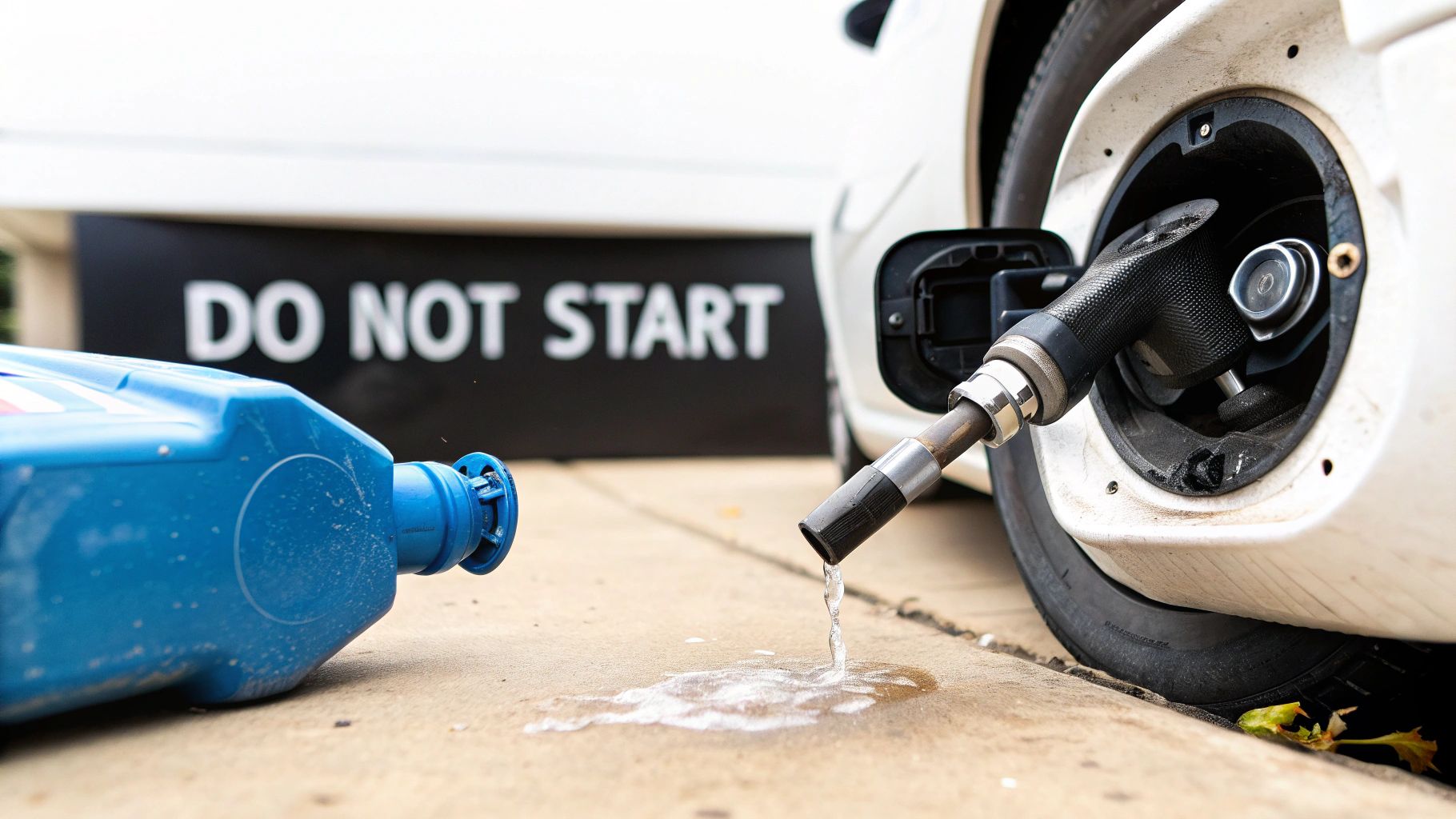
The second AdBlue hits your diesel tank, a destructive chemical reaction kicks off. This isn't like putting petrol in a diesel car, which is a problem of the wrong fuel type. Here, you’ve introduced a water-based urea solution into a system designed exclusively for oil-based fuel. They absolutely do not mix.
Because AdBlue is denser than diesel, it sinks straight to the bottom of the tank. This is a massive problem, as that’s exactly where your fuel pump’s pickup pipe sits. The water content immediately starts to corrode the metal components of your fuel tank and lines, a problem that only worsens the longer it sits there.
The Problem With Crystallisation
The real, wallet-emptying damage begins the moment the ignition is turned on. When the fuel pump primes, it sucks up this potent AdBlue and water mixture and forces it directly into the sophisticated and incredibly sensitive parts of your common rail diesel system. These systems operate under colossal pressure, with components engineered to microscopic tolerances.
As this corrosive cocktail travels through the fuel lines, pump, and injectors, a two-pronged attack unfolds:
Corrosion: The water in AdBlue is aggressively corrosive to the precision-milled metal parts in your fuel system. These components are never, ever meant to encounter moisture.
Crystallisation: As the engine heats up, the water in the AdBlue solution evaporates, leaving behind hard, sharp urea crystals. Think of it like fine, abrasive sand being blasted through the delicate internals of your fuel system.
The most critical takeaway here is that AdBlue contamination is not a "wait and see" situation. The damage starts instantly and gets exponentially worse once the engine runs, leading to clogged fuel injectors, a damaged fuel filter, and a seized high-pressure fuel pump.
Many drivers don’t realise just how severe this contamination is. For a full breakdown of what AdBlue is and how to handle it correctly, you can check out our guide here: https://www.misfuelledcarfixer-suffolk.co.uk/post/what-is-adblue-for-a-diesel-driver-s-guide.
A fuel system contaminated with AdBlue can't just be "flushed through" by adding more diesel. It demands a complete, professional drain and flush to meticulously remove every last trace of corrosive liquid and crystalline deposits before they cause irreversible, and very expensive, damage.
What AdBlue in Your Diesel Tank Actually Feels and Looks Like
So, what happens if you've already turned the key before that sinking feeling of realisation hits? If you’ve put AdBlue in the fuel tank and started the engine, it won't be subtle. The car will protest, and it will do it fast. This isn't like some misfuelling mistakes that creep up on you after a few miles; AdBlue contamination is aggressive, and the signs are usually immediate and severe.
The first thing you'll almost certainly notice is a sudden, dramatic loss of power. One minute you're pulling away from the pump, the next it feels like the engine has hit a brick wall. The accelerator pedal might as well be a block of wood – it just won't respond. It's a common story we hear: the car struggles to crawl along, even at a snail's pace.
This power loss is often paired with the engine juddering and spluttering violently. As the corrosive AdBlue solution finds its way to the injectors, it wreaks havoc on the combustion process. You'll hear the engine running rough, misfiring, and physically shaking the car. It's an unmistakable sign that something is critically wrong. For many, the engine will cut out altogether within a minute or two and then simply refuse to start again, leaving them stranded.
Your Dashboard Will Be Screaming for Help
Your vehicle's dashboard is going to light up like a Christmas tree, and it's not a festive occasion. While the exact warning lights can differ a bit from one manufacturer to another, a few key symbols almost always show up when AdBlue has gotten into the fuel system.
Keep an eye out for these warnings flashing up:
Engine Management Light (EML): This is the big one. That amber engine symbol is your car's way of telling you there's a serious fault that needs immediate attention.
Diesel Particulate Filter (DPF) Light: The engine's brain will detect something is very wrong with the exhaust readings, often triggering the DPF or another emissions-related warning light.
Glow Plug Light (Flashing): In many diesel cars, a flashing glow plug light doubles as a secondary, more urgent engine management warning. It signals a critical problem.
We see this all the time on roadside call-outs. A driver tells us the engine started coughing and died just as they were leaving the petrol station. The speed at which these symptoms appear really highlights how fast AdBlue in a fuel tank starts causing damage.
If you notice any of this happening, there's only one thing to do: pull over as soon as it's safe, turn off the engine immediately, and call for professional help. Trying to push on, even for another hundred yards, forces more of that crystallising solution through your entire fuel system. This massively increases the risk of writing off expensive components like the fuel pump and injectors. Every single second the engine is running, the potential repair bill is climbing.
What a Professional Fuel Drain and Flush Actually Involves
So, you've made that dreaded call after putting AdBlue in your fuel tank. What happens next? It’s not just a guy with a pump showing up. A qualified mobile fuel drain technician arrives in a specialised vehicle, kitted out to handle hazardous materials safely and turn a potential disaster into a straightforward roadside fix.
The entire process is methodical, designed to get every last drop of contamination out and save your engine from a very expensive headache.
First things first: safety. The technician will secure the area around your vehicle, making sure there are no ignition sources nearby. They'll then get access to your car’s fuel tank, but not through the filler cap you used. More often than not, they’ll go in by disconnecting a fuel line or removing the fuel sender unit, which is usually found under the back seat. This gives them direct access to the very bottom of the tank, which is exactly where the dense, heavy AdBlue solution will have settled.
Using a powerful, ATEX-approved pumping system (equipment certified as safe for explosive atmospheres), they'll drain the entire contents of the tank. This isn't a simple syphon job; it’s a professional extraction that removes the entire diesel and AdBlue mixture into a secure compartment on their truck for safe, environmentally compliant disposal later.
Draining More Than Just The Tank
Just emptying the tank is only half the battle. If you turned the ignition on, even for a second, the car's fuel pump has already pulled that corrosive mixture into the fuel lines, filter, and possibly the high-pressure pump and injectors. This is where a professional service really earns its stripes. They systematically purge the entire fuel delivery system from front to back.
The infographic below shows just how quickly things can go wrong, and why stopping the engine immediately is so critical.
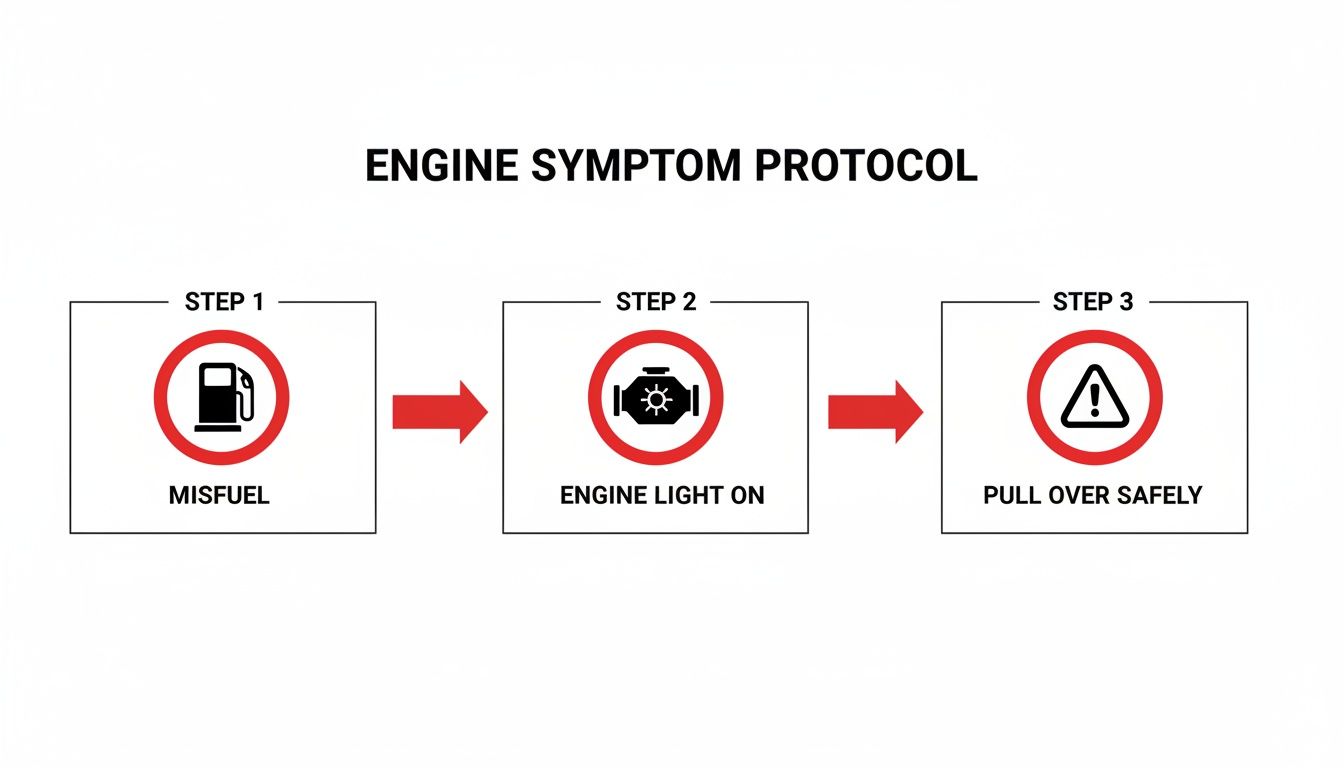
As you can see, pulling over safely is the number one priority. It contains the contamination before it can circulate and cause catastrophic damage to expensive components.
Flushing, Fresh Fuel, and Final Checks
Once the tank and lines are empty, the technician will run a small amount of clean diesel or a specialised flushing agent through the system. This helps dissolve any of those stubborn urea crystals that might have already started to form inside the lines or pump. It’s a vital step to ensure no abrasive particles are left behind to cause wear and tear down the line.
A non-negotiable part of any professional AdBlue contamination job is replacing the fuel filter. The old one will be completely saturated with the water-based AdBlue, and its delicate paper elements are often the first place crystals form. Trying to reuse it is just asking for trouble.
Finally, with a new filter fitted and everything reconnected, the tank is refilled with a small amount of clean, fresh diesel. The technician will then start the engine, let it run for a bit, and perform diagnostic checks to make sure everything is running smoothly.
This meticulous, multi-stage process is exactly why a DIY attempt is such a bad idea. If you’re curious about the technical side, you can learn more about the complexities of emptying a fuel tank and the professional gear involved. All told, the entire on-site procedure typically takes between 60 and 90 minutes, getting you back on the road with minimal fuss and maximum peace of mind.
What’s the Damage? Understanding AdBlue Removal Costs
After the gut-wrenching moment you realise what you’ve done, two questions immediately pop into your head: “How much is this going to set me back?” and “How long will my car be out of action?”
Let’s get the good news out of the way first. Calling in a specialist mobile service is almost always far less expensive than people imagine, especially when you compare it to the eye-watering quotes you’d get from a main dealer.
The final cost really hinges on a few things. The biggest factor by far is whether you’ve started the engine. If you caught the mistake at the pump and haven't so much as turned the key, the job is much more straightforward and, therefore, cheaper. Your vehicle's make and model and your location also play a part, as some fuel tanks are trickier to get to than others.
Mobile Service vs. Main Dealer: A Cost Breakdown
So, what are we talking in terms of pounds and pence? For a mobile fuel drain specialist to come out to you, you're typically looking at a bill between £200 and £400. That price usually covers the full works: draining the tank, flushing the entire fuel system, replacing the fuel filter, and disposing of the contaminated fuel safely.
This is where you see the real value in calling a mobile expert. If you have your car recovered to a main dealership for the same problem, you can expect a bill starting from £1,000 and potentially climbing into the thousands if they decide components need replacing. Plus, you’ll be at the mercy of their workshop schedule, which can mean days off the road.
This isn’t a new problem for the commercial world. Fleets have been dealing with AdBlue since it became common in the UK around 2009. They learned quickly to build AdBlue misfuelling into their risk assessments to sidestep massive repair bills and potential fines from the Environment Agency for fuel spills.
How Long Does an AdBlue Fuel Drain Take?
When you’re stuck on a forecourt or at the side of the road, time is everything. This is another area where a mobile service really shines.
Once the technician arrives, the whole process is surprisingly quick. From start to finish – draining the tank, flushing the lines, changing the filter, and getting some fresh diesel in – you’re usually looking at about 60 to 90 minutes.
That rapid turnaround gets you back on your journey with minimal fuss, saving you the hassle and expense of recovery trucks and garage labour rates. Remember, even if you’ve only put a small amount of AdBlue into your diesel tank by mistake, a professional drain is still absolutely essential to avoid catastrophic long-term damage. When you weigh up the speed and the cost, calling an emergency mobile service is the only sensible choice.
Simple Ways to Prevent Future Misfuelling
Going through an AdBlue misfuelling is a painful and pricey lesson, and it’s one you definitely don’t want to learn twice. The good news is that preventing it from happening again is actually pretty straightforward. It all comes down to breaking that autopilot mode we all slip into at the petrol station and building a few simple habits.
It might surprise you just how common this mistake has become. Across the UK, putting AdBlue in a fuel tank is no longer a rare mishap; it's a significant slice of all misfuelling call-outs. With around 5.6 million UK vehicles now equipped with AdBlue systems, national breakdown figures show these incidents make up about 22% of all wrong-fuel jobs. It’s turned what was once an unusual error into a daily reality for mobile fuel drain technicians. You can read more about these trends in this detailed analysis of UK misfuelling incidents.

Developing Mindful Fuelling Habits
Let's be honest, most mistakes happen when we’re distracted, rushing, or driving a car we’re not used to. The trick is to create a simple, repeatable routine every single time you pull up to the pump. This builds a mental checklist that eventually becomes second nature.
Before you even grab the nozzle, just pause. Take one second to consciously check what you’re doing. Look at the colour—black for diesel, blue for AdBlue—and read the label on the pump. It sounds almost too simple, but that tiny moment of awareness is your best defence against a four-figure repair bill.
Another great habit is to separate the two jobs entirely. Instead of trying to fill both tanks at a busy forecourt, top up your AdBlue at home from a sealed container before you set off on a long trip. This removes the risk of getting them mixed up when you’re in a hurry.
Tools and Tips for Fleet Managers
If you’re running a business with a fleet of diesel vehicles, preventing this kind of mistake is all about consistency and clear communication. A single driver error can take a vehicle off the road, costing you time and money. Standardising your procedures is key.
Here are a few practical strategies that work wonders for fleet operators:
Label Everything Clearly: Use prominent, colour-coded stickers right next to the diesel and AdBlue filler caps. A big, bold "DIESEL ONLY" sticker on the main fuel flap is a simple visual cue that’s impossible to ignore.
Drill it in with Training: Make misfuelling prevention a core part of your driver induction and regular refresher training. When you explain the real-world costs and operational downtime an AdBlue mistake causes, the message really hits home.
Fit Misfuelling Devices: You can buy specially designed filler caps and inserts that physically block the wrong-sized nozzle from going in. They’re a relatively cheap investment that provides a final, foolproof safeguard against contamination.
By putting these simple, proactive steps in place, both individual drivers and fleet managers can turn a moment of potential panic into just another routine, error-free task. It’s all about breaking the cycle of distraction and making a conscious check a non-negotiable part of every single refuel.
Your AdBlue Contamination Questions Answered
When you’re stuck at the side of the road after accidentally putting AdBlue in the diesel tank, your mind is probably racing with a dozen different questions. It’s a horrible feeling, but getting clear, straight answers can help lower the stress levels.
We’ve put together the most common questions our technicians get asked every single day, giving you the essential information you need, right when you need it most.
Will My Insurance Cover an AdBlue Misfuelling?
This is usually the first thing people ask, and unfortunately, the answer is almost always no. The vast majority of standard car insurance policies don't cover misfuelling incidents, viewing it as driver error or a mechanical breakdown, which are common exclusions.
It's always worth double-checking the small print of your policy, as some premium plans or specific breakdown cover add-ons might offer some help. Realistically, though, you should prepare to pay for the fuel drain yourself. The silver lining is that a mobile service is worlds cheaper than a main dealer repair, which makes the unexpected bill a lot less painful.
How Much AdBlue Does it Take to Damage a Diesel Engine?
Honestly, even a tiny amount can kickstart some serious problems. AdBlue is mostly water and much denser than diesel, so it sinks straight to the bottom of the tank—exactly where your fuel pump draws from.
There is no "safe" amount of AdBlue in a diesel tank. Even half a litre is enough to start causing corrosion and crystallisation as soon as it's pulled into the fuel system. The only right way to handle it is with a complete, professional drain and flush, no matter how little you think you put in.
A common and dangerous myth is that you can just top up the tank with diesel to dilute the AdBlue. All this does is help circulate the corrosive mix through your fuel system more effectively, massively increasing the risk of wrecking your engine.
Can I Just Siphon the Fuel Out Myself?
In a word: no. Trying to drain the tank yourself is a bad idea for several reasons and we strongly advise against it. Modern fuel tanks are designed with anti-siphon devices, making it virtually impossible to get a hose down to the bottom where the AdBlue is sitting.
You’d also be handling a hazardous cocktail of diesel and corrosive chemicals without the right safety gear. Our technicians use specialist ATEX-approved (explosion-proof) pumps and have a legal duty to dispose of the contaminated fuel according to strict environmental laws. It’s just not a job for the driveway.
Is My Engine Permanently Damaged After AdBlue Contamination?
If you haven't started the engine, the answer is almost certainly no. As long as the ignition stays off, the contamination is contained within the fuel tank. Calling a professional fuel drain service right away means they can remove the entire mixture before it ever gets near the delicate high-pressure fuel pump and injectors.
A proper flush and a new fuel filter will get the system back to normal with no lasting damage.
If the engine was started, even for a moment, the risk of damage increases. However, a quick professional response can still prevent the worst from happening. The technician can assess the situation on the spot and let you know if any further checks are needed once the car is running again. In the vast majority of jobs we attend, a thorough roadside drain is all it takes to solve the problem completely.
If you've put AdBlue in your fuel tank in Suffolk or anywhere nationwide, don't panic and don't start the engine. Call the experts at Misfuelled Car Fixer for immediate, 24/7 assistance. We'll get you safely back on the road in no time. Find out more at https://www.misfuelledcarfixer-suffolk.co.uk.


