



Discover What Happens with 1 litre adblue in diesel tank
- Misfuelled Car Fixer

- Jan 18
- 13 min read
Updated: Jan 28
24/7 Hotline Nationwide: 0330 122 6640
National Wrong Fuel Rescue: https://www.misfuelledcarfixer.co.uk
If you found this page, we cover you!
It’s a heart-stopping moment, that realisation you’ve just put AdBlue into your diesel tank. It’s a common mistake, but what happens next is absolutely critical. Even a small amount, like 1 litre of AdBlue in a diesel tank, can set off a chain reaction leading to serious and expensive damage.
The golden rule, the one thing you must remember, is simple: do not start the engine. Don't even turn the key to the 'on' position. Keeping the engine off prevents the contaminated fuel from being circulated, and it’s the single most important thing you can do to save your vehicle from a massive repair bill.
What One Litre of AdBlue Actually Does to a Diesel Engine
So, why is AdBlue so catastrophic for a diesel engine? It’s all down to chemistry. AdBlue is mostly deionised water and urea, and it simply doesn’t mix with diesel fuel. Instead, the urea reacts almost immediately, forming hard, sharp crystals.
Think of it like adding sand to your engine oil. These tiny, abrasive crystals are the real villains here, and they’re about to be sent on a journey through some of the most sensitive—and expensive—parts of your vehicle.
Once the ignition is switched on, the fuel pump kicks in, drawing the diesel and those suspended AdBlue crystals from the tank. The damage starts almost instantly.
The Destructive Journey Through Your Fuel System
First, the contaminated mix hits the fuel filter. It doesn't take long for the crystals to completely clog it, which will starve the engine of fuel. But that’s just the beginning.
Some of the smaller, more insidious crystals will inevitably bypass the filter and get forced under immense pressure into the high-pressure fuel pump and injectors. These are precision-engineered components, with tolerances measured in microns. The abrasive crystals tear through these delicate parts like sandpaper, scoring and destroying them from the inside out.
For commercial vehicles, this isn't just a mechanical problem. The severe damage caused by AdBlue directly affects compliance with strict HGV roadworthiness standards, taking the vehicle off the road until a full, professional repair is completed.
The Financial Fallout and Mechanical Damage
Starting the engine, even for a moment, turns a fixable problem into a potential financial nightmare. We've seen repair bills in the UK typically range from £1,500 to £5,000, and they can climb much higher if the engine has been running for any length of time.
To understand the full scope of what's at stake, you can read our detailed guide on what happens if you put AdBlue in your diesel tank.
Here’s a quick look at the kind of damage we’re talking about.
Immediate Risks of AdBlue Contamination
The table below outlines the components that are immediately at risk the moment you turn the key. Each one plays a crucial role, and failure in any of them can bring your vehicle to a grinding halt.
Affected Component | Type of Damage | Typical Symptom |
|---|---|---|
Fuel Tank & Pump | Clogging and pump failure | Car won't start or stalls |
Fuel Filter | Complete blockage by crystals | Severe loss of engine power |
Fuel Lines & Rails | Blockages and contamination | Engine juddering or misfiring |
High-Pressure Pump | Abrasive wear and failure | Engine management warning lights |
Fuel Injectors | Clogging and irreparable damage | White smoke from the exhaust |
This isn’t a situation where a 'wait and see' approach works. Calling for professional help immediately is the only way to prevent a simple mistake from escalating into a full-blown mechanical and financial disaster.
What to Do The Moment You Realise You've Misfuelled
It’s a heart-sinking moment. That sudden realisation you've just put even a small amount, like 1 litre of AdBlue, into your diesel tank can trigger instant panic. But what you do in the next few minutes is absolutely crucial. A clear head now will be your best friend, and the single most important rule is the simplest one: DO NOT START THE ENGINE.
Seriously, don’t even put the key in the ignition or press the start button. Many modern cars prime their fuel pump as soon as the electronics wake up. That's all it takes to start pulling that corrosive AdBlue solution into your car's very sensitive fuel system. This is the exact point where a simple, fixable mistake spirals into a catastrophic and expensive failure.
Do This, Not That: Your First Five Minutes
Your goal is straightforward: keep the contaminated fuel isolated in the tank and get your vehicle somewhere safe.
Here's exactly what you need to do:
Engine Off. Ignition Off. I can't say this enough. This one action is the difference between a fuel drain and a bill for thousands.
Pop it in Neutral. If you can, this will make it possible to move the car without starting it.
Push to a Safe Spot. If you're at a petrol station, ask for a hand to push the car to a safe parking bay, well away from the fuel pumps.
And here’s what you must absolutely avoid, no matter how tempting it seems:
Don't try to drain it yourself. Siphoning fuel is not only dangerous due to the flammable fumes, but it's also ineffective. You’ll never get all of it out, and the AdBlue will leave behind damaging crystalline deposits.
Don't try to "water it down". Adding more diesel won't dilute the AdBlue. They don't mix. You'll just be helping to slosh the contamination around the tank.
Don't drive any further. If the penny only drops after you've pulled away, find the first safe place to pull over, switch off the engine immediately, and don't restart it.
This simple diagram breaks down the critical choice you have to make.
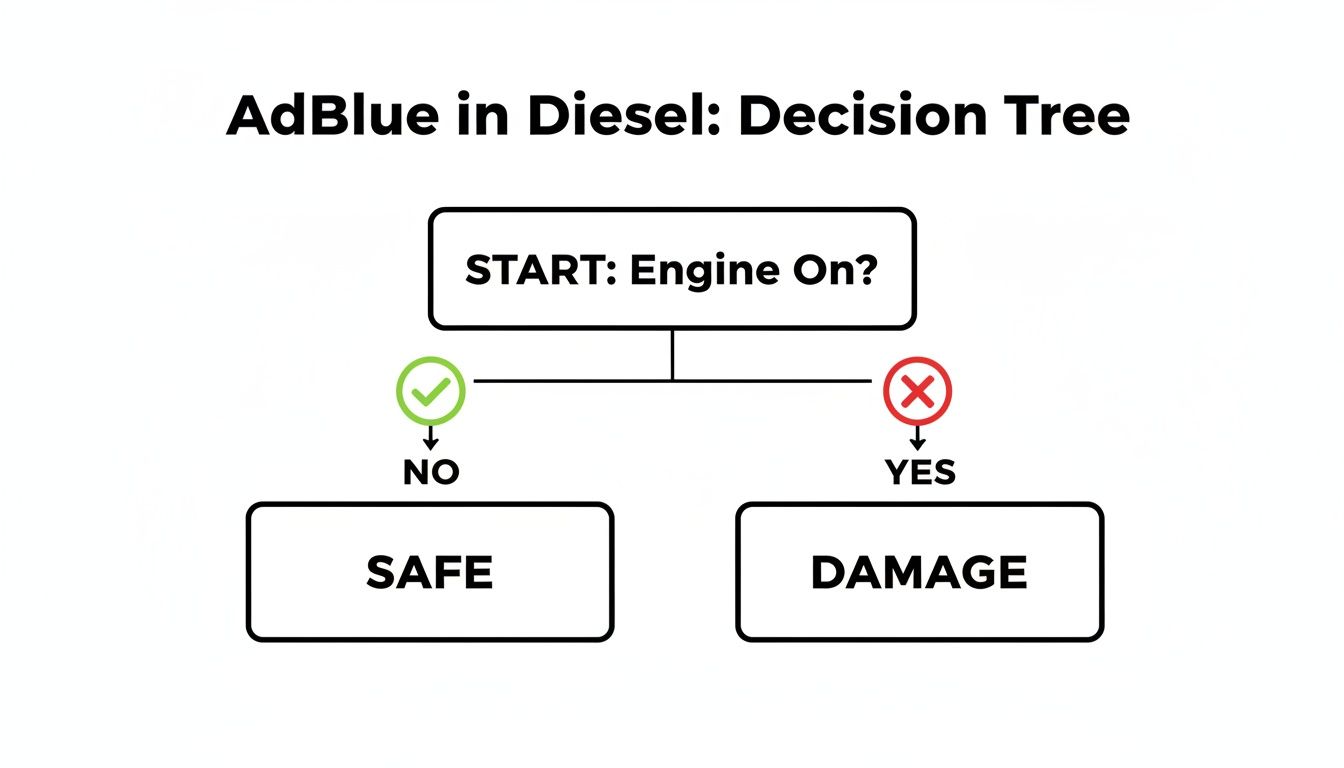
As you can see, keeping that engine off is the only path that leads to a safe and relatively inexpensive outcome.
Your Next Move: Call in the Professionals
Once the car is secure and, most importantly, switched off, there’s only one thing left to do: call for professional help. A mobile fuel drain service has the specialist pumps, filters, and expertise to not just empty the tank but to properly flush the entire system, ensuring no harmful residue is left behind.
Every minute spent considering a DIY fix or hoping for the best is a minute where the AdBlue could be doing unseen damage. Making a quick call to a professional service like Misfuelled Car Fixer is, without a doubt, the smartest and most cost-effective decision you can make right now. It protects your vehicle, your warranty, and your wallet.
How We Get AdBlue Out of Your Fuel Tank
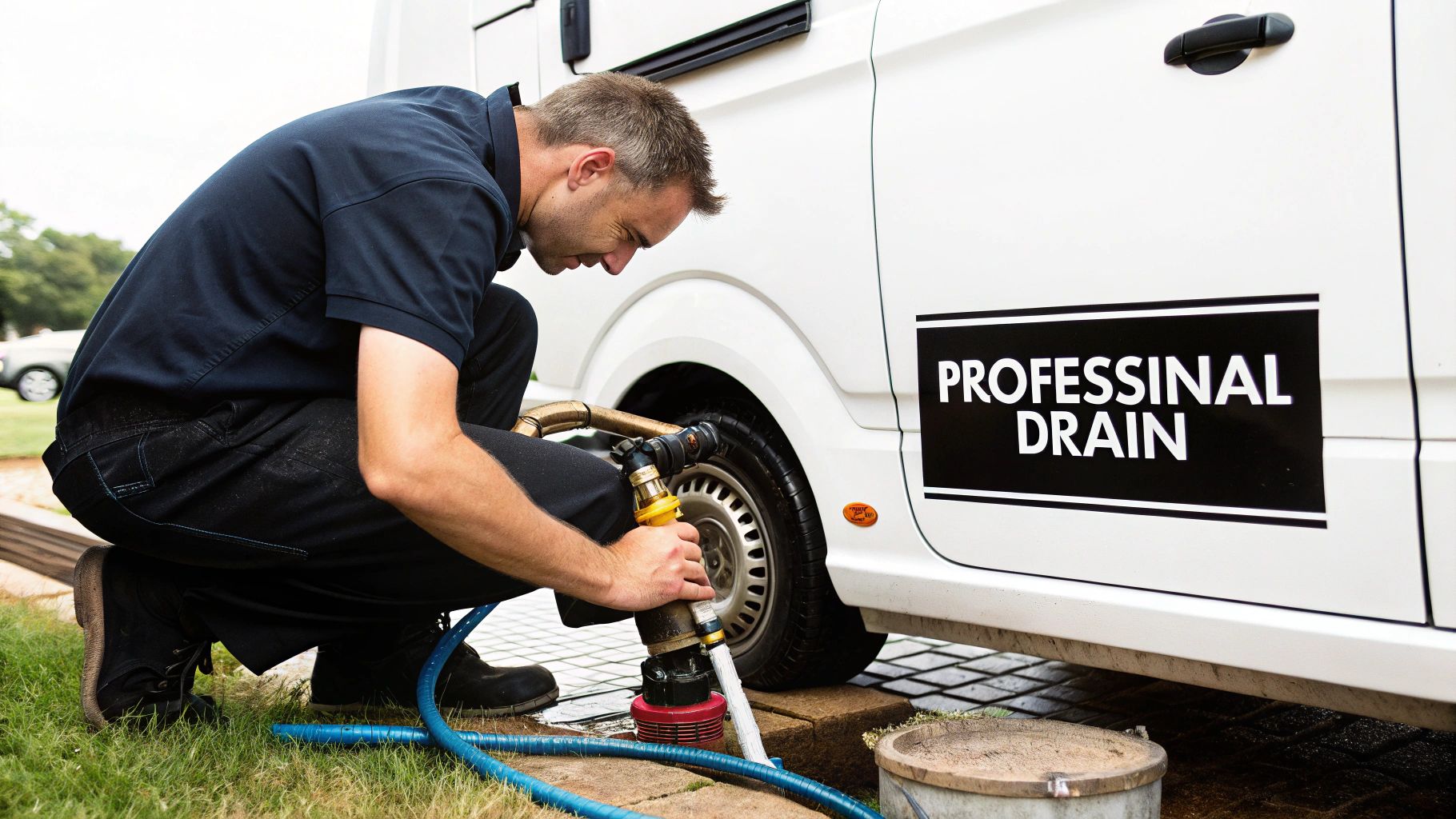
Realising you've poured even just 1 litre of AdBlue in your diesel tank is a heart-stopping moment. But if you haven't started the engine, the solution is relatively straightforward. Getting a mobile fuel drain specialist out to you is the only surefire way to fix this properly. This isn’t a simple case of emptying the tank; it's a deep-cleaning procedure to stop that AdBlue from causing permanent damage.
Trust me, this is not a job for the DIY enthusiast. You simply don't have the right kit to get every trace of the contaminant—or the gritty crystals it leaves behind—out of the system. Our technicians arrive with a van kitted out specifically to handle this kind of chemical mess, safely and completely.
First Things First: The Safety Check and Setup
When our technician arrives, their first priority is always safety. They'll check out where the car is parked, make sure it’s secure, and set up a safe working zone around it. This usually means putting out safety cones and double-checking for any potential ignition sources nearby.
We only use ATEX-approved pumps and equipment. This is a crucial point – it means everything is certified as safe for handling flammable liquids like diesel. Standard pumps can easily create a spark, and that’s a massive fire risk you don't want to take. The technician will walk you through what they're about to do, so you know exactly what’s happening.
Draining the Tank and Flushing Out the Crystals
Now for the main event. The technician will start by pumping out the entire mixture of diesel and AdBlue from your fuel tank. Every last drop is transferred into a special, secure container on the van, ready for proper, environmentally friendly disposal.
But just draining it isn't enough. AdBlue starts forming hard crystals almost immediately, and they stick to the inside of the tank. To tackle this, the technician will flush the tank, usually with a cleaning agent or even fresh diesel, to dissolve and wash away all that nasty residue. This step is absolutely vital to stop any leftover crystals from getting sucked into your fuel system down the line.
Cleaning the Rest of the Fuel System
Once the tank is spotless, the focus shifts to the rest of the fuel system. Even if you only turned the ignition to the "on" position without starting the engine, some of the contaminated fuel could have been pulled into the fuel lines. Our job is to hunt down and remove every trace.
The process looks like this:
Purging the Fuel Lines: We flush the lines all the way from the tank to the engine bay, ensuring they're completely clear.
Swapping the Fuel Filter: Your fuel filter is the first line of defence, and after AdBlue contamination, it’s a goner. It will be clogged with crystals and has to be replaced with a fresh, manufacturer-approved one.
Clearing the Injector Rail: The final check is making sure the fuel rail and injectors are clean. For this, a specialized fuel injection service is often the best way to be certain that no residue is left to cause blockages later on.
A professional fuel drain is a full decontamination, not just a quick empty and refill. It's about a systematic cleanse of the entire system, and that's something you can only achieve with the right training and equipment. Our team follows a strict process to guarantee your car is 100% safe to drive again.
To finish, the system is primed with a bit of clean diesel. We'll then add enough fresh diesel to your tank to get you safely to the nearest petrol station. It's a thorough job, but it’s the only way to be absolutely certain your vehicle is free from the destructive power of AdBlue.
If you're interested in the finer details, you can learn more in our guide to safely draining a fuel tank after misfuelling.
What Will Putting AdBlue in a Diesel Tank Cost Me?
That sinking feeling you get when you realise you've poured even 1 litre of AdBlue into your diesel tank is often followed by a much bigger worry: how much is this going to cost? The answer to that question boils down to one simple, critical factor – whether or not you turned the key.
Honestly, the difference is night and day. It can be the difference between a manageable headache and a truly wallet-busting catastrophe.
If you caught the mistake before starting the engine, breathe a sigh of relief. The solution is a straightforward professional fuel drain. This is, by a massive margin, the best-case scenario. A mobile specialist can come to you, sort the problem out on the spot, and save you a significant amount of cash compared to what a main dealer would charge.
But the moment you start that engine, the financial landscape changes completely.
The True Cost of Turning the Ignition
When you start the engine, you're essentially pumping a corrosive, crystal-forming liquid through the veins of your fuel system. This is where the costs start to climb, and they climb fast. The AdBlue solution begins to form abrasive crystals that wreak havoc on incredibly sensitive, high-precision components.
You could be looking at replacing parts like:
Fuel Injectors: These are complex, expensive parts, and a full set can run into thousands of pounds.
The High-Pressure Fuel Pump: Just this one component failing could land you with a bill north of £3,000.
A Full Engine Rebuild: In the worst-case scenarios, where the damage is widespread, the repair bill can easily rocket past £5,000.
It's amazing how quickly a small mistake can escalate. Remember, just one litre of AdBlue is enough to contaminate a full 40-60 litre tank of diesel, meaning the entire system needs a thorough flush. Industry data shows that while many injector-related repairs fall in the £2,000 to £7,000 range, a shocking 20% of cases where the car is driven for more than a mile end up needing a full engine replacement, costing upwards of £10,000.
Your most financially savvy move is to call for a mobile fuel drain immediately after the misfuel. Here at Misfuelled Car Fixer, we cover all of Suffolk, from Ipswich to Stowmarket. We can typically get to you in under an hour and resolve 95% of these cases right there at the roadside for £600 to £1,200 – a fraction of what you'd pay at a dealership.
Cost Comparison: Engine Off vs Engine Started
To put it into perspective, here’s a quick look at the potential costs. As you can see, keeping that ignition off is the single most important thing you can do to protect your wallet.
Action Required | Engine Off Cost (Estimate) | Engine Started Cost (Estimate) |
|---|---|---|
Professional Fuel Drain & System Flush | £600 - £1,200 | Included in higher repair costs |
Component Replacement (Injectors, Pump) | Not Required | £2,000 - £7,000+ |
Full Engine Rebuild or Replacement | Not Required | £5,000 - £10,000+ |
Total Potential Cost | £600 - £1,200 | £2,000 - £10,000+ |
The table makes it starkly clear: the cost difference isn't minor; it's a huge leap. A quick call for a mobile drain is an investment that saves you from potentially catastrophic repair bills.
The Hidden Costs You Haven't Thought Of
For anyone who uses their vehicle for work, whether you're a tradesperson, a delivery driver, or a sales rep, the garage bill is only the beginning of the financial pain. The real hidden cost is downtime.
Every single day your van or car is sitting in a workshop is a day of lost earnings, cancelled jobs, and unhappy clients. This loss of income can spiral quickly, sometimes even costing you more than the repair itself.
When you start to add up these secondary costs, the value of getting a fast, on-site fuel drain service becomes undeniable. To get a more detailed picture of the finances involved, have a look at our complete guide on AdBlue in diesel tank repair costs.
Ultimately, the best financial advice we can give is simple: don't touch that ignition.
Simple Ways to Avoid Putting AdBlue in Your Diesel Tank
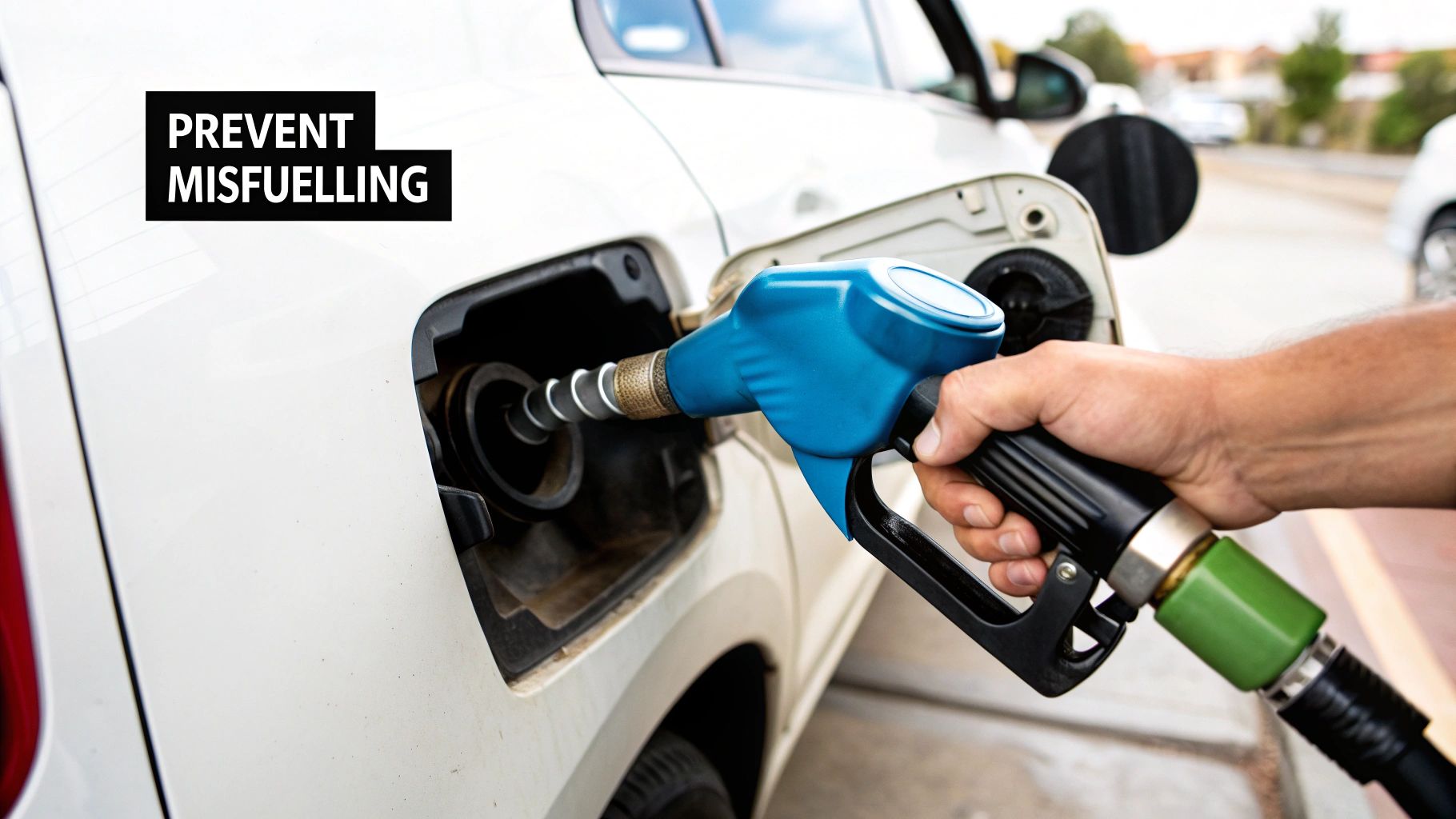
After the headache and hit to your wallet from an AdBlue mix-up, you'll be determined to make sure it never happens again. Thankfully, avoiding this mistake is pretty simple once you work a few habits into your refuelling routine. It really all boils down to just slowing down for a moment at the pump.
Honestly, a simple moment of distraction is almost always the culprit. Trying to refuel in a hurry on your way to a meeting, or while you’re on the phone, is asking for trouble. It's far better to treat filling up as the one thing you're focusing on. Just pause, take a breath, and double-check what you’re grabbing before you even lift the nozzle.
Create a Quick Mental Checklist
A consistent routine is your best defence against a slip-up. Before you squeeze that trigger, run through a quick mental check to make sure you have the right filler cap and the right nozzle in your hand.
Here are the key things to make second nature:
Spot the Blue Cap: Most cars make it obvious. The AdBlue tank has a bright blue cap, which should be your first visual clue.
Check the Nozzle: The AdBlue nozzle is deliberately designed to be smaller than a diesel nozzle. It will feel loose and wrong inside the diesel filler neck. If it doesn't feel right, stop.
Read the Pump: A final glance to confirm the pump is clearly labelled "Diesel" and not "AdBlue" is all it takes.
This three-point check takes less than five seconds but can genuinely save you thousands in repair bills.
The design differences are there for a reason. Manufacturers made the AdBlue opening smaller so the larger diesel nozzle simply can't fit. Paying attention to that physical clue is one of the easiest ways to prevent a very expensive mistake.
Smarter Habits for Topping Up AdBlue
If you top up your car’s AdBlue yourself, how you do it makes a big difference. Try to avoid using the AdBlue pumps at the filling station if you can, as that’s where the confusion with the diesel pump happens most often. Instead, it’s much safer to buy sealed, pre-packaged AdBlue containers.
When you're refilling, always use the dedicated, clean spout that comes with the bottle. This stops any other contaminants from getting into the tank and helps prevent messy spills. For total peace of mind, you could even buy a misfuelling prevention device. These are clever little caps that fit over your diesel filler neck and physically block the smaller AdBlue nozzle, making it impossible to put it in the wrong hole. A few small changes like these can turn a potential disaster into a complete non-issue.
Got Questions About Putting AdBlue in Diesel? We've Got Answers.
Once the initial "oh no" moment passes, a hundred questions probably start racing through your mind. It's a common mistake, but putting even 1 litre of AdBlue in a diesel tank can feel like a disaster. Let's tackle some of the most pressing questions we hear from drivers every day to clear things up.
How Much AdBlue Does It Take to Wreck an Engine?
This is the big one. People often hope that if they only put a tiny bit in, it might just dilute and be okay. Unfortunately, that's not how AdBlue works.
The truth is, there is no "safe" amount. The moment AdBlue, a water-based solution, hits your diesel, it starts to crystallise. These tiny, abrasive crystals are the real villains here, and they can do serious damage to your fuel pump and injectors. Even less than a litre is enough to require a professional fuel drain. The only way to guarantee you won't face a four-figure repair bill is to get the entire system cleaned out, no matter how small the spill was.
Will My Car Insurance Cover This Kind of Mistake?
It’s a bit of a tricky one, and the answer really depends on your specific policy. Some fully comprehensive plans do have cover for misfuelling, but it's far from standard and often comes with strings attached.
Before you rush to call your insurer, think about the potential downsides:
Higher Premiums: A claim like this will almost certainly push your premium up at renewal time.
Losing Your No-Claims Bonus: You could see years of careful driving wiped out, costing you more in the long run.
The Excess: You might find the policy excess you have to pay is almost as much as the cost of calling a specialist out anyway.
Honestly, it's often faster, cheaper, and less hassle to call a mobile fuel drain service directly. It keeps your insurance record clean and gets you back on the road without the paperwork.
Can't I Just Top It Up with Diesel to Water It Down?
This is a very common line of thought, but please, don't do it. Trying to dilute AdBlue by adding more diesel is a recipe for disaster. AdBlue is mostly water, and as we all know, water and diesel just don't mix.
Imagine pouring water into a bottle of oil and shaking it. They'll never truly blend. All you're doing by adding more diesel is sloshing the corrosive AdBlue solution and its damaging crystals further into your fuel lines, pump, and filters. You're essentially helping the contamination reach every part of the system.
What Happens If I've Already Driven It?
If you've started the engine, you'll know about it pretty quickly. The symptoms of AdBlue contamination are not subtle and show up almost immediately as the mixture gets pulled from the tank.
Be on the lookout for these classic warning signs:
The engine will feel like it's losing all its power.
You'll notice severe juddering or the engine running incredibly rough.
White smoke may start pouring out of the exhaust.
Your dashboard will probably light up like a Christmas tree with engine management warnings.
If any of this happens, your only move is to pull over safely, switch off the engine, and leave it off. Trying to push on will only cause more damage.
If you've put even 1 litre of AdBlue in your diesel tank in Suffolk or the surrounding areas, don't take a chance. Call Misfuelled Car Fixer straight away for our 24/7 emergency service. Find out more at https://www.misfuelledcarfixer-suffolk.co.uk and let our experts provide a fast, professional fuel drain to get you back on your journey safely.


