



Fuel Drain Near Me | Your Emergency Guide
- Misfuelled Car Fixer

- Nov 24, 2025
- 12 min read
That sinking feeling in the pit of your stomach when you realise you've grabbed the wrong nozzle is something no driver wants. But what you do in the next few seconds is absolutely crucial. The golden rule, the one thing you must remember, is this: do not start your engine.
Keeping the ignition off is genuinely the single most important action you can take. It can be the difference between a simple fix and a repair bill running into thousands of pounds.
Fuel Drain Near Me | Your Misfuelling Emergency Plan: What to Do Right Now
The moment you realise your mistake, your priority has to switch from filling up to damage limitation. The real harm happens when the wrong fuel gets circulated through your engine's delicate system. You might not realise that even turning the key to the 'on' position (to close a window or listen to the radio) can prime the fuel pump and start pulling the contaminated fuel into the lines.
First Steps at the Petrol Station
So, what's the plan? First, take a breath. Then, leave the ignition completely off. Don't even put the key in.
If your car is blocking the pump, you'll need to move it. Pop it into neutral and ask the forecourt staff or a fellow driver for a hand to push it to a safe spot. It might feel a bit embarrassing, but it's a vital step to protect your car.
Once you’re out of the way, let the staff inside know what’s happened. Trust me, they’ve seen it all before and can help make sure the area is safe, maybe by putting out a few cones. They'll also know the best place for you to wait for assistance.
This simple flowchart lays out the most critical steps to take immediately after a misfuelling mishap.
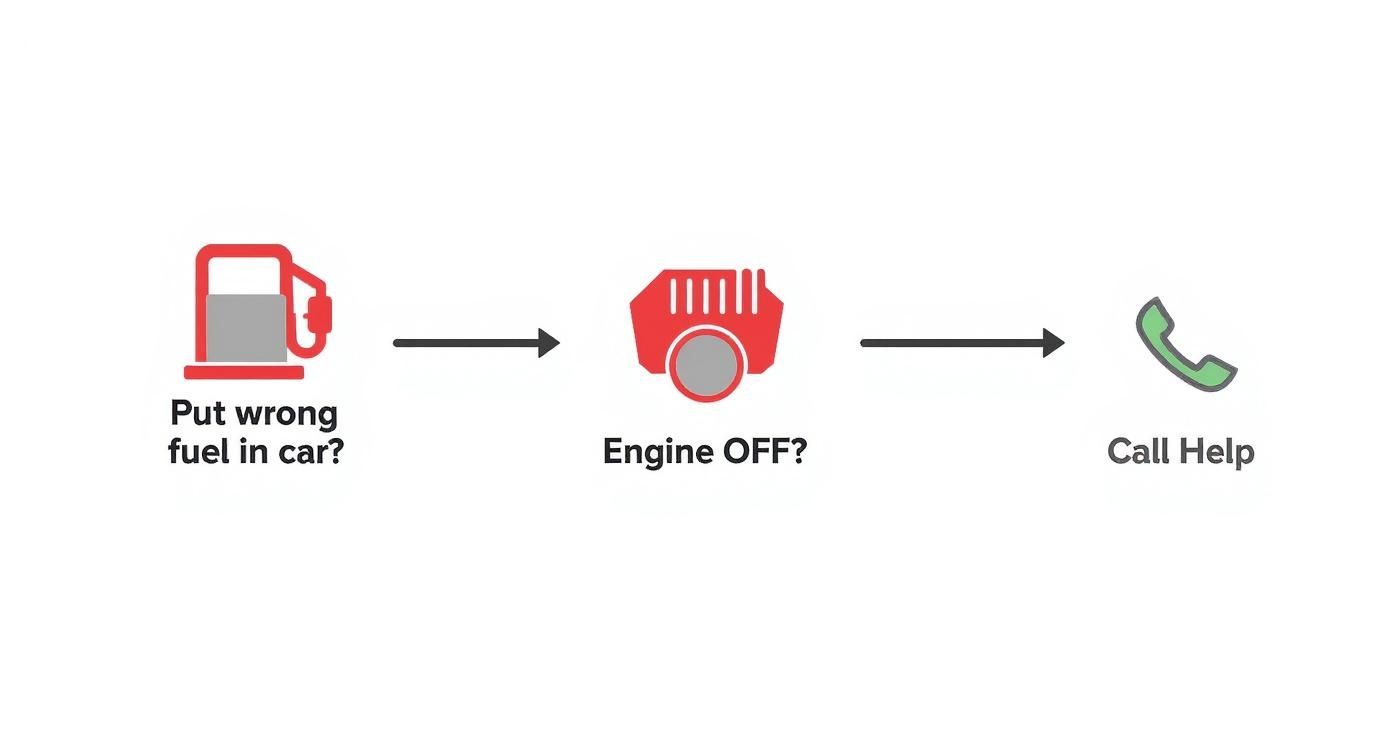
As you can see, the key takeaway is simple: engine off, call for help. It’s the only safe route forward.
Misfuelling Emergency Do's and Don'ts
To make things crystal clear, here’s a quick-reference table of what to do versus what you absolutely must not do in this situation.
What You Should Do Right Now | What You Must Avoid at All Costs |
|---|---|
Stay calm. Panic won't help. | Do not start the engine. |
Leave the ignition completely off. | Do not put the key in the ignition. |
Put the car in neutral. | Do not try to "flush it out" yourself. |
Ask for help to push it to a safe place. | Do not drive away, even for a short distance. |
Inform the petrol station staff. | Do not assume a little bit won't hurt. |
Call a professional fuel drain service. | Do not try to syphon the fuel on your own. |
Following these simple rules can save you a world of trouble and expense. The "Don'ts" column is non-negotiable if you want to protect your vehicle's fuel system.
Why Is Starting the Engine So Bad?
Putting petrol in a diesel car is by far the more common (and more damaging) mistake. Here’s why: diesel fuel isn't just a fuel; it's also a lubricant for components like the high-pressure fuel pump and injectors. Petrol, on the other hand, is a solvent.
When petrol enters a diesel system, it strips away that vital lubricating film, causing metal parts to grind against each other.
If you start the car, you're essentially pumping a destructive, corrosive mixture through the entire fuel system. This is what turns a simple fuel drain into a catastrophic mechanical failure.
The difference in cost is staggering. A mobile fuel drain is a relatively minor, manageable expense. Replacing fuel pumps, injectors, filters, and flushing fuel lines can easily cost you thousands. If you've already driven off, spotting the petrol in diesel car symptoms is your next priority, but preventing the problem in the first place is always the best-case scenario.
Your next move is to call a specialist who can come to you and safely sort the problem out on the spot.
How to Spot the Signs of a Misfuelled Engine
It’s an honest mistake, and it happens more often than you’d think. A moment of distraction, grabbing the wrong nozzle, and you've driven off without realising. But your car won't stay quiet for long. The symptoms of misfuelling can pop up in just a few minutes, and spotting them early is absolutely crucial to avoiding a wallet-emptying repair bill.
If you’ve managed to drive away from the petrol station, the first thing you'll likely notice is how the car feels. Does the engine sound rough, almost like it’s struggling? Is it hesitating or spluttering when you try to pick up speed? These are classic first signs that the wrong fuel is being pumped into the engine. The second you suspect something is off, find a safe place to pull over.
Common Misfuelling Symptoms
The exact signs will differ depending on whether you’ve put petrol in a diesel car or diesel in a petrol one. That said, there are several tell-tale warnings that should set alarm bells ringing.
Engine Spluttering or Misfiring: The car might feel jerky and struggle to hold a steady speed. It can often feel like it's on the verge of stalling completely.
A Major Loss of Power: You’ll feel it immediately. The car becomes sluggish and just won’t respond when you put your foot down.
Excessive Exhaust Smoke: Keep an eye on your rear-view mirror for plumes of white or black smoke. It’s a dead giveaway that the fuel isn’t burning correctly.
Loud Knocking or Rattling: A sharp, metallic clattering from the engine is a very bad sign. This ‘knocking’ means the fuel is igniting at the wrong time, which can cause serious damage, especially in diesel engines.
Dashboard Warning Lights: Your dashboard will probably light up like a Christmas tree, with the engine management light being the most common one to appear.
Putting petrol in a diesel engine is by far the more common and damaging mistake. Petrol acts like a solvent, stripping away the essential lubricating film that diesel provides. This leaves critical parts like the high-pressure fuel pump grinding against each other, creating tiny metal shavings that can get sent through the entire fuel system.
The second you spot any of these signs, your only priority is to stop the car safely. Every second the engine runs, the wrong fuel is doing more damage. Your next step should be to find a "fuel drain near me" without delay.
What Happens Next?
Once you're safely stopped, switch the engine off and pop your hazard lights on. Whatever you do, do not try to restart the car. This will only pump more of the contaminated fuel through the system and make things much, much worse.
These symptoms are your car’s SOS signal, and they won’t go away on their own. This is when you need to call in the professionals. A mobile fuel drain specialist can get to you, whether you’re stuck on the side of the A12 or in a car park in Bury St Edmunds, and sort the problem out right there. Trying to "drive through it" is a one-way ticket to a repair bill that could run into thousands of pounds.
What Actually Happens During a Professional Fuel Drain?
When you call for a fuel drain, you might imagine someone turning up with just a bucket and a hose. The reality is a whole lot more sophisticated and, crucially, safer. We're dealing with flammable liquids, so our technicians arrive with highly specialised, certified equipment designed to protect you, your vehicle, and the environment.
The very first thing our technician does on arrival is secure the area. This means creating a safety zone around your vehicle, checking for any potential ignition sources (like someone smoking nearby), and getting their gear ready. A critical early step is to disconnect your car's battery—this immediately removes the risk of any stray sparks causing a disaster.
Safely Removing the Contaminated Fuel
Getting the wrong fuel out is the main event, but it's not just a simple case of emptying the tank. The contaminated mixture will have worked its way into the fuel lines, the filter, and sometimes even the injectors.
To tackle this, we use an ATEX-approved pumping system. This is professional-grade kit, specifically built and certified to handle flammable liquids without creating sparks or static. The bad fuel is pumped directly from your tank into a secure, sealed container inside our van, all ready for safe, environmentally-friendly disposal later on.
A proper fuel drain isn't just about emptying the tank. Think of it more as a full decontamination of your car's fuel system. We're meticulously cleaning everything out to stop leftover residue from damaging expensive parts like your fuel pump or injectors down the line.
We often remove the fuel filter to drain it separately, as it can trap a surprising amount of the wrong fuel. Every part of the system we can get to is flushed and cleared. If you're curious about the regulations behind this, you can read our guide on how to drain a petrol tank safely and legally in the UK.
Flushing the System and Getting You Going
Once all the contaminated fuel is out, we're only halfway there. Now, we need to flush the system clean.
We'll put a small amount of the correct, fresh fuel into the tank and run it through the lines and injectors. This acts like a rinse cycle, pushing out any last stubborn droplets of the bad fuel. It’s a vital step to make sure your engine only gets the good stuff when we start it back up.
Finally, we'll add enough of the correct fuel to your tank to get you comfortably to the next petrol station. With the battery reconnected, the technician will do the final, all-important check: starting the engine. They’ll let it run for a few minutes, listening carefully and watching for any odd noises, smoke, or dashboard warning lights. This confirms the problem is completely solved and you can drive away with total peace of mind.
How Much Does a Fuel Drain Cost and How Long Will I Be Stuck?
Once the initial "oh no" moment passes, two big questions always surface: "How much is this going to set me back?" and "How long am I going to be stranded here?" Let's get straight to it, because the reality is often much less stressful than you're probably imagining.
The best news is that calling a mobile fuel drain specialist is a straightforward, one-time cost. It's a world away from the alternative. If you’ve started the car and circulated the wrong fuel, you could genuinely be facing a repair bill in the thousands for things like fuel pumps, injectors, and filters. A professional drain completely sidesteps that potential nightmare.
The Cost of a Fuel Drain
The price for a fuel drain near me isn't one-size-fits-all, as it depends on a few things. We believe in being transparent, so here’s a look at what influences the final figure.
Your Car: The make and model do matter. Some newer cars have tricky fuel tank designs or anti-siphon devices fitted, which just means the job requires a bit more finesse and time.
Where and When: Your location in Suffolk and the time of day will affect the price. A call-out to a remote village at 2 AM is naturally going to be different from a job in central Ipswich on a Tuesday afternoon.
The Fuel Itself: The amount and type of wrong fuel we need to safely remove and dispose of also plays a part in the cost.
It’s an unexpected expense, for sure, but it helps to put it in perspective. The price you pay at the pump is already high, with recent reports from sources like asiantrader.biz highlighting UK fuel retailer margins, adding a fair bit to your bill before any mistakes happen.
How Long Does It All Take?
Time is usually the biggest worry, especially when you've got somewhere important to be. From the second our technician pulls up beside you, the whole process typically takes around 60 to 90 minutes. That's the usual window to get the job done properly and safely from start to finish.
The real value isn't just avoiding a massive repair bill; it's the speed. In about the time it takes to watch an episode of your favourite show, you can go from being completely stuck and stressed to back on your way.
That timeframe includes everything: making the area safe, draining every drop of the contaminated fuel, flushing the system to get rid of any residue, and putting in enough of the correct fuel to get you going again. Our technician will run some final checks to make sure your car is happy before they leave you to it. So, while it’s definitely a hiccup in your day, it's a relatively short one.
Finding a Fast Fuel Drain Service in Suffolk and Beyond
That heart-sinking moment when you realise you’ve put the wrong fuel in your car is often followed by a frantic search for a "fuel drain near me". It’s a horrible feeling, but if you're in Suffolk, you can breathe a little easier. Getting a local expert to you quickly is the key to sorting this out without a massive drama, and that’s precisely what we’re set up to do.
Our mobile fuel drain units are always on the move, positioned strategically across Suffolk. This means whether you're stuck on a forecourt in Ipswich, stranded in a supermarket car park in Bury St Edmunds, or pulled over on a B-road near Felixstowe or Lowestoft, one of our technicians is never far away. A local specialist will almost always get to you faster than a national breakdown service that might be dispatching from a depot miles away.
Our Main Coverage Areas in Suffolk
We’ve worked hard to make sure we can cover all the main towns and the villages dotted in between. You can count on us to reach you quickly in places like:
Ipswich: As the county town, we have technicians covering every part of Ipswich and its surrounding areas.
Bury St Edmunds: We’re frequently helping drivers in the historic centre and along the busy A14 corridor.
Felixstowe and the Coast: Misfuelled near the port or enjoying the coastal views? We’ll be right there.
Lowestoft and Beccles: Our service extends right up to the northern edges of Suffolk, so you’re never left stranded.
There’s real peace of mind in knowing a local team is on standby. When you're in a pinch, you just want to find help fast, and for some, accessing local geographic data can be a helpful resource. We aim to be that rapid, reliable solution you find when you need one most.
What if You’re Further Afield? We Offer National Support
It's one thing to misfuel on your home turf, but what happens when you're hundreds of miles away on a road trip? While we’re a Suffolk-based service at heart, we know these mistakes don’t stick to county lines.
Through a carefully selected network of trusted, certified partners across the UK, we can arrange for professional help no matter where you are.
Don't let your location add to the anxiety. Just give us one call. We can tap into our national network and get a qualified fuel drain specialist out to you, whether you’re on the M6 near Manchester or the A303 in Somerset.
This means you still have a single, reliable point of contact, taking the guesswork out of the equation. It's a vital service, especially as so many of us still rely on diesel and petrol cars. Despite the rise of EVs, the sheer number of traditional cars on the road means misfuelling incidents remain a common problem right across the country.
So, whether you’re dealing with the wrong fuel in your car in Suffolk or find yourself in a jam elsewhere, our promise is the same: to deliver a fast, professional, and reassuring service that gets your problem solved with zero fuss.
Common Questions About Wrong Fuel Recovery

When you’re stuck on the side of the road after putting the wrong fuel in your car, your mind is probably racing with questions. It's a stressful situation, and you need clear, straightforward answers fast. Having handled countless wrong fuel call-outs across Suffolk, we've heard just about every concern imaginable. Here are some of the most common queries we get, answered with the clarity you need right now.
The first thing most drivers ask is, "Will my insurance cover this?" In our experience, the answer is almost always no. Standard car insurance policies rarely cover misfuelling, as it’s usually categorised as driver error, not an accident or mechanical failure. While some premium comprehensive policies might have an add-on that covers it, you shouldn’t count on it. It’s always worth checking your policy documents, but you should prepare for this to be an out-of-pocket expense.
How Damaging Is Petrol in a Diesel Engine?
This is the big one. Putting petrol into a modern diesel engine is easily the most common and damaging type of misfuelling, and people often wonder why it's such a serious problem. The key is lubrication. Diesel fuel is oily, and this quality is vital for keeping the high-pressure fuel pump and injectors running smoothly.
Petrol does the exact opposite – it’s a solvent. When it gets into the diesel system, it strips away that critical lubricating film. This causes metal-on-metal friction between precision components, generating tiny metal particles (swarf) that get pumped through the entire fuel system. The result can be catastrophic damage, often leading to repair bills running into the thousands.
The core issue isn't just about the wrong combustion; it's about petrol actively destroying the delicate, high-pressure components that your diesel engine relies on to function. Ignoring the problem is not an option.
Do I Need a Full Drain for a Small Amount?
"I only put a couple of litres in before I realised. Can I just top it up with diesel and drive on?" We hear this a lot, but the answer has to be a firm no. Even a tiny amount of petrol can contaminate a full tank of diesel and cause real harm.
Modern common-rail diesel engines are incredibly sensitive. A contamination level of just 5% (that's only 2.5 litres of petrol in a 50-litre tank) is more than enough to compromise the fuel's lubricating properties and start the process of damage. Topping up the tank might feel like a solution, but it just dilutes the poison and increases the risk of a much bigger bill down the line. A complete, professional fuel drain is the only truly safe option.
We get it, the cost of fuel is a sore point. Recent government reports noted that between May and August 2025, UK petrol prices rose to an average of 133.9 pence per litre. While the cost of a full tank is high, it’s a drop in the ocean compared to the potential cost of replacing a fuel pump and injectors. You can read more about UK road fuel market dynamics for context.
Ultimately, trying to "dilute" the problem is a massive gamble with your engine. Making that call for a "fuel drain near me" is the smartest, most cost-effective decision you can make to protect your vehicle.
If you've misfuelled your car in Suffolk or anywhere nearby, don't panic and don't start the engine. Call Misfuelled Car Fixer immediately for rapid, professional 24/7 assistance. We’ll get you safely back on the road in no time. https://www.misfuelledcarfixer-suffolk.co.uk


