



Misfuelled Car? Your Emergency Doctor Fuel Guide
- Misfuelled Car Fixer

- Feb 5
- 12 min read
24/7 Hotline Nationwide: 0330 122 6640
National Wrong Fuel Rescue: https://www.misfuelledcarfixer.co.uk
If you found this page, we cover you in England!
That sinking feeling. It hits you the moment you realise what you’ve done—the wrong nozzle, a moment of distraction, and now your car is full of the wrong fuel. The single most important thing to do right now is not to panic. And whatever you do, do not start the engine or even turn the key. This simple mistake becomes a major problem the second the ignition is turned, making your next steps absolutely vital.
Your Immediate Action Plan on the Forecourt, Roadside or Home | Doctor Fuel
That sudden 'sinking feeling' after misfuelling is a universal automotive panic, a lot like discovering you have locked keys in the trunk of your car. Both situations demand a calm, clear-headed response. Turning the key is what circulates the contaminated fuel, turning a simple fix into a potentially catastrophic engine repair. Your immediate reaction can genuinely prevent thousands of pounds in damage.
Do Not Start The Engine
This is the golden rule, the one thing you must remember. Don't turn the key, don't press the start button, don't even put the key in the ignition. The moment you do, the fuel pump primes itself, sending the wrong fuel on a journey from the tank into your car's delicate fuel lines, filters, and injectors. If you leave the engine off, the contamination stays safely contained within the tank, making the fix much simpler for a doctor fuel technician to sort out.
Let The Petrol Station Staff Know
Once you’ve taken a breath, let the staff at the petrol station know what’s happened. They can help cordon off the pump and make sure the area is safe. Trust me, they’ve seen this happen countless times before and can offer some initial guidance. You’re far from alone in this; every year in the UK, approximately 150,000 drivers make this exact mistake. That’s over 410 misfuelling incidents every single day. We often see a surge in the spring, with searches for 'wrong fuel' spiking by 51% in March alone as people get used to new cars. You can discover more insights about these driver statistics on GB News.
Key Takeaway: Leaving the car switched off is the single most effective action you can take. The problem remains isolated in the fuel tank, making a full recovery much more likely and far less expensive.
Move Your Vehicle Safely
Okay, so your car is now blocking a pump. You need to move it, but without starting it. Here's how:
Pop the car into neutral. This disengages the gears, allowing the wheels to turn freely.
Release the handbrake.
Ask for a hand. Get help from station staff or other drivers to push the car to a safe parking spot, well away from the pumps.
Following these first few steps correctly is absolutely critical. For a more detailed walkthrough, check out our guide on your immediate action plan for misfuelling in Suffolk.
Recognizing the Telltale Signs of Misfuelling
You’ve just left the petrol station, maybe only a few hundred yards down the road, and something feels… off. Your car just isn't right. Being able to spot these early warning signs of misfuelling is often the difference between a simple roadside drain and a repair bill that could run into the thousands.
What your car does next will depend entirely on which fuel has gone into the wrong tank.
Petrol in a Diesel Car
Putting petrol into a diesel engine is by far the most common, and unfortunately, the most damaging mistake you can make at the pump. Petrol acts like a solvent, and it immediately starts to strip away the lubrication that diesel provides. This causes metal-on-metal friction in high-precision parts like your fuel pump and injectors, leading to rapid wear and tear.
If you’ve driven off after filling your diesel car with petrol, the signs will show up fast and get worse with every metre you travel. You’ll probably first hear a distinct rattling or ‘knocking’ noise from the engine as it struggles to cope.
Shortly after, you'll likely notice:
A serious lack of power. The car will feel sluggish, almost as if it’s being held back.
The engine will start to splutter and misfire. This is the contaminated fuel failing to combust properly.
Lots of smoke from the exhaust. A telltale sign is clouds of thin, white or greyish smoke.
The engine will cut out. Eventually, it will stall completely and almost certainly won't restart.
Warning lights on the dashboard. The engine management light (EML) or glow plug light will likely start flashing or stay lit.
Diesel in a Petrol Car
Putting diesel in a petrol car is much rarer, mainly because the bulky diesel nozzle simply won't fit into the filler neck of most modern petrol cars. If you do manage it, though, the results are just as problematic. Diesel is a heavy, oily fuel that needs high compression to ignite, unlike petrol which uses a spark plug.
The diesel will quickly clog the spark plugs and the entire fuel system. Most of the time, the engine won't even start. If, by some miracle, it does fire up, it will run incredibly rough, belch out thick black smoke, and then conk out within moments.
Expert Tip: The second you suspect something is wrong, pull over safely and switch off the ignition. Don't be tempted to "just make it home." Every second the engine runs, it's pulling more of the wrong fuel through the system, dramatically increasing the risk of permanent damage. This is the moment to call for a doctor fuel service.
This flowchart lays out the critical decision you face after filling up. It clearly shows why the best thing you can do is not start the engine in the first place.
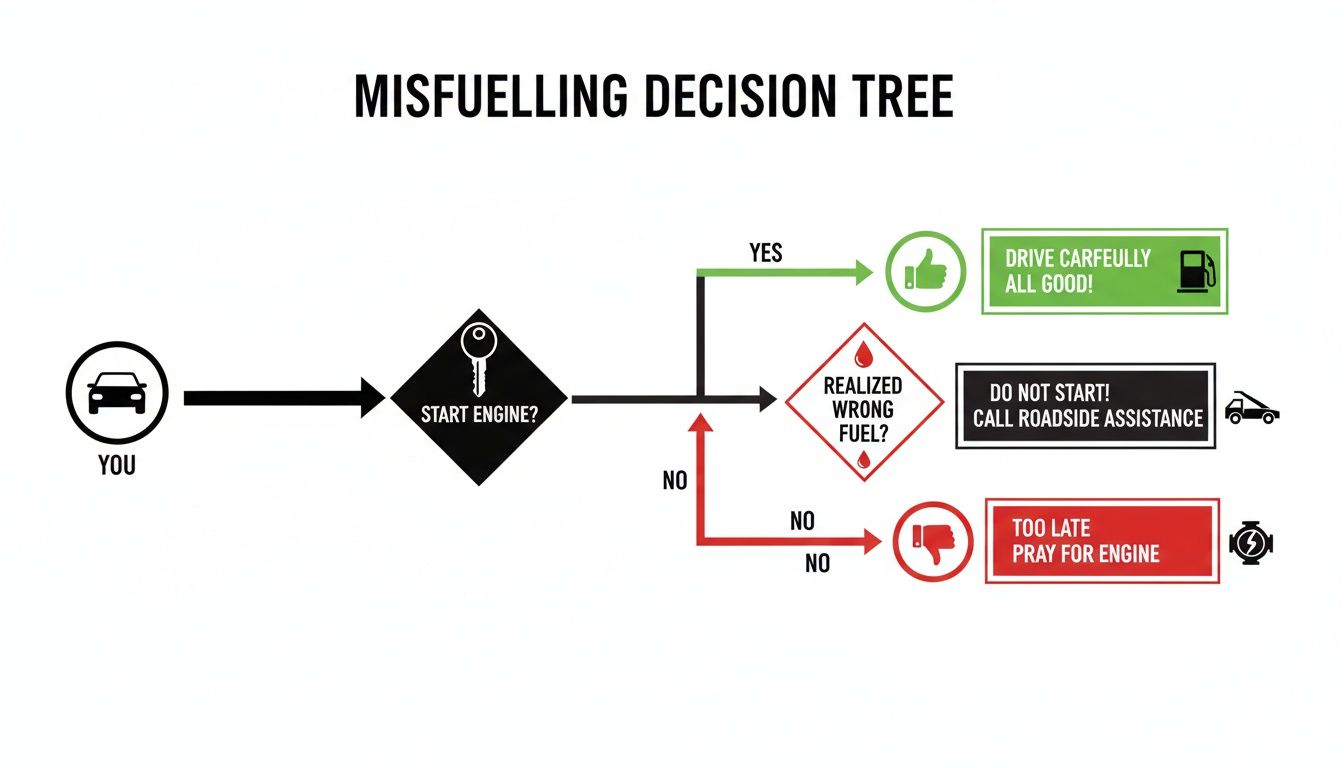
As you can see, keeping the engine off keeps the problem contained in the fuel tank. This makes the fix much faster, simpler, and kinder to your wallet.
For a more detailed look, our quick guide to wrong fuel symptoms for UK drivers is a great resource.
Wrong Fuel Symptom Checker
It can be a panicky situation, so here’s a quick-reference table to help you diagnose what might be happening based on your car's behaviour.
Symptom | Petrol in Diesel Car | Diesel in Petrol Car | AdBlue in Diesel Tank |
|---|---|---|---|
Engine Noise | Loud knocking or rattling | May not start, otherwise very rough | No immediate change in sound |
Power | Significant and rapid loss of power | Complete failure or extreme sluggishness | Gradual loss of power over miles |
Exhaust Smoke | Thin white or grey smoke | Thick, sooty black smoke | Often no smoke initially |
Engine Stalling | Will stall and not restart | Fails to start, or stalls immediately | Will eventually cut out and not restart |
Warning Lights | Engine management/glow plug light on | Engine management light on | Engine management and AdBlue warning light |
Remember, these are common symptoms, but every vehicle can react slightly differently. The golden rule remains the same: if you suspect a misfuel, stop, switch off, and call for professional help.
How a Professional Fuel Drain Works
Seeing the technician's van pull up is a huge relief. But what actually happens next? Knowing what's involved can take a lot of the stress out of the situation. It’s not just a case of siphoning out some fuel; it’s a highly controlled, professional procedure designed to protect your car, get you moving again, and handle the contaminated fuel responsibly.
First things first, the technician makes sure everyone is safe. If you're on a busy road, they'll secure the area with cones and warning lights. They'll then run through the details with you – what fuel went in, what should have gone in, and whether you started the engine. This quick chat is vital as it tells them exactly how to tackle the job.
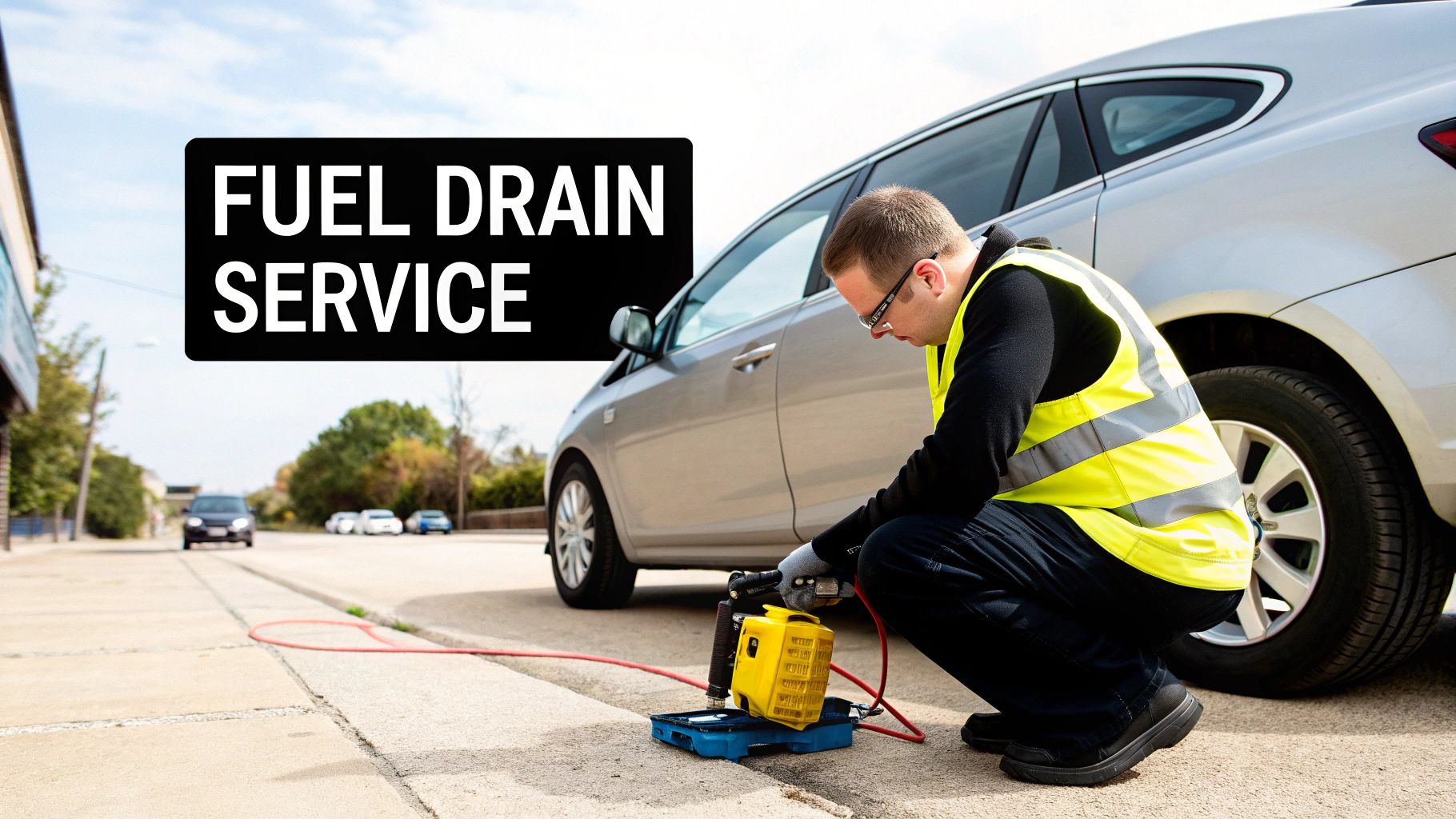
The Fuel Drain and System Flush
With the scene safe, the real work starts. Using specialised, non-sparking tools to eliminate any risk of ignition, the technician will access your fuel tank via the filler neck. A powerful pump, part of their self-contained mobile unit, then extracts every last drop of the mixed fuel. This isn't just any pump; it's purpose-built for flammable liquids and meets all UK safety standards.
But simply draining the tank often isn't enough, especially if you turned the key. The next step is a complete system flush.
Clearing the Lines: A small amount of fresh, correct fuel is pumped through the fuel lines, filter, and pump.
Removing Residue: This pushes out any rogue droplets of the wrong fuel that have made their way past the tank.
Protecting Injectors: This is absolutely critical for safeguarding sensitive parts like fuel injectors, which can easily be clogged or damaged by the wrong fuel type.
This comprehensive flush guarantees that once your tank is refilled, your engine gets a pure supply, with no lingering contaminants to cause problems later on.
Expert Insight: It’s a surprisingly quick process. A standard roadside fuel drain and flush from a professional doctor fuel service usually takes between 60 and 90 minutes from arrival to departure.
Refuelling and Responsible Disposal
Once the system is spotlessly clean, the technician will put around 5 to 10 litres of the correct fuel into your tank. It's just enough to prime the system and get the engine running smoothly, allowing you to drive safely to the nearest petrol station to fill up properly. Before they leave, they'll start the car and let it run for a few minutes, just to be certain everything is working as it should.
Finally, there’s a crucial part of the service you won't see. All the contaminated fuel removed from your car is stored securely in a sealed, purpose-built container in the van. It’s then taken to a licensed waste management facility for safe processing, all in line with strict Environmental Agency regulations. This ensures your mistake doesn't harm the local environment, giving you total peace of mind.
Choosing a Fuel Drain Service in Suffolk
You're stranded. Maybe it's on the side of the A14 near Bury St Edmunds, or perhaps you're blocking a pump at a busy Ipswich petrol station. That sinking feeling of having used the wrong nozzle has hit, and the next decision you make is critical.
Calling a mobile doctor fuel service is nearly always your best bet. It’s a move that can genuinely save you hundreds of pounds compared to the alternative: getting towed to a dealership and facing a hefty repair bill.
Think about the costs involved with a garage. First, there's the tow truck fee. Then comes the garage's hourly labour rate, plus dealership prices for any parts and servicing. A mobile fuel drain specialist, on the other hand, comes straight to you and sorts the problem on the spot for one, clear price.
Speed and Availability Are Everything
When your car won't move, every minute feels like an hour. This is especially true if you drive for a living. Picture a delivery driver in Felixstowe who misfuels their van during a time-sensitive morning round. Every hour their van is off the road is an hour of missed deliveries and lost income.
This is exactly why having a local, 24/7 service on call is so important. You need someone who knows the roads around Suffolk like the back of their hand and can get to you quickly, wherever you are. Some of the most efficient services use advanced field service scheduling software to manage their jobs and get to you faster. Waiting for a national breakdown company can often mean a delay of several hours, whereas a dedicated local specialist will aim to be with you in under 60 minutes.
For that driver in Felixstowe, a quick call to a mobile fuel drain expert could mean they’re back on their route in just over an hour. That kind of on-the-spot fix prevents a day-killing trip to the garage and keeps their delivery schedule mostly on track. That’s the real-world difference a good local service makes.
What About Cost and Insurance?
Putting the wrong fuel in is a far more common mistake than people realise. A recent study found that 29% of UK drivers have done it at least once.
What’s even more worrying? Around 62% of comprehensive insurance policies don't cover misfuelling as standard. This leaves drivers to cover the full cost themselves, which can range from £120 for a simple drain to over £5,000 if you’ve started the engine and caused serious damage.
Crucial Takeaway: A mobile fuel drain is more than just convenient—it's a smart financial choice. It cuts out the cost of towing and expensive garage labour, providing a fixed-price solution that is almost always significantly cheaper.
When you find yourself searching for "wrong fuel in car near me," you need a service that offers more than just a quick fix. To get a better idea of what to look for, check out our guide on finding a fast, expert fuel drain service 24/7. Always look for a company with transparent pricing, a solid reputation in Suffolk, and the proper certification to do the job safely and correctly.
Simple Habits to Prevent Misfuelling
The best way to deal with putting the wrong fuel in your car is, of course, to stop it from happening in the first place. You don't want to be searching for an emergency doctor fuel service when you could have avoided the whole mess. Building a few simple habits can save you the stress, hassle, and expense of a misfuelling incident, which is a surprisingly common mistake.
If you've ever done it, trust me, you're not alone. The statistics are quite startling. Research shows that a massive 29% of UK motorists have put the wrong fuel in their car at some point—that's almost one in three of us.
The data reveals some interesting trends, too. Men seem slightly more prone to this slip-up at 33% compared to 23% of women. And an incredible 54% of drivers aged 18-24 admit to having done it. You can read more about these misfuelling statistics and see who is most at risk.
Tips for Everyday Drivers
For most of us, it boils down to being distracted at the pump. It’s so easy to go into autopilot mode after a long day or when you're in a rush. Just a few seconds of conscious thought can make all the difference.
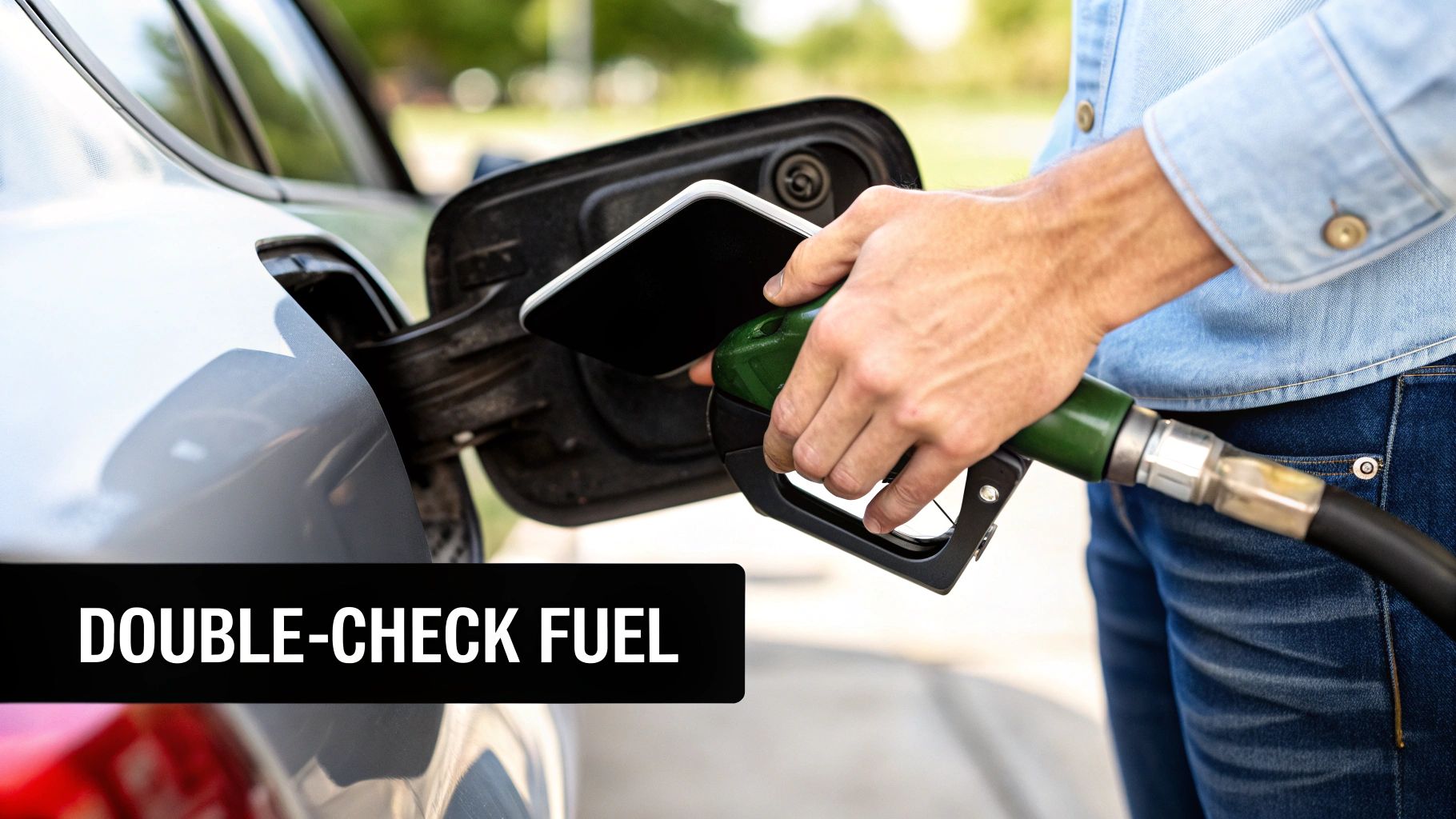
Pause and Check: Before you grab the pump, just stop. Take a breath. Read the label on the pump itself and the trigger, then double-check it against the label inside your car's fuel flap.
Know Your Nozzles: In the UK, diesel pumps are typically black and petrol pumps are green. Crucially, the diesel nozzle is wider and won't physically fit into a modern petrol car. The smaller petrol nozzle, however, slips easily into a diesel car's filler neck—which is exactly why that's the most frequent mistake.
Ditch the Distractions: A phone call or a quick text is one of the biggest culprits. Make it a hard rule: phone stays in your pocket or the car until the cap is back on.
A Simple Reminder: A lot of drivers swear by this trick. Get a small, brightly coloured sticker that says "DIESEL ONLY" or "PETROL ONLY" and stick it right inside the fuel flap. It's a final, unmissable reminder just as you're about to grab the pump.
Strategies for Fleet Managers
If you're managing a fleet of vehicles, a single misfuelling incident is more than just an inconvenience; it's a direct hit to your operations and budget. Prevention isn't just a good idea—it's essential.
Putting a few robust strategies in place can practically wipe out this problem across your entire fleet. A great starting point is to install misfuelling prevention devices that replace the standard filler cap. These are clever bits of kit that physically block the wrong-sized nozzle from ever being inserted.
Another powerful tactic is to use vehicle-specific fuel cards, which can be programmed to only authorise payment for the correct fuel type. Combine that technology with regular driver training—especially for new starters or when a new vehicle model joins the fleet—and you've built a solid defence. You'll protect your assets and keep your business on the road, free from these completely avoidable disruptions.
Answering Your Wrong Fuel Questions
Standing on a cold, windy forecourt after realising you’ve made a mistake, your mind starts racing. It’s a horrible feeling, and the last thing you need is confusing information. We get it. Here are the straight answers to the questions our technicians hear every single day from drivers just like you.
Will My Car Insurance Cover This?
This is usually the first question that pops into people’s heads, and unfortunately, the answer is almost always no. Standard comprehensive insurance policies generally don't cover misfuelling. They see it as self-inflicted damage or driver error, which means the bill lands squarely with you.
Some policies might offer misfuelling cover as a paid add-on, so it’s worth digging out your documents to double-check. But even if you are covered, calling a mobile service like ours is often far cheaper and quicker. Going through your insurer usually means waiting for a tow truck, then getting taken to their approved garage, leading to more downtime and higher labour costs.
What if I've Already Started the Engine?
This is the big one, the scenario every driver dreads. If you've started the car and driven off, even for a few yards, the absolute priority is to pull over safely and turn the engine off. Whatever you do, don't try to restart it. Each time you turn that key, you're just pulling more of the wrong fuel into the delicate parts of your engine.
Key takeaway: Starting the engine is not a death sentence for your car. A skilled technician can still sort it out. The fix is just a bit more involved. It means we’ll need to perform a complete system flush – clearing out the fuel lines, filter, and injectors – to make sure every last drop of contaminated fuel is gone.
How Long Will I Be Stuck Here?
Here's some good news. A professional mobile fuel drain is a surprisingly quick and efficient job. We know you’ve got places to be, and our entire service is built around getting you moving again with minimal fuss.
Once our van arrives, you can expect the whole process to take between 60 and 90 minutes. This isn't just a quick drain; it's a comprehensive service that includes:
Making the area around your vehicle safe.
Draining the entire fuel tank.
Flushing the fuel lines and system to remove contaminants.
Putting in some fresh, correct fuel to get you going.
Starting the car and running diagnostics to ensure it's running smoothly.
Our goal is to resolve the problem right there on the spot, whether you’re stranded on the A14 or stuck at the local Tesco petrol station.
Don't let a simple mistake derail your entire day. If you need immediate, expert help, the team at Misfuelled Car Fixer is ready to get you back on the road. Call us now for a fast, affordable, and professional fuel drain service. https://www.misfuelledcarfixer-suffolk.co.uk
Comments