
.jpg)


wrong fuel in car near me - fast, expert fuel drain 24/7
That moment of realisation hits you like a tonne of bricks. You've grabbed the wrong nozzle at the pump, and now your car has a tank full of the wrong fuel. It’s a gut-wrenching feeling, but what you do in the next few minutes is absolutely critical.
The single most important rule? Do not start the engine. Don't even put the key in the ignition and turn it to the 'on' position. Keeping the car completely off is your best defence against the contaminated fuel circulating and causing potentially thousands of pounds worth of damage.
Your Immediate Action Plan After Misfuelling
It's a horribly stressful situation, but staying calm and taking the right steps can be the difference between a simple, quick fix and a repair bill that ruins your month. The second you realise your mistake, your priority has to switch from getting on your way to damage control. Trust me, you're not the first person this has happened to, and you won't be the last.
It’s an astonishingly common slip-up. In the UK, this happens between 130,000 and 150,000 times every single year. It's a mistake that costs British motorists a collective fortune, underlining just how easy—and costly—it can be.
Securing Your Vehicle Safely
First things first, make sure you and your vehicle are safe. If you're still at the petrol station pump, the best thing to do is leave the car exactly where it is. Let the staff inside know what’s happened; they’ve seen it all before and can help by coning off the pump to keep other drivers away.
If you absolutely have to move the car, don't even think about starting it. Pop it in neutral and ask someone for a hand to push it to a safe parking bay. Turning the key, even without actually starting the engine, can be enough to prime the fuel pump. That's the first step in sending the wrong fuel into the delicate parts of your engine.
Key Takeaway: The difference between a £200 fuel drain and a £5,000+ engine rebuild often comes down to this one simple decision: leaving the keys out of the ignition. Petrol acts like a solvent in a diesel engine, stripping away the essential lubrication and causing devastating friction damage to the high-pressure fuel pump and injectors.
To make it crystal clear, we've put together a simple table outlining the immediate dos and don'ts.
Immediate Do's and Don'ts After Misfuelling
Action | Why It's Critical |
|---|---|
DON'T Start the Engine | This is the golden rule. Starting the car circulates the wrong fuel, causing major damage. |
DO Stay Calm | Panicking won't help. A clear head leads to better decisions. |
DON'T Put the Keys in the Ignition | Even turning to the 'accessory' position can prime the fuel pump. |
DO Tell Petrol Station Staff | They can secure the area and may have a procedure for this common issue. |
DO Push the Car to a Safe Spot | If you must move, get help to push it. Never drive it. |
DO Call a Professional Fuel Drain Service | This is a job for experts. Don't attempt a DIY drain. |
Following these steps will contain the problem and make the solution much more straightforward.
This decision flowchart breaks down the critical choice you face after a misfuel.
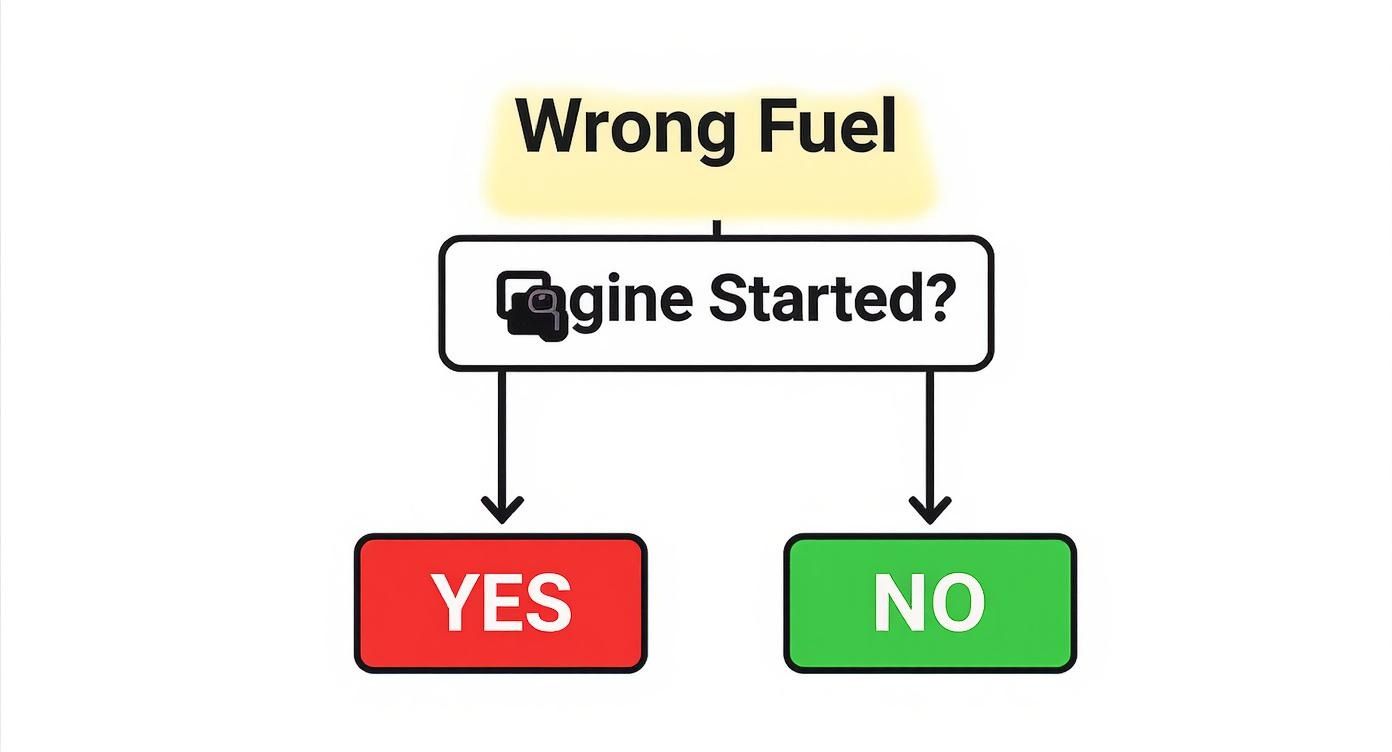
As you can see, keeping that engine off is by far the safest path. It prevents immediate mechanical harm and lines you up for a simple, on-the-spot fuel drain.
Preparing for a Mobile Fuel Drain
Once your car is secure, your next step is to call for a mobile fuel drain service. When you search for "wrong fuel in car near me," you need a team that can get to you quickly. To help them help you, it’s a good idea to gather a few key details:
Your Precise Location: Drop a pin on your phone's map app or use a service like what3words to give an exact location.
Vehicle Details: Have your car's make, model, and registration number handy.
The Fuel Mix-Up: Be ready to tell the technician what fuel you put in and, if you know, roughly how much.
Having this information ready makes the whole rescue process faster and smoother. For a more detailed look at what to expect, you can read our in-depth guide on what to do after putting the wrong fuel in your car. A little preparation ensures that when our mobile unit arrives, we can get straight to work and have you back on your journey with minimal fuss.
Recognising the Symptoms of Wrong Fuel
Sometimes the penny doesn't drop right there at the pump. You might have driven a few hundred yards or even a couple of miles before the car starts to complain. The signs of misfuelling can pop up alarmingly fast, and knowing what you're looking for is absolutely vital for your safety and for limiting expensive engine damage.
The specific symptoms your car shows will depend entirely on which fuel mix-up has happened. Putting petrol into a diesel engine is by far the most common mistake we see, and unfortunately, it's also the most damaging.
Telltale Signs of Petrol in a Diesel Engine
Picture this: you've just left a petrol station near Ipswich and pulled out onto the A14. Suddenly, your normally smooth-running diesel engine starts making a jarring, metallic rattling noise. This is often the very first red flag.
The problem is that petrol has none of the lubricating qualities of diesel. It acts more like a solvent, stripping away the oily film that protects the high-precision parts in your fuel pump and injectors. This causes metal to grind on metal, creating that unmistakable knocking or ‘pinking’ sound.
Soon after the noise begins, you'll probably notice a cascade of other dramatic symptoms:
Excessive Exhaust Smoke: A cloud of whitish or greyish smoke will start billowing from your exhaust. This is the engine struggling to burn the wrong fuel mix.
Sudden Loss of Power: The accelerator will feel spongy and unresponsive. You'll find the car struggling to maintain speed, particularly on an incline.
Engine Warning Lights: Your dashboard will light up like a Christmas tree as the car's sensors detect a serious problem.
Complete Engine Cut-Out: Eventually, the engine will likely cough, splutter, and stall completely. At this point, it almost certainly won't restart.
If you get this combination of symptoms, it’s a clear sign of petrol contamination. Your immediate priority is to find a safe place to pull over, switch on your hazard lights, and search for a "wrong fuel in car near me" specialist.
Expert Insight: The second you hear that first unusual engine knock after filling up, treat it as an emergency. Pushing on, even for another minute, massively increases the risk of destroying your fuel pump and injectors. It’s the difference between a recoverable mistake and a potentially catastrophic repair bill.
What Happens with Diesel in a Petrol Engine?
Putting diesel in a petrol car is much less common. This is mainly because the wider diesel pump nozzle simply won't fit into the filler neck on most modern petrol cars. It can still happen, though, especially with older vehicles or if someone uses a fuel can.
The symptoms here are quite different. Diesel is much thicker and oilier than petrol, so it won’t ignite properly. Instead, it will clog up the spark plugs and the fuel system.
You’ll typically notice:
Engine Misfiring and Juddering: The car will run very erratically, lurching and juddering as the spark plugs become coated in oily diesel and fail to ignite the fuel.
Thick, Black Smoke: If you do manage to get the engine running, it will probably produce a lot of thick, black smoke from the exhaust.
Failure to Start: More often than not, a petrol car with a tank full of diesel just won't start at all after you've switched it off.
While this isn't as immediately destructive as petrol-in-diesel, it still demands a professional fuel drain to prevent lasting damage to your fuel system and catalytic converter. In either case, recognising the signs early and stopping the car is the single best thing you can do.
What Actually Happens During a Mobile Fuel Drain?
So, your hazard lights are on, you’ve made that sinking call for help, and now you’re waiting. What can you expect when a fuel drain technician actually arrives? It’s a highly specialised process, far more than just a bit of siphoning at the roadside. It’s all about safety, precision, and getting you back on your way without causing any damage to your car.
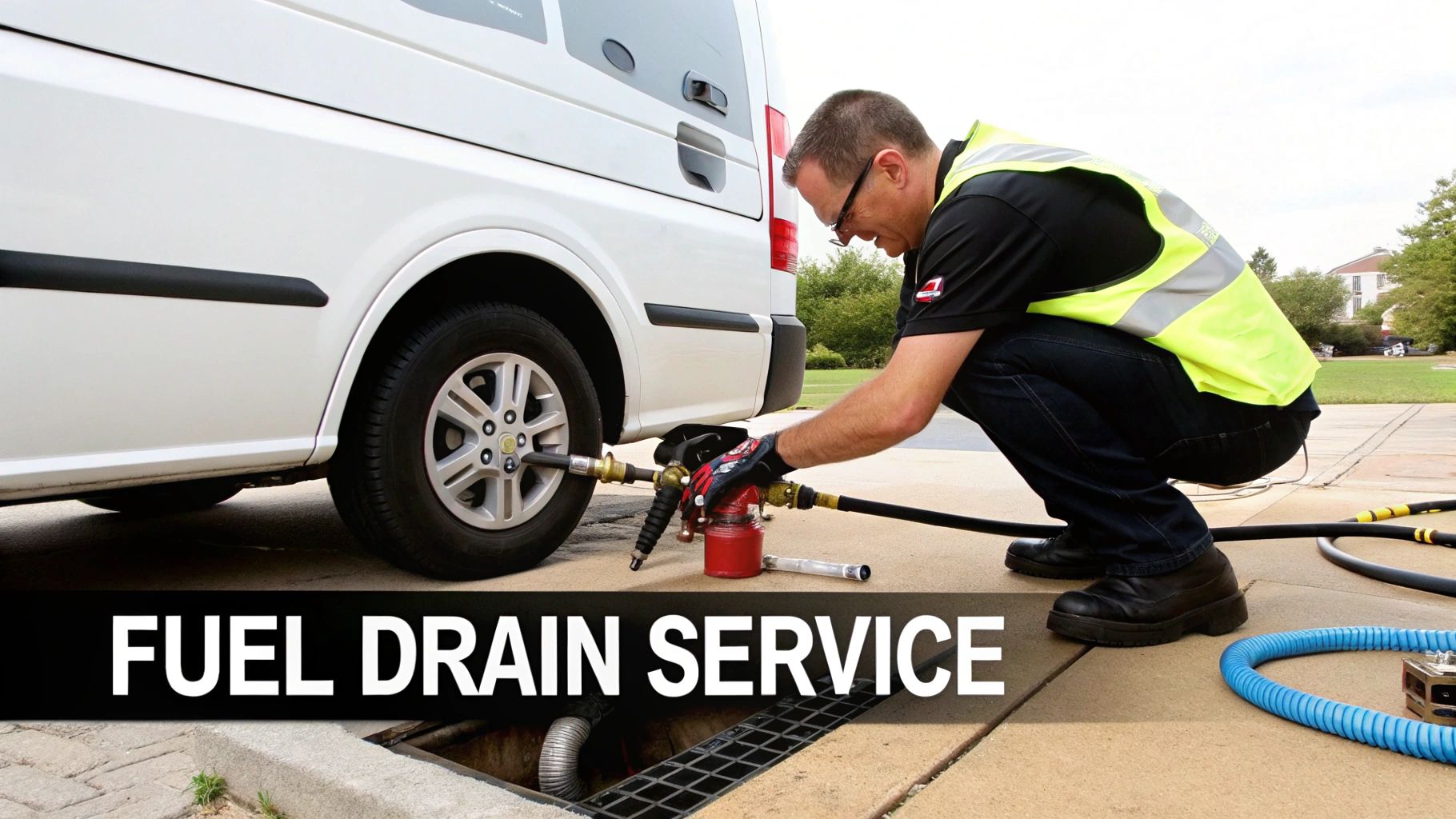
Forget any old-school ideas about a simple hose and a Jerry can. Our technicians turn up in a purpose-built van kitted out with some serious equipment. Everything we use is ATEX-approved, which is the official certification for gear used in potentially explosive environments. When you're dealing with petrol fumes and diesel, this isn't just a nice-to-have; it's absolutely critical for everyone's safety.
Getting the Wrong Fuel Out, The Right Way
First things first, we need to get into your fuel tank. We use a specialised pump and suction line that goes directly into the tank to start drawing out every last drop of the contaminated fuel. This isn't about just removing a few litres to dilute the problem – 100% of the wrong fuel mix has to come out. Anything less and you're just leaving contamination behind to poison your engine.
All that wrong fuel is safely pumped into a secure, double-skinned (or 'bunded') tank inside our van. This design makes spills impossible, protecting the environment and complying with the strict laws around handling hazardous waste. Rest assured, it’s not just dumped; it’s taken to a licensed facility for responsible disposal.
While the main tank is emptying, we’re also busy clearing out the rest of the system. We drain the fuel lines and the fuel filter housing, as these are common places where the wrong fuel gets trapped. It's this thorough approach that ensures a complete fix. For a deeper dive into the roadside process, our complete roadside fuel drain emergency guide breaks it down even further.
The System Flush: Why This Step is So Important
Once the system is empty, we're only halfway there. Now comes the most crucial part of the entire job: flushing the system. We introduce a small amount of clean, correct fuel and circulate it through the tank, lines, and filter.
Think of it as a rinse cycle. This clean fuel picks up any stray droplets and residue of the contaminant that could cause mischief later. We then drain this flushing fuel out and add it to our waste tank.
Why a Flush is Non-Negotiable: Some people might wonder if a flush is really necessary. Trust me, it is. Even a tiny amount of petrol left in a diesel engine can strip the lubricating qualities from the fresh diesel, leading to expensive wear and tear on your high-pressure fuel pump down the line. A proper flush gives your engine a completely fresh start.
With the system now spotlessly clean, the final step is to put a bit of the correct fuel back in. We’ll usually add 5-10 litres, which is plenty to get you to the nearest petrol station for a proper fill-up. Before we send you on your way, we'll start the car, listen to the engine to make sure it's running smoothly, and double-check for any dashboard warning lights. Only when we're completely happy will we give you the all-clear.
What's This Going to Cost? A Look at Prices and Insurance
Once the initial panic fades, the first thing on everyone's mind is the cost. It’s a fair question, and one we believe in answering upfront. A professional mobile fuel drain isn't a fixed-price service, as a few things can influence the final bill.
What I can tell you from years of experience is that a roadside fuel drain is always miles cheaper than the bill you'd get from a main dealer for the same problem. You're comparing a fast, on-the-spot fix with towing charges, dealership labour rates, and potentially losing your car for several days.
That's why calling a mobile specialist is the smartest move you can make in this situation.
What Goes Into the Price?
So, what factors actually affect the quote we give you? Understanding this helps you know exactly what you're paying for, with no nasty surprises when we arrive.
A few key things come into play:
Your Car's Make and Model: Some vehicles are just trickier than others. Newer cars, for instance, might have complex fuel tanks or anti-siphon measures that need a bit more finesse and time to work around.
Your Location: Where you are is a big factor. A call-out to a quiet lane deep in the Suffolk countryside will naturally be different from a job at a petrol station in the middle of Ipswich, mainly due to the time and fuel it takes for us to get to you.
Time of Day: Like any emergency service, an urgent job in the middle of the night or on a bank holiday will have a different rate than a standard weekday call-out.
Even considering these points, calling us out is still your most budget-friendly and efficient way out of this mess. For a deeper dive, check out our complete UK guide to wrong fuel in car costs.
The Hard Truth About Insurance Cover
This is the question we get asked on almost every single call: "Is this covered by my insurance?" I wish I had better news, but for almost everyone, the answer is a firm no. Misfuelling is considered driver error by insurance companies, and that means it's almost never included in a standard comprehensive policy.
Don't just take my word for it. A pretty shocking report found that a massive 86% of UK car insurance policies don't cover misfuelling damage as part of their standard cover. You can read more about this common problem over on GoCompare's press page.
This is exactly why acting fast and not starting the engine is so important. A fuel drain is a straightforward, one-off payment. The alternative—a bill for a wrecked fuel pump, damaged injectors, and a clogged filter—can easily spiral into thousands of pounds, and your insurer won't be helping you pay it.
Let's break down the real-world difference between a mobile drain and leaving it to a main dealer.
Cost Comparison: Misfuelling Solutions
Service | Estimated Cost | Estimated Time | Potential for Further Damage |
|---|---|---|---|
Professional Mobile Fuel Drain | £180 - £250+ | 60-90 minutes (at your location) | Minimal (if engine not started) |
Main Dealership Repair | £500 - £5,000+ | 2-5+ days (includes towing & workshop time) | High (if driven, often requires part replacements) |
The numbers speak for themselves. Choosing a specialist mobile service like ours isn't just about convenience; it's the most financially sound decision you can make, protecting both your car and your wallet from far more serious costs.
Why Putting the Wrong Fuel in Your Car Is So Common in the UK
If you’ve just put the wrong fuel in your car, the first thing to know is you’re not alone. Far from it. This happens to someone in the UK every few minutes, and it’s not just down to bad luck. A few specific things about driving in Britain make this a surprisingly easy mistake to make.
One of the biggest factors is simply the number of diesel cars on our roads. We have a huge diesel fleet compared to many other countries, with nearly a third of all cars running on it. This is a world away from somewhere like the USA, where diesel cars are a rarity at just 1% of the market. More diesel cars on the road means more opportunities for a mix-up at the pump. You can read more about why the UK has such a high misfuelling rate on Fuel Fixer.
It All Comes Down to the Nozzle
A fundamental design flaw is at the heart of most misfuelling incidents. It’s a simple mismatch in size, and it creates the perfect trap for a driver who is even slightly distracted.
Diesel Nozzles Are Wide: A diesel pump nozzle is physically too big to fit into the filler neck of a modern petrol car. This acts as a brilliant, if accidental, failsafe.
Petrol Nozzles Are Narrow: Here's the problem. A petrol nozzle is slimmer and slides effortlessly into the wider neck of a diesel tank. There’s nothing to stop you from making the most common—and most damaging—type of fuel mistake.
This simple design oversight is the reason for the overwhelming majority of misfuelling call-outs. A brief moment of distraction can quickly become a serious and expensive engine problem.
The Human Element
Of course, the mechanics of the pump are only half the story. Real life always plays a part. We’ve all had those days—you’re stressed, running on fumes after a long shift, or just trying to get the kids home. Your mind is elsewhere, and your body goes into autopilot.
That’s when it happens. Think about these classic scenarios we see every day:
Driving a different car: You’ve hired a car for the weekend or borrowed your partner's. You’re used to filling up with petrol, but today you're driving their diesel. Muscle memory takes over, and you reach for the familiar green handle.
Distractions at the forecourt: Your phone rings, the kids are arguing in the back, or you’re just thinking about your to-do list. Before you know it, you’ve grabbed the wrong pump.
A recent change of vehicle: You’ve just bought a diesel car after years of driving petrol. It takes a while for that new routine to stick, and your old habits can easily resurface at the pump.
When you add these everyday human moments to the nozzle design issue, it's easy to see why misfuelling is such a frequent headache for UK drivers. It’s an understandable mistake, but one that needs sorting out quickly.
Where We Can Get to You – Fast
When you’re stuck on the side of the road and frantically searching for “wrong fuel in car near me,” you need someone local. You need help, and you need it now. Waiting hours for a recovery truck just isn’t an option. That’s why we have our mobile fuel drain units strategically placed to get to you as quickly as humanly possible.
Our home turf is Suffolk. So, if you've put the wrong fuel in your car in Ipswich, Bury St Edmunds, Felixstowe, or Newmarket, rest assured, we're just around the corner. We know these roads like the back of our hand, which means we can get to you without any fuss, whether you’re still on the petrol station forecourt or have made it as far as a supermarket car park.
Covering England’s Main Roads and Motorways
Of course, putting the wrong fuel in isn't something that only happens close to home. It can happen to anyone, anywhere, which is why we’ve made sure our service covers a huge part of England's busiest road networks.
We’re constantly helping drivers who have come to a stop on major routes, including:
The crucial A12 and A14 that run right through the heart of East Anglia.
Major motorways like the M1 and the notorious M25.
The bottom line is, even if you're miles from your destination, one of our technicians is never that far away. We aim to give you that reliable, local service feel, no matter which main road you find yourself stuck on. You get a proper fix, without the agonising wait.
We Answer Your Misfuelling Questions

When you're stuck on the side of the road after typing "wrong fuel in car near me" into your phone, your mind is probably racing. It's a horrible feeling, but we’re here to clear things up. We've compiled the questions our technicians get asked every single day to give you some peace of mind while you wait for us to arrive.
The first question is always the same: "How long is this going to take?" You’ll be surprised. For most cars, the whole process is done and dusted in about 60 to 90 minutes. That includes us getting to you, draining the contaminated fuel, flushing the entire system, and getting some fresh, correct fuel back in the tank so you can be on your way.
Is One Mistake Worse Than Another?
People often worry they've made the "worst" possible mistake. And honestly, one is definitely worse than the other. Putting petrol in a diesel engine is by far the more common and damaging error. Why? Because petrol acts like a solvent, stripping away the lubrication that diesel fuel provides. Without that oily film, critical parts like the high-pressure fuel pump and injectors can be destroyed in no time.
Putting diesel in a petrol car is much harder to do, thanks to the wider diesel nozzle not fitting in most modern petrol fillers. If it does happen, it's less catastrophic but still a major problem. It will clog up the fuel system and foul your spark plugs, and your car simply won't run properly. Either way, it needs professional attention, fast.
A Word of Warning From The Experts: Whatever you do, do not fall for the myth that you can just top up the tank with the right fuel to "dilute" the mistake. This is the worst thing you could do and can lead to thousands of pounds in repairs. Even a tiny amount of petrol in a modern diesel system can cause complete lubrication failure. The only safe and correct solution is a full, professional fuel drain and system flush. This gets every last drop of the wrong stuff out and gives your engine a clean slate.
Made a mistake at the pump? Don't panic. Misfuelled Car Fixer offers a rapid 24/7 mobile fuel drain service right across Suffolk and on major UK roads. For immediate, expert help, visit us at https://www.misfuelledcarfixer-suffolk.co.uk.


