



Wrong Fuel in Your Suffolk Car? Your Immediate Action Plan
- Misfuelled Car Fixer

- Dec 27, 2025
- 13 min read
Putting the wrong fuel in your car is a surprisingly easy mistake to make, but what you do in the next few moments can make all the difference. The single most important rule is simple: DO NOT start the engine or even turn the key in the ignition. This one decision stops the contaminated fuel from circulating and can save you from a repair bill that could run into thousands of pounds.
Your First 60 Seconds After Misfuelling
That sinking feeling at a petrol station in Ipswich or Bury St Edmunds is unmistakable. You've just realised you’ve put petrol in your diesel car, or vice versa. It’s easy to panic, but staying calm and following a few critical steps will protect your vehicle from serious, expensive harm. Keeping that engine off is absolutely non-negotiable.

What To Do Immediately
Once you’re certain the keys are out of the ignition, your next priority is safety. It's best to leave your car right where it is at the pump; even pushing it can cause fuel to slosh into the lines.
Here’s your immediate action plan:
Tell the Petrol Station Staff: Let an attendant know what’s happened. They’re trained for this and can cone off the pump to keep other drivers away, helping you manage the situation safely.
Find a Safe Spot: Move yourself away from the forecourt to a secure place, like inside the station's shop. This gives you a quiet, safe space to make a call without any distractions.
Call a Specialist: Your very next call should be to a mobile fuel drain service. Getting an expert to come to you is almost always faster and more affordable than calling a recovery truck to tow you to a garage. If you're stuck, you can explore options to find a fuel drain near you fast and get professional help right where you are.
By far the most common mistake is putting petrol into a diesel engine. It's an easy error to make because the narrower unleaded nozzle fits perfectly into the wider diesel filler neck—a simple design flaw that catches out thousands of UK motorists every single year.
Petrol in Diesel vs Diesel in Petrol
It's helpful to understand the two scenarios, as one is far more destructive than the other.
Putting petrol in a diesel car is the most serious misfuelling mistake. This is because diesel fuel also acts as a lubricant for high-pressure components like the fuel pump and injectors. Petrol, on the other hand, is a solvent and strips this essential lubrication away instantly.
If the engine is started, it causes intense metal-on-metal friction, creating tiny metal filings that can destroy the entire fuel system.
Putting diesel in a petrol car is less common and, thankfully, less damaging. The thicker diesel oil will clog the spark plugs and fuel system, which will make the engine misfire, smoke heavily, and eventually stall. It's a problem, for sure, but it rarely leads to the same kind of catastrophic, wallet-emptying failure.
Spotting the Signs You've Used the Wrong Fuel
So, you’ve driven away from the forecourt and something just feels… wrong. That sinking feeling is often the first clue, but your car will give you much clearer signals, usually within minutes. For motorists across Suffolk, whether you're navigating the A14 during rush hour or on a quiet country lane, knowing what to look for is your first line of defence against serious engine damage.
What happens next really depends on the type of mix-up. By far the most common, and unfortunately the most damaging, is putting petrol into a modern diesel engine. Petrol is a solvent, meaning it strips away the lubricating qualities of diesel fuel. This causes immediate friction and can wreck sensitive components like fuel pumps and injectors in a very short space of time.
Petrol in a Diesel Car
If you've put petrol in your diesel and started driving, the signs are usually dramatic and hard to miss. Your engine is being starved of vital lubrication while trying to burn a fuel it simply can't handle properly.
Keep an ear and eye out for these classic warnings:
A Loud Knocking Noise: This is a horrible, metallic clattering sound. It's the sound of engine parts grinding together without the lubrication they desperately need.
A Serious Lack of Power: The car will feel incredibly sluggish, almost like it's fighting you. Acceleration will be jerky and unresponsive.
Lots of Smoke: You’ll likely see clouds of white or grey smoke billowing from the exhaust. This is the unburnt fuel making its way out.
Dashboard Warning Lights: Expect your engine management light to flash up almost immediately. It’s your car’s cry for help.
The Engine Will Cut Out: After coughing and spluttering, the engine will eventually stall and will almost certainly refuse to start again.
Diesel in a Petrol Car
This is a less frequent mistake, mainly because the wider diesel nozzle physically won't fit into most modern petrol filler necks. But it does still catch people out. While generally not as destructive as the other way around, it will stop you in your tracks.
Diesel is a thick oil that needs high compression to ignite, whereas petrol relies on a spark. It will quickly clog up your spark plugs and the entire fuel system. The car might misfire, produce some thick, black smoke, and then cut out. Often, it won’t even start at all if you've put a significant amount in.
Wrong Fuel Symptom Checker: Petrol vs. Diesel
Here’s a quick-glance table to help you identify the problem based on what you’re experiencing.
Symptom | Petrol in a Diesel Car (Most Common & Severe) | Diesel in a Petrol Car (Less Common & Damaging) |
|---|---|---|
Engine Noise | Loud, metallic knocking or clattering | Misfiring, rough or uneven running |
Power & Performance | Severe and immediate power loss, jerky acceleration | Sluggish, struggling to gain revs |
Exhaust Smoke | Plumes of white or grey smoke | Puffs of black, sooty smoke |
Starting the Car | May start initially, but will stall and not restart | Often won't start at all, or will stall quickly |
Engine Lights | Engine management light will illuminate | Engine management light likely to come on |
Remember, these symptoms are your car’s final warning before major damage occurs.
This isn't just a problem for individual drivers; fleet managers need to be especially aware. In the UK, around 133,000 misfuelling incidents happen every year, and it’s often business drivers behind the wheel. If you manage a fleet, it's worth reading up on the impact of misfuelling on business fleets to understand the risks and costs involved.
The Golden Rule: The very second you suspect a problem—be it a strange noise, smoke, or a warning light—pull over as soon as it's safe. Switch off the engine, put your hazard lights on, and don't even think about restarting it. Every second the engine runs increases the risk of a four-figure repair bill.
For a more detailed breakdown of these warning signs, our guide on the common wrong fuel in car symptoms offers even more useful information.
What Happens When a Fuel Drain Technician Arrives?
So, you’ve made the call. You’re sitting at a petrol station in Ipswich, or maybe you've managed to pull over safely on the A14 near Bury St Edmunds, and you're wondering what the fix actually involves. It’s a bit of a mystery to most people, but a mobile fuel drain is a precise, roadside operation designed to get you back on your way without needing a tow.
The first thing our technician will do when they arrive is make the scene safe. That means setting up cones and using hazard lights to create a secure bubble around your vehicle. It’s a simple step, but absolutely vital, especially if you’re on the hard shoulder of a busy road. They'll have a quick chat with you to confirm exactly what’s happened before touching your car.
This diagram breaks down the critical moments, from realising the mistake to the engine telling you something's wrong, and finally, getting pulled over safely.
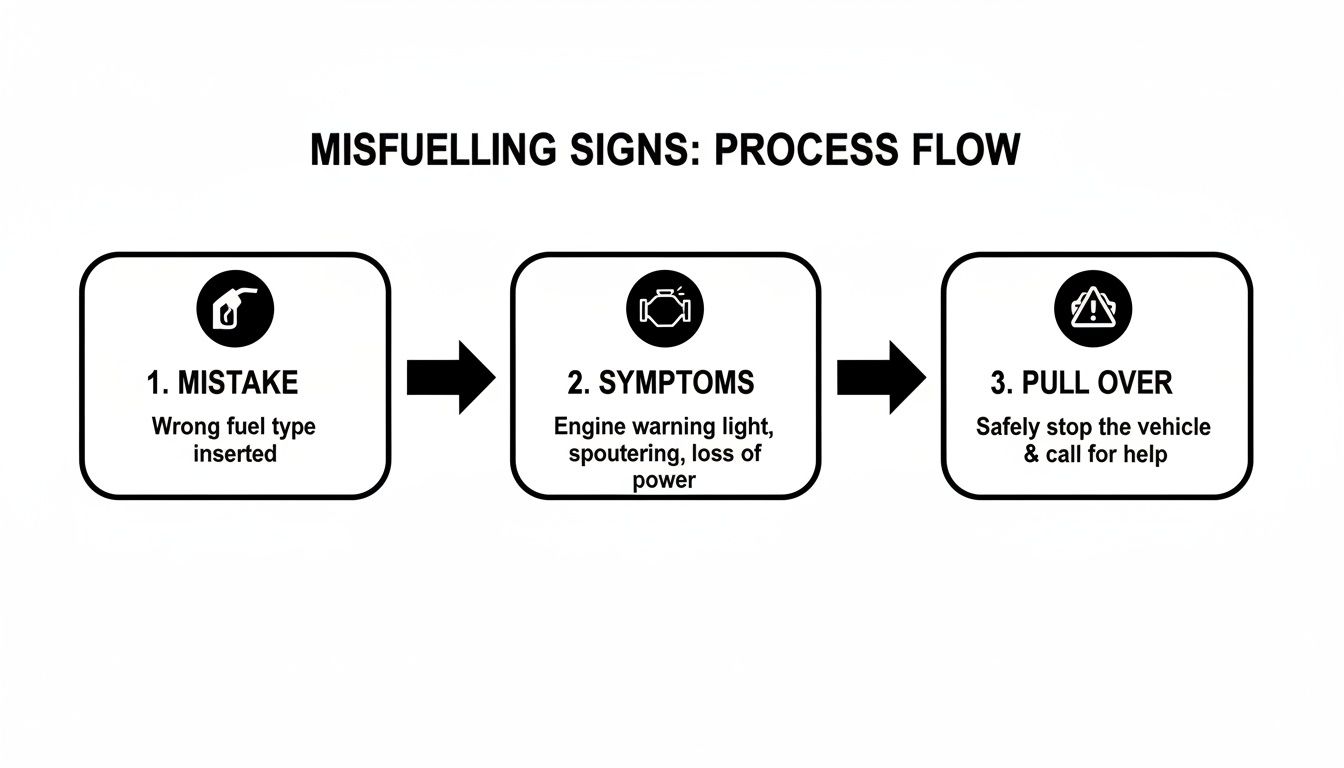
Catching those engine symptoms early and stopping the car is the best possible outcome if you’ve already driven off the forecourt.
Getting the Wrong Fuel Out: The Drain and Flush
The main event, of course, is draining the tank. Our technicians use specialist ATEX-certified pumps—equipment specifically built to handle flammable fuels without creating a single spark. They'll hook this up and carefully empty the entire contaminated mix from your tank into a secure container inside their van.
But just draining the tank is only half the job. Traces of the wrong fuel can get stuck in the fuel lines, filter, and even the injectors. To get rid of this residue, they perform a full system flush. By pumping a small amount of clean, correct fuel through the system, they can wash out every last drop of the bad stuff. This crucial step prevents any lingering contamination from causing damage down the line.
"A professional fuel drain is so much more than just sucking the fuel out. It’s about methodically cleaning the entire fuel delivery system to stop secondary damage from happening later. That flush is what makes it a proper, lasting fix."
Fresh Fuel and Responsible Disposal
Once the system is spotless, the final steps are pretty simple. The technician will put around 5-10 litres of the correct fuel back into your tank. It's not a full top-up, but it's more than enough to get you to the nearest petrol station to fill the tank properly.
They won't just wave you off, though. They’ll start the engine and let it run for a few minutes, making sure everything is circulating as it should and the engine sounds happy.
Finally, there’s the matter of the contaminated fuel. That mix of petrol and diesel is classified as hazardous waste, and you can’t just dump it. We handle all of that for you. It’s transported securely and disposed of at a licensed facility, following strict environmental rules. It means the entire job is done safely, not just for your car, but for the local Suffolk environment too.
Counting the Cost: Why Every Second Counts
The moment you realise you've put the wrong fuel in, that sinking feeling is quickly followed by one question: "How much is this going to set me back?" Honestly, the answer comes down to what you do in the next few minutes. The line between a simple, albeit frustrating, mistake and a catastrophic repair bill is incredibly thin.
Calling a mobile fuel drain service is your best first move. It’s designed to be a quick, affordable fix right there on the forecourt. While the exact price can shift depending on where you are in Suffolk and what you're driving, you're generally looking at a few hundred pounds. It sounds like a lot for a moment's lapse in concentration, but believe me, it’s a bargain compared to the alternative.
The Real Price of Turning the Key
This is where things get serious. Turning that ignition, even for a second, is the most expensive mistake you can make. And it’s a surprisingly common one – around 150,000 of us do it every single year in the UK.
Driving the car, even just moving it to another parking bay, can cause damage that skyrockets from £1,000 to over £5,000. The classic mix-up, petrol in a diesel engine, is especially brutal. Petrol acts like a solvent, stripping away the lubrication diesel provides and wrecking high-pressure fuel pumps and injectors. Just the parts to fix that kind of damage can easily hit £3,000. If you want to see just how widespread this issue is, you can find more information on the annual costs of misfuelling.
This is precisely why getting a specialist out isn’t just paying for a service; it's an investment in stopping a much bigger problem in its tracks.
The cost of a professional fuel drain is a fraction of the price of replacing a single major component like a fuel pump or injector. It’s the difference between a roadside fix and a week-long workshop repair.
Why a Speedy Response is Everything
We all know time is money, but if you run a business in Suffolk, that saying takes on a whole new meaning. A delivery van stranded at a petrol station in Felixstowe or a taxi that can't move in Stowmarket isn't just an annoyance—it's income draining away and a reputation on the line.
A dedicated 24/7 mobile service is a game-changer here. A good local team can get to you anywhere in Suffolk, often within the hour. That kind of rapid response keeps the disruption to an absolute minimum and gets your vehicle, and your business, moving again.
Less Hassle: A proper fuel drain at the roadside usually takes about 60-90 minutes. That’s far quicker and less stressful than waiting for a recovery truck to haul you to a garage.
Slashed Downtime: For any commercial fleet, every hour a vehicle is off the road costs money. An on-the-spot solution is vital to keep things running smoothly.
Damage Limitation: Even with the engine off, the wrong fuel can slowly work its way into sensitive parts of the system. The faster it’s out, the better.
What About Special Cases? AdBlue Mishaps and Fleet Vehicles
Misfuelling isn't always a simple case of putting petrol in a diesel car. With modern vehicles, especially the commercial fleets that are the lifeblood of Suffolk’s economy, there's another common trap: AdBlue. It’s a crucial additive for cutting emissions, but it can wreak havoc if it goes into the wrong tank.
Pouring AdBlue into your diesel tank is a serious mistake. Unlike petrol, which acts as a solvent, AdBlue is water-based and highly corrosive to your fuel system's components. Once it mixes with diesel, it can crystallise, completely blocking up everything from the fuel pump and injectors to the very expensive Selective Catalytic Reduction (SCR) system it was designed to protect.
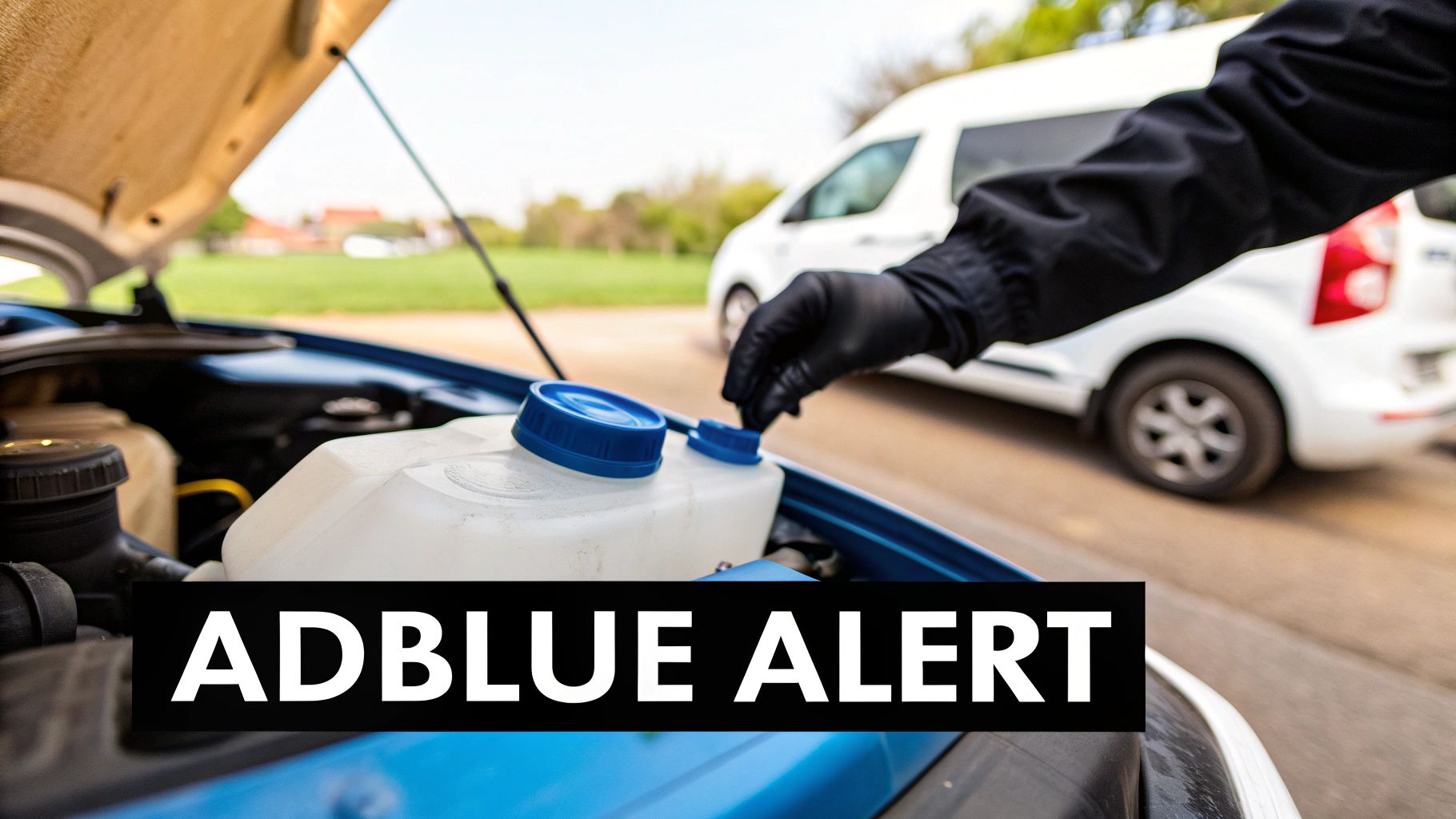
If you turn the key, you’re almost certainly looking at a repair bill that stretches into thousands of pounds. To get a real sense of the damage, you can read our detailed guide on what happens if you put AdBlue in your diesel tank.
The Unique Headaches for Fleet Managers
For any business running a fleet in Suffolk, a vehicle off the road isn't just an inconvenience—it's a direct blow to the bottom line. It disrupts delivery schedules, cancels client meetings, and chips away at your company's reliability. Unfortunately, business drivers are often the most common culprits when it comes to misfuelling.
This problem is particularly critical for our emergency services. A recent investigation found an astonishing number of misfuelling incidents within UK ambulance services—at least 769 since 2012. Each simple mistake took a vital emergency vehicle out of service for up to 48 hours while it waited for a fuel drain. It's a stark reminder of just how important a rapid, expert response is. You can read the full investigation into ambulances being taken off the road by misfuelling.
A vehicle sidelined by the wrong fuel isn't just a mechanical problem; for a business, it's a broken link in the operational chain. Preventing these errors and having a fast-response partner is essential for maintaining business continuity.
Keeping Your Fleet on the Road: Prevention and Recovery
For any business that depends on its vehicles, the risk of misfuelling is a case of 'when,' not 'if'. A solid plan is your best defence.
Here are a few practical steps fleet managers can take to minimise the disruption:
Driver Briefings: Regular reminders during team meetings can work wonders, especially for staff who hop between different vehicles.
Clear Labelling: Make sure every vehicle has bold, obvious labels on the fuel filler cap and, if it has one, the AdBlue port.
Prevention Devices: You can fit special caps that physically stop the wrong-sized fuel nozzle from being inserted.
A Clear Protocol: Have one trusted 24/7 mobile fuel drain service saved in every driver's phone. Make it company policy to call them immediately and never, ever start the engine.
Taking these proactive steps means that when a mistake does happen, the damage—both financial and operational—is kept to a minimum. A fast, professional fuel drain on-site can turn a potential two-day disaster into a one-hour hiccup, keeping your Suffolk fleet moving.
Your Wrong Fuel Questions Answered
Once the initial panic of putting the wrong fuel in your car subsides, the questions start flooding in. It’s a horrible feeling, but getting straight answers can make a world of difference. We’ve pulled together the most common queries we hear from motorists across Suffolk to give you the information you need, right when you need it.
Will My Warranty or Insurance Cover This?
This is usually the first question on everyone's mind, and I'll be honest, the answer isn't what you want to hear. Standard car insurance policies almost never cover misfuelling. They generally class it as a self-inflicted mistake, so unless you have a premium comprehensive policy with a specific add-on, you're likely not covered.
It’s a similar story with your vehicle's warranty. Damage from using the wrong fuel won't be covered. The absolute best way to avoid a painful conversation with your insurer or dealer is to prevent the damage before it happens. Don't start the engine and call a professional—that's your strongest move.
I Only Put a Little Bit In. Can I Just Top It Up?
This is one of the most common—and dangerous—myths out there. Never try to fix the problem by topping up with the correct fuel. The thinking goes that you can dilute the mistake away, but modern engines just don't work like that.
Even a tiny amount of petrol in a diesel engine, as little as 5% of the tank’s capacity, is enough to strip the diesel of its lubricating properties. This can lead to catastrophic failure of the high-pressure fuel pump and injectors. The risk of a repair bill in the thousands simply isn't worth it. No matter how little you put in, the only safe solution is a full, professional drain and system flush.
The "just top it up" idea might seem logical, but it's like trying to dilute a poison with water—the poison is still there. For a modern engine, any amount of the wrong fuel is a toxin that has to be removed completely.
How Long Will a Mobile Fuel Drain Take?
The whole point of a mobile service is to get you out of a jam as quickly as possible. For a standard car, the entire on-site process—from our technician arriving at your location in Suffolk to you being ready to drive away—typically takes between 60 and 90 minutes.
This includes making the area safe, draining all the contaminated fuel, flushing the system, and putting in enough of the correct fuel to get you moving again. Of course, it can vary a little based on the car, but our aim is always to get you sorted with the minimum fuss and delay.
How Is This Different to What a Main Dealer Would Do?
The biggest differences really boil down to three things: speed, location, and cost. If you call your main dealer, the first step is always getting your car recovered and towed to their workshop. That alone adds a huge amount of time and expense to the ordeal. Once it’s there, you're in their queue, and it could be hours or even days before they get to it.
A mobile fuel drain service, on the other hand, comes directly to you. Whether you're stuck on the forecourt in Lowestoft, at home in Stowmarket, or on the side of the A12 near Felixstowe, we fix the problem right there and then. We're usually done in about an hour, and it often costs a fraction of what a main dealer would charge for the exact same job.
If you're stuck with the wrong fuel in your tank anywhere in Suffolk, take a deep breath, and whatever you do, don't turn the key. Call the experts at Misfuelled Car Fixer for immediate, 24/7 assistance. Find out more at https://www.misfuelledcarfixer-suffolk.co.uk.
Comments