



Petrol in a Diesel Car A Driver's Essential Guide
- Misfuelled Car Fixer

- Jan 1
- 13 min read
It's the golden rule, the one thing you absolutely must remember if you ever put petrol in your diesel car: do not start the engine.
Seriously. Don't even turn the key to listen to the radio. The moment you turn that ignition, the fuel pump whirs into life, sucking the contaminated petrol from the tank and sending it coursing through the lines. Keeping the engine off is the single biggest factor that turns a potential catastrophe into a simple, straightforward fix.
What to Do the Second You Realise You've Misfuelled
That sudden, sickening feeling at the pump is a truly awful one, but it's a mistake that happens more often than you'd think. It's easy to imagine – pulling into a bustling petrol station in Ipswich after a long day, mind elsewhere, and grabbing the wrong nozzle.
You're certainly not the first, and you won't be the last. In the UK, this exact scenario plays out for around 150,000 drivers every single year. Putting petrol into a diesel tank is by far the most common slip-up, and what you do in the next few moments can save you thousands of pounds in repairs.
Getting Your Car to a Safe Spot
Okay, deep breath. Your immediate priority is safety. Do not start the car for any reason. If you're blocking a pump and need to move the vehicle, here’s how to handle it without making things worse:
Tell the staff: First things first, let the petrol station attendant know what's happened. They've seen it all before and can help cone off the area or direct other drivers.
Pop it in neutral: Put the car's gearbox into neutral. This will allow it to roll freely.
Get a push: Ask the attendant or a willing bystander to help you push the car to a safe parking spot. If you have an electronic handbrake, try to avoid using it if possible, as activating the car's electronics can sometimes prime the fuel system.
This flowchart breaks down the three non-negotiable actions to take the moment you realise your mistake.
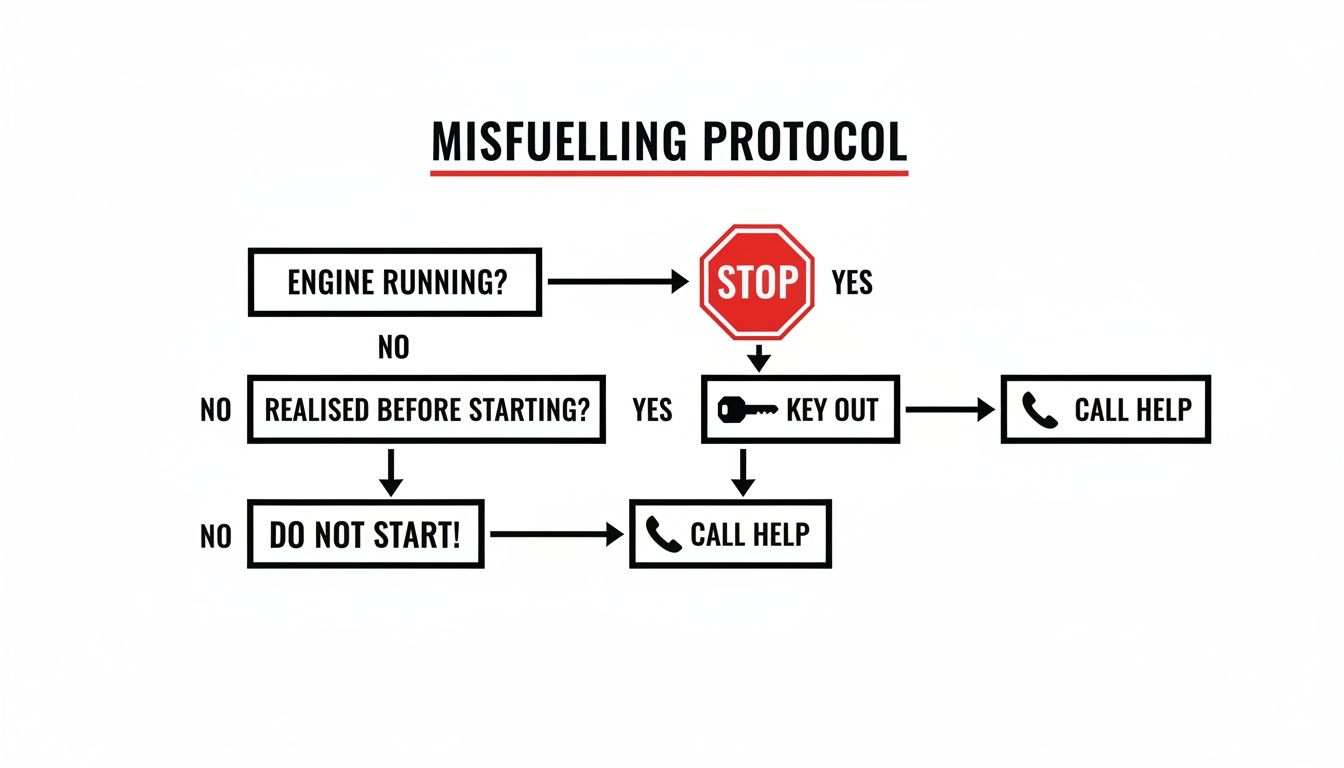
Ultimately, how you react at the pump directly dictates how severe—and expensive—the outcome will be.
Once the car is safely out of the way, your next move is to call for professional help. The quickest and most efficient solution by a long shot is a mobile fuel drain service.
When you're in a jam, it's easy to panic. This quick-glance table summarises the most important do's and don'ts.
Immediate Misfuelling Do's and Don'ts
Action | Do (To Minimize Damage) | Don't (To Avoid Costly Repairs) |
|---|---|---|
Ignition | Leave the keys out of the ignition. | DO NOT turn the key, start the engine, or even activate the electronics. |
Vehicle Movement | Put the car in neutral and ask for help to push it to a safe place. | DO NOT drive the car, even for a few feet to another parking bay. |
Communication | Inform the petrol station staff immediately. They can provide assistance and ensure safety. | DO NOT feel embarrassed or try to hide the mistake. It happens to thousands of people. |
Next Step | Call a specialist mobile fuel drain service right away. | DO NOT attempt to drain the fuel yourself or call a generic breakdown service first. |
Following these simple rules can make all the difference.
A mobile technician can come directly to you, whether you're stuck at a petrol station in Bury St Edmunds or sitting on your own driveway in Felixstowe, and sort the entire problem out on the spot. This saves you the hassle and extra cost of getting towed to a garage. For a more detailed guide on what to do, have a look at our immediate action plan for misfuelling in Suffolk.
What Happens if You've Already Driven Off?
It's a sinking feeling. You pull away from the petrol station, everything seems fine, and then... it isn't. For many drivers, the mistake only becomes apparent when the car starts to protest. If you've put petrol in a diesel car and driven away, your vehicle will send out some very clear distress signals.
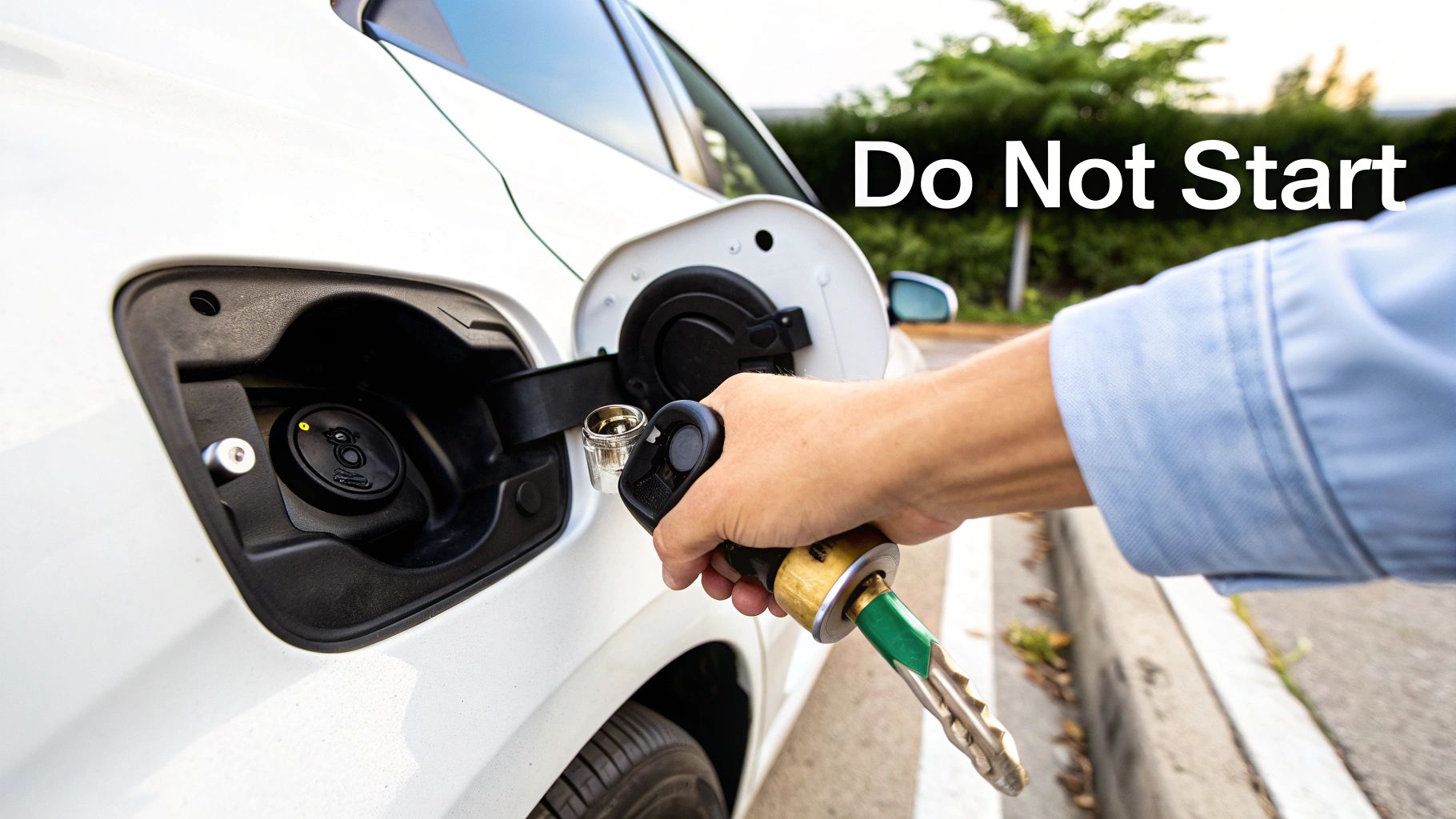
These symptoms can kick in within a few minutes or might take several miles to show up, depending on how much correct diesel was left in the tank to dilute the petrol. Spotting these signs quickly is crucial to avoiding catastrophic engine damage. The moment you notice anything odd, pull over as soon as it's safe to do so.
The Tell-Tale Signs of Misfuelling
Picture this: you're heading out of Ipswich on the A14, and your van suddenly starts juddering and losing all its pulling power. This sudden, unnerving loss of power is one of the first and most common signs. The engine feels sluggish, won't respond when you press the accelerator, and really struggles on even the slightest hill.
Keep an eye (and an ear) out for these other red flags:
A ‘Knocking’ Sound from the Engine: You may hear a metallic clattering or knocking noise. This is the sound of petrol igniting at the wrong time in the diesel engine’s combustion cycle, which can cause serious damage to pistons and cylinder heads.
Lots of Smoke from the Exhaust: A sudden cloud of white or grey smoke billowing from your exhaust is a dead giveaway. This is essentially unburnt fuel and oil being spat out by the struggling engine.
Stalling or Failing to Start: The car might cut out completely while you're driving, often at low speeds or when you stop at a set of traffic lights. If you've stopped, it will likely refuse to start up again.
Dashboard Warning Lights: Expect to see the engine management light (EML) or other warning icons light up your dashboard. The car's onboard computer knows something is seriously wrong with the fuel and combustion process.
Why does this happen? It comes down to lubrication. Diesel is an oily fuel that lubricates vital, high-pressure parts like your fuel pump and injectors. Petrol, however, is a solvent. It strips this protective film away, causing metal-on-metal friction that generates immense heat and leads to rapid, destructive wear.
What to Do the Moment You Notice a Problem
As soon as you experience any of these symptoms, your next actions are simple but absolutely critical. Find a safe place to pull over, switch off the engine, and take the keys out of the ignition.
Under no circumstances should you try to restart the car. Each time you turn that key, you're pumping more of that damaging petrol and diesel mixture through the delicate fuel system. This is how a fixable mistake turns into a bill for thousands of pounds for a new engine. Your very next move should be to call a professional mobile fuel drain service for help.
Why Petrol Is So Harmful to a Diesel Engine
To really get your head around why putting petrol in a diesel car is such a nightmare, you need to understand one basic difference between the two fuels. It’s not just about how they burn, but how they feel. Diesel is an oily, slick substance. Petrol, on the other hand, is a thin liquid that acts more like a solvent.
That one simple difference is the root of all the problems.

Your diesel engine's fuel system is a seriously high-pressure bit of kit. We're talking about components like the fuel pump and injectors, which are engineered to incredibly fine tolerances. Diesel fuel isn't just there to go 'bang'; its natural oiliness is crucial for lubricating all these delicate moving parts.
So what happens when petrol enters the scene? It behaves like a degreaser. It gets to work immediately, stripping away that essential oily film. Before you know it, you have sensitive metal components grinding directly against each other, creating massive amounts of friction and heat. That’s when the rapid, destructive wear begins.
The Chain Reaction of Destruction
That initial metal-on-metal grinding is just the start of a devastating chain reaction. As the parts start to wear down, they create tiny metal particles – what we in the trade call 'swarf'. These microscopic bits of metal are then carried by the contaminated fuel and pumped through the entire system.
It's a bit like pouring sand into your engine oil. The damage doesn't stay in one place; it spreads everywhere, taking out critical parts along the way:
The Fuel Pump: This is usually the first thing to go, and often the most expensive to replace. Without lubrication, it simply can't cope with the immense pressure it needs to create and will quickly fail.
Fuel Injectors: The swarf gets into the injectors, blocking and damaging their delicate nozzles. This messes up the fuel delivery completely.
Fuel Lines and Filters: These become contaminated with debris, meaning they either need a deep, professional flush or replacing entirely to get rid of every last particle.
This is exactly why just draining the tank often isn't enough if the engine has been started. The whole system has to be expertly flushed to make sure no metal fragments are left behind to cause more damage later on.
People often think a little bit of petrol won't do any harm. The truth is, even a 5% contamination is enough to drastically lower the lubricating quality of diesel and kickstart this whole destructive cycle. There is simply no "safe" amount of petrol to put in a diesel car.
Combustion Chaos and Engine Knocking
On top of the lubrication disaster, petrol and diesel burn in completely different ways. Diesel engines use extreme compression to ignite the fuel. Petrol engines, as you know, use a spark plug.
When you introduce petrol into a high-compression diesel engine, you throw that controlled process into chaos. Petrol can ignite way too early under that pressure, causing a violent, uncontrolled explosion. We call this engine knocking or pre-ignition.
This sharp shockwave puts enormous stress on the pistons, cylinder heads, and connecting rods, and can easily lead to a catastrophic mechanical failure. It’s this violent detonation that causes the awful clattering or knocking sound you might hear if you’ve tried to drive. Once you understand the mechanics of what's happening, it becomes obvious why calling in a professional right away isn't just a good idea—it's absolutely essential.
What to Expect From Our Professional Fuel Drain Service
So, you’ve made that all-important call for help. What happens now? It’s natural to feel a bit stressed, but the good news is that a mobile fuel drain is a slick, well-rehearsed operation. Our technicians don't just show up with a pump and a prayer; they arrive in a fully equipped, self-contained service vehicle designed to handle the entire job safely and cleanly, right there at the roadside or on the forecourt.
First things first, our technician will have a quick chat with you. They’ll confirm the make and model of your car, the type of fuel you’ve put in, and a rough idea of how much went in before you realised. Then comes the crucial question: "Did you start the engine?" Your answer is key, as it tells them exactly what’s needed to get your vehicle completely clear of contamination.
Safely Draining the Contaminated Fuel
The main event is, of course, the fuel drain. Using specialist equipment, our technician will access your car’s fuel tank and start pumping out the incorrect fuel mix. This isn't just a basic siphon job. We use ATEX-approved pumps—certified safe for explosive atmospheres—to transfer the petrol and diesel mixture into a secure, sealed container inside the van.
We make sure every last drop of the wrong fuel is removed, not just from the tank but from the fuel lines and filter housing too. Cutting corners here is a big mistake, as leaving even a small amount of petrol in a diesel system can still lead to serious, expensive damage down the line. For a more detailed look, you can read our emergency guide to the fuel drain process.
Believe me, it's a mistake that happens more often than you'd think. One survey found that a staggering 29% of UK motorists have misfuelled their car at some point. While London might top the charts with 48% of incidents, we see it all the time here in Suffolk, especially with over 12 million diesel cars on Britain's roads. You can see more on these stats over at GoCompare.com.
Flushing the System and Getting You Going
Once the tank is empty, we're only halfway there. The next step is absolutely vital: flushing the system. To ensure no traces of petrol or tiny bits of debris are left behind, the technician will run a small amount of clean, correct diesel through the entire fuel system. This works like a cleansing agent, pushing out any final contaminants and, just as importantly, re-lubricating the components that petrol would have stripped dry.
When the system is sparkling clean, we'll add enough fresh, correct diesel to your tank to get you safely to the nearest petrol station. The final check involves starting your engine, making sure it’s running smoothly, and clearing any warning lights that might have popped up on your dashboard.
The whole on-site process, from our arrival to you driving off, usually takes between 60 and 90 minutes. And you don't have to worry about the contaminated fuel—we take it all away for safe, environmentally compliant disposal. Job done.
What Misfuelling Could Actually Cost You
That sinking feeling when you realise you’ve put petrol in your diesel car is often followed by a second wave of panic: how much is this going to cost? The truth is, the financial fallout can be anything from a minor annoyance to a major financial headache. It all hinges on one single, critical moment: whether you turned the key in the ignition.
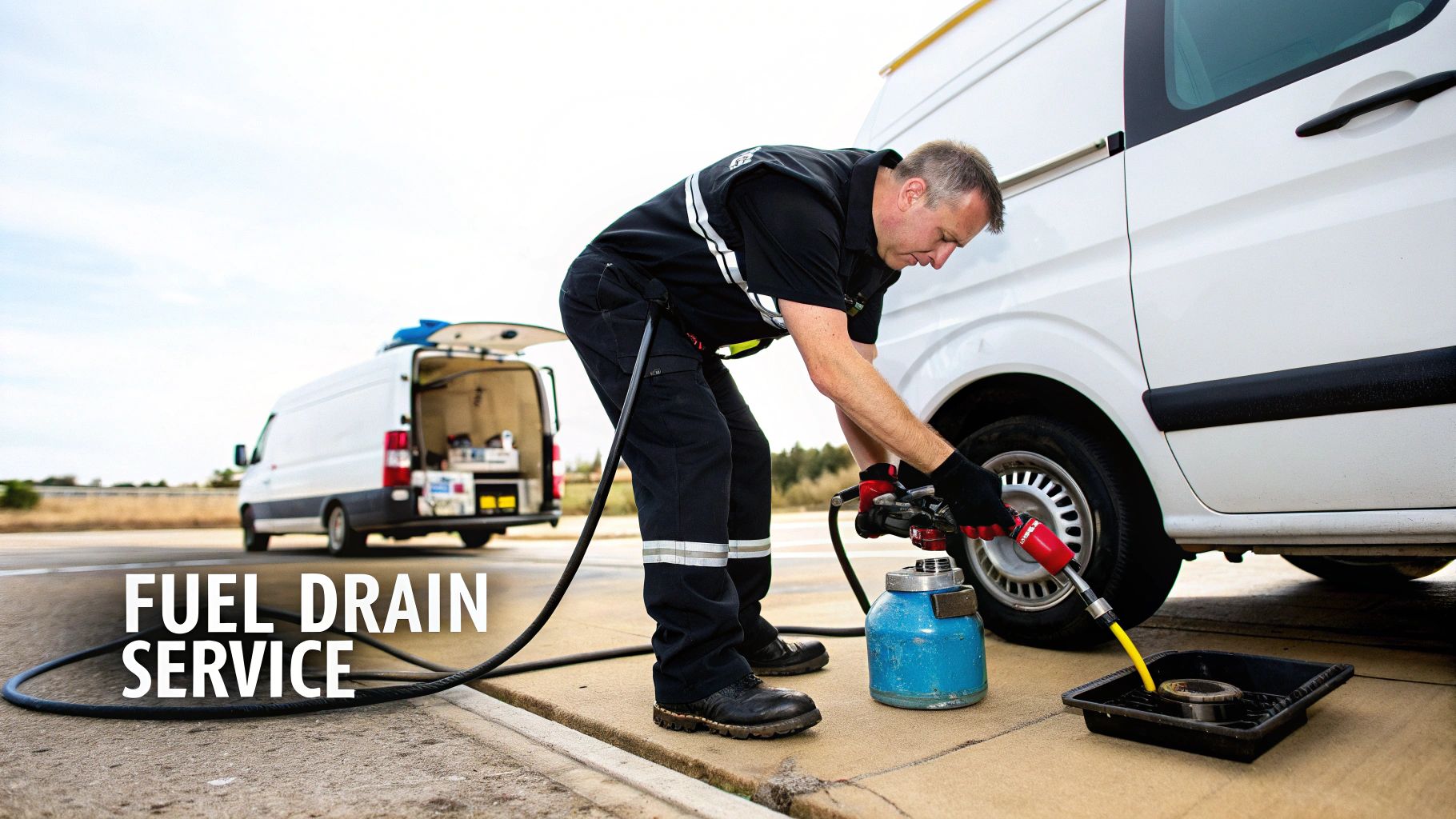
If you catch the mistake right there on the forecourt and haven't started the car, you can breathe a little easier. The fix is relatively simple. Calling a mobile fuel drain specialist is your best and most affordable move. This kind of roadside service will set you back a few hundred pounds, but it's a world away from the cost of being towed to a dealership, who will charge a premium for the very same job.
The financial stakes get much higher the second you start the engine. You wouldn't be alone, either—it happens to around 150,000 drivers in the UK every single year. Petrol acts like a solvent in a diesel engine, stripping away the essential lubrication it needs to run. This leads to misfires and, if you keep driving, serious damage. Even a small amount of petrol circulating can push a simple fuel drain and flush into the £1,500 to £4,000 range.
The Real Cost of Driving On
Driving your car, even just to pull it out of the way, is the most expensive mistake you can make. The moment that petrol-diesel mix gets pulled from the tank, it starts its destructive journey through your entire fuel system. This is where a simple problem becomes a complex and costly repair job.
The potential bill can escalate frighteningly quickly as different parts start to fail.
New Fuel Pump: This is usually the first component to go, and it's a big one. Expect a bill of over £1,000 for this alone.
Fuel Injectors: If these get damaged by contaminated fuel, replacing them can easily add another £1,500 or more to the invoice.
Filters and Lines: The whole system might need to be flushed or even replaced to clear out any metal particles from failing components, adding hundreds more.
Once you factor in the labour charges from a garage, the final figure can soar past £5,000. We break down these numbers in more detail in our article on https://www.misfuelledcarfixer-suffolk.co.uk/post/what-happens-if-you-put-petrol-in-diesel-car-repair-costs.
A common and costly assumption is that your insurance will pick up the tab. Unfortunately, many standard policies specifically exclude misfuelling, deeming it to be avoidable driver error. It’s always worth checking the small print, but you should review your car insurance considerations for misfuelling before you assume you're covered.
When you look at the potential costs, spending a couple of hundred pounds on a professional, on-the-spot fuel drain is a smart investment. It’s a fraction of the price of the mechanical nightmare that can unfold if you drive away from the pump. Acting quickly is the single best way to protect your engine and your bank account.
Your Misfuelling Questions Answered
That sinking feeling you get when you realise you’ve put the wrong fuel in your car is often followed by a wave of urgent questions. It's a stressful, panic-inducing moment, but what you need right now are clear, honest answers from someone who deals with this every single day. Let's tackle the most common queries we get from drivers across Suffolk.
Is a Little Bit of Petrol Okay?
In a word: no. I can't stress this enough. Even a small splash of petrol in a modern diesel engine is a recipe for disaster.
Think of diesel as an oily, lubricating fuel. Petrol, on the other hand, is a solvent. When you mix them, even at a ratio of just 5% petrol to 95% diesel, that petrol strips away all the lubricating qualities. Your high-pressure fuel pump and injectors, which rely on that lubrication, will start grinding metal against metal. It’s never safe to just "top it up with diesel and hope for the best." The only safe move is to not start the engine and get the tank drained.
Will My Car Insurance Cover This Mistake?
This is a real grey area and it all comes down to the fine print in your policy. Many standard insurance plans simply don't cover misfuelling because it falls under "driver error."
Some fully comprehensive policies might offer some help, but you'll almost certainly have to pay an excess. The bigger issue? Making a claim will likely torpedo your no-claims bonus, which means higher premiums for years. Honestly, nine times out of ten, calling a specialist mobile service like ours is far cheaper and faster in the long run.
Expert Takeaway: A professional fuel drain is a one-off, fixed cost. An insurance claim can have a long-term financial sting that costs much more than the initial call-out. Before you ring your insurer, seriously consider the impact on your no-claims discount.
How Long Does a Mobile Fuel Drain Take?
People are often surprised by how quickly we can sort this out. Once our technician gets to you, whether you’re stuck on the forecourt in Bury St Edmunds or on your driveway in Lowestoft, the entire job usually takes between 60 and 90 minutes.
That timeframe covers everything: safely draining the tank, flushing the contaminated fuel from the lines, putting in some clean diesel to get you going, and making sure the engine is running properly before we leave. Our entire focus is on getting you back on your way with minimal fuss.
What if I Have Already Driven the Car?
Right, this is where you need to act fast. If you've started the engine and driven away, pull over as soon as it's safe. The second you notice any symptoms—a knocking sound, loss of power, excess smoke—turn the engine off immediately.
Do not be tempted to restart it. Every second the engine runs, it's pulling more of that damaging petrol-diesel mix through the system, dramatically increasing the risk of costly repairs. When you call for help, make it clear that the car has been driven so the technician knows they need to perform a much more intensive system flush.
To avoid this happening again, you could look into a simple preventative device like a Diesel Clix fuel port adapter, which physically stops the smaller petrol nozzle from fitting into your diesel tank.
If you’ve put the wrong fuel in your car in Ipswich, Felixstowe, or anywhere across Suffolk, don't panic. Stay calm, keep the engine off, and call the professionals at Misfuelled Car Fixer for immediate 24/7 roadside assistance. Contact us now at https://www.misfuelledcarfixer-suffolk.co.uk.


