
.jpg)


Petrol in a Diesel Car What to Do a Complete Emergency Guide
Updated: Jan 28
24/7 Hotline Nationwide: 0330 122 6640
National Wrong Fuel Rescue: https://www.misfuelledcarfixer.co.uk
If you found this page, we cover you!
It’s a mistake that can happen to anyone. One moment of distraction at the pump, and now you’re staring at a green petrol nozzle after filling up your diesel car. Your first instinct might be panic, but what you do next is absolutely critical.
Whatever you do, do not start the engine. Don't even put the keys in the ignition or turn on the electrics. This one simple act prevents the fuel pump from kicking in and sending the wrong fuel through your engine's delicate system. Keeping everything off is the difference between a simple fix and a repair bill that could run into thousands of pounds.
The Critical Mistake: What Happens When Petrol Meets Diesel
That sinking feeling is surprisingly common. Maybe you’re in a hire car, borrowed a friend's vehicle, or were just on autopilot after a long day. Imagine pulling into a busy petrol station in Ipswich and making the slip-up – you’re not alone.
A 2023 survey from Go.Compare found that an astonishing 29% of UK drivers have misfuelled their car at least once. That adds up to around 150,000 incidents every year across the country. Considering the UK's 'dash for diesel' in the early 2000s pushed the number of diesel cars to over 12 million, it’s easy to see why putting petrol in a diesel tank is such a frequent call-out.
Why Petrol Is So Damaging to a Diesel Engine
To get why this is such a big deal, you need to understand how different the two fuels are. Diesel isn't just fuel; it's also a lubricant. It has an oily quality that’s essential for protecting high-pressure components like your fuel pump and injectors. These parts are precision-engineered and rely on that constant lubrication to prevent wear and tear.
Petrol, in stark contrast, acts as a solvent. The moment it enters your diesel system, it starts stripping away that vital oily film. This leads to direct metal-on-metal grinding, creating tiny metal filings (called swarf) that will quickly shred the intricate parts of your fuel pump and injectors from the inside out.
The single most important rule is to prevent the contaminated fuel from circulating. Turning the key is what turns a manageable inconvenience into a potential financial catastrophe.
When you've made a mistake at the pump, knowing exactly what to do—and what not to do—can save you a world of trouble. Here’s a quick-glance guide to help you navigate that stressful moment.
Immediate Actions: Do This, Not That
Action to Take Immediately (Do This) | Action to Avoid at All Costs (Don't Do This) |
|---|---|
Stay calm and don't panic. | Do not put the key in the ignition. |
Tell the petrol station staff what has happened. | Do not start the engine. |
Put the car in neutral. | Do not attempt to drive the car. |
Ask for help to push the car to a safe place. | Do not try to drain the tank yourself. |
Call a professional wrong fuel drainage service. | Do not ignore the problem and hope for the best. |
Following these simple steps keeps the situation contained and minimises the risk of any serious, long-term damage to your vehicle.
When the Engine Has Been Started
If the ignition has already been turned on, the electric fuel pump will prime itself, sending the harmful petrol-diesel mix shooting through the entire system. If the engine actually starts and runs, the damage happens much faster.
The solvent nature of the petrol causes poor combustion and accelerates wear on critical components. To truly appreciate the risk, it’s worth looking into the technical properties of diesel fuel to see how it’s designed to work.
If you’ve driven off, you’ll likely notice some pretty clear warning signs very quickly. Keep an ear out for a loud, knocking sound from the engine, and you’ll feel a major loss of power. You might also see excessive smoke pouring from the exhaust or have the engine management light start flashing on your dash. You can find out more about these alerts in our guide on petrol in diesel car symptoms. If you spot any of these, pull over safely and turn the engine off immediately. It’s your last chance to prevent total engine failure.
Your Roadside Emergency Action Plan
That sinking feeling when you realise you've grabbed the wrong pump is horrible, but what you do in the next few minutes is absolutely crucial. A calm, methodical response can turn a potential disaster into a manageable inconvenience, saving you a world of stress and a pile of cash. The goal here is simple: stop the mistake from turning into catastrophic engine damage.
First things first, think safety. If you're still at the petrol station, don't move the car an inch. The best thing you can do is leave it right there by the pump. Walk into the kiosk and let the staff know what's happened; they'll have a procedure for this and can cone off the area to keep everyone safe.
Already pulled away and on the road? Find the first safe spot to pull over. Get your hazard lights on, kill the engine, and get yourself to a safe place away from passing traffic.
Who to Call and What to Say
Once you're safe, it's time to get professional help. You could ring your usual breakdown provider, but honestly, a dedicated mobile fuel drain service is almost always the quicker and more cost-effective choice. These specialists have one job, and they have all the right kit in their vans to do it on the spot.
When you call, being prepared with the right info will speed everything up. Make sure you have these details to hand:
Your Exact Location: Use a mapping app, a nearby landmark, or the petrol station's address.
Your Vehicle Details: They'll need the make, model, and registration number.
The Misfuel Details: Tell them it's petrol in a diesel car and give a rough idea of how much went in (e.g., "about 10 litres" or "a full tank from empty").
Engine Status: This is the most important bit. Be crystal clear: have you started the engine or not?
The answer to that last question changes everything.
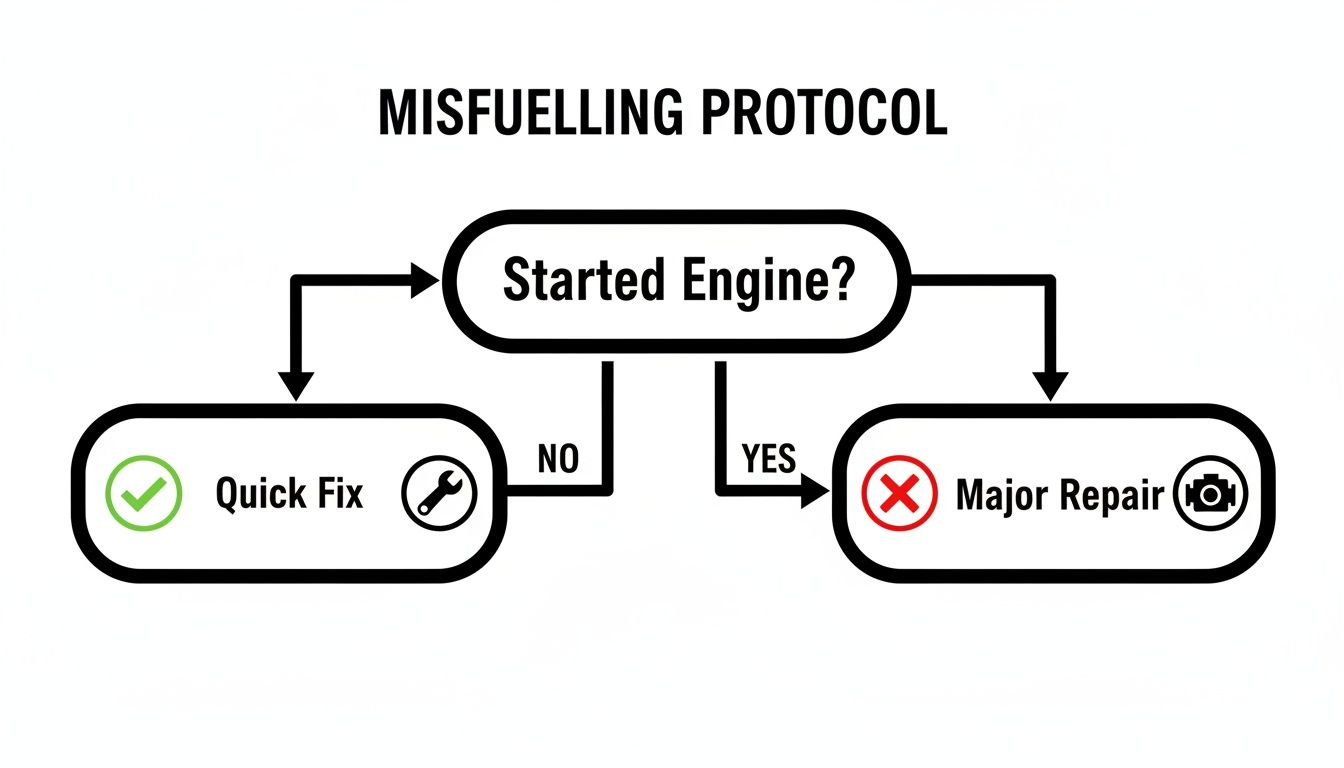
As you can see, keeping that key out of the ignition is the difference between a simple fix and a seriously expensive problem.
Managing the Wait for Assistance
While you're waiting for the technician, the temptation to "just see" if the car will start can be strong. Don't do it. Every single time you turn that key, you're risking pulling the contaminated fuel into the engine's delicate components.
Key Takeaway: The cost of a professional fuel drain is a tiny fraction of what you’ll pay to replace a fuel pump and injectors. Your patience right now is the best money-saving tool you have.
Of course, misfuelling isn't the only thing that can leave you stranded. Getting locked out or losing your keys is just as frustrating, which is why it's also worth knowing about finding reliable auto locksmith services for those kinds of emergencies.
Once the fuel drain specialist arrives, you can breathe a sigh of relief. They'll secure the area, walk you through exactly what they're going to do, and get to work draining the tank. Think of this not just as a set of instructions, but as your playbook for taking control of a bad situation and getting it sorted properly.
What to Expect When the Fuel Drain Technician Arrives
So, you’ve made the call and a mobile fuel drain technician is on their way. It’s natural to feel a bit anxious, wondering what’s about to happen to your car. Let me walk you through what a true professional will do, so you know exactly what to expect. This isn’t just some bloke with a hose; it’s a highly specialised roadside operation.
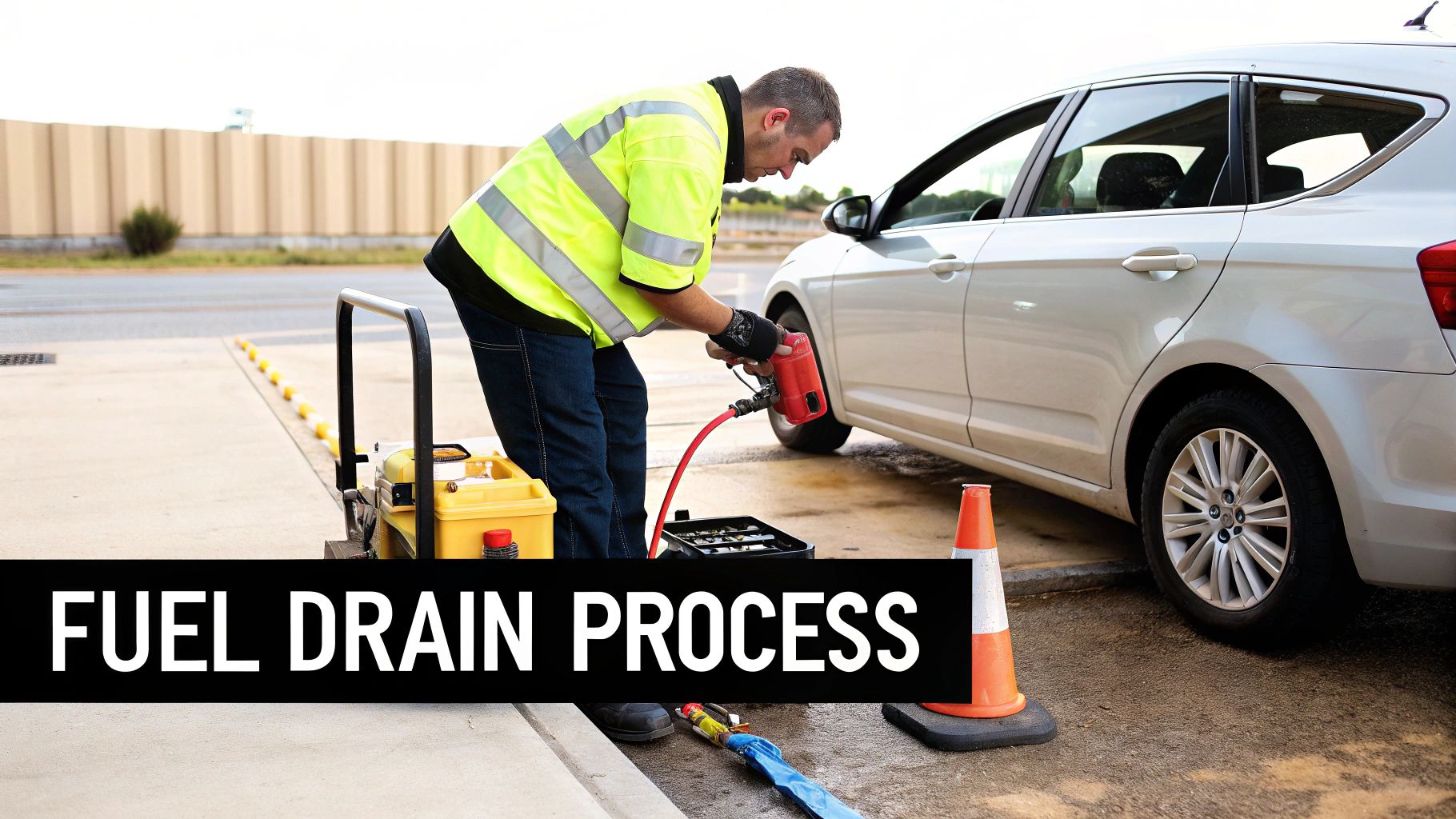
First things first: safety. Before any equipment comes out, the technician will make your vehicle and the surrounding area safe. This means setting up cones and making absolutely sure there are no sparks or flames nearby. Petrol fumes are incredibly flammable, and a real pro takes zero chances.
With the area secure, they'll get to work on the car. The equipment they use is far from a simple DIY pump. It’s an ATEX-approved system, specifically designed and certified for safely handling explosive fuels. The entire setup is earthed to prevent static electricity build-up, which could be catastrophic. The contaminated fuel is then carefully pumped from your tank into a specially designed, secure container in their van.
More Than Just Draining the Tank: The System Flush
Getting the fuel out of the tank is just the start. If you turned the ignition on—even for a second—that petrol has already started its journey through your car's fuel system. This is where a specialist’s expertise really shines. They have to flush every last drop out.
A proper, thorough flush involves several steps:
Targeting the Fuel Filter: This is a key spot where the contaminated mix will have collected. It has to be drained completely.
Cleaning the Fuel Lines: They'll pump clean diesel through the lines, pushing out all the residual petrol from the pipes that run to the engine.
Clearing the High-Pressure System: The technician will prime the system to make sure the delicate fuel pump and injectors are completely clear of the petrol.
This flushing process is without a doubt the most important part of the job. It's what stops that leftover petrol from slowly wrecking your engine's most sensitive—and expensive—parts down the line.
The Final Checks and Responsible Disposal
Once the entire system is confirmed clean, the technician will put a bit of fresh, correct diesel into your tank. It's usually just enough to get you safely to the next petrol station to fill up properly.
They’ll then ask you to start the engine. They'll listen carefully and watch the dashboard for any odd sounds or warning lights, just to be 100% sure the job is done right.
And what about that tank full of mixed fuel? A reputable service handles that, too. This contaminated fuel is classed as hazardous waste and they are legally required to dispose of it following strict environmental rules. This is a massive weight off your shoulders, and it’s one of the main reasons a DIY job is such a bad idea.
While the on-site process is intricate, you can get a better sense of the principles by reading our guide on how to drain a fuel tank safely. It really shows why calling in a professional is the only safe and effective solution.
The True Cost of Misfuelling and How to Limit the Damage
Let’s get straight to the question that's probably making your stomach churn: how much is this going to set me back? The final bill for putting petrol in a diesel car can swing wildly, and it all hinges on one single, critical action: whether or not you started the engine.
The difference isn't just a few quid. We're talking about the gap between a manageable inconvenience and a potential financial nightmare.
If you realised your mistake right there at the pump and haven't touched the ignition, you're in the best-case scenario. The fix is a professional mobile fuel drain. It's a quick, on-the-spot service where a technician safely drains the mixed fuel, flushes the lines, and gets you back on your way with a fresh tank of diesel.
Cost Comparison: Engine Off vs Engine Started
The moment you turn that key, the financial picture gets a lot darker. Petrol starts circulating where it shouldn't, stripping away the lubrication diesel provides and causing friction that can wreck finely-tuned components like your fuel pump and injectors.
To put it into perspective, here's a look at what you can expect.
Cost Comparison Engine Off vs Engine Started
Scenario | Typical Service Required | Estimated Cost Range |
|---|---|---|
Engine OFF | Mobile fuel drain, system flush, and fresh diesel. | £150 - £300 |
Engine ON | Fuel drain, new fuel filters, pump, and injectors. Potentially engine components. | £1,500 - £8,000+ |
As the table shows, that one decision—to start the engine or not—can literally save you thousands of pounds. For a deeper dive into what drives these figures, have a look at our detailed guide on the repair costs after putting petrol in a diesel car. The costs escalate incredibly quickly once components start failing.
Your first instinct might be to turn the key just to "see if it's okay." Fight that urge with everything you've got. Resisting it is the single most important thing you can do to protect your car and your wallet.
Will My Insurance Cover Misfuelling?
This is another area where many drivers get an unwelcome surprise. More often than not, standard car insurance policies won’t cover misfuelling. It’s typically classed as driver error, which means the responsibility for paying the bill lands squarely on your shoulders.
It's a more common mistake than you might think. A staggering 150,000 UK drivers do it every year, and many only discover their insurance won't help when it's too late. In fact, some studies show that as many as 62% of policies have a specific exclusion for wrong-fuel incidents. This just reinforces how crucial your immediate actions are. For more information on UK fuel statistics, the official government news site is a useful resource.
Ultimately, the true cost of misfuelling is in your hands in those first few critical minutes. By staying calm, leaving the engine off, and calling a specialist, you are actively choosing the most affordable and least damaging path forward.
Simple Habits to Prevent Misfuelling in the Future
Dealing with the aftermath of a misfuel is a headache nobody needs. It's stressful, expensive, and a complete waste of time. The best way to deal with it, of course, is to make sure it never happens again. By building a few simple habits into your refuelling routine, you can pretty much eliminate the risk entirely.
More often than not, misfuelling is just a case of simple distraction. You might be in a rush, driving a hire car you're not used to, or just running on autopilot after a long day. The trick is to create a small, conscious ritual that breaks that autopilot mode.
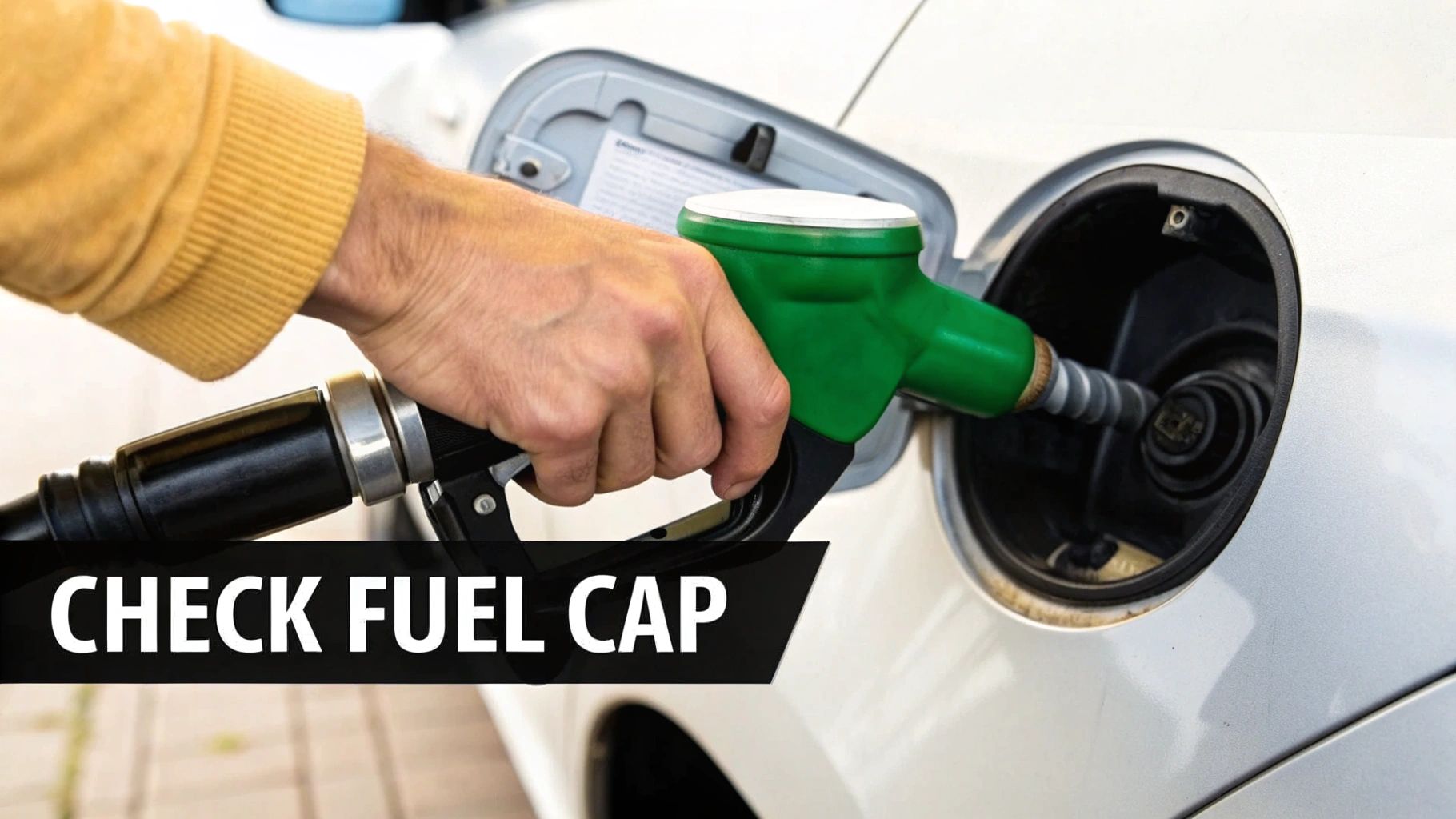
Before you even touch the pump, pause and double-check. Glance at the colour of the nozzle and then look at the label on your fuel cap. In the UK, diesel nozzles are black, and petrol nozzles are green. This simple check takes less than five seconds but can save you from a bill running into hundreds, if not thousands, of pounds. It's especially crucial when you're behind the wheel of a vehicle that isn't your own.
Creating a Misfuelling Failsafe
If you want an extra layer of protection, you could fit a physical barrier. A few companies make specialised misfuelling prevention devices that replace your standard fuel cap. These clever bits of kit are designed to only accept the wider diesel nozzle, physically blocking the narrower petrol nozzle from ever entering your tank. It’s a brilliant one-off investment for total peace of mind.
A few other simple but surprisingly effective visual reminders can also help:
Stick a brightly coloured "DIESEL" sticker inside your fuel flap.
See if a colour-coded fuel cap is available for your car model.
Always read the text on the pump trigger itself, not just going by the nozzle colour.
The UK has a surprisingly high rate of misfuelling incidents, and there's a reason for it. A government tax shift back in 2001 caused a huge surge in diesel car ownership, from three million to twelve million by 2020. This diesel-heavy car park is a big part of why around 150,000 UK drivers put petrol in a diesel car every single year. You can learn more about why this is such a common British problem at Fuel Fixer.
For businesses that run a fleet of vehicles, these preventative steps are absolutely essential. Adding a quick misfuelling check into driver training and fitting prevention devices across all diesel vehicles can save a fortune in downtime and logistical nightmares. It all comes down to small, consistent habits—they are your best defence.
Your Misfuelling Questions, Answered
That sinking feeling after you've put the wrong fuel in your car is often followed by a flood of frantic questions. Your mind starts racing, imagining the worst-case scenarios. Let's cut through the noise and get you the straight, practical answers you need right now.
"I Only Put a Small Amount of Petrol in. Is It Really That Bad?"
Yes, it is. This is probably the most common—and most dangerous—misconception out there. Even a splash of petrol, as little as 5% of your tank's total volume, is enough to cause serious, expensive damage to a diesel engine.
Think of it this way: petrol acts like a solvent. It immediately starts to strip away the natural lubricating film that diesel provides. Your high-pressure fuel pump and injectors depend on that lubrication to function without grinding themselves to pieces. Without it, you get metal-on-metal friction, and the damage can happen frighteningly fast.
Don't be tempted to risk it. The only safe move, no matter how little petrol you've added, is to leave the engine off and call for a professional fuel drain. A potential multi-thousand-pound repair bill just isn't worth the gamble.
"I've Already Driven a Short Distance. Is the Damage Done?"
Not necessarily, but you need to stop driving immediately. The longer you keep the engine running, the further that contaminated fuel mix gets circulated through its most vital and costly parts.
Every second the engine is on, the risk of permanent damage climbs. As soon as it's safe, pull over to a secure spot, turn off the engine, and switch on your hazard lights.
From that point on, the advice is the same: call a specialist. A mobile technician can still perform a complete drain and system flush. Crucially, they can also assess whether any initial damage has occurred. Acting fast gives you the best possible chance of limiting the problem to a simple flush, rather than a full-scale fuel system replacement.
"Will My Car Insurance Cover This?"
It’s very unlikely. Standard car insurance policies in the UK almost always exclude misfuelling. It’s generally considered a result of driver error, which means the cost, unfortunately, lands on your shoulders.
While a few top-tier premium policies or specific add-ons might provide some cover, they are very much the exception. In fact, research shows that over 60% of comprehensive policies offer zero protection for this surprisingly common mistake.
This is exactly why what you do in those first few minutes is so critical. By not starting the engine, you're containing the problem and opting for the most affordable solution: a mobile fuel drain. It's a manageable out-of-pocket cost, especially when you consider the alternative.
"What About AdBlue in the Diesel Tank? Is That as Bad?"
Putting AdBlue in your diesel tank is a completely different problem, but it can be just as destructive—if not more so. AdBlue isn't a fuel additive at all; it’s a non-toxic liquid made of urea and de-ionised water that’s meant for your car’s exhaust system.
The issue is that it's highly corrosive to many of the materials inside your fuel system, from rubber seals and plastic pipes to sensitive electronic components. If you start the engine, the AdBlue mixture will be pumped through, causing catastrophic and often irreversible damage. The repair bill for an AdBlue mistake can easily dwarf the cost of a petrol-in-diesel incident.
The advice is exactly the same: do not turn the key. Call for an emergency fuel drain straight away.
If you're in Suffolk or the surrounding areas and have put petrol in your diesel car, don't panic and don't start the engine. Contact Misfuelled Car Fixer immediately for fast, professional 24/7 emergency assistance. Our expert technicians will come to you and get you safely back on the road. Visit us at https://www.misfuelledcarfixer-suffolk.co.uk or call now for help.


