
.jpg)


symptoms of bad fuel injectors in diesel: 5 telltale signs
That gut-wrenching moment when your van loses power on the A14, or the unnerving shudder you feel while idling at the traffic lights in Ipswich – that's not just your diesel having an 'off day'. It's a cry for help.
When you notice things like engine misfires, terrible fuel economy, black smoke billowing from the exhaust, or the engine just refusing to start, you're seeing the classic symptoms of bad fuel injectors in a diesel. These are all tell-tale signs that the finely tuned fuel delivery system is out of whack.
Is Your Diesel Engine Trying to Tell You Something?

Imagine your diesel injectors are like the highly calibrated nozzles on a professional spray painter's gun. Their one job is to spray a perfect, atomised mist of fuel into the engine's combustion chamber at precisely the right split second. When they're working properly, you get smooth, efficient power.
But what happens when one of those injectors gets clogged, worn out, or just plain faulty? That perfect mist becomes an inconsistent dribble, a messy spray, or sometimes, nothing at all.
This breakdown in precision is the source of all your troubles. A dodgy injector can't deliver the right amount of fuel, which throws the whole air-to-fuel ratio into chaos and leads to incomplete combustion. The result? Your engine stutters, drinks fuel like it's going out of fashion, and struggles to deliver the performance you rely on.
Why Modern Diesel Engines Are So Sensitive
The diesel engines in most vans and cars on UK roads today, especially the high-pressure common rail (CR) systems, are incredible bits of kit. They run at mind-boggling pressures—often hitting over 2,000 bar—to squeeze every last drop of performance and efficiency out of the fuel while keeping emissions down.
But there's a flip side to all this precision engineering: they're incredibly sensitive to contamination. Even the tiniest speck of dirt or a minuscule droplet of water in the fuel can wreak havoc on an injector's delicate internal workings.
This is exactly why problems with fuel injectors are such a common headache for drivers around Suffolk and beyond. Contaminants can physically wear away the tiny valves inside the injector nozzle, messing up the fuel metering and timing that your engine depends on. This is what directly causes those frustrating issues like rough idling and engine surging. As you can read in these insights about common rail injector failure on autotechnician.co.uk, ignoring these early warnings is a recipe for turning a small problem into a very expensive repair job.
The Seven Telltale Signs of Failing Diesel Injectors

Spotting the early warning signs of a bad diesel fuel injector can be the difference between a simple fix and a bill for a new engine. These aren't just little quirks your vehicle develops over time; they're direct messages from your engine telling you it's not getting the fuel it needs correctly.
Let's walk through the seven most common signals your car or van will give you when an injector is on its way out.
1. Engine Misfires and Rough Idling
This is often the first thing drivers notice. You're sitting at a traffic light, and you can feel the engine shuddering or vibrating through the steering wheel. Or maybe it stutters and hesitates when you try to pull away. That’s a classic sign.
What’s happening is that one or more cylinders isn't getting the right amount of fuel at the right time. A dodgy injector throws off the whole rhythm of the engine's combustion, making it run erratically. Think of it like a rower in a boat who's completely out of sync with everyone else – the whole vessel becomes jerky and inefficient.
2. A Sudden Drop in Fuel Economy
Finding yourself at the petrol station more often than usual? If your miles-per-gallon has taken a nosedive for no apparent reason, a faulty injector is a prime suspect.
When an injector gets clogged or starts leaking, it can't create that fine, atomised mist of fuel the engine needs for a clean burn. Instead, it might dribble fuel in or spray a messy pattern. Either way, you're just wasting diesel, forcing the engine to burn more than it should to get the job done.
A malfunctioning injector doesn't just hit you in the wallet with higher fuel costs. It's a clear warning that something is wrong, and ignoring it can lead to much more serious, and expensive, engine damage down the line.
3. Sluggish Acceleration and Power Loss
Does your car or van feel gutless? If it struggles to get up to speed or lacks the oomph it used to have when you put your foot down, a bad injector could be the culprit.
An engine’s power comes from a perfectly balanced mix of air and fuel, ignited at precisely the right moment. A failing injector throws that delicate balance completely out of whack, starving the engine of the power it needs. You’ll really feel it when you’re trying to overtake on the A14 or climbing a hill with a bit of a load in the back.
4. Excessive Smoke from the Exhaust
The smoke coming out of your exhaust is a fantastic diagnostic tool if you know what to look for. A healthy, warm diesel engine should produce very little visible smoke.
Black Smoke: This is a dead giveaway for too much fuel. The injector is dumping more diesel into the cylinder than can be burnt, and that black cloud is essentially soot – unburnt fuel particles.
White Smoke: This usually means raw, unburnt diesel is making its way straight through the engine and into the hot exhaust, where it vaporises. This often happens when an injector is stuck wide open or its spray pattern is completely shot.
If you see consistent clouds of either colour, your injectors need looking at—fast.
5. Difficulty Starting the Engine
Is your engine turning over a few more times than it used to before it catches, especially on a cold morning? That hard starting is another key symptom. A diesel engine relies on a very precise, high-pressure squirt of fuel to fire into life.
Injectors that are clogged or leaking can't deliver that crucial initial burst of fuel properly. This makes it tough for combustion to start, and what begins as a minor inconvenience can quickly become a vehicle that won't start at all.
Why Diesel Fuel Injectors Fail in UK Conditions
It's one thing to spot the symptoms of a bad diesel injector, but understanding why they fail in the first place is the real key to preventing a hefty repair bill. Modern diesel injectors are marvels of engineering, but they're also incredibly sensitive, especially to some of the unique challenges we face here in the UK. The main culprits are usually lurking unseen in your fuel tank.
A big part of the problem, ironically, is the fuel itself. To cut down on harmful emissions, the UK switched to Ultra Low Sulphur Diesel (ULSD) back in 2007. While it’s much better for the air we breathe, it has a downside: lower natural lubricity. This means it doesn't protect the injector’s delicate moving parts as well as older diesel formulas did, leading to faster wear and tear.
But that's not all. This cleaner fuel also has an unintended side effect that can completely cripple an injector from the inside out.
The Problem with Internal Deposits
A growing headache for diesel drivers across the UK is something called Internal Diesel Injector Deposits (IDID). Don't think of this as simple soot; it's more like a sticky, varnish-like lacquer that coats the microscopic passageways inside the injector. This gummy residue interferes with the super-precise movement of the injector's internal needle and control valve, which operate with clearances as tight as 1 to 3 microns.
Believe it or not, these deposits can build up in as little as 100 engine hours. They're a massive cause of injector problems and are directly responsible for the poor fuel spray that triggers many of the symptoms we've already covered.
Industry experts have drawn a clear line connecting the rise of IDID to the widespread use of ULSD fuels. If you want to dive deeper, there's a great technical breakdown of how these deposits form and impact modern engines on marship.eu.
Water and Dirt Contamination
Aside from the fuel's chemistry, two other enemies are constantly trying to get into your system: water and dirt. In a high-pressure common rail system, even a tiny amount of contamination can spell disaster.
Water Contamination: With the UK's damp, fluctuating temperatures, condensation naturally builds up in fuel tanks. Water not only causes rust and corrosion but also reduces the fuel’s ability to lubricate. Worse, it can encourage microbial growth (the dreaded "diesel bug") that clogs up filters and injectors.
Microscopic Debris: Tiny particles of dirt, rust, or metal can sometimes sneak past even the best fuel filter. When you've got fuel being blasted at pressures over 2,000 bar, these particles act like a sandblaster, eroding the injector nozzles and causing permanent damage.
Both of these contaminants attack the integrity of your fuel system, leading to poor performance and, eventually, complete failure. You can learn more in our guide on the dangers of contaminated diesel fuel and what drivers need to know. It really drives home why simple preventative steps, like using good quality fuel and keeping on top of filter changes, are so vital for your engine's health.
Your Next Steps for a Suspected Injector Problem
Spotting the symptoms of a failing diesel injector is one thing, but knowing what to do next is what really counts. Not every little hiccup means you need to pull over immediately, but ignoring the big red flags can lead to catastrophic, and very expensive, engine failure. You've got to know the difference between a problem you can monitor and a warning that means "stop the car, right now."
For instance, a slight drop in your MPG might be something you can keep an eye on for a bit. Other symptoms, however, are far more serious.
Stop Driving Immediately If You Notice:* Heavy black or white smoke pouring out of your exhaust pipe.* A strong, persistent smell of raw diesel either inside the cabin or around the car.* Loud, metallic engine knocking sounds that get louder when you accelerate.
These aren't just minor quirks your car is developing. They are serious signs of a major fuel system fault that could be wrecking your engine with every single piston stroke. Pushing on could easily turn a repairable problem into a full engine replacement.
What You Can Check Safely
While a proper diagnosis needs professional kit, there are a few simple things you can look for to give your mechanic a head start. Just make sure the engine is switched off and has had time to cool down first.
Look for Fuel Leaks: Have a careful look around the fuel injectors and the fuel lines connected to them. Can you see any damp patches or the shiny residue of a diesel leak? That’s a major fire risk.
Check for Soot: Peer around the base of the injectors where they meet the engine block. Any black, sooty build-up is a tell-tale sign of a leaking seal, which means hot combustion gases are escaping.
Listen on Startup: The next time you start the car from cold, listen carefully. Do you hear any unusual clicking or tapping noises coming from the top of the engine where the injectors live?
This infographic breaks down one of the most common ways injectors fail in UK diesel cars.
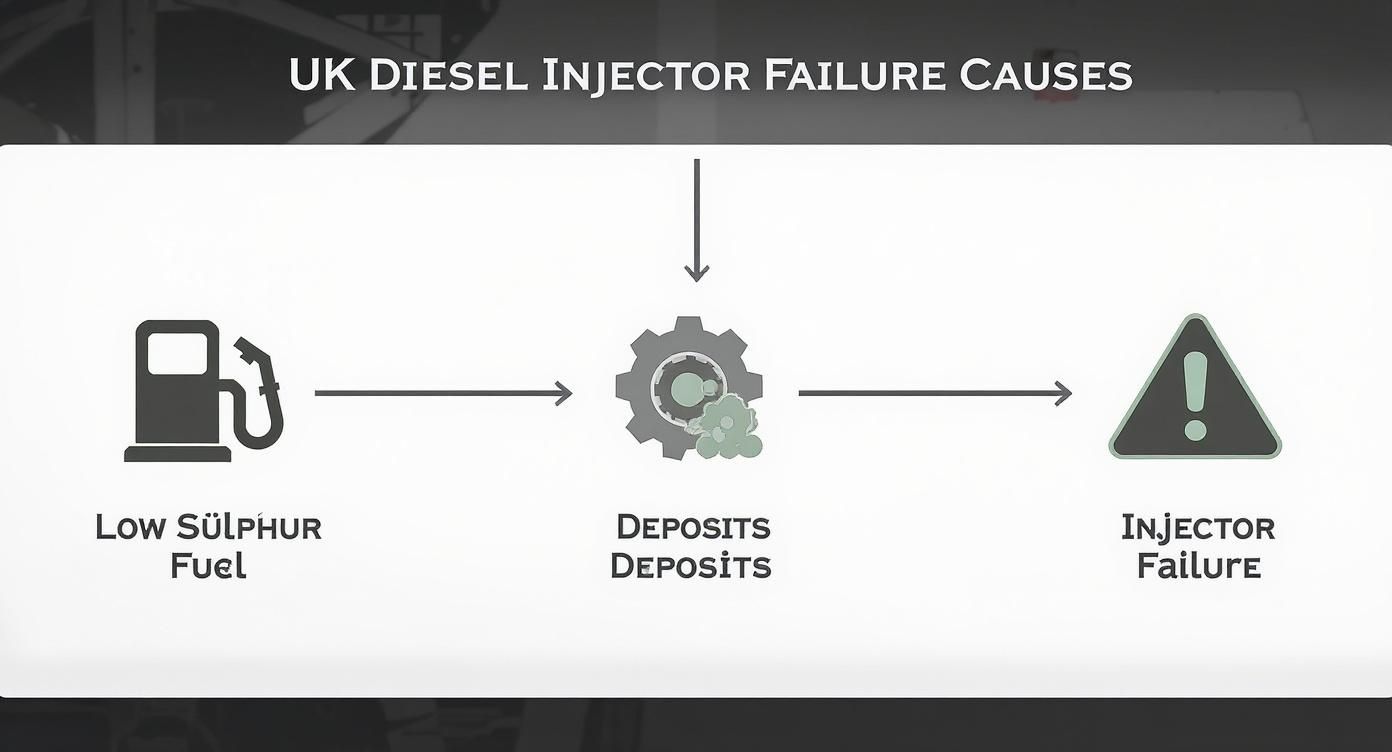
It clearly shows how today's low-sulphur fuel can, over time, lead to deposits that eventually choke the injector and cause it to fail.
The Importance of Professional Diagnosis
These simple checks are purely for gathering information. The real answer will always come from a professional diagnostic scan. If you spot any of the signs we've talked about, your next move should be to get the car to a certified automotive workshop for a proper look.
Technicians have advanced diagnostic tools that can run tests like a "cylinder contribution test," which pinpoints exactly which injector isn't pulling its weight. This kind of precision saves a lot of time and money because you're only fixing what's actually broken. Often, the root cause is some kind of contamination. You can learn more about the tell-tale signs of water in diesel fuel and its solutions over on our detailed guide.
Understanding Your Repair Options and Costs in the UK
So, you've had it confirmed: it’s an injector problem. The good news is you have options. The next step is figuring out the best way forward for your car and your wallet, and this section will help you have a confident chat with your mechanic about what comes next.
One thing to get straight from the start: modern diesel injectors are not a DIY job. We're talking about high-pressure common rail systems that require specialist tools and know-how. Trying to pull these out yourself can easily lead to more expensive damage or, worse, serious injury. It's a job best left to the professionals.
Comparing Your Repair Solutions
Your mechanic will likely suggest one of three main routes, all depending on just how bad the injector is.
Professional Injector Cleaning: If you've caught the problem early and it's just a case of minor clogging from deposits (what the industry calls IDID), an off-car ultrasonic clean might just do the trick. It's the cheapest route, but it only works for clogged injectors – it won't fix any mechanical wear or electrical faults.
Reconditioning or Remanufacturing: This is often the sweet spot for both cost and reliability. Your old injector is sent off to a specialist facility where it’s completely stripped down. They replace worn-out internal parts like nozzles and valves, then test it on a high-tech rig to make sure it performs exactly like a new one. It’s a great way to get factory-fresh performance without the brand-new price tag.
Full Replacement with New Injectors: Sometimes, an injector is just too far gone. If it's heavily worn, physically damaged, or has an electrical failure, a brand-new unit is the only way to guarantee a fix. It's the most expensive option, but it comes with the ultimate peace of mind.
When you're talking about replacement parts, it's really important to know what's going into your car. Understanding the key differences between OEM and aftermarket parts will help you make a smart decision on quality and cost.
A Look at Typical Repair Costs in the UK
The final bill can vary quite a bit. It all depends on your car's make and model, the garage's labour rates, and which of the solutions above you go for. Here’s a rough guide to help you get an idea.
Repair Option | Estimated Cost Per Injector (inc. Labour) | Best For |
|---|---|---|
Professional Cleaning | £80 - £150 | Minor clogs and early-stage issues. |
Reconditioning | £150 - £300 | Worn injectors that are still salvageable. |
New Replacement | £300 - £600+ | Seriously damaged or electrically failed injectors. |
Just remember, mechanics often advise replacing all the injectors at once. It helps ensure the engine runs smoothly and everything is balanced. Of course, sometimes you can get away with just replacing the one faulty unit. The key takeaway is that spotting the symptoms of bad fuel injectors in diesel early gives you far more choices and can stop a small problem from turning into a big one.
How to Prevent Costly Injector Problems
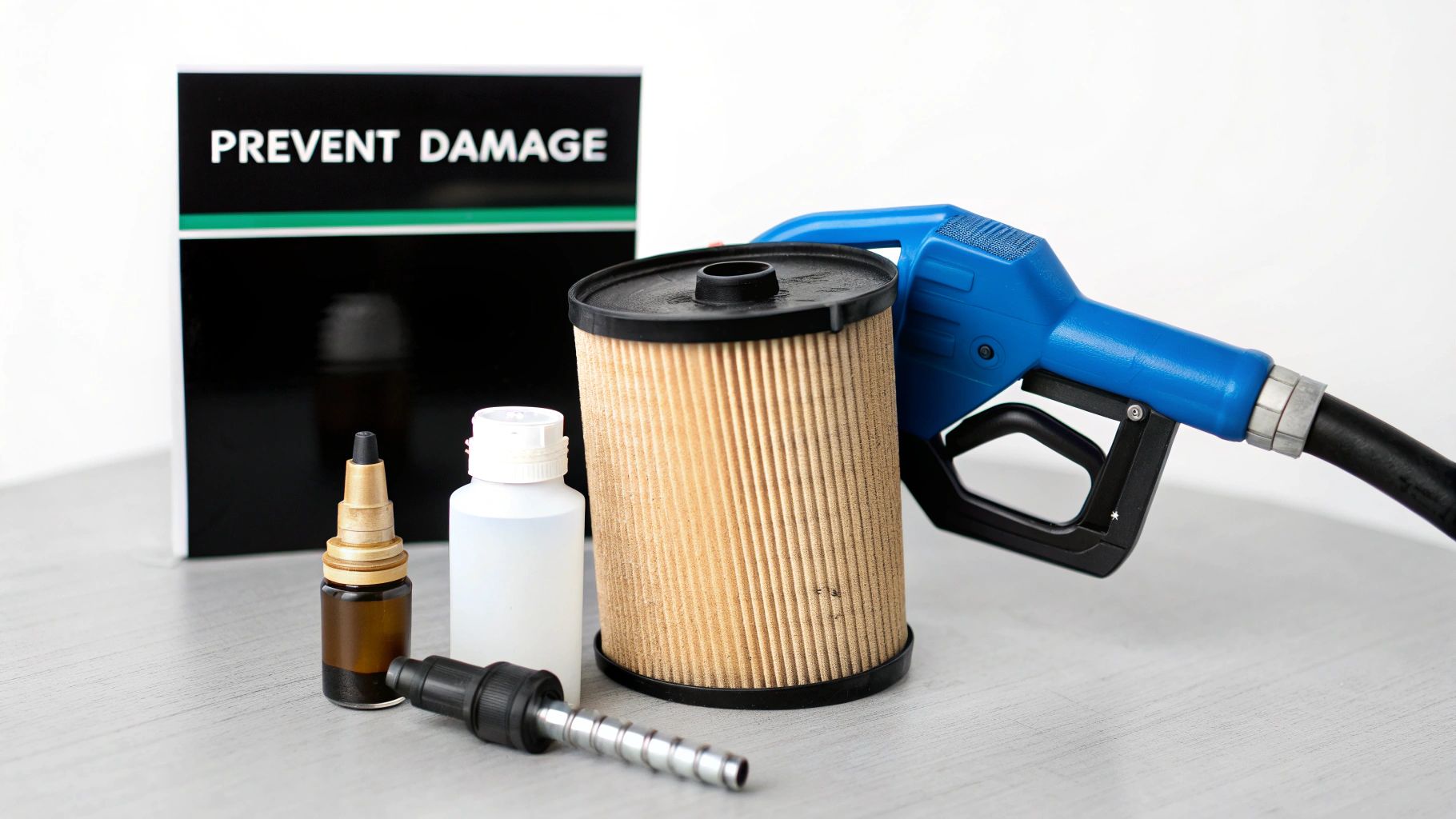
As any seasoned mechanic will tell you, the best repair is the one you never have to make. This is especially true when we're talking about the complex, high-precision components in a modern diesel engine. A bit of preventative care can save you a world of hassle, not to mention some eye-watering repair bills down the line.
The good news is that protecting your fuel injectors isn't about being a master technician; it's just about forming a few simple, smart habits. Think of it as a proactive defence for your engine. By making a few small tweaks to how you refuel and maintain your vehicle, you can dramatically cut the risk of ever seeing the classic symptoms of bad fuel injectors in diesel engines. It's a small investment of attention that pays you back in reliability and cold, hard cash.
Build a Strong Foundation with Quality Fuel
Your first line of defence is right there at the petrol station. While it's true all diesel sold in the UK has to meet certain standards, the quality of the additive packages mixed in can vary quite a bit from brand to brand.
Sticking to high-quality diesel from reputable, busy stations is a smart move. Higher turnover means the fuel is less likely to be stale or contaminated. These premium fuels often contain powerful detergents designed to clean your entire fuel system as you drive, preventing nasty carbon build-up on your injectors. It’s an easy win for engine health.
Your Fuel Filter Is Non-Negotiable
If your engine has an unsung hero, it's the humble fuel filter. It's the silent guardian, trapping the tiny particles of dirt, rust, and water that would otherwise wreak havoc on the microscopic tolerances of your fuel injectors.
A clogged filter is a useless filter. Once it's full, it can't stop contaminants from getting through to the injectors. This is why sticking to your manufacturer's service schedule for filter changes is one of the single most important and cost-effective bits of maintenance you can do. Don't skip it.
Use Additives and Avoid Running on Fumes
For an extra layer of protection, a good quality diesel fuel additive can work wonders. These treatments contain concentrated detergents that help dissolve any gunk that's already there and stop new deposits from forming, ensuring your injectors can deliver that perfect, fine mist of fuel. If you're curious, you can learn more about what fuel additives are and how they work in our detailed guide.
Lastly, try to kick the habit of running your tank down to the last drop. The bottom of your fuel tank is where years of sediment and water condensation settle. Running on fumes stirs all that sludge up and sends it on a direct path to your fuel filter and injectors. A simple rule of thumb? Keep your tank at least a quarter full. It's a small change that makes a big difference.
Got a Question About Your Diesel Injectors?
When you’re dealing with potential diesel engine trouble, it's natural to have a few pressing questions. Let's run through some of the most common ones we hear from drivers, with straight-to-the-point answers to help you figure out your next steps.
Can I Keep Driving with a Bad Fuel Injector?
This is probably the most urgent question on your mind, and the answer is a firm "no". While your car might still technically run with a dodgy injector, you’d be taking a massive gamble.
Continuing to drive puts you at risk of catastrophic engine damage. Think of it this way: a leaking injector can literally wash the essential lubricating oil off your cylinder walls, causing metal-on-metal grinding that scores the pistons and cylinders. Even worse, if enough fuel pools in the cylinder, you could get a "hydraulic lock." The engine can't compress liquid, and the force can be enough to bend or even snap a connecting rod. It’s a risk that just isn’t worth taking.
How Long Should Diesel Injectors Last Anyway?
There's no hard and fast rule here, as it all comes down to how the vehicle is treated. With good quality fuel and regular maintenance, you could easily see 100,000 to 150,000 miles out of a set of injectors.
However, skimping on fuel filter changes or regularly filling up with cheap, poor-quality diesel can drastically shorten their life. It's all about keeping the system clean and happy.
Will a Bottle of Fuel Additive Fix the Problem?
Fuel additives can be a fantastic bit of preventative maintenance. A good quality cleaner can help keep small carbon deposits from building up and keep your injectors spraying cleanly. But it’s important to be realistic.
An additive is not a miracle cure for a serious mechanical fault. If an injector is already heavily clogged, leaking, or has failed electronically, a bottle of cleaner simply won't fix it. It's a tool for prevention, not a repair for an existing breakdown.
What's the Real Difference Between Diesel and Petrol Injectors?
It really comes down to brute force. Diesel and petrol injectors do the same basic job, but they operate in completely different worlds.
A diesel injector is a seriously robust piece of engineering. It has to withstand incredible pressures—often over 2,000 bar (or 29,000 PSI)—to blast a fine mist of fuel directly into the super-hot, high-compression environment of the cylinder. Petrol injectors, on the other hand, have a much easier life. They only need about 50-60 PSI to spray fuel into the intake manifold, where it mixes with air before entering the cylinder. They’re just not built for the same level of punishment.
If you find yourself stuck on the roadside in Suffolk or nearby with a suspected fuel problem or a misfuelling nightmare, don't risk starting the engine. Misfuelled Car Fixer provides a 24/7 mobile fuel drain and repair service to get you sorted safely and quickly. Give us a call for immediate help at https://www.misfuelledcarfixer-suffolk.co.uk.


