



Petrol in diesel engine: What to Do If You Put It In (petrol in diesel engine)
- Misfuelled Car Fixer

- Feb 10
- 16 min read
24/7 Hotline Nationwide: 0330 122 6640
National Wrong Fuel Rescue: https://www.misfuelledcarfixer.co.uk
If you found this page, we cover you in England!
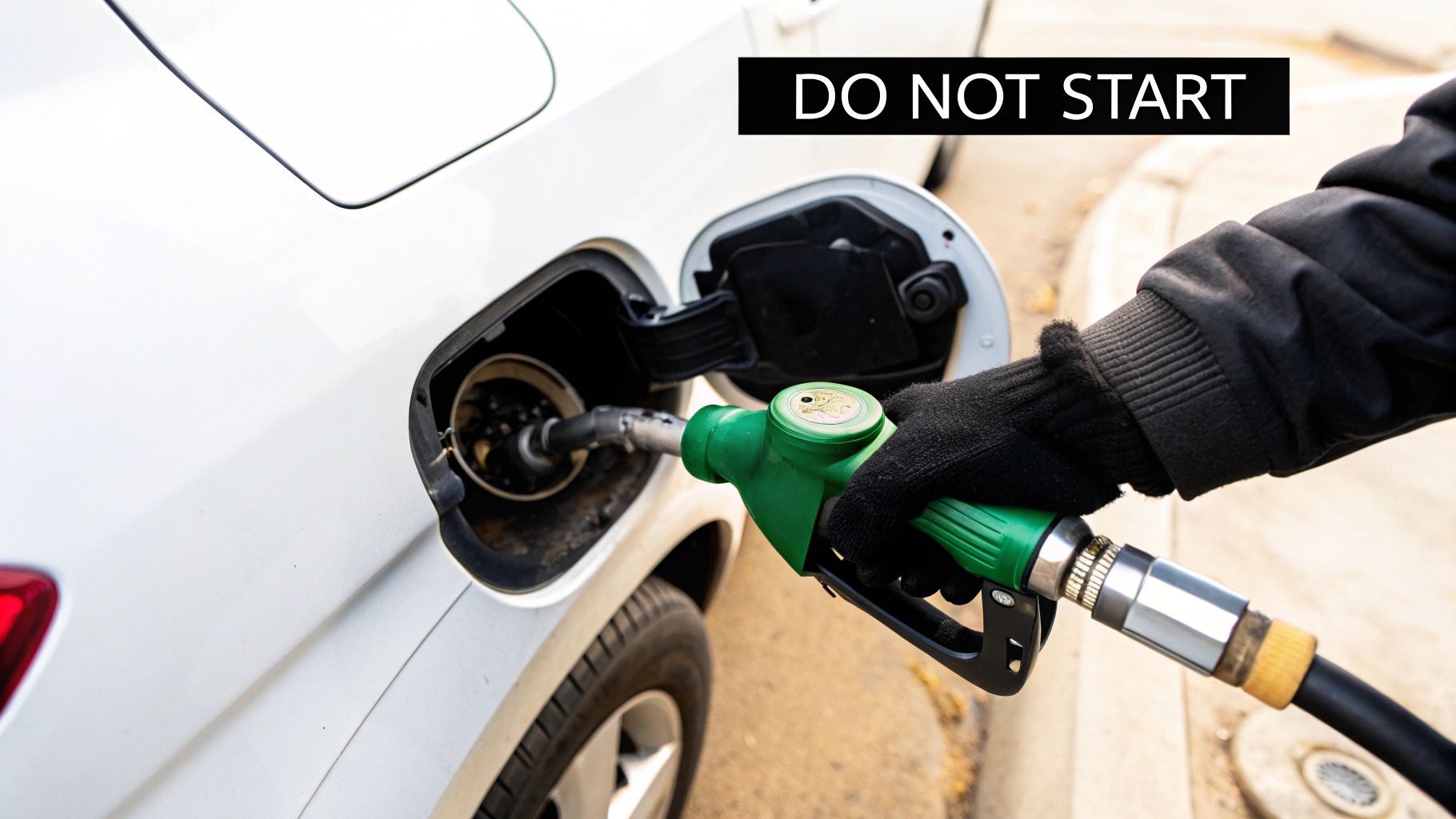
That sinking feeling you get the moment you realise you've put petrol in your diesel car is horrible. But before panic sets in, remember this one golden rule: DO NOT start the engine.
Don't even turn the key to the 'on' position to check the radio. Starting the car is like hitting the self-destruct button; it begins circulating the damaging fuel mix and can turn a simple fix into a catastrophic engine failure.
Why Petrol is a Diesel Engine's Worst Nightmare
Putting petrol into a diesel car is one of the most common and costly misfuelling mistakes you can make. It might seem like a small error, but petrol and diesel are worlds apart in how they work, and that difference is the root of the problem.
Think of diesel as a slightly oily, lubricating substance. A modern diesel engine, particularly one with a high-pressure common rail system, is a marvel of precision engineering. Its fuel pump and injectors rely on the natural oiliness of diesel fuel to stay lubricated and operate smoothly under immense pressure. It’s this property that prevents critical metal parts from grinding against each other.
Petrol: The Solvent That Strips Everything Bare
Now, think about petrol. It's the complete opposite—it acts as a solvent. When you pump it into your diesel tank, it doesn't just sit there; it immediately starts to strip away the lubricating qualities of any diesel left in the tank. This is where a very expensive chain reaction begins.
Without that protective film of lubrication, the damage happens fast:
Friction and Grinding: The fuel pump, now starved of lubrication, starts to wear itself out. Metal grinds against metal.
Metal Shavings Contaminate the System: This grinding action creates tiny metal particles—we call this swarf.
Widespread Damage: The swarf is then pumped at high pressure through the entire fuel system, blasting through fuel lines, blocking the fuel filter, and wrecking the delicate injectors.
In short, the petrol acts like a harsh degreaser in a system that desperately needs oil to survive. By starting the engine, you're essentially running a high-performance machine with no lubrication, guaranteeing friction, damage, and eventual failure.
Combustion Chaos
On top of the lubrication issue, petrol completely disrupts the way a diesel engine ignites fuel. Diesel engines work by compressing air to a very high pressure, which makes it incredibly hot. When diesel fuel is injected, it ignites instantly from the heat and pressure—no spark plug needed.
Petrol, however, is designed to be ignited by a spark. When you introduce it into the high-compression world of a diesel engine, it ignites far too early and uncontrollably. This causes violent, uncontrolled detonations inside the engine, which you might hear as a loud knocking or banging sound. This puts immense stress on the pistons, connecting rods, and crankshaft, and can quickly lead to complete engine seizure.
This double-whammy of stripped lubrication and chaotic combustion is why putting petrol in a diesel engine is so disastrous. The good news? If you haven't turned the key, the problem is contained to the fuel tank. What could have been a four-figure repair bill is now a much more manageable—and affordable—fuel drain.
Why This Mistake Is So Common On UK Roads
If you’ve just put petrol in a diesel car, your first reaction is probably a sinking feeling in your stomach, followed by the thought, "How could I have been so stupid?" But here's the thing: you're not alone. Far from it. This happens to over 150,000 drivers in the UK every single year, and many of them are careful, experienced motorists.
It’s less about carelessness and more about the realities of modern life. Picture a busy delivery driver in Suffolk, running late after a long shift, pulling into a forecourt on autopilot. Or a parent with kids making a racket in the back, grabbing the first nozzle they see. When you're distracted or rushed, muscle memory kicks in. If you've spent the last 20 years driving petrol cars, reaching for that green unleaded nozzle is a deeply ingrained habit.
The Changing Face of UK Vehicles
A huge part of the story is how much our roads have changed. The mix of cars in the UK today is completely different from what it was two decades ago, and that shift has created the perfect conditions for this exact mistake.
Official UK government data shows that between 2001 and 2018, the number of diesel vehicles on our roads more than doubled, soaring to 18.9 million. At the same time, the number of petrol vehicles actually fell by 15%. Millions of us switched from petrol to diesel, often for the first time. This mass changeover meant a whole generation of drivers had to un-learn a lifetime of habit at the fuel pump. You can dig into the full government report on the UK's evolving motor vehicle fleet to see the numbers for yourself.
With so many more diesel cars around, it’s just a numbers game. The chances of someone putting petrol in a diesel engine went through the roof.
This isn't just a story about individual slip-ups. It's about a massive, nationwide shift in what we drive. More diesel cars on the road simply created more opportunities for lifelong petrol drivers to make a mistake based on pure habit.
Everyday Factors That Lead to Misfuelling
It’s not just about long-term trends, either. A few very common, everyday situations are classic triggers for a misfuelling mishap. Understanding them might make you feel a bit better if it's just happened to you.
Distraction at the Pump: We’ve all been there. You’re checking your phone, trying to keep an eye on the kids, or just lost in thought about your next meeting. It only takes a split second of inattention to grab the wrong fuel nozzle.
Unfamiliar Hire Cars: This is a big one. When you're driving a rental or have borrowed a friend's car, you're not used to it. It’s incredibly easy to forget what fuel it takes, especially if the filler cap isn't clearly marked.
Confusing Nozzle Colours: We expect green for petrol and black for diesel, but this isn't always the case. Some brands use different colours, which can easily throw you off if you're not paying close attention.
Pressure and Haste: Pulling into a packed petrol station with a queue of cars behind you can make anyone feel rushed. In that hurry, it’s easy to skip the crucial double-check.
At the end of the day, misfuelling is just one of those things that can happen in our busy, often stressful, lives. The key isn't to beat yourself up over it. What really matters is what you do next: don't start the engine, and call for professional help right away.
Right, let's get this done. Putting the wrong fuel in your car is a surprisingly common mistake, and the moments that follow can be pretty stressful. If you’ve driven off after putting petrol in your diesel, your car won't stay quiet about it for long. It'll start showing some very clear signs of protest.
Knowing what to look for can make all the difference. The symptoms usually start small and get much worse, much faster, as the petrol works its way through the fuel system.
From a Rough Start to a Complete Stall
The first clue you'll probably get is that the engine just won't want to start. You might turn the key and find it's taking ages to fire up, or it might just refuse to start at all. This is because diesel engines rely on high pressure to ignite the fuel, and petrol simply doesn't play by the same rules. It messes up that critical combustion process from the get-go.
If you do manage to get the engine running, things will go downhill pretty quickly. You'll likely feel a very noticeable loss of power, almost like the car is being held back. Trying to accelerate will feel sluggish and unresponsive.
This is often followed by the engine starting to run really rough. It might sound like it's coughing or sputtering, and the whole car might feel jerky, especially when you put your foot down. This is the sound of petrol igniting at the wrong time, creating chaos where there should be a smooth, rhythmic cycle.
The Alarms: What You'll See and Hear
Keep driving, and the warning signs become impossible to miss. You’ll start to see and hear things that are clear indicators of a serious problem.
A Loud Knocking or Pinging Noise: This is a nasty, metallic rattling sound coming from the engine. It's not a subtle tick; it’s the sound of the petrol detonating too early and too violently inside the engine, which puts a huge amount of stress on its internal parts.
Loads of Exhaust Smoke: Look in your rearview mirror and you'll probably see a big cloud of white or greyish smoke. This isn't normal exhaust; it's unburnt fuel being pumped out because the engine can't properly burn the petrol-diesel mix.
Warning Lights on the Dash: Your car's computer (the ECU) is smart enough to know something is very wrong. It will light up your dashboard like a Christmas tree, most likely with the engine management light or the glow plug light, to tell you there's a major fault.
When these symptoms show up, they aren't gentle suggestions. They are your car screaming for help. The best and only thing to do is to find a safe place to pull over and switch off the engine immediately. Every moment it stays running, the risk of catastrophic damage gets higher.
Why You Absolutely Must Turn It Off
Every one of these signs points back to the core issues: petrol's lack of lubrication and its disastrous combustion in a diesel engine. That knocking sound is literally the engine fighting against itself. The smoke and power loss are proof that the fuel system is failing. For a more detailed breakdown, you can learn more about the specific symptoms of petrol in a diesel car and what to do next.
By leaving the engine on, you're letting the petrol act like a solvent, stripping away the vital lubricating film from the high-pressure fuel pump and injectors. This causes metal to grind against metal, sending tiny shards through the entire system. Pushing on is what turns a simple fuel drain into a crippling repair bill that could easily cost thousands to replace the entire fuel system.
Your Emergency Misfuelling Recovery Plan
Realising you've put petrol in a diesel car can send a wave of panic through you, but getting it sorted is often much faster and simpler than you might imagine. The moment you know what's happened, your priority is to find a safe, professional fix that prevents lasting damage.
Your next decision is the most important one: call a mobile fuel drain service or get the car towed to a garage?
For most people, a mobile emergency service is hands-down the best choice. Think about it. Instead of waiting for a recovery truck, organising a tow to a dealership (who might not even be able to look at it for days), and then getting hit with high labour charges, a specialist technician comes directly to you. It's a service designed for this exact problem, which makes the whole thing incredibly efficient.
The On-Site Fuel Drain Procedure
When our technician arrives, they don’t just suck the fuel out and leave. They follow a meticulous, professional process to make sure every last drop of corrosive petrol is gone from your car’s sensitive fuel system.
Here’s a step-by-step look at how we get you back on the road:
Safety First: Before anything else, the technician secures the area around your car to make it a safe workspace. They use specialised, ATEX-approved equipment designed for handling flammable fuels, so there’s no risk of sparks or ignition.
Draining the Contaminated Fuel: Using professional pumping gear, they drain the entire contents of your fuel tank into a secure, environmentally safe container. This gets the bulk of the damaging petrol-diesel mix out.
Flushing the Fuel System: This is the most critical part of the job. The technician flushes the whole system—from the fuel lines and filter right through to the fuel rail and pump—with fresh, clean diesel. This purges any lingering petrol that was pulled from the tank when you started the engine.
Adding a Lubricating Agent: To combat the damage from petrol's solvent-like properties, a special additive is often put into the system. This helps bring back the vital lubrication your high-pressure fuel pump and injectors need to survive.
Refuelling and System Priming: With the system clean, a small amount of fresh diesel is added to the tank. The technician then primes the fuel system, getting rid of any airlocks and ensuring clean fuel is ready to go the moment you turn the key.
This flowchart shows the common symptoms that usually lead to an emergency call-out.
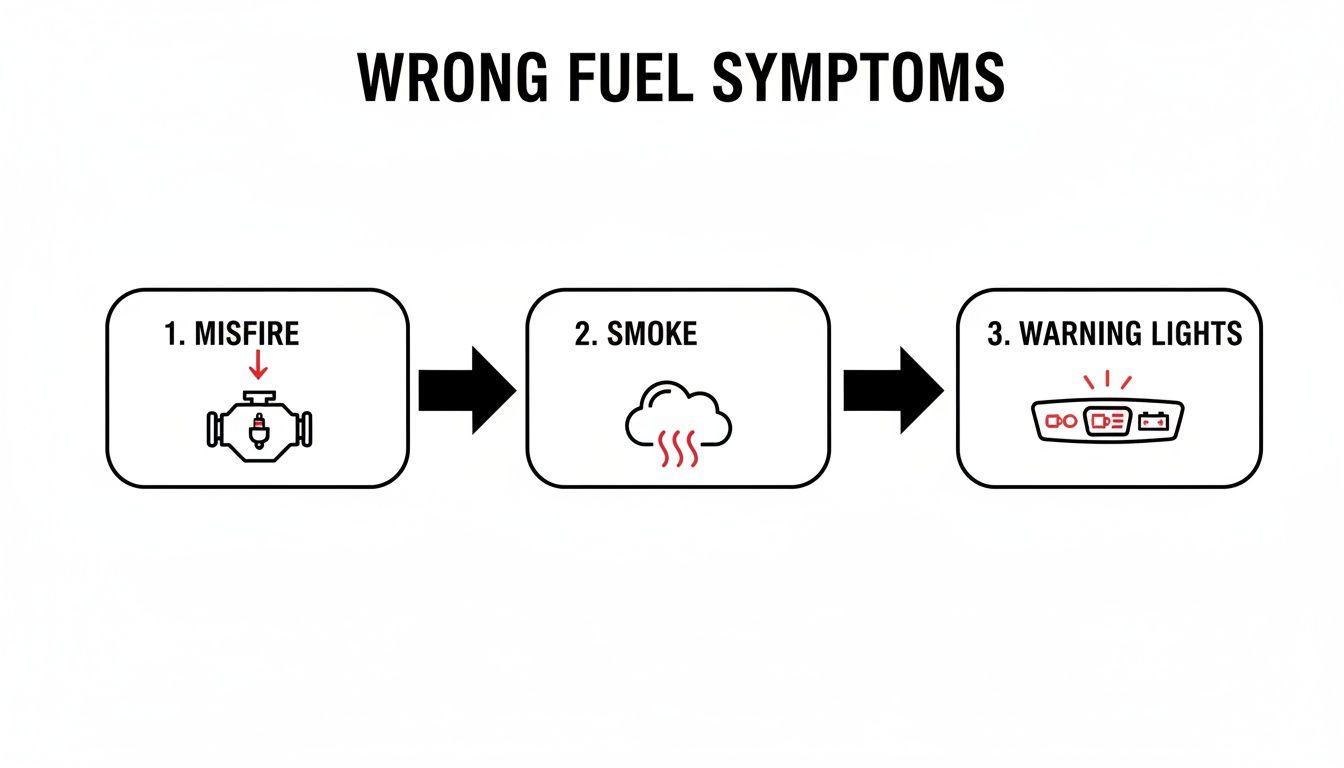
As you can see, your car often gives you a series of warnings, from a bit of a stutter at first to serious smoke and dashboard alerts, which is why acting fast is so important.
Mobile Drain Versus Garage Towing
Opting for a mobile service over a traditional garage tow has some massive advantages. A specialist can usually have the whole job done right there at the roadside in about 60-90 minutes. That means you're back on your journey in a fraction of the time.
A mobile fuel drain is a precise, on-the-spot solution. It avoids the logistical nightmare and added costs of being towed, which can leave you without your vehicle for several days while it waits in a queue at a busy garage.
On the other hand, getting towed to a main dealer or local garage almost always means delays and higher costs. You'll be paying for the tow truck on top of everything else, and the garage's labour rates are often steeper. More importantly, you've lost control over the timescale.
For a deeper dive into the specifics, take a look at our guide on how to drain a fuel tank safely after misfuelling in the UK.
Ultimately, the best plan is one that prioritises speed, safety, and efficiency. A professional mobile service ticks all three boxes, turning what feels like a disaster into a minor inconvenience that’s sorted right where you are.
What Will This Mistake Cost Me? A Look at Repair Costs and Timescales
When you're stuck at the petrol station after putting the wrong fuel in your car, the big question on your mind is always: "How much is this going to cost?" The answer really boils down to one simple thing: did you start the engine? The difference in the final bill between starting the car and not is night and day.
If you caught the mistake right there at the pump and didn't even turn the key, you can breathe a huge sigh of relief. The problem is literally contained in one place – the fuel tank. A mobile fuel drain is a quick, on-the-spot solution that usually takes a technician about 60 to 90 minutes. This is by far the cheapest and easiest outcome.
Starting the engine, however, is a game-changer. The moment that contaminated fuel gets pulled into the system, the scope of the repair job explodes, and the costs climb right along with it.
Costs if You Haven't Started the Engine
If you left the engine off, the fix is straightforward. The cost is generally a fixed call-out fee that covers the technician's time to perform a complete fuel drain and flush right where you are.
The Job: A professional mobile fuel drain and system flush.
Time on Site: All sorted within 90 minutes of the technician arriving.
Typical Cost: You're looking at a few hundred pounds – a fraction of what a garage would charge.
By not turning the key, you've kept the harmful petrol away from your engine's most delicate and expensive parts. It’s a move that saves you from a massive headache and an even bigger bill.
Potential Costs if You Have Started the Engine
Driving your car, even just down the road, lets the petrol work its way through the fuel system. Petrol acts like a solvent, stripping away the lubricating properties of diesel fuel. This causes intense friction in the high-pressure fuel pump and injectors, which start grinding against each other. The result is tiny metal shavings, known as swarf, being fired through the entire system.
The second you start the engine with the wrong fuel, a simple drain becomes a potential full-system replacement. The repair bill can jump from hundreds to thousands of pounds in an instant.
At this point, just draining the tank won't cut it. The potential repair list gets long and very expensive, fast. You could be looking at:
Replacing the high-pressure fuel pump.
Fitting a new set of fuel injectors (which can be hundreds of pounds each).
A new fuel filter.
Flushing out or completely replacing all the fuel lines.
The final invoice could easily stretch into the thousands. When you look at it that way, the cost of an emergency fuel drain service is a small price to pay. For a deeper dive into this, check out our guide on what happens if you put petrol in a diesel car and the repair costs.
How Fuel Prices Can Catch You Out
You might be kicking yourself, wondering how this could even happen. It's often just a moment of distraction, but the ever-changing price of fuel in the UK can also play a part.
For example, in early 2025, unleaded petrol was around 135.25 pence per litre, while diesel sat higher at 142.54 pence. That 7.29 pence difference might make a driver pause for a split second, especially when they're in a rush and the pump nozzles look so similar. That brief moment of hesitation is all it takes to grab the wrong one. It just goes to show how easily this simple, but costly, mistake can be made.
How To Prevent Misfuelling In The Future
Once you’ve gone through the stress of putting petrol in a diesel engine, you’ll want to make sure it never, ever happens again. The good news is that avoiding a repeat performance is pretty simple. It just comes down to a few good habits and maybe a clever bit of kit.
The biggest culprit behind misfuelling isn't a lack of knowledge – it's distraction. We’ve all done it. You pull into the petrol station on autopilot, thinking about work or what to make for dinner, and before you know it, the wrong nozzle is in your hand. The easiest fix is to simply build a routine that forces a moment of focus right before you start filling up.
Building Simple Habits at the Pump
The most effective prevention methods are completely free; they just require a bit of mindfulness. Before you even twist off your fuel cap, run through these quick checks to snap out of autopilot and make sure you’re grabbing the right pump.
Pause and Check: Just take two seconds before you lift the nozzle. Read the label on the pump and the trigger – does it say “Diesel”?
Look at the Nozzle: Diesel nozzles are almost always black and are physically wider than the green petrol nozzles. This size difference is your best physical clue.
Check Your Filler Cap: Most modern diesel cars have “DIESEL” written clearly on the fuel flap or the cap itself. Make it a habit to glance at it every single time.
This sounds obvious, but it’s so easy to forget when you’re in a rush. Try to stay off your phone and just be present for the 30 seconds it takes to get the fuel flowing. That small bit of focus is your number one defence against a very expensive mistake.
Using Technology for a Foolproof Solution
If you want a more concrete safeguard, you can fit an anti-misfuelling device. These are specially designed fuel caps that replace your standard one and make it physically impossible to insert the wrong nozzle.
Think of an anti-misfuelling device as a lock and key for your tank. It's engineered to only accept the wider diameter of a diesel nozzle. The smaller unleaded petrol nozzle simply won't fit, blocking you from making a mistake.
These gadgets are fantastic for families that share a car, or for people who switch between petrol and diesel vehicles for work. They provide complete peace of mind, taking human error out of the equation entirely.
Strategies for Fleet and Commercial Vehicles
For any business that runs a fleet of vehicles, a single misfuelling incident means more than just a repair bill. It means vehicle downtime, lost revenue, and major disruption. Fleet managers can put a few straightforward strategies in place to protect their entire operation.
Here are a few practical measures to consider:
Driver Training: Make misfuelling a regular topic in safety briefings. Reinforce the real-world costs and drill in the habit of double-checking the pump every single time.
Vehicle-Specific Fuel Cards: Issue fuel cards that are restricted to purchasing diesel only. This adds a financial checkpoint that can stop the wrong transaction at the till.
Clear Labelling: Don't rely on the manufacturer's small print. Put large, impossible-to-miss “DIESEL ONLY” stickers on the fuel flap and dashboard of every vehicle. It’s a cheap, constant, and highly effective reminder.
Common Questions About Putting Petrol In a Diesel Engine
The moment you realise you've put the wrong fuel in your car, your mind starts racing. It's a horrible feeling, and a flurry of questions is completely normal. Having clear, straightforward answers is the first step to getting this sorted out quickly and without causing more damage. Here are the most common things we get asked by drivers in this exact situation.
"I Only Put a Little Bit of Petrol In – Is It Still a Problem?"
Unfortunately, yes. Even a small amount of petrol can cause major headaches for a modern diesel engine. We're talking as little as a couple of litres. The problem isn't so much about diluting the diesel, but about contamination.
Think of petrol as a solvent. The second it mixes with diesel, it starts stripping away the natural lubricating properties of the diesel fuel. Your diesel engine's fuel pump and injectors are incredibly precise pieces of kit, operating under immense pressure. They rely entirely on that lubrication to prevent metal grinding against metal.
No matter how much petrol went in, the only safe thing to do is get the tank professionally drained. Trying to "top it up" with more diesel or "drive it out" is a recipe for a very expensive repair bill.
"Will Putting Petrol In My Diesel Car Void My Warranty or Insurance?"
This is a big concern, and the answer is often not what people want to hear. Most manufacturer warranties don't cover damage caused by driver error, and misfuelling fits that description perfectly. That means you'll likely be on the hook for the full cost of any repairs.
As for insurance, some comprehensive policies do include misfuelling cover, but it’s rarely standard. Even if you are covered, making a claim can mean losing your no-claims bonus and facing higher premiums down the line. That's why calling a specialist mobile fuel drain service is often the quickest, cheapest, and most discreet way to handle things, without getting insurers or main dealers involved.
"How Long Does a Professional Fuel Drain Take?"
The big advantage of calling a mobile service is speed. If you haven't started the engine, a skilled technician can usually have the whole problem sorted in about 60 to 90 minutes from the moment they get to you.
The process is pretty thorough:
They’ll safely drain every drop of the wrong fuel from your tank.
Then, they'll flush the fuel lines and filter to get rid of any residue.
They’ll add some fresh, clean diesel and get the system primed.
Finally, they'll start the car to make sure everything is running smoothly.
This is a world away from getting towed to a garage, which could easily leave you without your car for a few days while you wait for them to fit you in.
"Can I Just Drain the Fuel Myself?"
In a word: no. Please, don't even think about it. Draining fuel is incredibly dangerous. Petrol is highly flammable, and its vapours can be ignited by a single spark – even one from static electricity. It’s a serious fire and explosion risk.
On top of that, the mix of petrol and diesel is considered hazardous waste. You can't just pour it down a drain; it needs to be disposed of following strict environmental rules. Professionals use specialised, anti-static (ATEX-approved) pumps and are licensed to transport and dispose of contaminated fuel correctly. It's the only way to protect yourself, your car, and the environment.
If you've put petrol in your diesel engine in Suffolk or the surrounding areas, don't risk it. Call the experts at Misfuelled Car Fixer for immediate, 24/7 emergency assistance. We'll get you safely back on the road. Find out more at https://www.misfuelledcarfixer-suffolk.co.uk.


