
.jpg)


Guide: Diesel in Petrol Car What to Do - Quick Steps to Avoid Engine Damage
Updated: 7 days ago
24/7 Hotline Nationwide: 0330 122 6640
National Wrong Fuel Rescue: https://www.misfuelledcarfixer.co.uk
If you found this page, we cover you in England!
Right, you’ve just put diesel in your petrol car. That sinking feeling in your stomach is horrible, but what you do in the next 60 seconds is absolutely critical. The most important thing? Do not turn the key or start the engine.
This single action is the most effective way to prevent thousands of pounds in potential engine damage.
That Sinking Feeling: Diesel in Petrol Car What to Do Immediately
It’s a surprisingly easy mistake to make. You pull into a busy petrol station in Suffolk, you’re distracted, and you grab the wrong nozzle. It’s a nightmare scenario that plays out far more often than you’d think—current estimates suggest around 72,000 misfuelling incidents happen annually across Britain.
The one thing that determines whether this is a simple fix or a financial catastrophe is whether the engine has been started. Just a small amount of diesel getting into the system can wreak havoc on sensitive components like your fuel injectors, potentially landing you with a repair bill of £1,500 to £3,000.
To avoid that, let's create a quick mental checklist for what to do and what not to do.
Immediate Do's and Don'ts After Misfuelling
When you realise the mistake, your first instincts are everything. Panic can lead to costly errors, so having a clear set of actions is vital. This table breaks down exactly what you need to do—and what you must avoid.
Action to Take Immediately (Do) | Action to Avoid at All Costs (Don't) |
|---|---|
Stay calm and take a deep breath. | Do not put the key in the ignition or turn it. |
Take the keys out of the ignition completely. | Do not start the engine, even for a moment. |
Put the car into neutral. | Do not attempt to drive the car to a "safe" spot. |
If you can, push the car to a safe parking bay. | Do not try to siphon the fuel yourself. |
Inform the petrol station staff about the situation. | Do not panic and make a rushed decision. |
Following these simple steps keeps the contaminated fuel isolated in the tank, making the fix much easier and cheaper.
Your First Sixty Seconds
Stay calm and run through this in your head. What you do right now can be the difference between a straightforward fuel drain and a major mechanical headache.
Don't Start The Engine: It's worth saying again. Turning the ignition will prime the fuel pump, sending diesel from the tank straight into the fuel lines, injectors, and engine.
Keys Out of the Ignition: This simple step prevents you, or anyone else, from starting the car out of pure habit.
Car in Neutral: Put the gearstick in neutral and take the handbrake off.
Move to Safety: If it's safe, get a hand to push the car away from the pumps to a parking space. Never start the engine to do this.
Tell the Staff: Let the petrol station attendants know what’s happened. They can help cordon off the area if needed and will appreciate you keeping them in the loop.
In moments of panic, whether it's misfuelling or another roadside emergency, knowing where to find fast roadside help is crucial. Your next step is to call for professional assistance.
Why Starting the Engine is So Damaging
So, what’s the big deal? A petrol engine is engineered to ignite a very fine, volatile mist of petrol using a spark from the spark plugs.
Diesel is a completely different beast. It's much thicker and oilier, and it's designed to ignite under compression, not with a spark. When it gets into a petrol engine, it simply doesn't burn correctly.
Instead of combusting, it coats everything in its path—spark plugs, sensors, fuel injectors—with a greasy residue. This contamination stops these critical parts from doing their job, leading to misfires, poor running, and eventually, expensive damage.
If you’ve already turned the engine on and noticed things aren't right, you can learn more about how to identify diesel in petrol car symptoms in our detailed guide.
Understanding the Damage: Engine On vs. Engine Off
The single most important factor in this whole mess is brutally simple: did you start the engine?
Your answer to that one question is the dividing line between a straightforward, albeit annoying, problem and a potentially wallet-emptying mechanical disaster. Everything you do next hinges on whether you turned that key.
If You Haven’t Started the Car
Let's start with the best-case scenario. You've realised the mistake right there at the pump, with the nozzle still in your hand. You can take a deep breath. Right now, the problem is contained.
The thicker, oilier diesel is just sitting in your fuel tank, completely separate from the delicate inner workings of your engine. It hasn't been pumped through the lines, injectors, or filters.
In this situation, the fix is as direct as it gets: a professional fuel drain. A specialist will come out, safely pump the contaminated mixture out of the tank, flush the system, and get you ready for a fresh tank of the correct petrol. No real harm done, just a lesson learned the hard way.
This flowchart breaks down the immediate steps to take, depending on when you noticed the error.
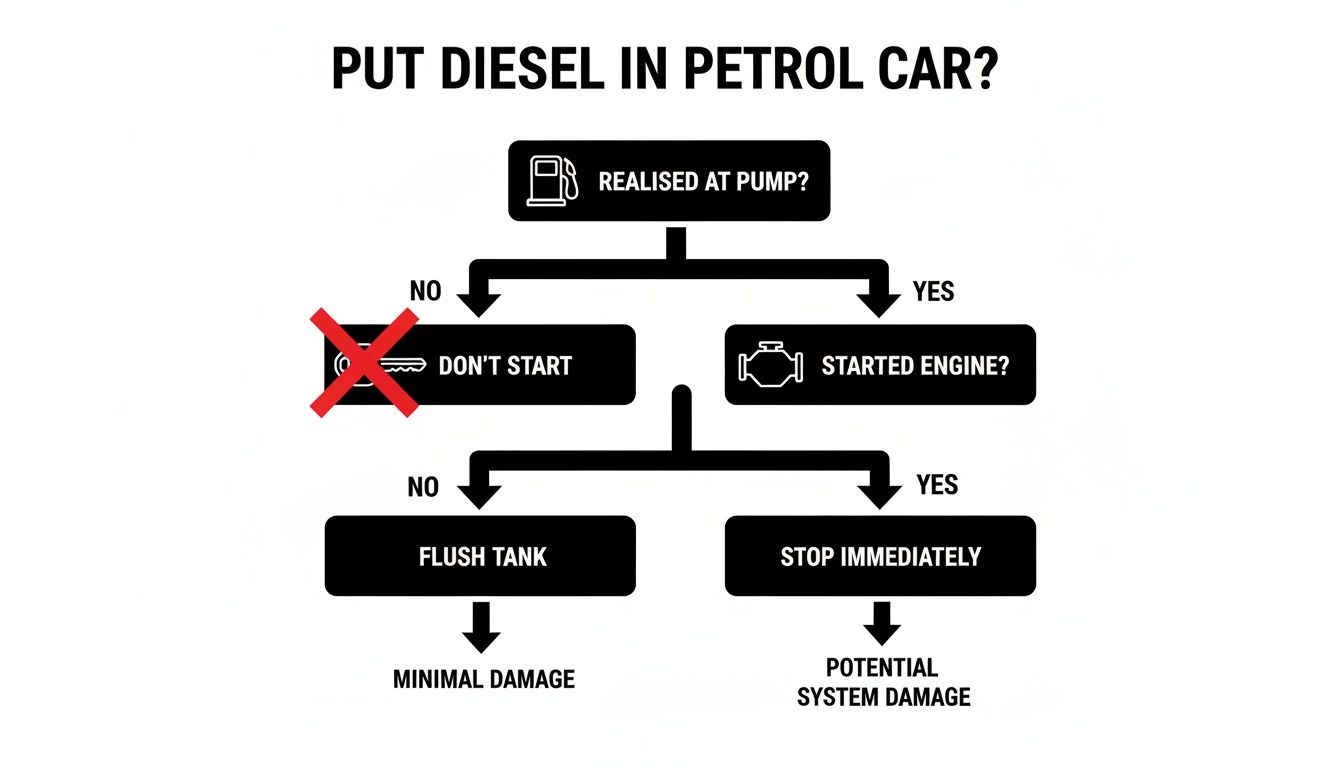
As you can see, the path you need to take changes dramatically the moment the engine comes into play.
The Consequences of Starting the Engine
Now for the scenario we all dread. If you've started the car—even for a moment—the situation gets serious, fast.
The second you turn that key, the fuel pump kicks into action. It immediately begins sending that incorrect diesel fuel on a destructive tour through your car’s entire fuel system.
Diesel just isn't built for a petrol engine. It’s a heavy oil that needs compression to ignite, not a spark. Instead of vaporising for a clean burn, it coats everything it touches, clogging up vital components that were never designed to handle its greasy consistency.
The crucial difference lies in the fuel’s properties. A petrol engine uses a spark to ignite a fine fuel mist. Diesel is a heavier oil that smothers this system and simply won't combust properly. This leads to immediate running issues and can cause lasting damage if you don't act quickly.
Recognising the symptoms is key, because the damage starts happening the second you pull away.
Common Symptoms After Starting the Car
You won’t get far down the road before your car starts complaining. Loudly. The signs are usually immediate and impossible to ignore. Keep an eye (and an ear) out for these tell-tale warnings:
A Spluttering, Misfiring Engine: The car will feel jerky and hesitant. This is the sound of your spark plugs failing to ignite the oily diesel fuel.
Excessive White or Grey Smoke: This is the classic giveaway. The engine is desperately trying—and failing—to burn the diesel, pumping thick clouds of unburnt fuel vapour out of the exhaust.
Complete Loss of Power: Your car will feel sluggish and won't respond when you press the accelerator. It will likely cut out completely as the fuel system gets gummed up.
The Engine Warning Light Comes On: Your car's onboard computer knows something is seriously wrong with the combustion process and will light up the dashboard to let you know.
These symptoms are a clear signal that the diesel has circulated. In the UK, this exact mistake accounts for a staggering 65% of all wrong-fuel breakdowns. It’s known to clog petrol injectors very quickly, leading to misfiring in 80% of cases within just five miles. For 40% of drivers, the engine fails entirely.
The financial difference is stark: a simple fuel drain at the forecourt might cost £200-£400, but driving away could lead to an engine rebuild costing over £4,000. You can find more official vehicle statistics and trends on the GOV.UK website. Pulling over the moment you suspect a problem is your best chance to minimise the damage and the cost.
Why a Professional Fuel Drain is Your Best Bet
Standing at the pump after realising you've put diesel in your petrol car, your mind probably jumps straight to "how can I fix this, fast?" It's a horrible feeling. The temptation to try a DIY fix, maybe by siphoning the tank yourself, is understandable. But trust me, it's a route filled with hazards.
For a start, you're dealing with highly flammable fuel and toxic vapours. Without the proper anti-static equipment and know-how, you’re creating a serious fire risk. This isn't just about getting your hands dirty; it's a genuine safety issue that professionals are trained to handle.
Then there's the aftermath. What do you do with 50 litres of contaminated fuel? Tipping it down the drain is not only illegal and environmentally disastrous, but it also comes with the threat of massive fines. A professional service is licensed to dispose of this hazardous waste correctly, saving you a whole world of trouble.

The Mobile Service Advantage
This is exactly why calling a specialist mobile fuel drain service like Misfuelled Car Fixer is the smartest move you can make. Forget the hassle and expense of calling a tow truck and waiting for a slot at a garage. A mobile technician comes right to you.
Think about it. You could be stuck on the forecourt in Ipswich or stranded on the side of the A14. Instead of waiting hours, an expert in a fully equipped van arrives to sort the problem right there and then. It's a workshop on wheels.
The benefits of this approach are massive:
Fast and Convenient: Most mobile specialists can get to you in under an hour. You’ll be back on the road far quicker than if you'd gone to a traditional garage.
More Affordable: You skip the towing fees and main dealer labour charges, which is why a mobile service is often up to 50% cheaper.
Specialist Expertise: These technicians live and breathe misfuelling mistakes. They know exactly how to assess the damage and perform a fuel drain with surgical precision.
Calling a professional isn't just about making your life easier. It's about damage control. A specialist ensures the job is done safely and legally, preventing a simple error from escalating into a costly and dangerous ordeal.
Dealerships Versus On-Site Specialists
Of course, taking your car to a main dealership is an option, but it's almost always the slowest and priciest one. You'll have to wait for a recovery truck, and then your car could sit at the dealership for days before they even look at it, especially if they're busy.
A mobile service, on the other hand, is built for this specific emergency. The technician’s only job is to get you sorted. They’ll drain the tank, flush the entire fuel system to clear out the diesel, and get your engine ready to run safely again. This focused, on-the-spot attention is why a professional fuel drain is, without a doubt, your best bet.
What to Expect From Our Mobile Fuel Drain Service
So, you’re stuck on a forecourt, and you've called for a mobile fuel drain. What actually happens next? It’s a lot more than just siphoning fuel out with a bit of tubing; it’s a precise, safe, and surprisingly quick process carried out by an experienced technician. Knowing what's involved can take a lot of the stress out of the situation.
Let's walk through the steps our experts take to get you safely back on your road.
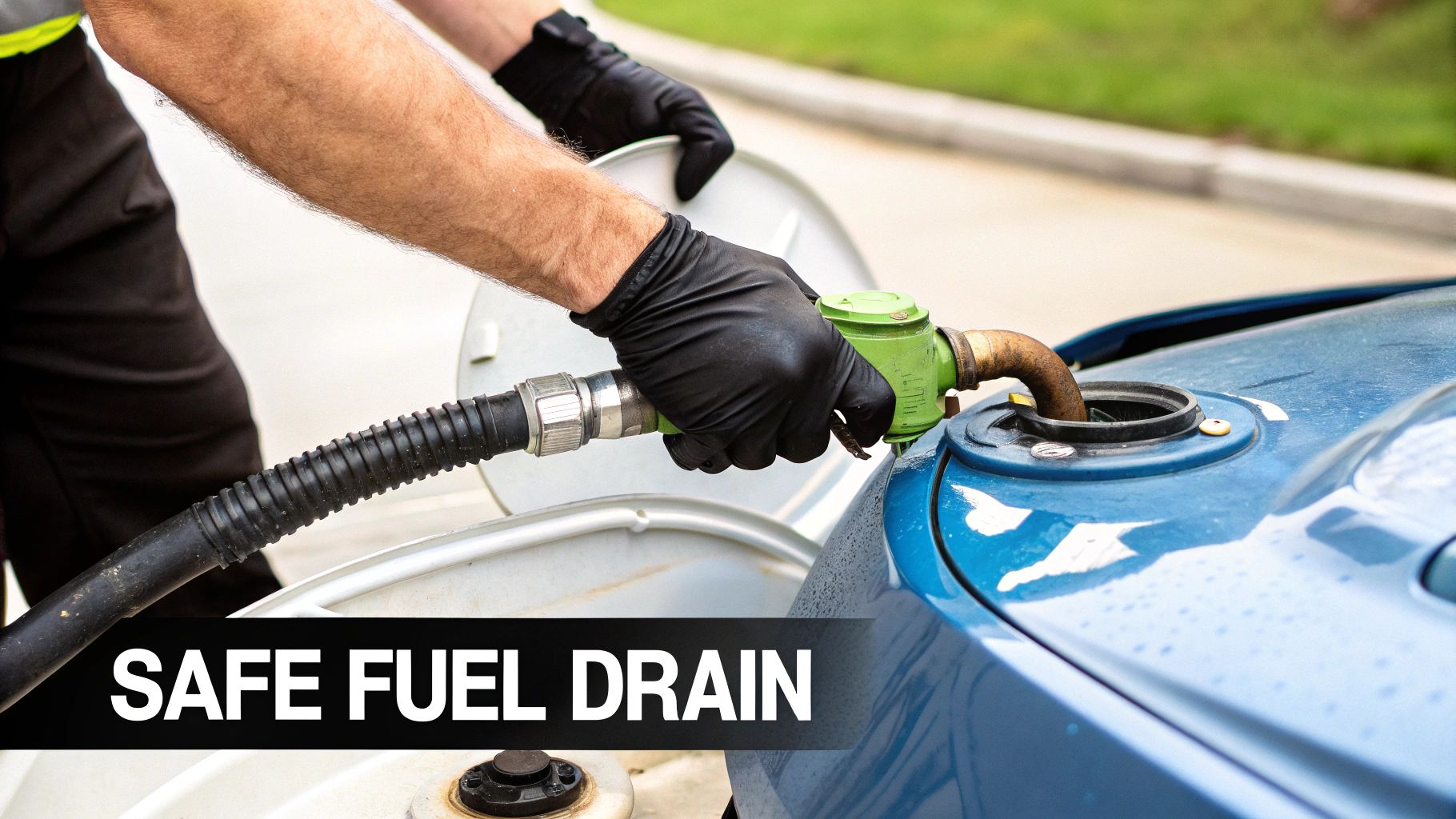
Securing the Scene and Quick Assessment
The moment our technician arrives, their first priority is safety. They'll secure the area around your car, usually with safety cones, and make sure there are no ignition risks nearby. Your car will be checked to ensure it's stable and the handbrake is on.
Next, they’ll have a quick chat with you. The big question is, "Did you start the engine?" Your answer helps them understand how far the diesel has travelled through the system. Don't panic if you did—it's a common scenario, and they have the right tools to handle it.
Draining the Contaminated Fuel
This is where the specialist gear comes out. Using an ATEX-approved (explosion-proof) pump, the technician will start the process of safely removing the incorrect fuel mix from your tank. This isn't your average pump; it's specifically designed to handle flammable liquids without creating sparks or static.
Every last drop of the contaminated fuel is drained from the tank and pumped into a secure container in the van. It’s a meticulous job to make sure no residue is left behind to cause issues later.
The equipment our technicians use is highly specialised. These are certified, professional-grade pumps and anti-static hoses—not something you could pick up at a DIY store. Trying to drain a fuel tank without the right kit is extremely dangerous.
Flushing the Entire Fuel System
With the tank empty, the next crucial step is to clean out the rest of the fuel system. If the engine was started, diesel will be sitting in the fuel lines, the filter, and possibly even the injectors. Leaving it there is asking for trouble.
To clear it out, the technician circulates a small amount of fresh, clean petrol through the system. This acts like a rinse, flushing out any lingering diesel contamination. This flushed fuel is then drained away with the rest of the waste.
Adding Fresh Fuel and Final Checks
Once the system is completely clean, the technician will add around 5 to 10 litres of the correct petrol to your tank. This is just enough to get the engine running smoothly and let you drive to the nearest petrol station for a full top-up.
Then comes the moment of truth: you’ll be asked to start the car. The technician will listen carefully to the engine and run a few quick checks to make sure everything is ticking over perfectly.
Finally, they’ll take care of the contaminated fuel. This isn't something that can just be poured down a drain; it's classified as hazardous waste. A professional service like ours is licensed to transport and dispose of it correctly at a registered facility, so you don't have to worry about the environmental side of things. Knowing what to expect when you need wrong fuel in car help near you can make a bad situation feel much more manageable.
Misfuelling Repair Costs On-Site Service vs Garage
When you've misfuelled, you have two main options: call a mobile service like us to fix it on the spot, or get your car towed to a garage. The difference in cost, time, and convenience can be significant.
Service Aspect | Mobile Fuel Drain Service | Traditional Garage or Dealership |
|---|---|---|
Recovery Costs | None. We come directly to you. | You'll likely face a recovery truck fee. |
Typical Call-Out Time | Fast. Usually within 30-90 minutes. | Can take several hours for recovery to arrive. |
Labour Costs | Fixed, all-inclusive price. No surprises. | Charged per hour, often at higher garage rates. |
Total Time | Usually under an hour from arrival to departure. | Can take a full day, sometimes longer if they're busy. |
Additional Costs | Unlikely. Costs are transparent upfront. | May include diagnostic fees or unnecessary part replacements. |
Convenience | Extremely high. Fixed at the roadside or on the forecourt. | Low. Involves towing, waiting, and potential delays. |
As you can see, a mobile service is almost always the quicker, cheaper, and far less stressful option. You're back on the road in about an hour, rather than facing the hassle and expense of being without your car for a day or more.
Simple Habits to Avoid Misfuelling in the Future
Going through the hassle of a misfuelling incident is something no one wants to experience twice. Once you’ve had the car drained and sorted, your top priority is making sure it never happens again. Thankfully, avoiding a repeat performance is less about luck and more about building a few solid, mindful habits at the petrol station.
We all lead hectic lives, and it’s usually a simple distraction that leads to this mistake. A phone call at the wrong moment, kids causing a fuss in the back, or just being exhausted after a long day can easily make you grab the wrong nozzle. This is where a simple routine becomes your best defence, acting as a mental safety net when your attention is pulled elsewhere.
Create Unmistakable Visual Cues
Your first line of defence is making the right choice so obvious you can't miss it. Don't just rely on your memory, especially if you're driving a car that isn't yours. A couple of cheap and easy additions can give you that crucial reminder just when you need it.
Stick it on: A bright, bold "PETROL ONLY" sticker on the inside of the fuel filler flap works wonders. You can't open the flap without seeing it, giving you an instant, unmissable confirmation.
Know your colours: In the UK, petrol nozzles are almost always green. Get into the habit of consciously looking for that green nozzle every single time. The black one is for diesel. Simple.
These tiny steps create a physical checklist, forcing you to pause and confirm before you start pumping. It’s a process that takes seconds but can save you a fortune. For more tips, check out our comprehensive wrong fuel in a car fix and prevention guide.
Develop a Routine for Unfamiliar Cars
The risk of misfuelling shoots up when people are driving cars they don't own. Whether it’s a hire car, a company vehicle, or just borrowing a mate’s motor for the weekend, your usual routine goes out the window. Your muscle memory is useless when the fuel flap is on the opposite side and nothing feels familiar.
A simple lapse in routine is the number one cause of misfuelling. When you’re in a different car, your autopilot habits don't work, and that's when mistakes happen. Always take five extra seconds to double-check the fuel type before you even touch the pump.
Before you even pull up to the pump in an unfamiliar car, get into the habit of confirming its fuel type. You'll usually find it written on the dashboard, inside the fuel cap, or in the car's paperwork. Make this check a non-negotiable part of your pre-fuelling ritual. It’s a tiny investment of time that offers total peace of mind and stops you from ever having to deal with the "diesel in a petrol car" drama again.
Common Questions After Fuelling Up with the Wrong Pump
Even after the initial shock wears off and you've got help on the way, your mind is probably still racing with questions. That's completely normal. Let's walk through some of the most common worries drivers have when they've accidentally put diesel in their petrol car.
How Much Diesel Is Too Much?
This is the number one question we get asked, and the answer is surprisingly simple: any amount of diesel is too much.
There's no "safe" ratio or magic number. Even a small splash, say 5% diesel mixed in with your petrol, is enough to cause serious problems. Think of diesel as a thick, greasy oil – because that's essentially what it is. It won't ignite from a spark plug and instead clogs up everything it touches, from the fuel lines to the injectors. The only real fix is to get every last drop out of the tank.
Will My Car Insurance Cover This?
That really comes down to the fine print of your policy. Some fully comprehensive plans do have an "accidental damage" clause that might cover a misfuelling blunder, but it's rarely a standard feature.
Even if you are covered, think twice before making a claim. You'll likely lose your no-claims bonus and could see your premiums shoot up at renewal time. Honestly, most of the time, the cost of calling out a mobile fuel drain expert is less than your insurance excess anyway.
It’s always a good idea to check your policy documents, but paying for a specialist directly is often the quickest, cheapest, and smartest way forward. It keeps your insurance record clean and gets you back on the road faster.
Can I Just Top Up the Tank with Petrol to Dilute It?
Please, whatever you do, don't do this. It’s a common myth, and a very dangerous one at that. Trying to dilute diesel with petrol is one of the worst things you can do and will almost guarantee expensive engine damage.
Here's why: diesel is heavier and oilier than petrol. It doesn't mix. Instead, it sinks straight to the bottom of your tank, right where the fuel pump pickup is. The moment you turn the key, your engine gets a pure, concentrated shot of diesel. The only safe and effective solution is a professional drain and flush.
How Long Does a Mobile Fuel Drain Actually Take?
If you're picturing yourself stuck on the side of the road for half the day, don't worry. A professional mobile fuel drain is a remarkably quick and efficient service.
For most cars, as long as the engine hasn't been run, the entire process from start to finish usually takes between 45 and 90 minutes. That includes the technician arriving, draining the contaminated fuel, flushing the system clean, and getting some fresh petrol in to get you started. It's worlds away from the hassle of waiting for a tow to a garage where your car might sit for hours before anyone even looks at it.
If you've put the wrong fuel in your car in Suffolk, don't risk it. Call the experts at Misfuelled Car Fixer for immediate, 24/7 assistance. We'll get you safely back on the road. Visit our website at https://www.misfuelledcarfixer-suffolk.co.uk or call us now.


