
.jpg)


Water in the petrol tank: A UK Driver's Guide
Updated: 15 hours ago
It's a sinking feeling every driver dreads: your car starts sputtering, juddering, or just won't start at all. One of the most common culprits, and one of the most damaging, is water in fuel tank. It's a surprisingly frequent problem, and it can cause serious, expensive trouble if you don't act fast.
Because water is denser than petrol, it sinks straight to the bottom of the tank. This is a huge problem because that’s exactly where your fuel pump pickup is located. The result? Your engine tries to run on pure water instead of petrol, leading to immediate performance nightmares and the risk of long-term damage.
Why Water in Petrol Tank is an Engine's Worst Enemy
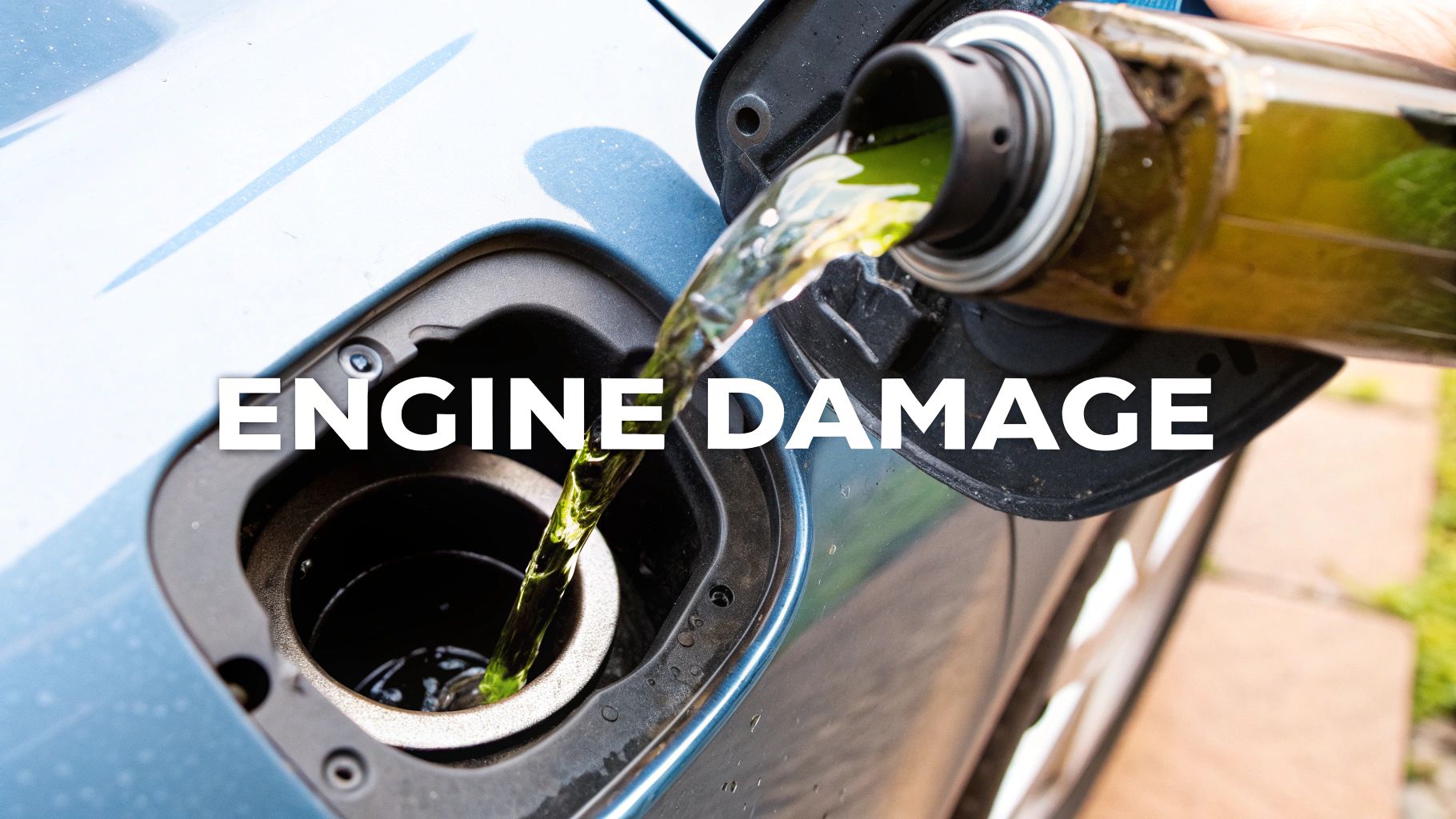
Discovering water in your fuel tank isn't just a minor hassle; it's a direct threat to your car's engine. Think of your engine as a precision instrument designed to run on a very specific, highly combustible mix of petrol vapour and air. When water crashes that party, the whole system grinds to a halt.
Water, of course, doesn't burn. So when the fuel pump forces it through to the injectors, they end up spraying a useless, non-combustible mist into the cylinders. This is what causes the engine to misfire, idle erratically, and lose power dramatically. If enough water gets pulled in, the engine will likely stall and refuse to start again, leaving you stuck.
The Science Behind the Damage
The root of the issue is simple physics. Water is heavier than petrol, so it doesn't mix. It creates a separate layer at the very bottom of your fuel tank, right where the fuel pump draws from. This means your engine gets a concentrated slug of water before it can access the perfectly good petrol floating on top.
This kicks off a chain reaction of problems that go way beyond poor performance:
Rust and Corrosion: Water is the enemy of metal. It will quickly start to corrode the inside of your fuel tank, fuel lines, and critical components like the fuel pump and injectors.
Clogged Fuel System: As rust forms, tiny particles can flake off and get sucked into the fuel system. These will quickly clog your fuel filter, starving the engine of fuel even after the water is gone.
Damaged Injectors: Modern fuel injectors are incredibly precise and operate under high pressure. Forcing water through them can cause serious internal damage, often requiring expensive replacements.
"Ignoring the signs of water in the petrol tank is a false economy. What starts as a simple stutter can quickly escalate into a repair bill involving the entire fuel system. The best course of action is always immediate and decisive."
A Common Problem on UK Roads
This isn't just a rare or theoretical issue; it happens more often than you'd think and affects UK drivers regularly. In a recent high-profile case, contaminated petrol at a single BP station in Essex caused over 40 vehicles to break down in one go.
Local recovery services were completely overwhelmed, with the final number of affected cars potentially topping 100. It's a stark reminder of how quickly a contaminated tank can lead to widespread chaos and unexpected bills for motorists. You can read more about the Essex fuel contamination incident to see just how disruptive it was.
How Does Water Even Get in Your Petrol Tank?
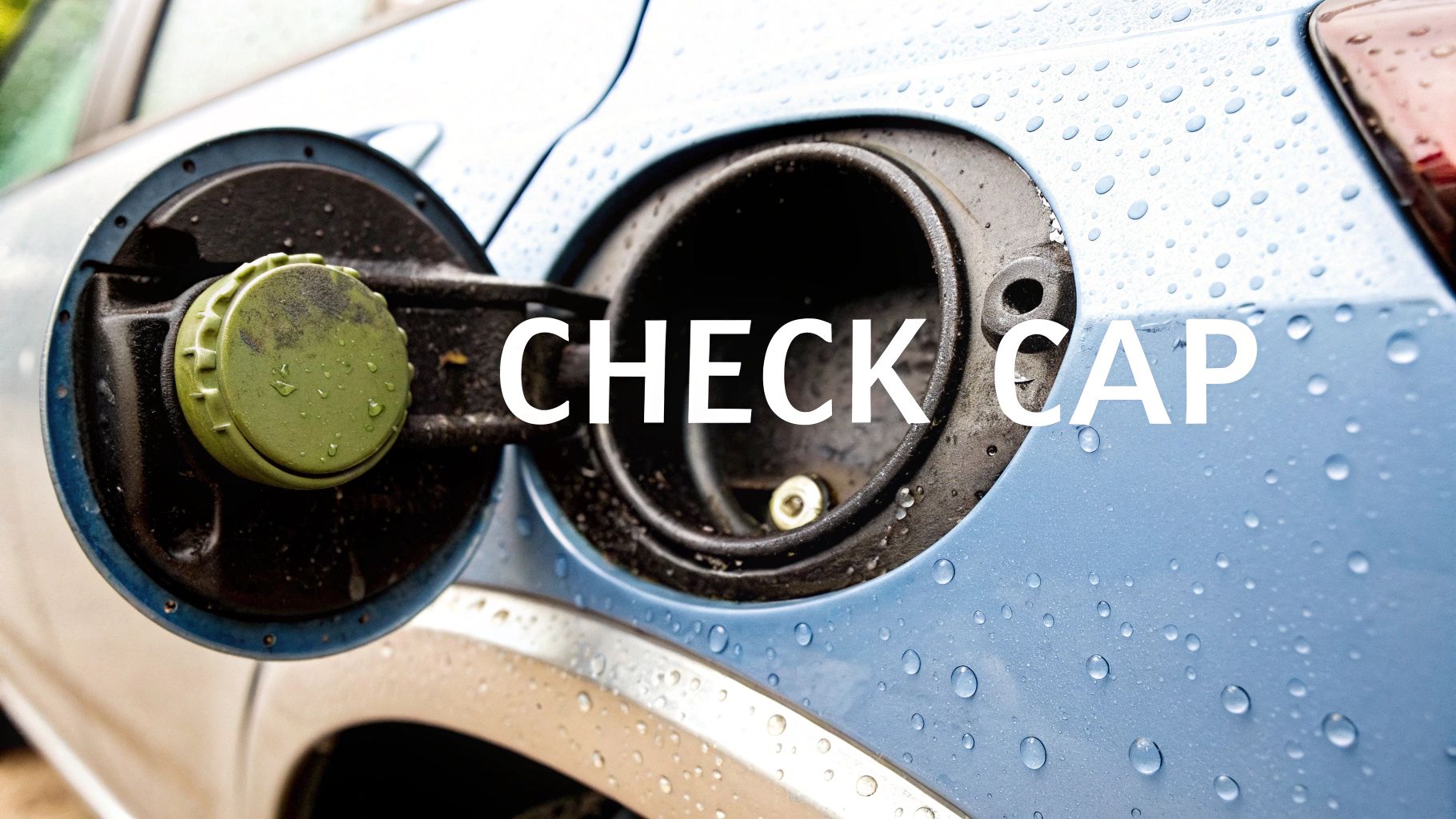
It sounds a bit odd, doesn't it? A supposedly sealed fuel system somehow letting water in. But honestly, it’s a far more common problem than most people realise, especially with the classic British weather we all know and love. It’s rarely a single big event; instead, it's usually a slow, sneaky creep of moisture that builds up over time.
The number one culprit? Simple condensation.
Every time your engine runs, it uses fuel, leaving a pocket of air in its place. That air, of course, contains moisture. As the temperature swings from day to night, the air in the tank expands and contracts. This constant "breathing" can gradually pull in more damp air from outside.
When the tank cools down, that moisture turns into tiny water droplets on the inside walls, just like the condensation on your windows on a chilly morning. These droplets trickle down and, because water is denser than petrol, they collect at the very bottom of the tank. A few drops here and there don't sound like much, but they soon add up.
The Usual Suspects: Common Ways Water Sneaks In
Beyond the slow build-up of condensation, there are a few other weak points and mishaps that can lead to water in the petrol tank. Most of these boil down to everyday wear and tear or just plain bad luck.
A Dodgy Petrol Cap Seal: Your petrol cap isn't just a lid; it has a crucial rubber seal. Over the years, this seal can dry out, crack, and lose its tight fit. A worn seal is like leaving the door ajar for rainwater, spray from a jet wash, or road grime to find its way in.
Contaminated Fuel from the Pump: It's rare, but it does happen. Sometimes, the massive underground storage tanks at a petrol station can get contaminated with water themselves. If you happen to fill up before they've identified the problem, that water gets passed straight into your car.
A Simple Mistake: We’ve all had those days. Forgetting to put the petrol cap back on properly, or leaving it off entirely during a sudden downpour, can let a surprising amount of water into the tank in just a few minutes. It’s an easy slip-up with potentially expensive consequences.
Fundamentally, the science is simple. Damp air gets into the tank, cools down, and the water condenses out. This water sinks, degrades your fuel quality, and can even encourage nasty microbial growth (often called 'fuel bugs') that creates sludge and corrodes your fuel system from the inside out. For a deeper dive, official guidance on preventing groundwater contamination from fuel tanks offers some technical insight.
If you take one thing away from this, let it be this: a fuller tank is a healthier tank. Less empty space means less room for air, which means less condensation can form. Try to keep your tank at least half-full, particularly during the colder, wetter months. It’s one of the easiest and most effective preventative habits you can adopt.
Your Emergency Action Plan for Contaminated Fuel
That sinking feeling when you realise there might be water in petrol tank is a stressful one, but what you do next is absolutely critical. Getting this right can be the difference between a straightforward fix and a repair bill stretching into the thousands.
The golden rule, the one thing you must remember, is this: do not start the engine.
Seriously. Turning that key is the worst thing you can possibly do. The moment you do, the fuel pump kicks into life and starts sucking that water from the bottom of the tank, sending it straight into your fuel lines. This is how you cause catastrophic damage to injectors, filters, and the pump itself.
Immediate Damage Control
Your first job is to stop the problem from getting any worse. If you're in an awkward or unsafe spot, like blocking a pump at a busy petrol station, the car needs to be moved. But you can't use the engine.
Push, don't drive: Pop the car into neutral and ask for a hand to push it to a safe parking space. Even just driving a few metres is enough to pull the water into the system.
Secure your vehicle: Once it's safely parked, put the handbrake on and, most importantly, take the keys out of the ignition. This stops you—or anyone else—from starting it by accident.
By keeping the engine off, you've successfully contained the problem to the fuel tank. This makes the job of draining it far simpler, quicker, and a whole lot cheaper than if the water had been circulated through the entire fuel system.
Your Next Moves
Okay, the car is safe and the engine is off. Now you can take a breath and think. Sometimes, a quick look can give you a clue. Check your fuel cap – is the rubber seal looking cracked, brittle, or is it missing altogether? A worn-out seal is a classic way for rainwater to creep in over time.
This brings you to a crossroads. While you might be tempted to tackle this yourself, especially if you think it's only a small amount of water, the risks are high. A DIY drain without the proper gear is not only hazardous but often incomplete, leaving just enough water behind to cause more issues down the line.
Before you even think about grabbing a hosepipe, it's vital to understand how to drain a petrol tank safely and legally in the UK. Honestly, this is usually the point where calling in a professional is the smartest, safest, and in the long run, the most cost-effective decision you can make.
Choosing Between a DIY Fix and a Professional Fuel Drain
So, you’re pretty sure you’ve got water in your petrol tank. Now comes the big decision: do you roll up your sleeves and tackle it yourself, or is it time to bring in the pros? Honestly, the right call hinges on how much water you think is in there, how comfortable you are with car mechanics, and how much risk you're willing to take.
The DIY route can be tempting, especially if you think it's just a tiny amount. Some people swear by fuel additives that are meant to absorb a little bit of water, letting it get burned off with the petrol. The trouble is, these are really only for minuscule amounts of condensation. They’re no match for a proper slosh of water.
Then there's the idea of siphoning the tank yourself. You'll need a proper pump (and I can't stress this enough – never use your mouth), some approved containers for the contaminated fuel, and a safe, open space to work. The real problem is you're fumbling around in the dark, trying to get the siphon hose right to the bottom where the water has settled. It’s messy, the fumes are dangerous, and you almost never get all the water out.
This is the point where you have to make a call, and your very first move is the most important one.
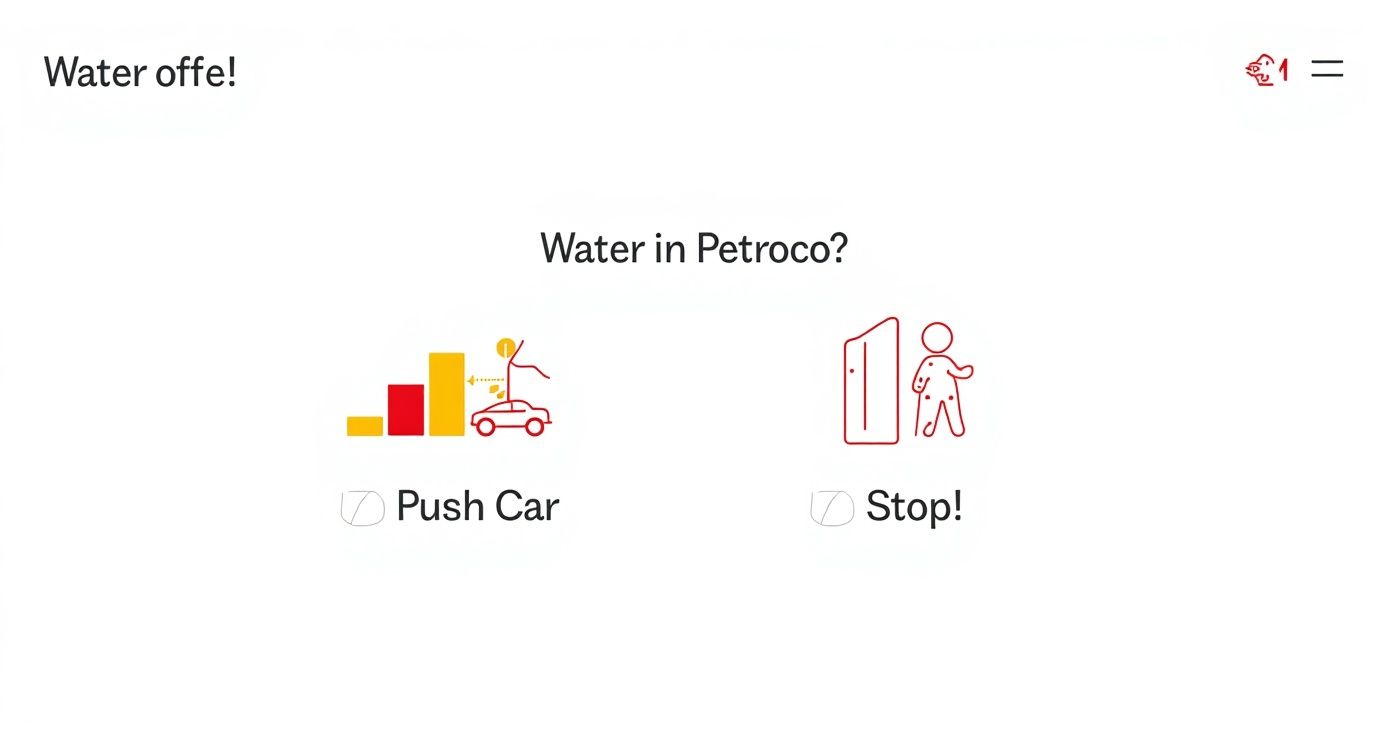
As the chart makes crystal clear, whatever you suspect, do not start the engine. Keeping the contaminated mix out of your fuel lines and engine is the key to preventing a small headache from turning into a massive, expensive migraine.
When a Professional Is Your Best Bet
If your car is spluttering badly, misfiring, or just refuses to start, that’s a pretty clear sign the water isn't just sitting in the tank anymore. It’s been pulled into the fuel system. At this stage, a DIY fix is off the table, and you need a professional fuel system service.
A professional mobile technician does a lot more than just stick a hose in and hope for the best. They perform a complete system flush.
Specialised Equipment: They come equipped with powerful pumps and sometimes even small inspection cameras to make absolutely sure every last drop of water and tainted fuel is gone.
System Purge: The job isn't done until they've flushed the fuel lines, checked (and often replaced) the fuel filter, and made sure the injectors are clear.
Safe Disposal: They know how to handle and dispose of contaminated fuel safely and legally, according to UK environmental rules. You really don't want that stuff lying around in your garage.
To make the choice clearer, let's break down the pros and cons side-by-side.
DIY Methods vs Professional Service: A Comparison
Factor | DIY Approach (Additives/Siphoning) | Professional Fuel Drain Service |
|---|---|---|
Effectiveness | Only works for very small amounts of water. Siphoning often leaves residue. | Highly effective. Guarantees complete removal of all contaminants. |
Risk | High risk of incomplete removal, damage to fuel system, and personal safety hazards (fumes, spills). | Very low risk. Performed by trained technicians with the correct safety gear and equipment. |
Time & Effort | Can be time-consuming and messy. Requires sourcing equipment and disposal options. | Quick and efficient. Technicians are often mobile and can be with you in an hour or two. |
Cost | Low initial cost for additives or a pump, but high potential cost if further damage occurs. | Higher upfront cost (£150-£300 on average), but prevents far more expensive engine repairs. |
Guarantee | None. If the problem persists, you're back to square one. | Work is guaranteed. Provides peace of mind that the job is done correctly. |
Ultimately, while the DIY approach might seem like a money-saver at first, the risks often outweigh the benefits.
A professional service ensures the problem is sorted properly the first time. They have the experience to spot any related issues, like a struggling fuel pump, and give you a complete solution that gets you back on the road safely. If you’re curious about just how detailed the process can be, this practical guide to cleaning petrol tanks gives a great overview of the thoroughness required.
Getting to Grips with the Cost of Water Removal
Let's talk money. The thought of a big repair bill is never pleasant, but knowing the ballpark figures can take some of the sting out of the situation. For a mobile fuel drain service here in the UK, you should budget for somewhere between £150 and £300.
Of course, that's a range for a reason. What you'll actually pay depends on a few things. The make and model of your car is a big one – some fuel tanks are just trickier to get to than others. Your location also plays a part; if you're stranded out in the sticks, the technician's travel time will be factored in. And, naturally, the scale of the problem matters. A bit of condensation is a much quicker fix than a tank brimmed with rainwater from a dodgy jerry can.
The Knock-On Costs: Beyond Just Draining the Tank
Here’s the crucial part: the initial drain might not be the end of the story. If you’ve tried to drive the car with water in the system, you could be looking at a few extra expenses. This is where the costs can really start to mount up.
New Fuel Filter: The fuel filter's one job is to catch gunk, and it will have done its best to trap the water and any resulting rust. It’ll almost certainly be clogged and need replacing.
Fuel Pump Failure: Petrol acts as a lubricant for the fuel pump. When you force water through it instead, it can overheat and burn out. That’s a much pricier fix.
Injector Problems: Water and delicate fuel injectors do not mix. Corrosion can clog up their fine nozzles, which can mean a professional cleaning at best, or a full replacement at worst.
When it comes to replacing parts like the fuel pump or filter, you'll also run into the choice between OEM and aftermarket parts, which adds another layer to the cost and quality decision.
The real financial danger isn't the £200 for the initial call-out. It’s the chain reaction of failing components that can hit your wallet if you don't sort the problem out properly and right away.
It's a reminder of how easily water can get into a fuel system. Old government reports once found that a staggering 84% of petroleum leaks came from older bare steel tanks, which are notorious for rusting and letting water in. While that’s a historic stat, it shows why you need to be thorough. You can read more about these historical insights into fuel storage issues if you're curious, but the lesson is clear: deal with water contamination completely, or it will cause more expensive problems down the road.
Preventing Future Fuel Contamination Issues

Going through the stress and expense of sorting out water in your petrol tank is something you'll want to avoid happening again. Thankfully, preventing it is less about complex mechanical know-how and more about adopting a few simple, proactive habits. A little bit of mindfulness goes a long way in keeping your fuel system clean.
The most common culprit, especially during our damp British winters, is condensation. An incredibly effective defence is simply to keep your petrol tank at least half-full whenever possible. Less empty space in the tank means less room for moisture-laden air to gather, condense, and form those pesky water droplets that sink straight to the bottom.
Build These Simple Checks Into Your Routine
Beyond keeping the tank topped up, a couple of other quick checks can save you a world of trouble down the line. They only take a few seconds but are your best defence against water getting in from the outside.
Every few months, make a point of inspecting the rubber seal on your petrol cap. You're looking for any signs of wear and tear—cracks, brittleness, or visible damage. A seal that's past its best is an open invitation for rainwater or spray from a car wash to sneak into your tank.
It also pays to be a bit picky about where you fill up. Try to stick to busy, reputable petrol stations. A high turnover of fuel means their underground storage tanks are less likely to have petrol sitting around for ages, which is when water contamination can become an issue.
Key Takeaway: Proactive prevention is always cheaper than a cure. Simple habits like keeping your fuel level up and regularly checking your petrol cap seal are the most effective ways to avoid the headache of water in your petrol.
Some drivers also swear by using fuel additives as a preventative measure. These products can help manage very small amounts of water from condensation, allowing it to mix with the fuel and be burned away safely. If you're curious, you can learn more about what fuel additives are and how they work in our detailed guide.
Ultimately, these small, consistent steps are your best insurance against future fuel system problems.
Your Questions Answered
We get a lot of questions from drivers across the UK who’ve found water in their petrol tank. Here are some quick, straightforward answers to the most common ones.
Will Just a Little Bit of Water Really Damage My Engine?
In short, yes. Even what seems like a tiny amount of water can start causing trouble pretty quickly. You'll notice things like sputtering and poor performance first, but the real damage is happening out of sight.
Water leads to rust and corrosion inside your fuel system – think of your fuel lines, the pump, and especially the injectors. Over time, that corrosion causes parts to fail, leading to some eye-watering repair bills. It’s always best to tackle any suspected water in the petrol tank straight away, no matter how small you think the problem is.
How Long Does It Take to Get My Fuel Drained Professionally?
When you call out a mobile technician, you can typically expect the whole job to be done in about 60 to 90 minutes. That timeframe usually covers draining all the bad fuel, flushing the system to get rid of any lingering water, and refilling with fresh, clean petrol.
Of course, this can change depending on the car. Some vehicle designs make the tank harder to access, and the severity of the contamination plays a big part. A simple drain where the engine hasn't been started is much faster than a situation where water has been pulled all the way through to the engine.
The single best thing you can do for a quick fix is to not start the car. If the water stays in the tank, the technician's job is simpler, faster, and you avoid the more complex (and expensive) job of cleaning out the entire fuel line and injector system.
Am I Covered by My Car Insurance for This?
Probably not, but it’s always worth checking. Most standard UK car insurance policies don't cover problems from contaminated fuel. They tend to see it as a maintenance issue rather than an accident.
That said, some comprehensive plans or specific "misfuelling cover" add-ons might include it. The only way to know for sure is to dig out your policy documents or give your insurer a call. It's far better to confirm what's covered before you make any assumptions.
If you've found water in your petrol tank and need a professional on the scene fast, don't wait. Contact Misfuelled Car Fixer for a rapid 24/7 mobile fuel drain service across Suffolk and beyond. You can reach us at https://www.misfuelledcarfixer-suffolk.co.uk.


