



What Happens If You Put Petrol In Diesel Engine: Quick guide
- Misfuelled Car Fixer

- Nov 18, 2025
- 16 min read
Updated: Nov 24, 2025
It’s a heart-sinking moment at the pump: you’ve put petrol in your diesel car. This is a far more serious mistake than the other way around, and the damage can be immediate, severe, and incredibly expensive. The key is what you do next – starting the engine is the worst thing you can do.
What Happens If You Put Petrol In Diesel Engine?
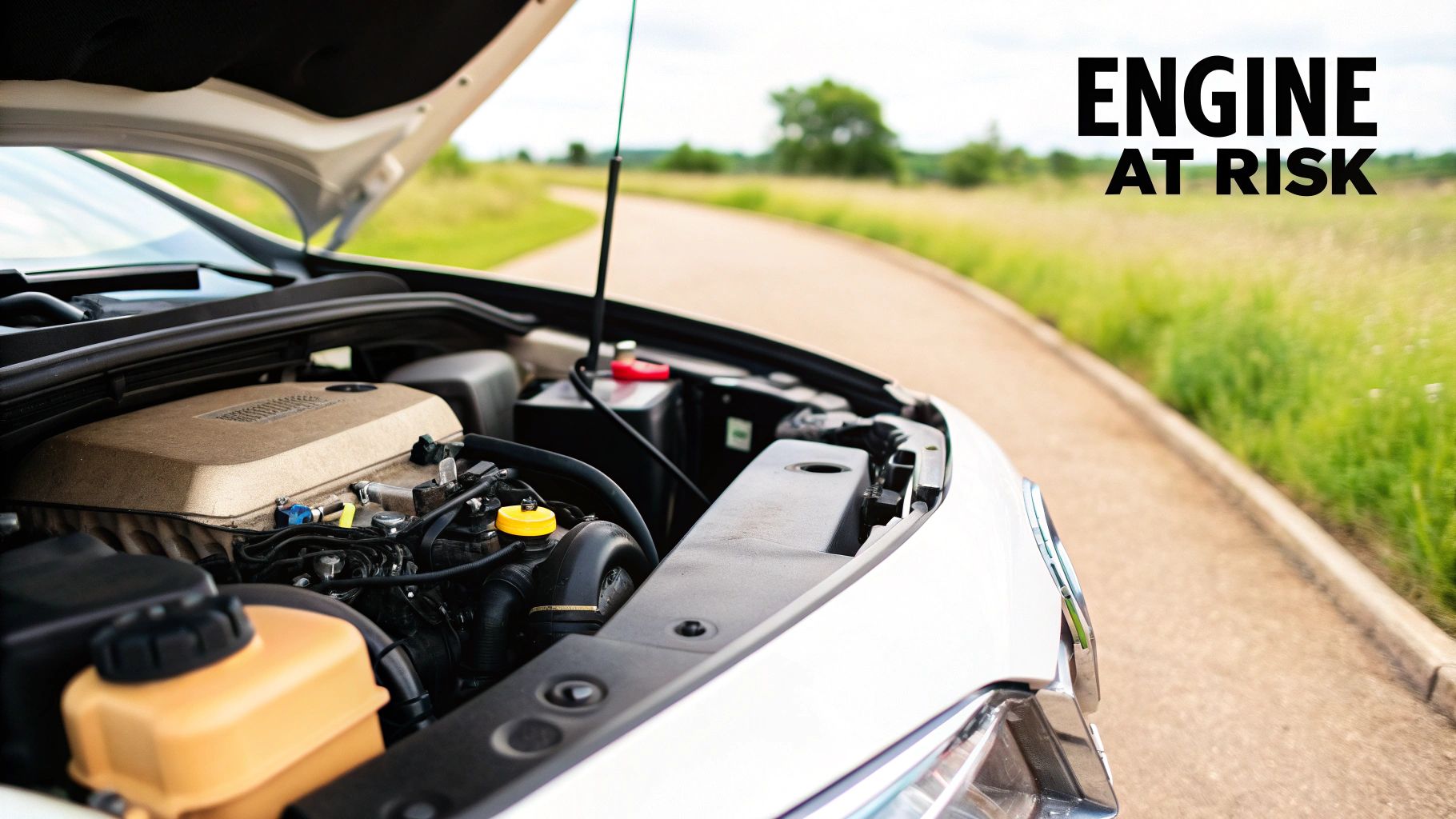
What Happens If You Put Petrol In Diesel Engine? To really get your head around the problem, you need to understand one crucial thing about diesel fuel: it isn’t just fuel. It’s also a lubricant. The intricate, high-pressure fuel pump and injectors in a modern diesel are marvels of engineering, with metal parts that rely on the oily quality of diesel to glide smoothly past one another.
Petrol is the complete opposite. It’s a solvent. So, when it enters the system, it actively strips away that vital lubricating film. It’s like trying to run an engine with sand in the oil. The result is instant and destructive metal-on-metal friction.
The Lubrication Meltdown
What Happens If You Put Petrol In Diesel Engine? As soon as petrol starts circulating, it begins dissolving the oily film that protects your fuel system’s most delicate components. The high-pressure fuel pump is nearly always the first casualty. We're talking about a part that operates at pressures well over 30,000 PSI.
Without that essential lubrication, the pump's internal parts start to grind together, creating tiny metal filings. These sharp, abrasive particles are then blasted through the entire fuel system. They contaminate the fuel lines and shred the microscopic nozzles inside the fuel injectors, rendering them useless.
This isn't just a minor hiccup. UK automotive data shows that repair bills for this kind of misfuelling can easily range from £500 to well over £1,500, depending on how far the contamination has spread. For more on the properties of diesel, GOV.UK provides some useful insights.
The Detonation Disaster
The second major issue comes down to how each fuel ignites. Diesel engines don't have spark plugs; they use immense compression to heat the air in the cylinder until the injected diesel fuel spontaneously combusts in a controlled burn. Petrol engines, of course, need a spark to get things going.
Introduce petrol into a high-compression diesel engine, and it ignites far too early and with explosive force. This is known as detonation, or 'knocking'. The violent pressure spikes are like hitting the top of your pistons with a sledgehammer, which can lead to catastrophic failure of pistons, cylinder heads, and other core engine parts.
At its heart, the problem is a destructive one-two punch: petrol acts as a solvent where a lubricant is desperately needed, and it detonates violently when it should be burning smoothly under compression. This is why not turning the key is so absolutely critical.
To really see why these two fuels are worlds apart, this quick comparison table breaks it down.
Petrol vs Diesel Key Differences and Engine Impact
Property | Diesel Fuel | Petrol Fuel | Impact on Diesel Engine |
|---|---|---|---|
Lubricity | High (Oily) | Low (Solvent) | Strips lubrication, causing metal-on-metal friction and component failure. |
Ignition | Compression-Ignited | Spark-Ignited | Ignites too early and violently, causing engine 'knock' and damaging pistons. |
Flash Point | High (~52°C) | Low (~ -43°C) | Increased volatility and risk of uncontrolled premature combustion. |
Viscosity | Higher | Lower | Can lead to leaks and improper operation of finely-tuned fuel system parts. |
Seeing the stark differences makes it clear why putting the wrong fuel in is no small matter. The entire system is engineered for one type of fuel, and introducing its polar opposite sets off a devastating chain reaction.
How Petrol Wrecks a Diesel Engine
To really get your head around what happens when you put petrol in a diesel car, you need to understand two key things: lubrication and combustion. It's easy to think of diesel as just fuel, but it’s much more than that. It's an oily, slippery substance that keeps the high-precision parts of your fuel system happy. Petrol, on the other hand, is the exact opposite. It's a solvent. It cleans things. And that one difference is where all the trouble begins.
Think about the high-pressure fuel pump and injectors in your modern diesel. These aren't just simple bits of kit; they're incredibly sophisticated, with metal components moving at blistering speeds and under pressures that can top 30,000 PSI. They absolutely rely on a constant, protective film of oily diesel to keep everything moving smoothly and stop metal from grinding against metal.
When you introduce petrol into this system, it immediately gets to work stripping away that vital oily layer. The result is catastrophic. It’s like trying to run an engine with sandpaper instead of oil. Stripped of their lubrication, those intricate metal parts start grinding against each other.
The Metal-on-Metal Nightmare
This friction creates instant and severe wear. The high-pressure fuel pump is almost always the first victim – and it’s a costly one. As its internal components tear themselves apart, they generate microscopic metal shavings. We call these tiny, razor-sharp particles ‘swarf’. Pushed by the immense pressure, this swarf is fired through your entire fuel system like shrapnel.
This metallic debris contaminates everything it touches:
Fuel Lines: The swarf gets stuck in the lines, just waiting to cause problems down the road.
Fuel Injectors: The tiny, precise nozzles on your injectors are shredded by these particles, destroying the fine spray pattern needed for the engine to run properly.
Fuel Filter: The filter is quickly overwhelmed and clogs up, which can starve the engine of fuel.
In essence, the fuel pump starts to eat itself, sending a wave of destruction through the rest of the system. This chain reaction is why what seems like a simple mistake can lead to repair bills that run into thousands of pounds.
Petrol in a diesel system doesn't just fail to lubricate; it actively strips away the lubrication that’s already there. This turns the high-pressure fuel pump into a machine that generates metal filings, which then contaminate and destroy every component downstream.
The Uncontrolled Explosion Problem
On top of the lubrication disaster, petrol throws the whole combustion process into chaos. This is the second major assault on your engine. Diesel engines are built tough, designed to use immense compression to ignite fuel in a controlled, powerful burn.
Petrol is far more volatile and ignites much more easily. It doesn't wait for the piston to reach the top of its stroke. Instead, it detonates prematurely and violently under the high-compression conditions of a diesel cylinder. It's an uncontrolled explosion that mechanics often call 'engine knock' or 'pinking'.
That knocking sound isn't just a noise; it’s the sound of your engine trying to tear itself apart. The violent, badly-timed explosions are like someone hitting your pistons with a sledgehammer on every single stroke. That kind of stress can cause serious internal damage.
What Components Are at Risk?
The combination of metal contamination and violent combustion puts some of your engine's most critical parts on the line. The shockwaves from the detonations can crack pistons, bend the rods that connect them to the crankshaft, or even damage the cylinder head. A simple mix-up at the forecourt can genuinely end in a full engine rebuild.
This twin-pronged attack – lubrication failure and explosive detonation – means the damage gets exponentially worse for every second the engine runs. That's why the most important piece of advice you will ever hear is this: do not turn the key. If you can keep the contaminated fuel in the tank, you can stop this whole destructive cascade before it even begins.
Spotting the Telltale Signs of Misfuelling
Catching a misfuelling mistake early is absolutely crucial. It can mean the difference between a straightforward, affordable fix and an eye-watering repair bill for catastrophic engine damage. The symptoms you’ll see all hinge on one single, critical factor: have you started the engine?
If you realise what you’ve done right there at the pump, before even touching the ignition, you’re in the best possible position. The only "symptom" is that sinking feeling in your stomach. It's stressful, for sure, but the petrol is just sitting in the fuel tank, completely isolated and unable to cause any mechanical harm.
The game changes completely the second you turn that key. The moment the engine fires up, that damaging petrol-diesel mix gets sucked out of the tank and pumped through the entire fuel system. The warning signs will appear fast and get worse with every second you drive.
Signs Your Engine is Running on the Wrong Fuel
If you've driven off the forecourt, your car will start complaining very quickly. The initial signs might be subtle, but they will escalate as the engine battles against the contaminated fuel. Keep an eye (and an ear) out for any of these red flags.
First, you'll probably notice a serious lack of power. The car might feel sluggish and lazy, struggling to accelerate. This is because the engine is being starved of the lubrication and specific combustion properties it gets from proper diesel. That's your cue to pull over safely, right away.
The most obvious and worrying signs are the ones you can see and hear:
Loud, Metallic Knocking: A diesel engine operates under immense compression. When petrol is introduced, it detonates uncontrollably, creating a harsh, clattering or knocking noise from the engine. That’s the sound of your engine's internal parts being put under incredible stress.
Excessive Smoke from the Exhaust: Look in your rearview mirror. You'll likely see clouds of white or grey smoke pouring out of the exhaust pipe. This is a classic sign of the fuel not burning properly.
Sudden Loss of Power: Your car might lurch violently or lose power completely, making it impossible to keep your speed up. This often happens as the fuel pump and injectors, stripped of their essential lubrication, begin to fail.
The engine management light (EML) on your dashboard will almost certainly light up or start flashing. This is your car's brain telling you a major fault has been detected in the engine or fuel system. Never, ever ignore it.
The Final Stages of Misfuelling Damage
If you try to push on, these symptoms will quickly lead to the engine cutting out and stalling completely. By this point, the damage is usually severe. The lack of lubrication from the diesel means the fuel pump may have seized, sending tiny metal fragments through the system and clogging up the injectors.
Once it stalls, the engine probably won't restart. The fuel system is too compromised to work correctly, and trying to crank it over will only make things worse. For a deeper dive into these warning signs, you can learn more about the symptoms of petrol in a diesel car and what to do. The only correct course of action is to stop the car safely and call for a professional.
Your Immediate Action Plan After Misfuelling
That sinking feeling when you realise you’ve just put petrol in your diesel car is horrible. But what you do in the next few seconds can mean the difference between a simple fix and a wallet-emptying, catastrophic repair bill. The number one rule, above all else, is this: DO NOT START THE ENGINE.
If you haven't turned the key, the petrol is just sitting in the fuel tank, away from your engine's most sensitive and expensive parts. If the engine was already running when the penny dropped, switch it off immediately and safely. The moment you start the engine, the fuel pump kicks into life and begins sending that corrosive petrol all the way through the system, starting a chain reaction of damage.
The Golden Rules: What to Do Right Now
Your only job is to stop that contaminated fuel from ever reaching the engine. Follow these steps calmly and precisely – it’s your best defence against a huge repair bill.
Here’s exactly what to do the moment you realise your mistake at the pump:
Don't Touch the Ignition: Don’t even turn the key to get the radio on. In most modern cars, this simple act can prime the fuel pump, which is the first step in circulating the wrong fuel.
Tell the Petrol Station Staff: Let them know what’s happened. They’ve seen it all before and can help cone off the pump to keep everyone safe.
Move Your Car Safely: Pop the car into neutral. Under no circumstances should you start it to move it. Ask the staff or a friendly driver for a hand to push it to a safe parking spot.
Call a Professional: This is not a DIY job. You need to ring a specialist wrong fuel recovery service straight away. They have the proper equipment to drain the tank and flush the system safely.
The single best thing you can do is keep the bad fuel in the tank. Resisting that temptation to just "see what happens" by turning the key is what will save you from the most eye-watering repair costs.
The infographic below makes it crystal clear what to do, whether your engine is on or off.
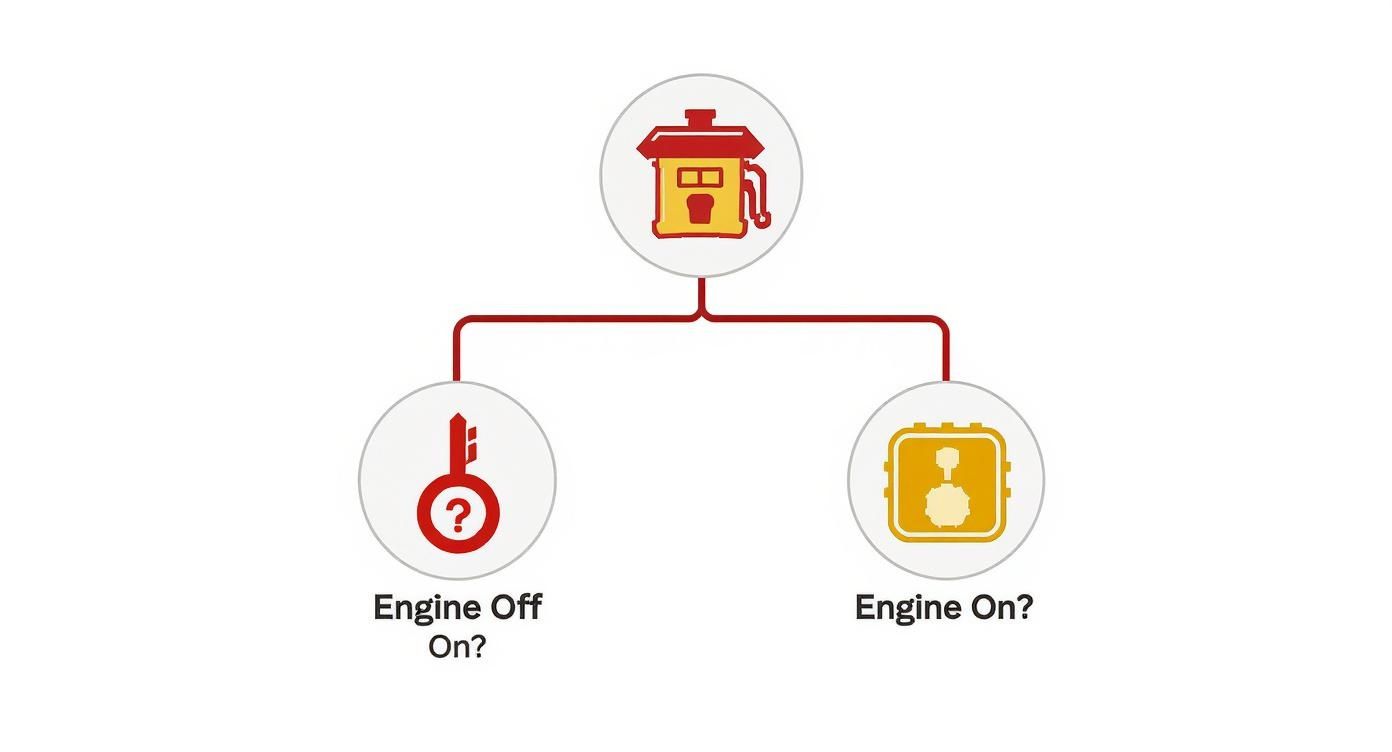
As you can see, keeping the engine off is the "safe" path. Starting it is a direct route to potential engine damage.
Why You Must Not Drive the Vehicle
It’s an easy mistake to make, and you’re not alone. In fact, up to 15,000 vehicles are misfuelled every single year in the UK. Driving with petrol in a diesel engine isn’t just bad for the car; it’s a massive safety risk. It can cause the engine to cut out suddenly, which is incredibly dangerous on Suffolk’s busy A-roads or the A14. You can read more about the frequency of misfuelling incidents on RAC.co.uk.
Don't fall for the old myth of "diluting" the petrol by topping up with diesel. It simply doesn't work. You’ll still be sending a harmful mixture through the system that strips away lubrication and causes wear and tear. The only real solution is a complete drain and flush. For a deeper dive into what that involves, take a look at our guide on the safe steps for how to drain a fuel tank.
Calling a professional like Misfuelled Car Fixer ensures the contaminated fuel is removed properly, disposed of correctly, and gets you back on your journey without risking thousands in engine repairs.
What the Professionals Do: A Step-by-Step Look at the Fix
That sinking feeling when you realise you've put petrol in your diesel car is horrible, but calling in a specialist is the best and quickest way to get things sorted. Knowing what they actually do can take a lot of the stress out of the situation and shows you why it's so important not to turn that key.
Ultimately, the entire repair process boils down to one crucial question: did you start the engine? The answer completely changes the game.
Scenario 1: You Haven't Started the Engine
If you realised your mistake at the pump and haven't touched the ignition, breathe a sigh of relief. This is the best-case scenario. The contaminated fuel is sitting harmlessly in the tank, and a straightforward wrong fuel drain is all that’s needed.
A mobile technician can come right to you, whether you're stuck at a Tesco pump in Ipswich or on your driveway in Bury St Edmunds. Their process is meticulous and safe.
Here's what they'll typically do:
Drain Every Last Drop: Using specialist, explosion-proof (ATEX-approved) pumps, they will safely drain the entire mixture of petrol and diesel from your fuel tank.
Flush the Fuel Lines: A small amount of residue can linger in the fuel lines. They'll flush the system with a small amount of clean diesel to chase out any remaining petrol.
Change the Fuel Filter: This is a must. Your fuel filter will have soaked up the contaminated mix, and leaving it in place is just asking for trouble down the road. A fresh filter is essential.
Add the Right Fuel: Once the system is completely clean, they’ll add enough fresh, high-quality diesel to get your engine started safely and send you on your way.
This whole process is incredibly efficient. From the moment they arrive, you're usually looking at being back on the road in under an hour. It's by far the fastest and cheapest way to fix a misfuelling blunder.
Scenario 2: You've Started the Engine
This is where things get more serious. If you’ve started the car, even for a minute, the petrol has been pulled from the tank and circulated through the entire fuel system. It will have started stripping the essential lubrication from delicate, high-precision components like the fuel pump and injectors, causing friction and potentially irreversible damage.
A roadside fix is usually off the table at this point. Your vehicle will need to be recovered and taken to a garage for much more intensive work.
The repair process will likely involve:
A Full System Decontamination: This is far more involved than a simple tank drain. Mechanics will need to meticulously clean the fuel pump, all injectors, and every fuel line.
Replacing Damaged Parts: Anything that shows signs of wear from the lack of lubrication has to be replaced. This often means the high-pressure fuel pump and the fuel injectors—two of the most expensive components in a modern diesel engine.
Estimated Costs and Downtime for Misfuelling Scenarios
The financial and time implications between these two scenarios are huge. A simple mistake can either be a minor inconvenience or a major, wallet-draining headache. This table gives you a realistic idea of what to expect.
Scenario | Typical Repair Actions | Estimated Cost (UK) | Estimated Vehicle Downtime |
|---|---|---|---|
Engine NOT Started | Mobile fuel drain, system flush, fuel filter replacement. | £200 - £400 | ~1 hour (roadside repair) |
Engine STARTED | Vehicle recovery, full system strip-down & decontamination, replacement of fuel pump, injectors, filters. | £1,500 - £4,000+ | 2-4 days (at a garage) |
As you can see, the difference is staggering. A quick call to a specialist before turning the key can save you thousands of pounds and days of hassle. For a more detailed look at the figures, you can check out our complete guide to petrol in diesel car repair costs. This is precisely why the single most important thing you can do is don't start the car.
How to Prevent Putting the Wrong Fuel in Your Car
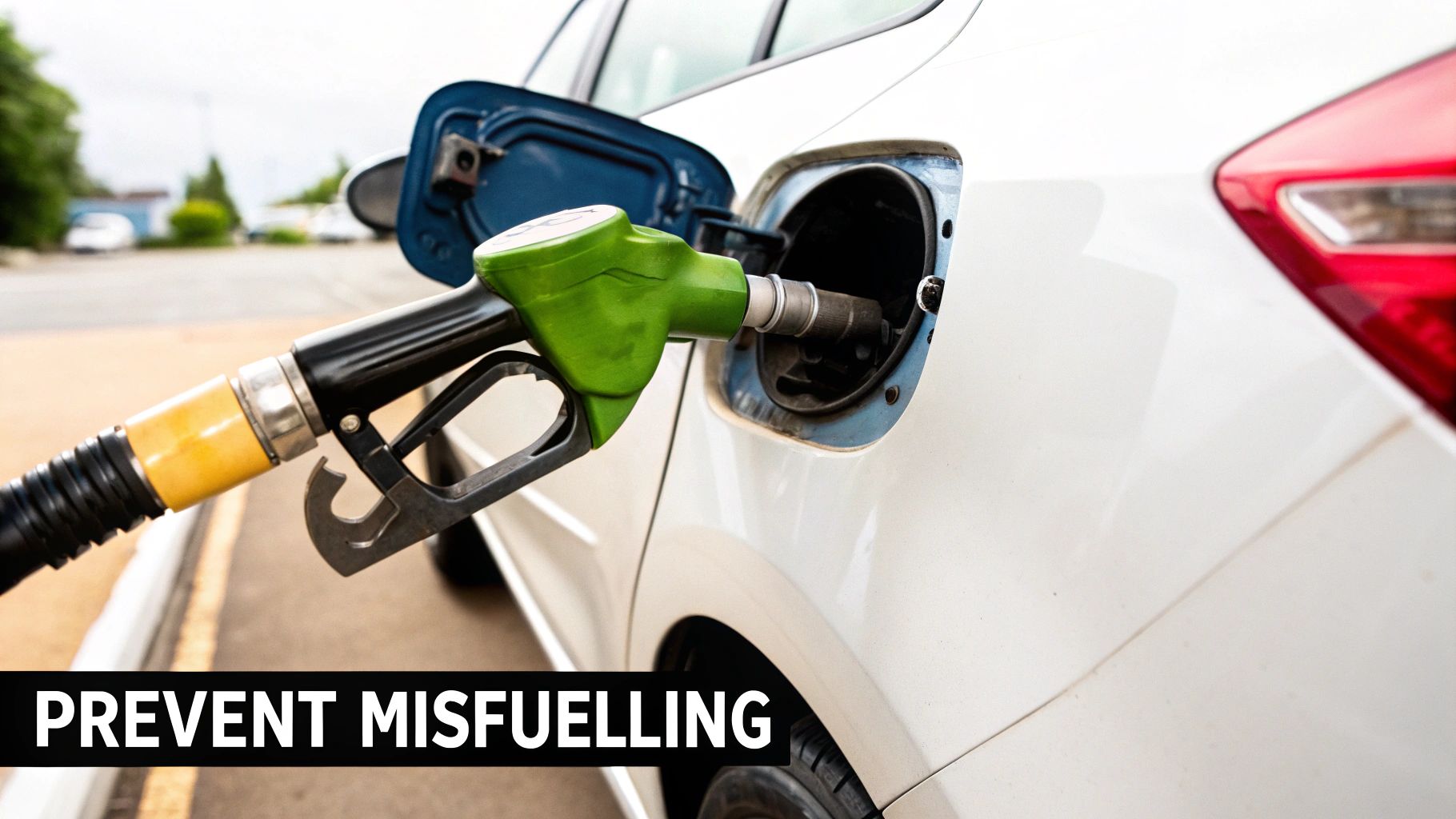
After going through the ordeal of a misfuelling incident, you’ll be determined to never let it happen again. The damage, the cost, the sheer inconvenience—it’s a harsh lesson. The good news? It's almost always preventable. A few simple habits can make all the difference.
This mistake rarely happens out of carelessness. More often, it’s a moment of distraction. You're on the phone, tired after a long haul down the A14, or perhaps driving a hire car you're not used to. The key is to be fully present for those couple of minutes at the pump.
Developing Good Habits at the Pump
It all comes down to paying attention. Before you even reach for the nozzle, just pause. Take a second to consciously double-check what you’re doing. It sounds almost too simple, but that one deliberate action can save you a fortune.
Here are a few practical habits to bake into your refuelling routine:
Check the Nozzle Colour: In the UK, the colour-coding is there for a reason. Diesel pump handles are almost always black, and unleaded petrol is green. This is your first, fastest visual clue.
Read the Pump Label: Don’t rely on colour alone. Make sure the label on the pump you’re using actually says "DIESEL" before the nozzle goes anywhere near your car.
Check Your Fuel Flap: Most diesel cars have a sticker inside the fuel flap that states "DIESEL." Make it a reflex to glance at it every single time you pop it open.
Misfuelling is usually caused by simple, everyday distractions. By creating a consistent, three-step mental checklist—nozzle colour, pump label, fuel flap—you build a powerful habit that acts as your best defence.
Using Technology for Added Security
If you want an extra layer of protection, consider fitting a misfuelling prevention device. These are clever gadgets that replace your standard filler cap. They’re designed to physically block the narrower unleaded petrol nozzle, making it impossible to insert it into your wider diesel filler neck.
They're an affordable and popular aftermarket solution that offers complete peace of mind, especially for vehicles shared by multiple drivers in a household.
Advice for Fleet Managers in Suffolk
For any Suffolk business running a fleet, whether it's vans or cars, a single misfuelling incident means more than just a repair bill. It means vehicle downtime, lost revenue, and major disruption. A more formal approach to prevention is essential.
Here are a few strategies to put in place:
Clear Vehicle Labelling: Make it impossible to miss. Use prominent "DIESEL ONLY" stickers on the dashboard near the fuel gauge and inside the fuel flap of every single vehicle.
Driver Training: Don't just assume drivers know the risks. Make misfuelling prevention a specific part of your induction process and ongoing training. Explain the mechanical damage and hammer home the importance of checking.
Fit Prevention Devices: For your most valuable vehicles or in fleets with high driver turnover, investing in misfuelling prevention caps is a no-brainer. It's a cost-effective way to completely remove the risk of human error.
Frequently Asked Questions About Misfuelling
Even with all the technical details laid out, you probably still have a few questions buzzing around your head. It's completely normal. When you're standing on a forecourt in Suffolk realising you've made a mistake, you need clear, no-nonsense answers. We've put together some of the most common questions we get asked day in and day out.
Will Just a Small Amount of Petrol Do Any Harm?
Yes, unfortunately, it will. One of the most persistent and dangerous myths out there is that a "splash" of petrol in a diesel tank is harmless. The truth is, even a small amount—say, 5% of your tank's capacity—is enough to start causing problems.
Diesel isn't just a fuel; it's also a lubricant. Petrol, on the other hand, is a solvent. As soon as it mixes, it starts stripping away that vital lubricating film, increasing friction and wear on incredibly precise parts like your fuel pump and injectors. While a tiny amount might not cause the engine to grind to a halt immediately, it's quietly causing premature wear. The more petrol, the faster and more severe the damage. It’s never safe to assume a small amount is fine.
Am I Covered by My Car Insurance for This?
That really depends on the fine print of your policy. Many fully comprehensive insurance plans will cover misfuelling incidents, but it's certainly not a given.
Some insurers specifically list misfuelling as an exclusion, which means you're on your own for the cost of the drain and any repairs. The only way to know for sure is to dig out your policy documents or, better yet, give your insurer a call to clarify exactly what your plan includes. Don't just assume you're covered.
Be sure to check your policy carefully. Some insurers might pay for the fuel drain itself, but not for the much more expensive mechanical repairs if you started the engine and caused damage.
Can't I Just Top It Up with Diesel to Dilute the Petrol?
Absolutely not. This is one of the worst things you can do and will only make a bad situation worse. Trying to dilute the petrol by drowning it in diesel doesn't get rid of the core issue: the petrol is still in there, acting as a solvent.
Even a heavily diluted mixture will get pumped all through your fuel system, from the tank to the injectors. Every component it touches will be running on a fuel that's failing to lubricate it properly, leading to friction, heat, and potentially catastrophic damage. The only correct course of action is to have the contaminated fuel professionally drained out.
What’s the Environmental Impact?
Running your engine on the wrong fuel isn't just bad for your car; it's bad for the air we all breathe. The combustion process gets completely thrown off, leading to a huge spike in harmful emissions.
A misfuelled diesel engine can spew out 20-30% more nitrogen oxides (NOx) because the petrol-diesel mix burns so erratically. With the UK's tough EURO 6 emissions standards and the spread of Clean Air Zones, this extra pollution is a serious concern. You can read more about the health and environmental impacts of vehicle emissions to get the full picture.
If you've put the wrong fuel in your car in Ipswich, Bury St Edmunds, or anywhere across Suffolk, don't panic and don't start the engine. Call the experts at Misfuelled Car Fixer immediately for fast, professional roadside assistance. We'll safely drain the contaminated fuel and get you back on your way, saving you time, money, and stress. Contact us 24/7 at https://www.misfuelledcarfixer-suffolk.co.uk.


