
.jpg)


What Is the Difference Between Diesel and Petrol Explained
At the heart of it, the real difference between diesel and petrol comes down to how they work inside an engine and what kind of driving you do. A petrol engine uses a spark plug to ignite the fuel, which is great for the zippy acceleration you need in most everyday cars.
Diesel, on the other hand, ignites under pure compression—no spark needed. This method delivers fantastic fuel efficiency and the kind of low-end pulling power that’s perfect for long motorway journeys and heavy-duty vehicles.
Diesel vs Petrol at a Glance
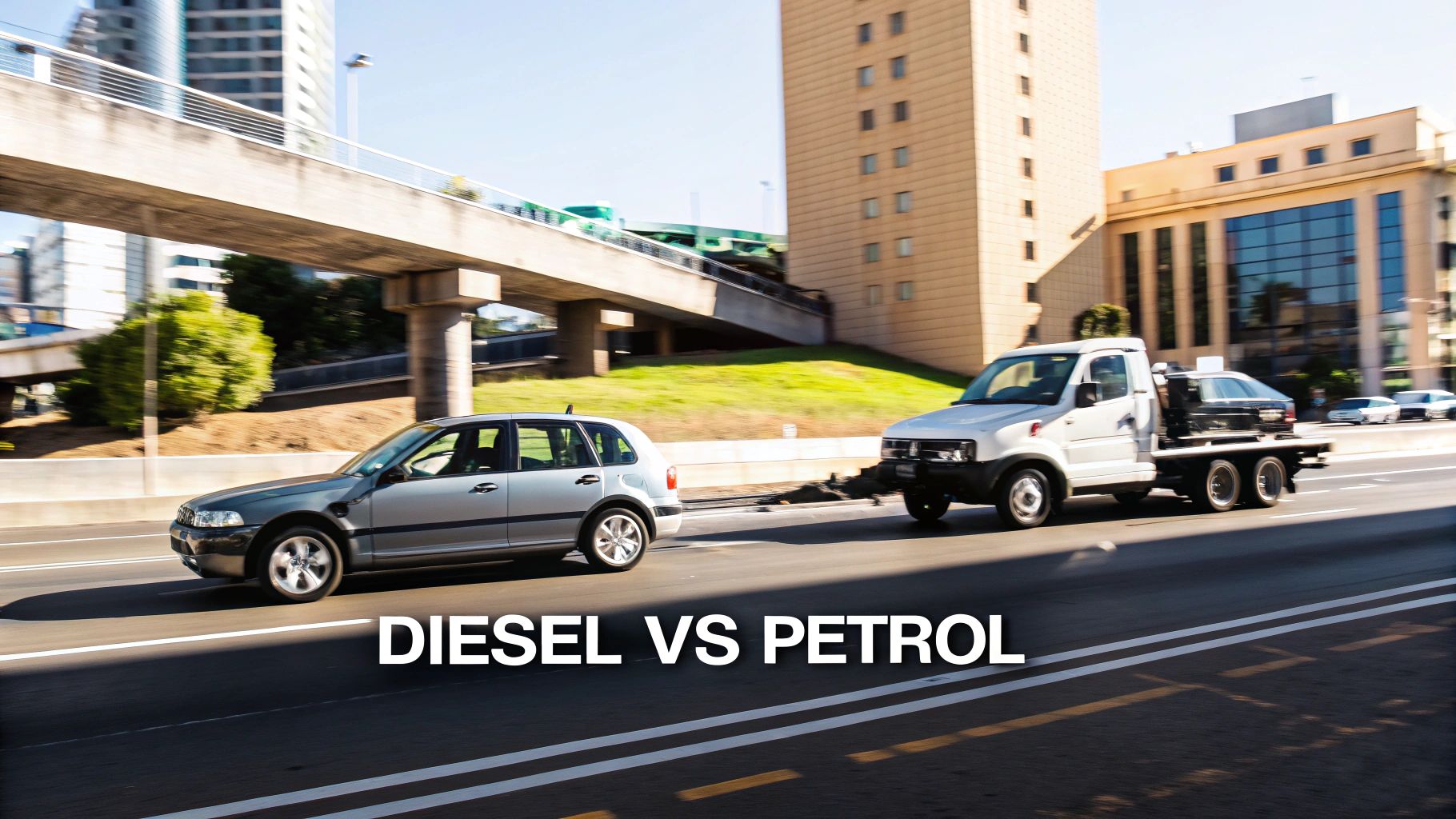
Here’s a simple way to think about it: a petrol car is like a sprinter, built for quick, explosive bursts of speed off the line. A diesel is more like a marathon runner—it takes a moment to get into its stride but has incredible endurance and efficiency over the long haul.
This core difference really shapes everything else, from fuel economy to engine maintenance. It’s why picking between a petrol or diesel car is about so much more than just the price at the pump. It's about matching the fuel's natural strengths to your daily driving habits, whether you’re doing the school run or clocking up hundreds of miles on the motorway each week.
How Fuel Chemistry Shapes Your Drive
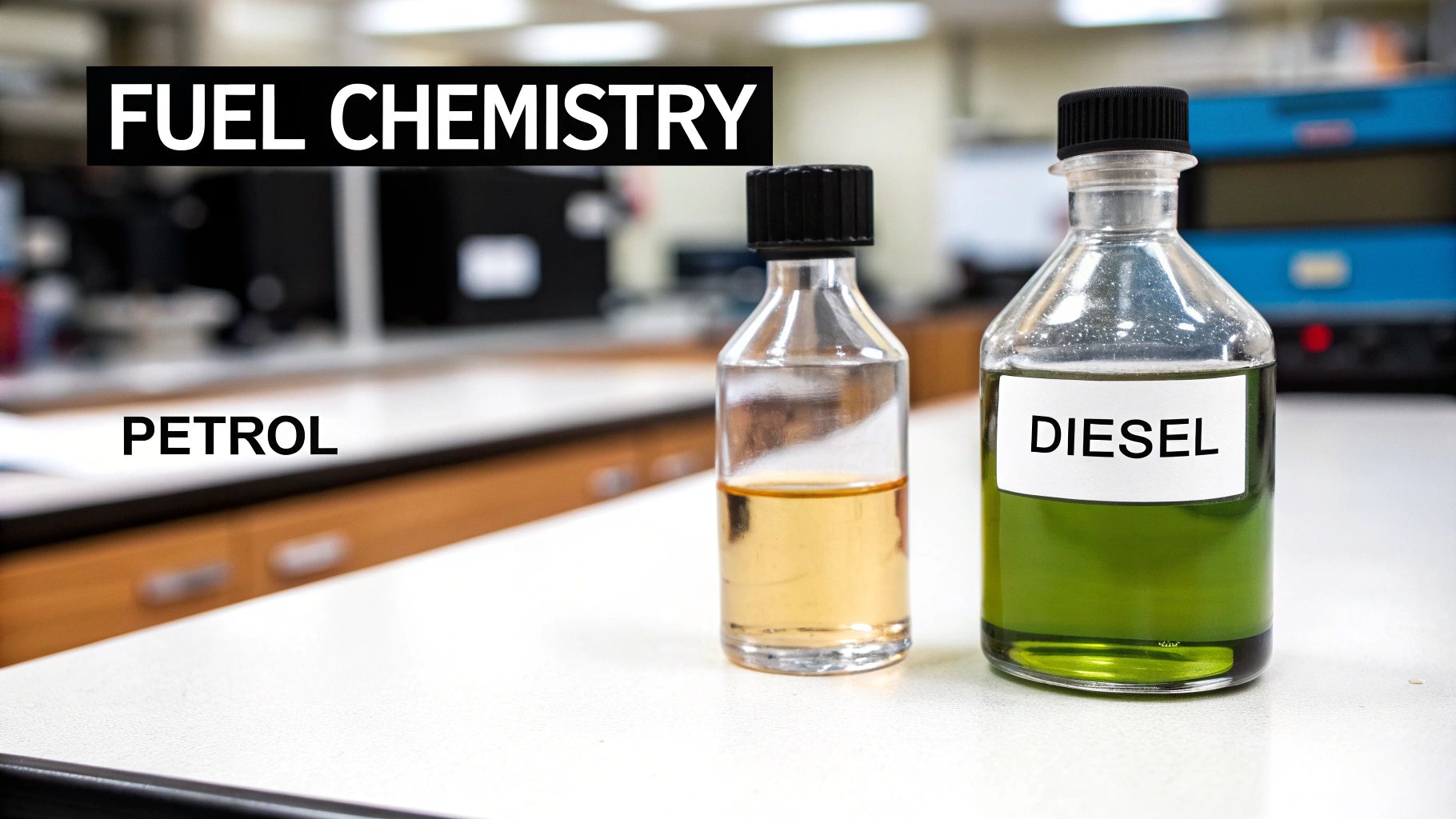
To really get to the heart of what separates diesel from petrol, you have to look at what they're made of. While both start life as crude oil, they're born at different stages of the refining process, which gives them completely different personalities on a chemical level.
Petrol is made up of lighter, more volatile hydrocarbon chains. It's thin, almost like water, which allows it to evaporate quickly and mix with air – a crucial step before it's ignited by a spark plug. Diesel, on the other hand, is built from heavier, oilier, and denser chains, which is why it feels greasy to the touch.
This extra density is the key to everything. It means diesel packs more energy into every single litre, which is the secret behind its legendary fuel economy. A good way to think about it is that petrol is like fine kindling – it catches fire in an instant with a spark. Diesel is more like a dense, heavy log that needs immense pressure to get going, but once it does, it burns for a very long time.
It's this fundamental difference in their very makeup that explains why you can't just swap them – they demand entirely different kinds of engines to work. The quality and performance of both can also be enhanced, as we cover in our guide on what fuel additives are and how they work.
Here's the rewritten section, designed to sound natural and human-written:
Spark vs. Squeeze: How Your Engine Really Works
At the heart of it, the fuel you put in your tank dictates the entire way your engine makes power. It all comes down to one fundamental difference: how that fuel is ignited.
A petrol engine is all about the spark ignition. You might have heard the four-stroke cycle described as 'suck, squeeze, bang, blow'. In a petrol engine, that 'bang' is created by a spark plug, which zaps a precisely mixed cocktail of air and petrol vapour.
This controlled explosion happens incredibly quickly, which is why petrol engines can rev so high. It’s what gives them that nippy, responsive character, especially when you put your foot down.
Diesel engines, on the other hand, play a completely different game. They use what’s called compression ignition. Instead of mixing fuel and air together first, a diesel engine just sucks in air and compresses it with immense force. If you’ve ever noticed a bicycle pump getting hot as you use it, you’ve felt this principle in action.
Once the air inside the cylinder is superheated from all that pressure, the engine injects a fine mist of diesel fuel. The heat is so intense that the diesel ignites instantly on contact—no spark plug needed. This much more powerful, slower burn is what gives diesel engines their signature low-end torque, or pulling power.
Choosing the Right Fuel for Your Driving Style
So, petrol or diesel? It’s the classic debate, and honestly, the right answer boils down to one thing: how you actually use your car.
Think about your typical week. If it’s filled with school runs, nipping to the shops, and navigating city traffic, a petrol car is likely your best bet. They generally feel a bit zippier off the line, which is perfect for all that stopping and starting.
On the other hand, if your life involves long stretches of motorway, a diesel engine is the undisputed king. They really come into their own on those long, steady cruises, delivering fantastic fuel economy thanks to their high torque. You'll go much further on a single tank.
It's a trend reflected in the bigger picture, too. Recent government statistics on UK energy trends and fuel consumption show a clear shift, with petrol becoming more common in cars while diesel finds its niche in other sectors.
This all comes back to the fundamental difference in how the engines work – one ignites with a spark, the other with pure compression.

Get this choice right, and you'll have a car that perfectly suits your lifestyle and your wallet.
Comparing the True Cost of Ownership
When you’re weighing up the cost of a car, the price you see on the forecourt is only part of the story. The real financial picture—the true cost of ownership—unfolds over years of fuel top-ups, tax, insurance, and inevitable maintenance bills.
The Financial Balancing Act
Historically, the trade-off was simple: diesel cars cost more to buy but saved you money in the long run, especially if you covered a lot of miles. Their impressive fuel efficiency made them the go-to choice for long-distance commuters.
That picture has become a bit more complicated lately. While diesels are still MPG champions, the price gap at the pump has flipped. Recent UK data consistently shows diesel costs more per litre than petrol—sometimes by a significant margin. Figures have shown a gap of over 7p per litre, which really adds up for the average driver.
Maintenance and Other Considerations
Maintenance costs can also throw a spanner in the works. Modern diesel engines are complex bits of kit, and when things go wrong with injectors or diesel particulate filters (DPFs), the repair bills can be steep. It's why many owners end up searching for information on topics like the signs of contaminated diesel fuel.
Of course, the debate doesn't end with petrol and diesel anymore. It's also worth looking into the real cost of owning an EV compared to petrol cars to get a complete view of your options.
What to Do if You Use the Wrong Fuel
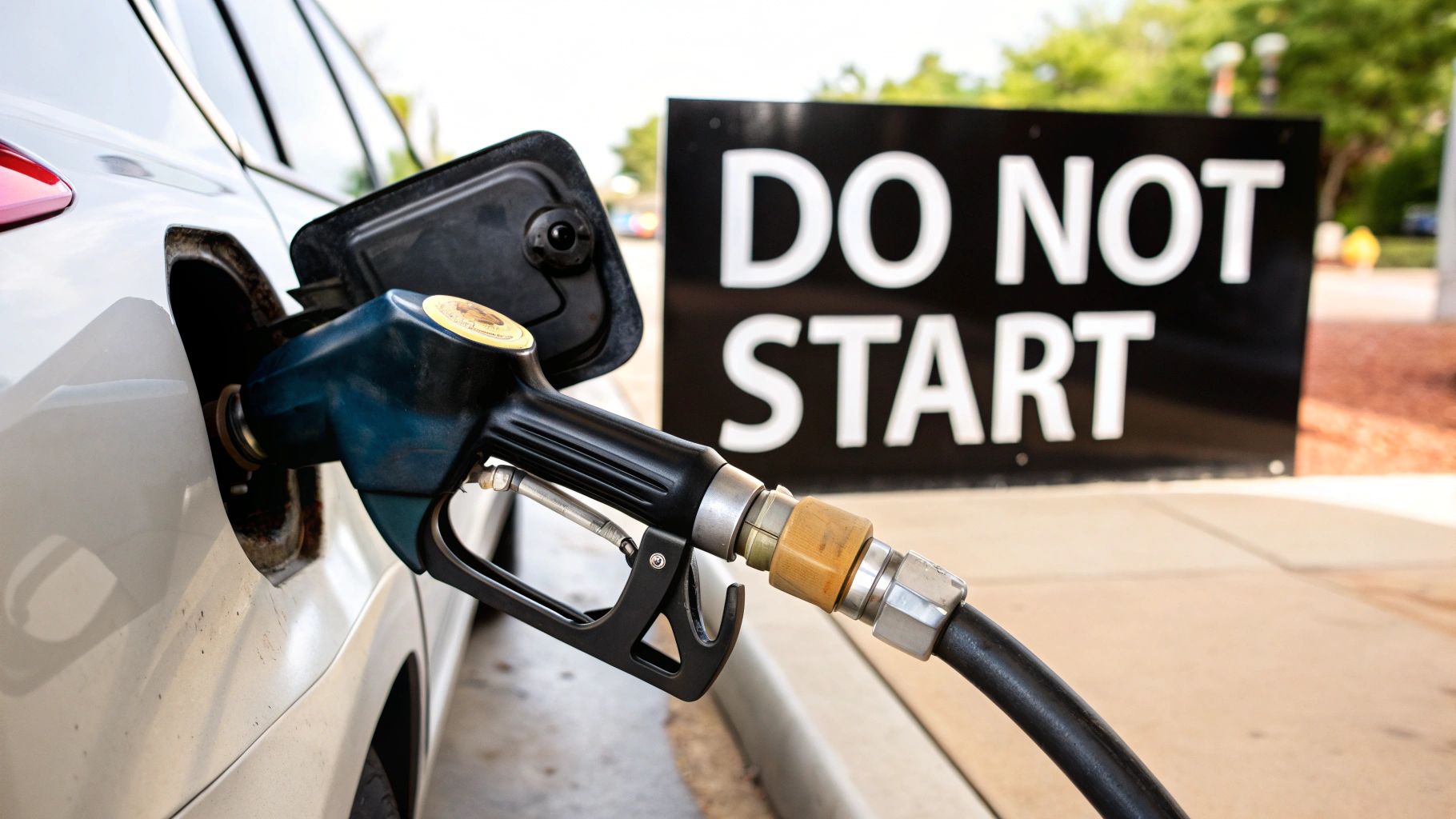
It’s a heart-sinking moment, but putting the wrong fuel in your car is a surprisingly easy mistake to make. What you do next, however, is absolutely critical. There’s one golden rule that can save you a world of pain: DO NOT start the engine.
Don't even put the key in the ignition. Turning it on starts the fuel pump, which immediately begins circulating the wrong fuel through the entire system. This is where a simple mistake can quickly escalate into thousands of pounds worth of damage.
Remember those chemical differences we talked about? Putting petrol into a diesel car is particularly nasty. The petrol acts like a solvent, stripping away the lubricating properties of diesel. This causes critical metal components in the fuel pump and injectors to grind against each other, creating tiny metal particles that contaminate the whole system. You can read more about the specific petrol in diesel car symptoms and what to do in our detailed guide.
Putting diesel in a petrol car is less common, mainly because the diesel nozzle is physically larger than most petrol filler necks. If it does happen, the thicker diesel will clog up the spark plugs and fuel system, causing the engine to misfire, smoke, and eventually stop running altogether.
Your Emergency Action Plan: The second you realise your mistake, stop fuelling. Don't touch the car keys. Let the petrol station staff know what’s happened, then call a professional misfuel assistance service immediately. A quick call can turn a potential mechanical disaster into a straightforward fix.
Got Questions About Diesel and Petrol? We Have Answers.
Deciding between diesel and petrol can feel like a big commitment, and it's easy to get bogged down in technical details. We get it.
To help clear things up, we've put together answers to the questions we hear most often from drivers, giving you the straightforward information you need to feel confident about your choice.


