



What To Do With a Wrong Fuel Car in Suffolk
- Misfuelled Car Fixer

- Dec 29, 2025
- 12 min read
It’s a heart-sinking moment. That instant you realise you’ve grabbed the wrong nozzle at the pump. It's a surprisingly common mistake, but the next few seconds are absolutely critical. Your very first move should be to… do nothing.
Seriously. Do not start the engine. Don't even put the key in the ignition and turn it to the 'on' position. By leaving the car completely off, you keep the contaminated fuel safely contained within the tank, making the problem much, much easier to solve.
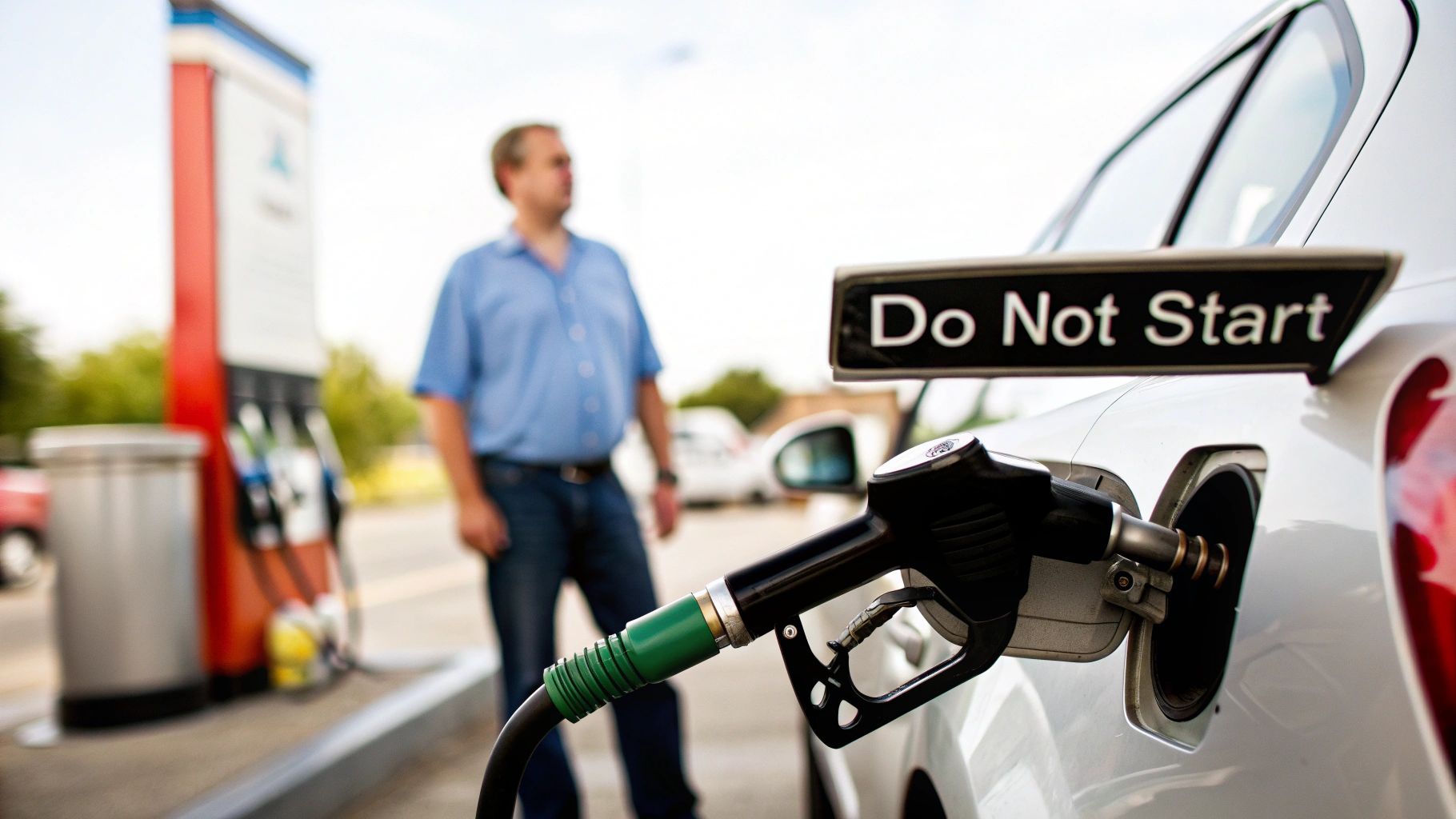
If you've done this, don't beat yourself up. An estimated 150,000 drivers in the UK make this exact mistake every single year. You're definitely not the first and you won't be the last. The real difference between a minor inconvenience and a wallet-emptying disaster comes down to what you do right now.
Even just turning the key to the accessories position can be enough to prime the fuel pump. That little whirring sound you sometimes hear? That’s the pump pulling fuel from the tank, ready to send it towards the engine. If that fuel is the wrong type, you’ve just moved the problem from the tank into the delicate fuel lines.
Starting the engine is where things get really serious, as the incorrect fuel then gets circulated through the entire system.
Why Is Starting the Engine So Bad?
The most frequent and harmful mix-up is putting petrol into a diesel car. Here’s the problem: diesel isn’t just a fuel; it’s also a lubricant. It keeps the high-pressure fuel pump and injectors running smoothly.
Petrol does the exact opposite. It's a solvent, so it strips away that vital lubrication. This causes metal-on-metal friction inside the most expensive parts of your fuel system.
This quickly leads to a cascade of failures:
Fuel Pump Destruction: Without lubrication, the pump starts to grind itself apart, creating tiny metal shavings.
Injector Blockage: These metal particles are then forced through the system, where they wreck the incredibly fine tolerances of the fuel injectors.
Total Engine Failure: In the worst-case scenario, this contamination can lead to catastrophic engine damage, with repair bills stretching into the thousands.
By not touching that key, you keep the problem neatly contained in the fuel tank. This transforms a potential mechanical nightmare into a simple fix: a mobile fuel drain and flush. It's far quicker, infinitely cheaper, and gets you back on the road without needing a trip to the garage.
It’s a horrible, sinking feeling. You’ve just filled up, driven a couple of miles down the road, and suddenly the car starts acting very strangely. Sometimes, you don’t even realise your mistake at the forecourt; the first clue is your car protesting loudly.
Knowing what to listen and look for is crucial. Spotting the signs early can be the difference between a quick fix and a wallet-busting repair bill.
Putting petrol into a diesel engine is the mistake we see most often. Because petrol doesn't have the same lubricating qualities as diesel, it starts causing friction and damage almost straight away. The first signs might be small, but they won't stay that way for long.
Maybe you’re trying to pull out onto the A12 and notice the engine just doesn't have its usual get-up-and-go. That feeling of sluggishness or a real lack of power is one of the classic first warnings.
Common Signs of Petrol in a Diesel Car
Once that petrol starts circulating properly, the symptoms will get much harder to ignore. Keep an ear out and an eye on your dashboard for these classic red flags:
A Juddering Engine: Your car might start to shake or shudder, feeling rough and unstable. This is especially obvious when you're stopped at traffic lights or trying to accelerate.
Loud Knocking Sounds: This is a serious one. A sharp, metallic rattling from the engine means the petrol is detonating incorrectly, and it’s a clear signal to stop.
Lots of Smoke: You might see clouds of white or grey smoke coming from the exhaust pipe. This is the engine struggling to burn the wrong fuel.
Warning Lights on the Dash: Don't be surprised if your dashboard lights up like a Christmas tree. The car’s onboard computer knows something is seriously wrong.
The Engine Cuts Out: The final stage is usually the engine spluttering to a halt and then refusing to start again.
If you spot any of these signs right after filling up, safety has to be your number one priority. Signal, pull over somewhere safe as soon as you can, switch off the engine completely, and stick your hazard lights on. Whatever you do, don't try to restart it.
What About Diesel in a Petrol Car?
This is much less common, mainly because the diesel nozzle is physically bigger than the filler neck on most petrol cars, but it does still happen. The symptoms here are a bit different, but just as serious.
Diesel is oilier and much harder to ignite than petrol. It will quickly clog up your fuel filter and spark plugs. The result is often heavy misfiring, the engine running incredibly rough, or it just won't start at all. You’ll also likely see a lot of thick, black smoke puffing out of the exhaust.
For a more in-depth look, check out our guide on the specific wrong fuel in car symptoms for UK drivers. The sooner you recognise what’s happening, the faster you can get professional help and prevent any lasting damage to your engine.
What Happens During an On-Site Fuel Drain?
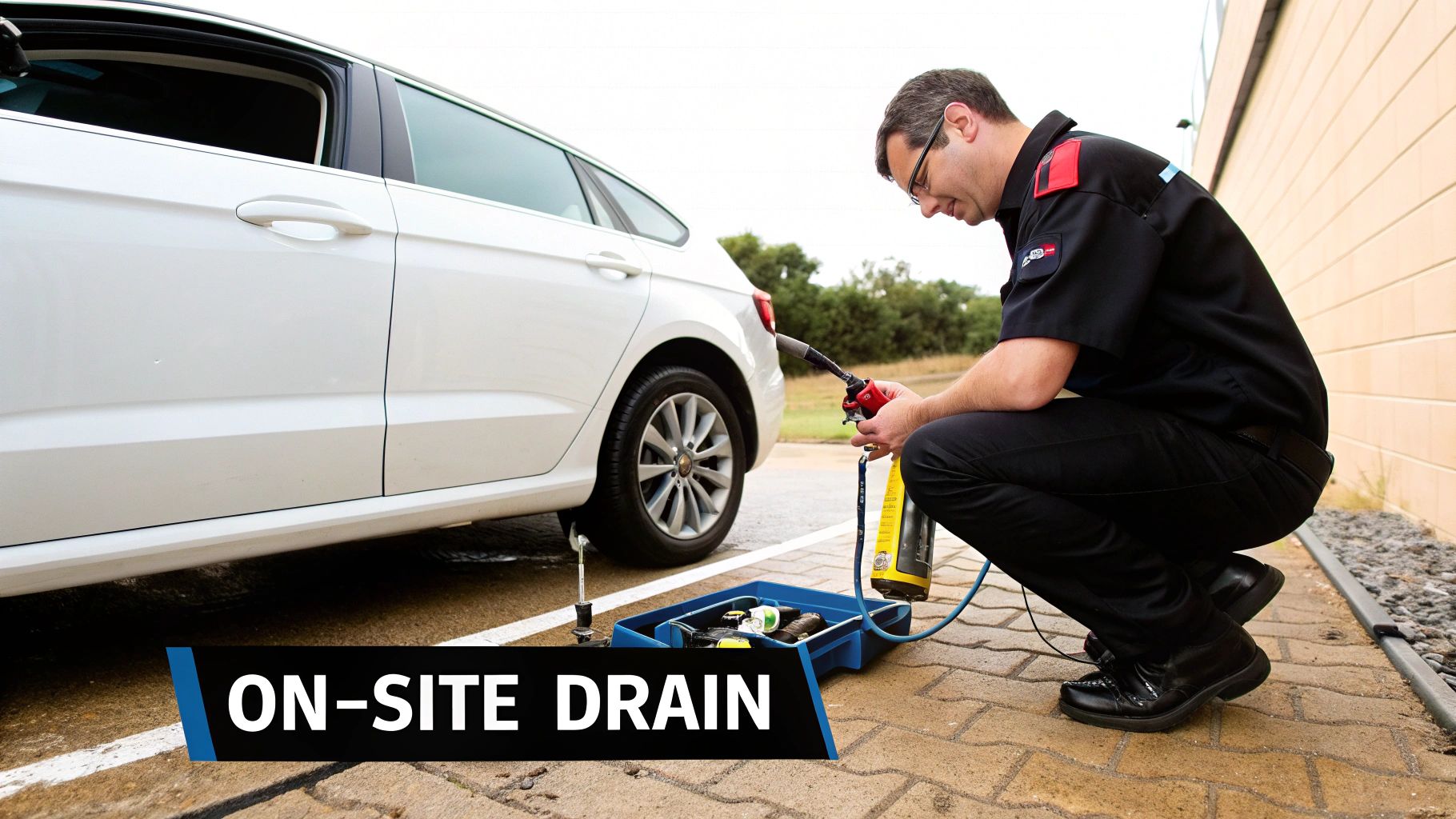
Seeing the recovery van pull up is a mix of relief and worry. You're glad help is here, but you're probably picturing your car being towed away for a lengthy, expensive repair. Thankfully, a professional mobile fuel drain is nothing like that. It's a precise and surprisingly quick procedure designed to sort the problem right there and then.
The first thing our technician will do is make the area safe. Whether you're stuck on a busy petrol station forecourt or parked up on your own drive, safety is paramount. They'll set out cones, check for any ignition sources, and get their specialist equipment ready in a safe, controlled way.
Getting the Wrong Fuel Out
To start, the technician needs to get into your fuel tank. Modern cars have anti-siphoning devices, but our specialists have the tools to bypass these without causing any damage. They’ll insert a suction pipe connected to professional, ATEX-certified pumping equipment. This gear is specifically designed to handle flammable liquids like petrol and diesel without any risk of sparks.
The pump then gets to work, draining every last drop of the contaminated fuel from your tank. This is the most important step in fixing a wrong fuel car scenario, as it removes the problem at the source. The process usually takes around 20-30 minutes, depending on how full your tank was.
The whole point of a mobile fuel drain is efficiency. Instead of losing your car to a garage for days, we aim to have you safely back on the road in under an hour from the moment we arrive.
If you’ve driven the car, you’ll already know the symptoms. If not, this is what you’ve avoided.
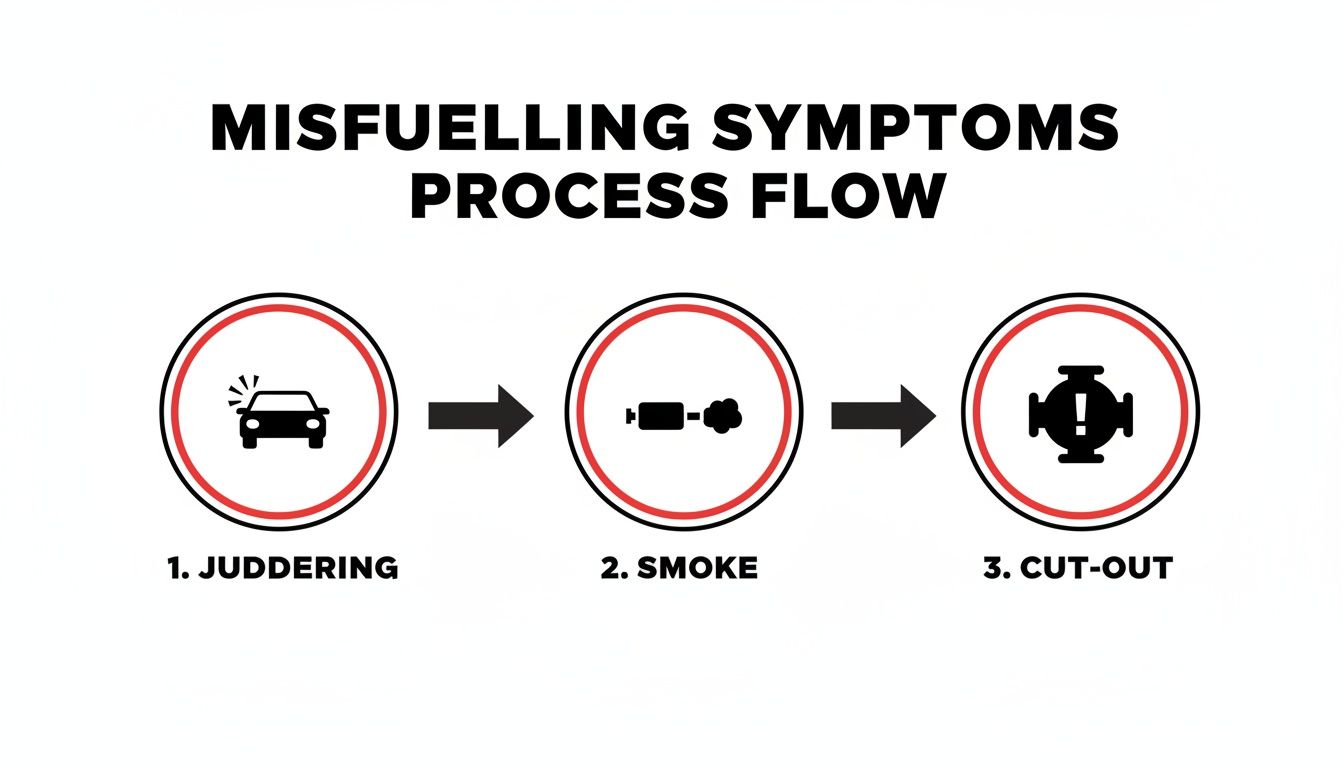
As you can see, what starts as a bit of juddering can quickly become total engine failure. That’s why it’s so critical not to drive anywhere.
Flushing the System and Getting You Going
Just draining the tank isn’t enough. There's still a bit of the wrong fuel lurking in the fuel lines, filter, and pump. To clear this out, the technician will add a small amount of the correct fuel and circulate it through the system, flushing out the last of the contamination. This flushing fuel is then drained out as well, leaving everything clean.
For a more detailed look at the technical side of things, our guide explains how to drain a fuel tank safely.
Finally, with the system completely clean, we'll add enough fresh, correct fuel to get you started. All you need to do is drive to the nearest petrol station and fill the tank to the brim. The contaminated fuel we’ve removed is taken away and disposed of responsibly at a licensed facility, in line with environmental regulations. It’s a complete, start-to-finish service.
So, What’s This Going to Cost and How Long Will It Take?
Once the initial "Oh no!" moment passes, your mind will jump straight to two things: cost and time. The good news is that the answer to both really hinges on one simple question – did you start the engine?
If you caught the mistake at the pump before turning the key, breathe a sigh of relief. You're in the best-case scenario. The wrong fuel is just sitting in the tank, and a straightforward drain is all that's needed. This is by far the quickest and cheapest fix.
Things get a bit more involved if you've started the car, even for a moment. That wrong fuel starts getting pulled through the system, potentially reaching the fuel pump, lines, and injectors. This means we'll need to do a full flush to clear it all out, which understandably adds a bit more time and cost to the job.
Breaking Down the Costs
There isn't a single flat fee for a mobile fuel drain, as every situation is a little different. Several factors play into the final price for a wrong fuel car recovery.
Your Location: There's a difference between being stuck at a well-lit petrol station in Ipswich and being on a narrow country lane outside Bury St Edmunds. Easy access helps.
Time of Day: A call-out at 2 am on a Tuesday will naturally cost a bit more than one at 2 pm on a weekday.
Your Vehicle: A large van with a huge fuel tank will take longer to drain than a small city car, and that can influence the cost.
The Severity: As we've mentioned, a simple tank drain is much more affordable than the full system flush needed if the engine has been run.
For business owners and fleet managers, the invoice is only part of the story. Every minute a vehicle is off the road, it's losing you money. The direct costs for a fleet vehicle misfuelling can start from around £150 for a basic drain and climb to over £2,000 if parts get damaged. You can discover more insights on how misfuelling impacts business fleets and the true hit to your bottom line.
How Quickly Can You Be Back on the Road?
Here’s where a mobile service really shines: speed. Our entire operation is built around getting you moving again with minimal fuss.
From the second you ring us to the moment our technician puts the keys back in your hand, you're typically looking at just 60 to 90 minutes. That includes our travel time to you and the entire job on-site.
Once our specialist is with you, the actual work is incredibly efficient. Draining the tank, flushing the lines, and refilling with the correct fuel often takes under an hour. It turns what feels like a day-ruining disaster into a simple, manageable hiccup.
To put it in perspective, let's compare the mobile drain option against the old-school method of getting towed to a garage.
Wrong Fuel Recovery Cost and Time Comparison
The difference between calling a mobile service and waiting for a garage appointment is stark. A mobile drain gets you back on the road in about an hour, whereas a garage might have your car for days, especially if they're busy.
Service Factor | Mobile On-Site Drain | Traditional Garage Repair (After Towing) |
|---|---|---|
Typical Cost | £150 - £400+ | £250 (tow) + £200-£500 (garage) + parts |
Total Downtime | 60-90 minutes (from call to driving) | 24-72 hours+ (towing, waiting, repair) |
Convenience | Repair happens wherever you are | Requires towing and alternative transport |
Risk of Further Cost | Low. Assessed & fixed on the spot. | Higher. Diagnosis may take time. |
Ultimately, choosing a mobile fuel drain is about more than just the initial bill. It’s about saving an immense amount of time, hassle, and potential secondary costs like taxis or hire cars. You're turning a major problem into a minor inconvenience.
The Modern Challenge of AdBlue Contamination
Modern diesel cars have thrown a new spanner in the works when it comes to misfuelling: AdBlue contamination. This isn't your classic petrol-in-a-diesel mix-up; it's a chemical problem that can cause catastrophic, eye-watering damage to a vehicle's advanced exhaust and fuel systems.
First things first, AdBlue is not a fuel additive. It’s a solution made of urea and deionised water that lives in its own separate tank, usually marked with a distinctive blue cap right next to your diesel filler. Its whole purpose is to be injected into the exhaust gases to neutralise harmful emissions through a system called Selective Catalytic Reduction (SCR).
The trouble starts with two simple but devastating mistakes: putting AdBlue in the diesel tank, or, less often but just as bad, putting diesel in the AdBlue tank. Either way, you're looking at a potentially ruinous repair bill.
Why Is AdBlue Contamination So Serious?
Unlike petrol, which acts like a solvent, AdBlue is highly corrosive to many of the seals, plastics, and metal components found in your car's fuel system. Once it gets into the diesel tank, it gets to work damaging the fuel pump, injectors, and lines.
The real kicker is that it also crystallises when it dries. Even a tiny amount can form hard crystals that will clog up the incredibly fine tolerances of modern high-pressure fuel injectors.
If you make the opposite mistake and put diesel in the AdBlue tank, you contaminate the entire SCR system. This oily film wrecks the sensitive AdBlue pump and injector, and can permanently poison the SCR catalyst itself—a single component that can easily cost thousands of pounds to replace.
The golden rule here is exactly the same as any other misfuelling situation: DO NOT START THE ENGINE. Don't even turn on the ignition. The moment you do, the pumps prime and start circulating the contaminant, turning a manageable problem into a financial nightmare.
The fallout from an AdBlue error can be huge. We've seen from recovery data that once AdBlue gets into the fuel system, damage to pumps and catalysts often leads to repair costs soaring past £1,000–£3,000, particularly for commercial vehicles. You can discover more insights about misfuelling fleets on Right Fuel Card and see just why getting a specialist out to the roadside is so critical.
Fixing this isn't a job for a standard fuel drain. It requires a meticulous, specialist process. The entire system—whether it’s the fuel side or the SCR side—has to be professionally drained, flushed through with cleaning agents, and carefully inspected for any signs of damage.
To get the full picture on the risks, have a look at our detailed guide on what happens if you put AdBlue in your diesel tank. Realising your mistake quickly and calling a professional is the only way you can hope to save your vehicle's complex and very expensive emissions system.
It’s a horrible feeling when you realise you’ve put the wrong fuel in your car. Even after reading a guide, your mind is probably still racing with questions. We get it. Our technicians are on the roadside with drivers in this exact situation every single day, so we’ve heard all the common worries.
Here are the straightforward answers to the questions we hear most often.
Will Putting the Wrong Fuel in My Car Void My Warranty?
This is probably the biggest fear for anyone with a newer car. The simple act of putting the wrong fuel in won't automatically cancel your entire manufacturer's warranty, so you can breathe a small sigh of relief there.
The catch, however, is that any damage caused as a direct result of driving on that contaminated fuel almost certainly won't be covered. If the fuel pump gives up or the injectors get clogged because of the mix-up, you'll likely be footing that bill yourself. This is exactly why it's so critical to call for a professional fuel drain immediately. By getting the wrong fuel out before it causes damage, you're also protecting your warranty.
Does Car Insurance Cover Misfuelling?
This one really depends on your specific policy. There’s no single answer, as cover varies wildly between providers.
Standard Policies: Your average third-party policy is very unlikely to cover a misfuel.
Fully Comprehensive Policies: Some (but definitely not all) comprehensive policies might cover the fuel drain and repairs under their "accidental damage" clause.
Breakdown Cover: This is often a good shout. Many breakdown policies, especially the premium ones, include misfuelling cover as a specific benefit.
Before you do anything, dig out your policy documents and read the small print. It’s also worth weighing up the cost. Making a claim will probably hit your no-claims bonus and could push up your premiums next year. Honestly, a lot of the time, the cost of a mobile fuel drain is less than the insurance excess, making a direct call-out the cheaper and less complicated option.
Our Advice: Always double-check your insurance and breakdown policies. More often than not, paying a specialist directly is quicker, cheaper in the long run, and won't leave a mark on your insurance history.
What Information Should I Have Ready When I Call?
When you call us, the more information you can give, the faster we can get the right person and the right gear on the way to you. It makes a huge difference.
Try to have these details ready:
Your Exact Location: Be as precise as you can. A postcode is great, but a what3words address is even better. Failing that, use road names, junctions, or obvious landmarks.
Vehicle Details: We'll need the make, model, and registration number of your car.
The Fuel Mix-Up: Just tell us what happened. For example, "I've put petrol in my diesel Ford Focus."
Engine Status: This is the most important bit of information. Have you started the engine? Just a simple yes or no is all we need.
Getting these details sorted before you ring helps us get you back on the road with minimum fuss.
If you've put the wrong fuel in your car in Suffolk or the surrounding areas, don't panic. Call the experts at Misfuelled Car Fixer immediately for a fast, professional, and affordable 24/7 mobile fuel drain service. Get immediate help from Misfuelled Car Fixer.


