
.jpg)


A Complete Guide to Cleaning Fuel Tanks After Misfuelling
It's a gut-wrenching moment. That instant you realise you've grabbed the wrong pump handle. We've all had those momentary lapses, but what truly matters isn't the mistake—it's what you do in the next few seconds. Driving away, or even just turning the ignition, is what escalates a simple problem into a potential engine-destroying disaster. This is why a professional fuel drain isn't just a service; it's an emergency procedure.
The Urgent Problem of a Contaminated Fuel Tank
Putting the wrong fuel into your tank isn't just an inconvenience; it’s an immediate threat to your vehicle's health. Modern engines are finely tuned machines, and the wrong type of fuel acts like a poison running through its veins. The second you turn that key, you begin circulating it.
For drivers across Suffolk, whether you're in Ipswich or out near Bury St Edmunds, knowing the risks is your first line of defence against what could be thousands of pounds in repair bills.
What Happens When You Start the Engine
When you start the engine, the contaminated fuel is immediately drawn from the tank by the fuel pump. From there, it travels through the lines, filters, and into the delicate injectors. The damage can be incredibly fast and often severe, leading to some very obvious signs that something is seriously wrong.
Look out for these classic symptoms:
The engine starts making a knocking or sputtering sound because the fuel isn't burning properly.
You'll feel a significant loss of power, or the car might start lurching and accelerating erratically.
A plume of excessive smoke starts billowing from the exhaust.
The engine cuts out or simply refuses to start after a few tries.
Spotting these signs early is vital. If you want a more in-depth look, our guide on the signs of wrong fuel in your car can help you quickly pinpoint the issue.
The immediate damage from starting a misfuelled engine varies depending on what you've put in. Here’s a quick breakdown of what you're up against.
Immediate Risks of Starting a Misfuelled Engine
Contamination Type | Immediate Risk to Engine | Common Symptoms |
|---|---|---|
Petrol in a Diesel Car | Petrol acts as a solvent, stripping away the lubrication diesel provides. This causes metal-on-metal friction in the fuel pump and injectors, leading to rapid and severe component failure. | Knocking sounds, loss of power, excessive smoke, engine cutting out. |
Diesel in a Petrol Car | Diesel is thicker and won't combust properly in a petrol engine. It clogs spark plugs, fuel filters, and injectors, preventing the engine from running smoothly or starting at all. | Misfiring, heavy smoke from the exhaust, engine won't start. |
AdBlue in Diesel/Petrol | AdBlue is highly corrosive to many materials in the fuel system. It can destroy seals, sensors, the fuel pump, and injectors, causing widespread and very expensive damage. | Engine management lights, non-starting, rough running. |
This table really highlights why that split-second decision not to turn the key is so critical.
The single most important thing you can do is to not start the engine. If you've already driven off, pull over somewhere safe as soon as you realise and switch it off immediately. That one action can literally mean the difference between a straightforward fuel drain and a repair bill in the thousands.
A Problem That Scales
The basic principle of keeping fuel pure applies everywhere, from your family car to massive industrial storage tanks. While manual cleaning of industrial tanks is an option, it's a hazardous job. Contaminated industrial tanks can lose up to 20-30% of their capacity just from sediment and sludge build-up.
Here at Misfuelled Car Fixer, we apply the same professional principles but on a mobile scale. We use specialist equipment to safely drain and flush the wrong fuel from your car's tank right there at the roadside, preventing that catastrophic damage.
In the industrial world, things like agricultural tank monitoring systems help detect contamination early. For a motorist, your "monitoring system" is that moment of realisation at the pump—and acting on it correctly.
Understanding Different Types of Fuel Contamination
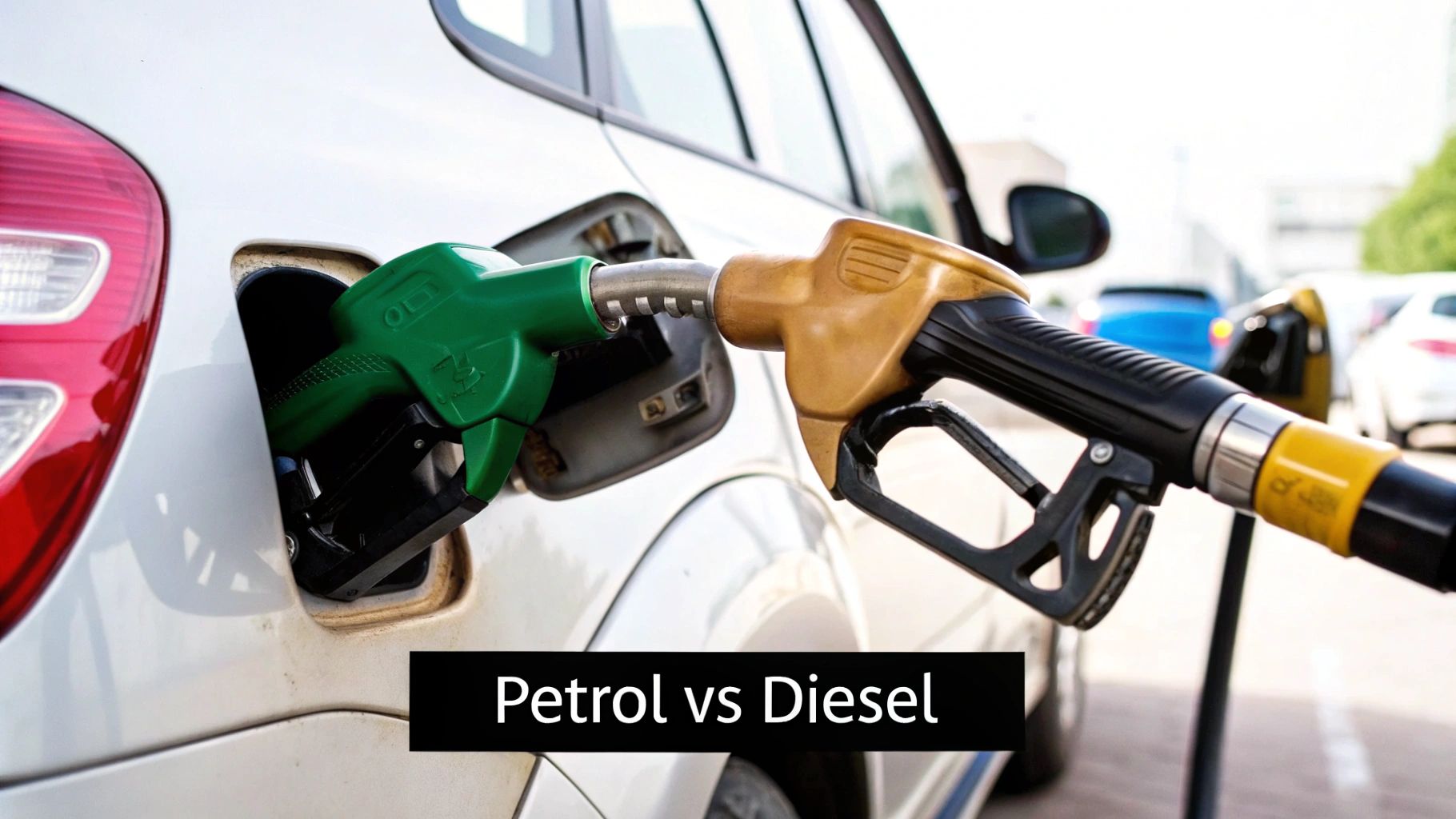
Not all misfuelling mishaps are created equal. The chaos that unfolds under the bonnet depends entirely on what you've put in and what your engine is designed to drink. Getting your head around the differences is the first step to understanding why a professional fuel drain is so non-negotiable.
Each type of contamination creates its own unique set of mechanical headaches, turning a simple liquid into a destructive force inside your car’s intricate fuel system. Let’s look at the common scenarios we see every day on the roads of Suffolk.
Petrol in a Diesel Engine
This is, by far, the most common and damaging mistake we come across. Diesel fuel is naturally oily, and that's not just for combustion. It also plays a crucial role in lubricating the high-pressure fuel pump and injectors – components engineered with microscopic tolerances.
When you add petrol, you’re essentially pouring a powerful solvent into the mix. It immediately starts stripping away that essential lubricating film, causing brutal metal-on-metal friction. Turning the key, even for a second, grinds these parts together, sending tiny metal shavings throughout the entire fuel system. This can completely wreck the pump and injectors.
It’s the mechanical equivalent of running an engine with no oil. The damage is fast, catastrophic, and eye-wateringly expensive to put right. This is why cleaning fuel tanks becomes an absolute emergency in this situation.
Diesel in a Petrol Engine
Putting diesel in a petrol car is less frequent, mainly because the larger diesel nozzle won't fit into most modern petrol filler necks. But it still happens. The problem here is that diesel is thick, oily, and needs immense compression to ignite – a spark plug just won't cut it.
The immediate result? A car that won't start. The heavy diesel clogs the fuel filter and injectors, and smothers the spark plugs, making them totally ineffective.
While it’s generally not as destructive as putting petrol in a diesel, it will stop your car dead in its tracks. A full drain and flush is the only way to get the system clean and running again.
The core issue with any fuel contamination is that the wrong fuel introduces chemical properties your engine cannot handle. Petrol's solvency destroys diesel parts, while diesel's oiliness smothers petrol components. Both demand immediate, professional intervention.
The Growing Problem of AdBlue Contamination
AdBlue isn't a fuel additive. It's a special exhaust fluid made of urea and deionised water, kept in a separate tank and injected into the exhaust to cut down on emissions. The problem is, the filler cap is often right next to the diesel cap, making mix-ups frighteningly easy.
This is a particularly nasty one. AdBlue is highly corrosive to many of the seals, plastics, and metals used in your car's fuel system.
Once AdBlue gets into the fuel tank, it triggers rapid and widespread damage:
It can crystallise as it dries, completely blocking fuel lines, filters, and injectors.
Its corrosive nature eats away at the fuel pump, sensors, and vital seals.
Repairs almost always mean replacing the entire fuel system, a job that can easily run into thousands of pounds.
This specific type of contamination really highlights how vital it is to correctly diagnose the problem before anyone tries to fix it. To get a better grasp of the risks, take a look at our post detailing what UK drivers need to know about contaminated diesel fuel.
What Are Your Options for Cleaning the Fuel Tank?
Standing beside your car with a tank full of the wrong fuel, it’s easy to feel a surge of panic. You’ve really got two ways to go from here. One might feel like a quick, cheap fix – the DIY approach. The other is calling in a professional mobile service to sort it out properly.
Knowing what you're getting into with each choice is crucial. One is a high-stakes gamble, while the other is a surefire way to get back on the road safely. Let's look at what each option really means for you and your car.
The Tempting but Treacherous DIY Route
At first glance, draining the fuel yourself sounds simple enough. You're probably picturing a hand pump, a jerry can, and a quick flush with some fresh fuel. It seems like the most direct way to solve the problem without paying for a call-out.
But this picture leaves out the very real and immediate dangers. Petrol, especially, isn't just a liquid; it gives off highly flammable vapours that a single spark can ignite.
Think about these serious risks before you even start:
Static Electricity: Just the friction of fuel flowing through a plastic tube can create a static charge. A tiny, invisible spark is all it takes to set off the fumes, leading to a catastrophic explosion.
The Wrong Gear: That pump from the shed and a few old containers are not built for handling volatile fuels. They don't have the proper grounding or anti-spark features that professional equipment does.
An Incomplete Job: You can stick a siphon tube in, but it will never get every last drop of contaminated fuel from the nooks and crannies of a modern, baffled fuel tank. That residue is often more than enough to cause serious engine damage down the line.
The biggest DIY headache people forget is what to do with the contaminated fuel afterwards. You can't just pour gallons of it down the drain or stick it in the bin. It’s legally classified as hazardous waste, and dumping it illegally comes with hefty fines and massive environmental harm.
The Professional and Safe Alternative
Calling a specialist service like Misfuelled Car Fixer completely changes the game. It turns a risky DIY experiment into a controlled, safe, and efficient procedure. Our technicians don’t just arrive with a pump; they come with a fully equipped mobile unit kitted out with certified, explosion-proof gear made for this exact job.
This is all about safety and doing the job right. The equipment is ATEX-approved, which means it’s certified to be used safely in potentially explosive environments. Our process is thorough: we drain the entire system—not just the tank, but the fuel lines, filter, and injectors too. This makes absolutely certain that no damaging residue is left behind.
Modern roadside assistance in the UK is borrowing from advanced industrial principles. Think about how robotics in large-scale industries can lead to 70% faster cleaning cycles for industrial tanks. We apply a similar logic, using specialist automated pumps in our mobile units to quickly and safely drain the wrong fuel. This method prevents contaminants from being circulated through your engine and lets us fix issues like misfiring or smoke right there on the spot—for a fraction of what a garage would charge. You can read more about this advanced approach to fuel tank cleaning in the UK.
In the end, the choice is pretty clear. The DIY path is loaded with life-threatening risks and legal trouble, whereas the professional option guarantees a safe, thorough, and compliant solution. It’s about protecting yourself, your vehicle, and the environment.
A Look Inside a Professional Fuel Drain
Ever wondered what actually happens when you call a professional fuel drain service? It’s a moment of panic for most drivers, but understanding the methodical, safety-first process can be incredibly reassuring. From the second you call us, we kickstart a precise procedure designed to get you back on the road safely, without causing any long-term damage to your car.
It all begins with your phone call. We’ll ask for the crucial details: where you are—whether that’s a busy forecourt in Felixstowe or a quiet lane near Stowmarket—and what’s happened. With that information, we get a fully-equipped technician on their way to you immediately.
On-Site Safety and Assessment
When our technician pulls up, their first job isn't to start draining fuel. It’s to carry out a full safety assessment of the scene. They’ll secure your vehicle, identify and neutralise any potential ignition sources, and make sure the entire area is safe for working with highly flammable liquids.
Your safety, our technician's safety, and public safety are the absolute priority. Only when the area is confirmed to be secure does the real work of cleaning your fuel tank begin.
A professional fuel drain is a meticulous, carefully executed procedure—not a rushed job. That initial safety check is arguably the most critical part of the entire call-out, as it ensures everything that follows can be done without risk.
This infographic shows the difference between a simple DIY attempt and the professional approach.
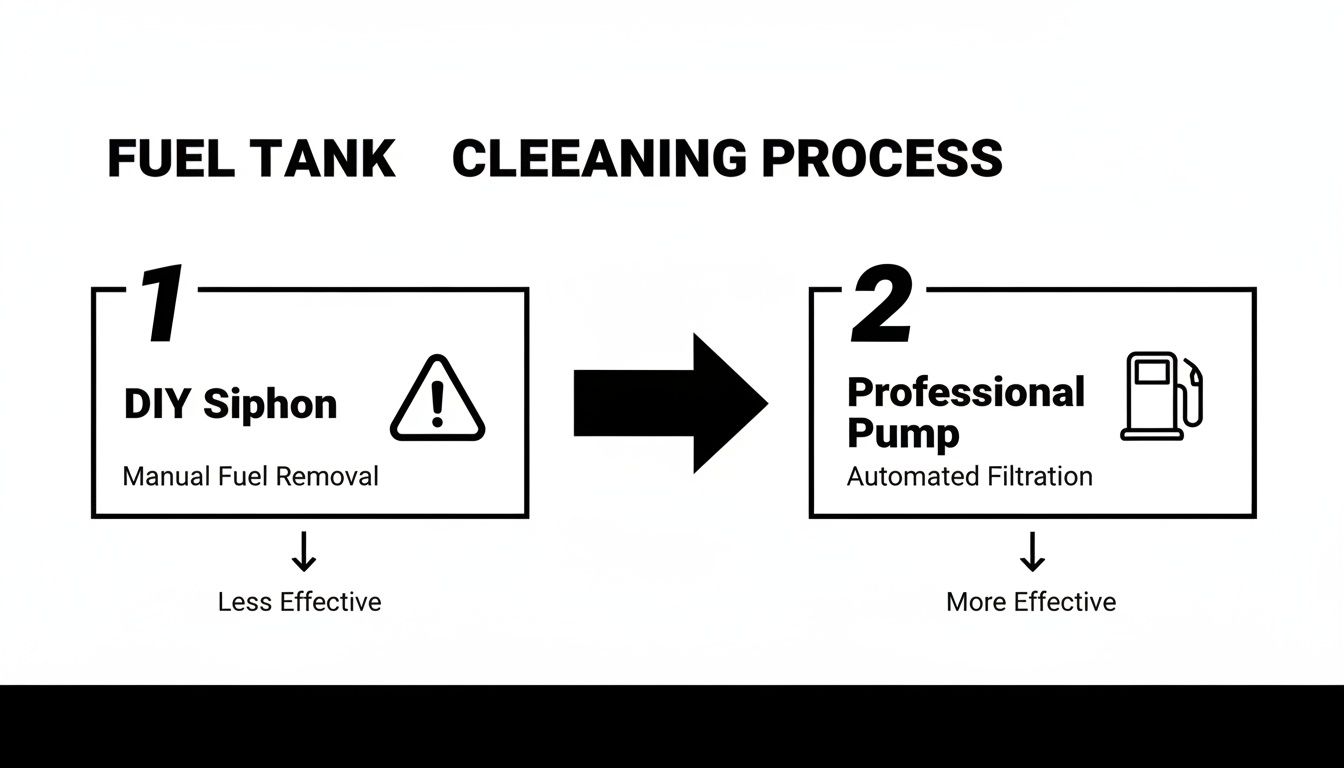
As you can see, a professional service uses specialist, sealed equipment to guarantee every last drop of contaminated fuel is removed safely and completely. A simple siphon just can't compete.
The Draining and Flushing Process
Our vans are kitted out with specialised, ATEX-approved pumping equipment. This isn't just jargon; the ATEX certification means the tools are intrinsically safe and won't create a spark in a flammable atmosphere, which is vital. The technician connects this system to your car's fuel tank and begins the process of removing the contaminated mixture.
But it's about more than just emptying the tank. Here’s what a thorough job really involves:
Complete System Drain: We don't just drain the tank. We also clear out the fuel lines and the filter housing to make sure no incorrect fuel is left anywhere in the system.
System Flush: Next, we flush the system with a small amount of fresh, clean fuel. Think of it as a rinse cycle—it pushes out any stubborn droplets of the wrong fuel that might be clinging to the inside of pipes or components.
Responsible Disposal: All the contaminated fuel is pumped directly into a secure, sealed container in our van. It's then taken for safe, legal disposal at a licensed hazardous waste facility.
This comprehensive approach is the only way to be certain that no contaminants are left behind to cause engine damage down the line. If you're currently waiting for help, our emergency guide has useful tips on what to do when you need a fuel drain near you.
Once the entire system is clean, we’ll put enough of the correct fuel back into your tank to get you comfortably to the next petrol station. We then have you start the engine, and we'll check that everything is running perfectly before we sign off on the job. It’s a complete service, designed to give you total peace of mind.
How a Specialist Saves You Time and Money
Calling in a professional for a fuel drain isn't just another cost – it's an investment that can save you from a truly eye-watering repair bill. The real damage from putting the wrong fuel in your car isn't the initial mistake; it's what happens if you try to drive it or attempt a DIY fix. Get that wrong, and you're looking at a financial nightmare.
It’s a sobering thought, but let's look at the numbers. The high-pressure fuel pump and injectors in a modern diesel engine are incredibly precise, delicate pieces of kit. The wrong fuel acts like a poison, wrecking them in minutes. Replacing just these parts can easily run into thousands of pounds, and that's before you even consider new engine sensors, filters, and labour costs.
Comparing the Costs
When you’ve misfuelled, you're essentially at a crossroads. One path is fraught with risk and potentially huge expenses, while the other offers a fixed price and complete peace of mind.
Scenario | Potential Costs | Outcome |
|---|---|---|
DIY Attempt / Driving On | £1,500 - £5,000+ | You're on the hook for new fuel pumps, injectors, sensors, plus towing fees and garage labour. Your car could be out of action for days, even weeks. |
Professional Mobile Service | A fixed, transparent price | A one-off fee, usually far less than a main dealer would charge. No towing, no hidden extras. Your car is fixed on the spot in about an hour. |
Looking at it this way, the financial logic is pretty clear. A professional service helps you dodge the massive financial bullet of major component failure. You skip the towing fees and the often-inflated labour charges you'd find at a main dealership. For any specialist running a mobile service, from fuel draining to other on-site repairs, having a system for efficient client communication for cleaning services is absolutely crucial to managing jobs effectively.
Your Time is Priceless
Beyond the money, there's your time. Let's be honest, your day is already packed. Whether you're a fleet manager trying to keep vehicles on the road, a taxi driver losing fares by the minute, or a parent doing the school run, being stranded is more than just an inconvenience. Waiting hours for a tow truck, followed by days of garage repairs, can throw your entire week into chaos.
The whole point of a professional fuel drain service is to cut that disruption down to almost nothing. Our technicians can typically get your car drained, flushed, and running safely again in about an hour.
This is what we do: we provide a fast, on-the-spot solution. You can get back to your day with the minimum of fuss. No need to clear your schedule for a garage appointment or arrange alternative transport. We come to you, wherever you are in Suffolk, and sort the problem right there and then. This efficiency is what turns a potential disaster into a minor, quickly resolved hiccup.
Your Fuel Drain Questions Answered
Finding yourself stranded with the wrong fuel in your tank is a nightmare scenario, and your head is probably buzzing with questions. It’s a stressful spot to be in, and you need straight answers, fast. We've put together the most common things we're asked by drivers across Suffolk to give you some clarity.
The whole point here is to give you the practical info you need to understand what's happening and what to do next. A bit of knowledge goes a long way in taking the panic out of a misfuelling mishap.
I Only Put a Little Bit of Wrong Fuel In – Is a Drain Really Necessary?
This is easily the question we hear the most: "I only put a few quid's worth in, surely it's not that bad?" The answer, every single time, is a firm yes. Even a tiny amount of the wrong fuel can lead to eye-wateringly expensive engine damage.
Think about it this way: just 5% petrol in a modern diesel engine is enough to wash away the vital lubricating film that your high-pressure fuel pump and injectors rely on. Without that lubrication, you get metal-on-metal friction and catastrophic wear. It's never worth the gamble; a professional drain is the only safe bet for your engine.
Can You Come Out if My Car Is Already at a Garage?
Of course. Our service is completely mobile for exactly this reason. While we spend a lot of time at petrol station forecourts and on roadsides, we can just as easily come to your home, workplace, or a local garage.
In fact, calling us out is often much faster and more affordable than having a busy garage try to squeeze you in. Just let us know where the car is, and we'll send a technician to sort it out on-site, getting you back on the road with far less hassle.
What Do You Do With the Old, Mixed Fuel?
We take our environmental duties very seriously. Every drop of contaminated fuel we remove from your car is pumped into specialised, sealed containers that live on our vans.
We handle all contaminated fuel according to strict UK environmental regulations. It’s then transported to a licensed waste facility for safe, responsible processing and recycling. You can rest easy knowing the problem is being sorted out properly and legally.
How Long Will it Take for You to Get to Me in Suffolk?
We run a 24/7 emergency service, so our number one priority is getting to you as quickly as humanly possible. Our technicians are spread out to cover all of Suffolk, from the centre of Ipswich and Bury St Edmunds to the most remote country lanes.
We generally aim to be on-scene within 60-90 minutes of you calling us, though this can vary with traffic and your exact location. When you phone, we'll give you a realistic ETA so you're not left wondering when help will arrive.
If you've misfuelled and need a professional to sort it out right now, don't wait. Contact Misfuelled Car Fixer any time of day or night for a fast, safe, and affordable mobile fuel drain. Get immediate help by visiting us online.


