
.jpg)


Cleaning Out Fuel Tank: A Practical Guide for Misfuelled Cars
That sinking feeling in the pit of your stomach… it hits the second you realise you’ve put the wrong fuel in your car. Before you do anything else, take a deep breath. Your first and most important move is simple: do not start the engine.
Seriously, don’t even turn the key to put the radio on. Keeping the engine off is the one thing that can turn a manageable headache into a massive repair bill.
A Common Mistake, Not a Catastrophe
It might feel like you’re the only person this has ever happened to, but trust us, you’re in good company. This exact scenario plays out at petrol stations all over the UK every single day. A busy parent with the kids in the back, a delivery driver rushing to the next drop, or someone just getting used to a new or hired car—it can catch anyone out.
That initial wave of panic is completely normal. The good news? When you handle it correctly, this is a totally fixable problem.
The real trouble starts the moment you turn the ignition. Starting the engine is like flipping a switch on a pump, sending that wrong fuel on a journey from the tank right through your car’s sensitive fuel system.
What’s Happening Inside Your Engine?
When petrol gets into a diesel engine, it doesn't just fail to work; it actively causes damage. Diesel fuel is oily, providing essential lubrication for high-precision parts like the fuel pump and injectors. Petrol, on the other hand, is a solvent. It strips away that vital oily film, causing metal-on-metal friction. This grinding can quickly create tiny metal shavings that contaminate the entire system, leading to catastrophic—and expensive—failure.
Putting diesel in a petrol car is a bit less common, mainly because the diesel nozzle is physically larger than most petrol filler necks. But if it happens, the engine won't like it. The thicker diesel oil clogs everything up, failing to ignite properly with the spark plugs. You'll see heavy smoke, the engine will run rough, and it will eventually cut out, leaving a sooty, oily mess on your spark plugs and sensors.
The most important thing to remember is this: the damage isn't done while the wrong fuel is sitting harmlessly in the tank. The damage happens when you try to run the engine with it. A professional cleaning out fuel tank service is designed to stop that from ever happening.
What You Should and Shouldn’t Do
When the realisation hits, it's easy to second-guess yourself. This quick table breaks down the critical first steps versus the actions that could lead to serious engine damage.
What You Should Do Immediately | What You Must Avoid at All Costs |
|---|---|
Keep the engine OFF | Turning the key in the ignition |
Put the car in neutral | Starting the car to "see what happens" |
Ask for help to push it to a safe place | Driving to a nearby garage |
Call a professional misfuel expert | Attempting to siphon the fuel yourself |
Following the "do" column keeps the problem contained and the repair straightforward. The "don't" column is a recipe for a much bigger bill.
Misfuelling is far from rare. In fact, between 100,000 and 150,000 UK drivers do it every year. The stats don't lie: starting the engine after a misfuel boosts the risk of injector damage by a staggering 70%. The repair costs can jump from around £500 for a simple drain to over £5,000 if major components are wrecked.
If you find yourself in this situation, it’s worth knowing what your car breakdown cover options are, as many policies provide specific assistance. But the golden rule remains the same: stay put, keep the engine off, and call in the experts.
How Professionals Drain and Flush a Fuel Tank
So, you’ve made the call. What happens next? You might be picturing a messy, complicated job, but a professional fuel drain is a surprisingly slick and safe operation. The technician who pulls up isn’t just any mechanic; they're a specialist trained to handle hazardous fuels at the roadside, getting you sorted with minimal fuss.
Safety is always the first order of business. When the technician arrives, they'll secure the area around your car, often with cones, and make sure there are no ignition sources nearby. They’ll have a quick chat to confirm what went in the tank and, crucially, whether you started the engine. This helps them get the full picture and tailor the clean-out for your specific situation.
The best thing you can do is simply stop and call for help.
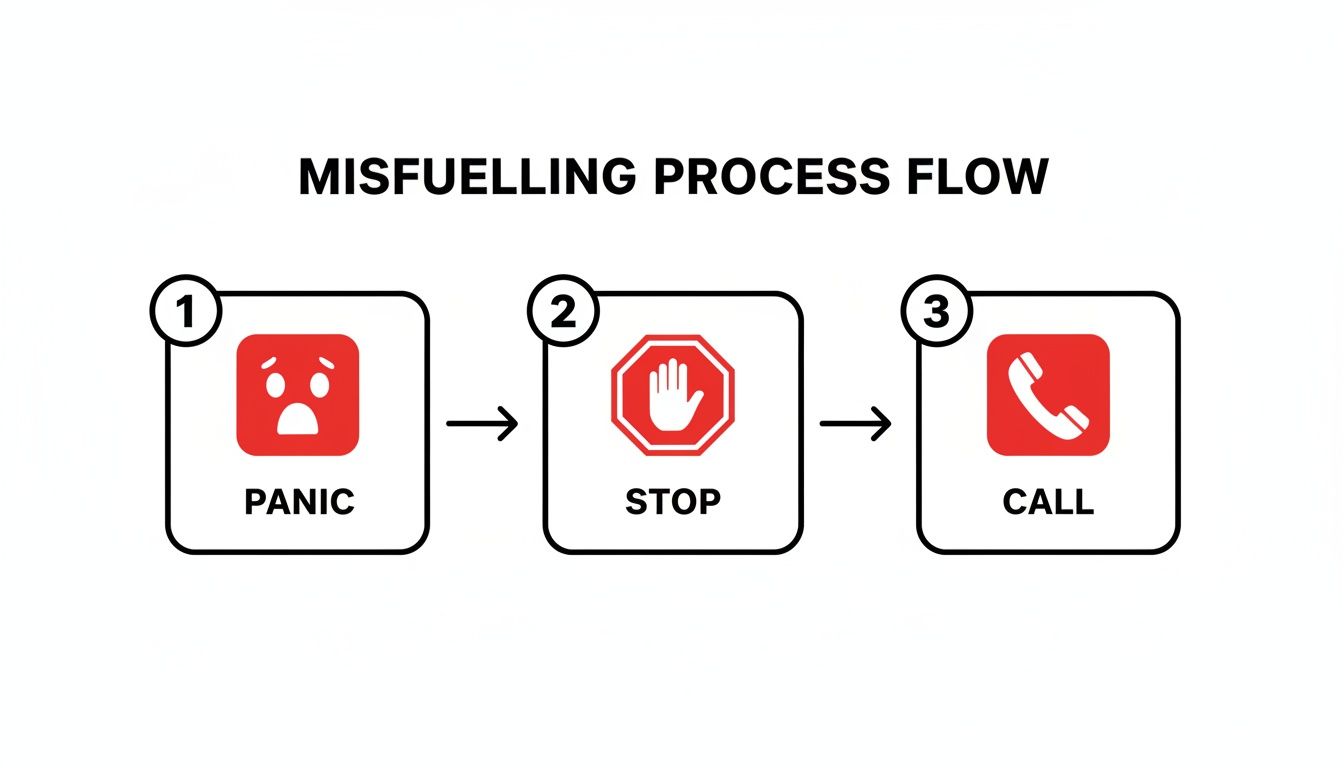
As you can see, panicking and starting the car is where the real trouble begins. A calm call is all it takes to get things back on track.
The Draining and Flushing Procedure
With the area safe, the real work starts. This isn’t a job for a garden hose and a bucket. Our technicians use specialist, mobile pumping systems that are ATEX-approved, meaning they are certified as intrinsically safe to use around flammable liquids like petrol and diesel. It’s all professional-grade gear that meets strict UK safety regulations.
The technician will access your fuel tank, usually through the filler neck or sometimes by lifting a rear seat to get to the fuel sender unit. A suction line is then fed directly into the tank.
Using the pump, the technician starts draining every last drop of the contaminated mix. They know your vehicle's tank capacity and make sure it’s completely empty, pumping the wrong fuel into a secure, sealed container inside their van. This is the first critical step to a proper fuel tank clean.
Key takeaway: Just draining the tank isn't enough. The wrong fuel will still be sitting in the fuel lines, filter, and pump. A simple drain won't protect your engine from damage.
Removing Every Last Trace of Contamination
To deal with the residue left in the fuel system, the technician will then carry out a full flush. This involves introducing a small amount of clean, correct fuel into the system and circulating it through. This fresh fuel acts like a cleaning agent, pushing out any lingering bad fuel from the lines and other components, which is also safely pumped away.
Finally, they'll add about five to ten litres of the correct fuel back into your tank – more than enough to prime the system and get you to the nearest petrol station. After a final systems check, they’ll ask you to start the engine. Once it's running smoothly, you're good to go, confident the problem is completely solved.
If you’re curious about the specific tools and safety protocols involved, have a look at our detailed guide on how to drain a fuel tank safely.
What About Special Cases Like AdBlue?
Putting AdBlue in your diesel tank is a whole different ball game and requires specialist knowledge. While AdBlue itself isn't toxic, it can crystallise when it comes into contact with the diesel system's components. These crystals can block injectors and wreck the sensitive (and expensive) Selective Catalytic Reduction (SCR) system.
The clean-up is far more intensive. It often involves a multi-stage flush with a special solution designed to dissolve any crystals before they can cause thousands of pounds in damage. It's a job that absolutely has to be done right.
What This Is Going to Cost and How Long It Takes
When you’re stuck on the side of the road with the wrong fuel in your car, two things immediately pop into your head: “How much will this set me back?” and “How long am I going to be stuck here?” You need straight answers, not guesswork.
Let’s get right to it. The cost to clean out a fuel tank can vary, but calling a professional mobile service is almost always your best bet financially. For most standard cars, you’re looking at a cost somewhere between £250 and £400. That price should cover everything – the technician coming out to you, the complete drain and flush, and a top-up of the correct fuel to get you moving again.
Now, compare that to ringing up your main dealer. That call usually kicks off a far more expensive and drawn-out process. First, your car gets towed to their workshop. Then it sits in a queue. The final bill can quickly climb, adding towing fees, premium workshop labour rates, and sometimes even suggestions for parts you don't actually need.
What Affects the Final Price?
A few things can nudge the final quote up or down. It’s good to know what they are before you make the call.
Your Vehicle: Bigger vehicles like 4x4s or commercial vans have larger fuel tanks. It simply takes more time to drain them, which can bump up the cost a little.
Where You Are: Most of us have a standard service area. If you happen to be in a particularly remote spot, there might be a small extra charge to cover the travel.
Did You Start the Engine? This is the big one. If the wrong fuel has been circulated through the engine, the job gets more involved. We don't just drain the tank; we have to flush the entire fuel system, which takes more time and expertise.
For a more detailed look at all the potential costs involved, we've put together a complete guide on what putting the wrong fuel in your car can cost.
How Long Until You're Back on the Road?
This is where a mobile fuel drain service really proves its worth. From the moment our technician pulls up, the whole job—draining, flushing, and refuelling—usually takes between 60 and 90 minutes. That’s it. For a commuter trying to get to a meeting or a taxi driver losing fares, that quick turnaround makes all the difference.
Choosing a professional mobile service isn’t just about saving money. It’s about saving time. Your car isn't off the road for two days at a dealership; it’s often sorted and running again in under an hour.
Our speed and efficiency come down to the specialist equipment we use. Our advanced, semi-automated flushing systems can pull contaminated fuel out of a standard 50-80 litre tank with 98% purity. This technology is what helps us prevent massive repair bills for our customers. It’s especially crucial as we see more complex issues, like AdBlue contamination, where a proper flush can save you from having to replace expensive engine sensors. There are always new advancements in tank cleaning technology, and we stay on top of them to give you the best service possible.
Safety and Environmental Rules for Fuel Drains
Dealing with contaminated fuel is more than just a mechanical fix; it's a serious business that comes with strict legal responsibilities here in the UK. When you call in a professional to clean out your fuel tank, you're not just paying for a repair. You're ensuring the entire job is done safely and by the book, which protects everyone involved and the environment.
These processes are heavily regulated, and for very good reason. We're working with highly flammable, hazardous materials, so the safety of our technicians is always the top priority. The Health and Safety Executive (HSE) lays down the law on this, and there's no room for cutting corners.
Keeping Our Technicians Safe
The days of risky, old-school methods are long gone. Any reputable fuel drain specialist today will use advanced, automated systems often referred to as 'No Man Entry' equipment. This tech is fantastic because it means our technicians are never directly exposed to the dangerous fumes inside a fuel tank.
This shift didn't happen by accident. It’s a direct response to regulations like the Control of Substances Hazardous to Health (COSHH). Believe it or not, before these automated systems became the norm, manual tank cleaning was behind a staggering 40% of all petroleum-related workplace incidents. The move to safer, HSE-approved systems has dramatically cut down on these accidents, making the job so much safer for the person sorting out your car.
The Law on Hazardous Waste Disposal
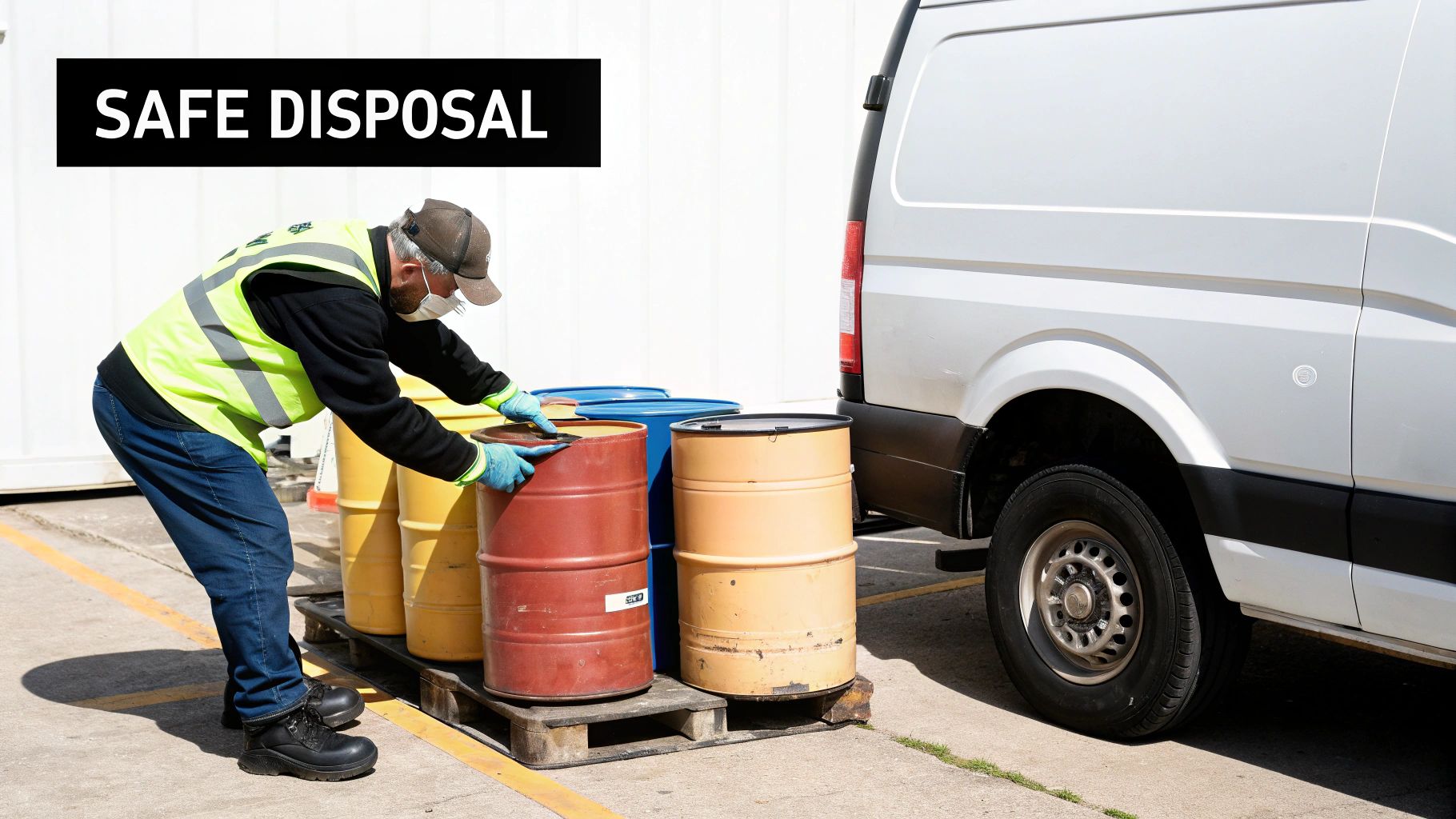
So, what happens to all that contaminated fuel once it’s out of your tank? You certainly can't just tip it down the nearest drain or chuck it in a hedge. The Environment Agency is crystal clear on this: mixed fuel is classified as hazardous waste, and there are rigid rules for its disposal.
At Misfuelled Car Fixer, we hold an official Environment Agency waste carrier permit. This is your absolute guarantee that every single drop of contaminated fuel we remove is transported and disposed of correctly at a fully licensed facility.
Trying to get rid of it yourself can land you with a hefty fine—up to £10,000—and that’s before you even consider the environmental damage. Our technicians handle the 20 to 60 litres of waste fuel from your vehicle, managing it from the roadside all the way to its final, legal disposal. For the industry as a whole, understanding proper hazmat waste management is a non-negotiable part of the job.
This commitment to compliance is at the heart of what we do. It gives you complete peace of mind, knowing the whole messy situation is being handled in line with national safety and environmental laws. If you want to dive deeper into the specifics, check out our guide on how to drain a petrol tank safely and legally in the UK: https://www.misfuelledcarfixer-suffolk.co.uk/post/how-to-drain-a-petrol-tank-safely-and-legally-in-the-uk.
Simple Habits to Prevent Misfuelling in the Future
Once the stress of cleaning out a fuel tank is behind you, the last thing you want is a repeat performance. Let's be honest, misfuelling usually happens when we're distracted, tired, or driving a car that isn't our own.
The good news is that a few simple, conscious habits can pretty much eliminate the risk of it ever happening again.
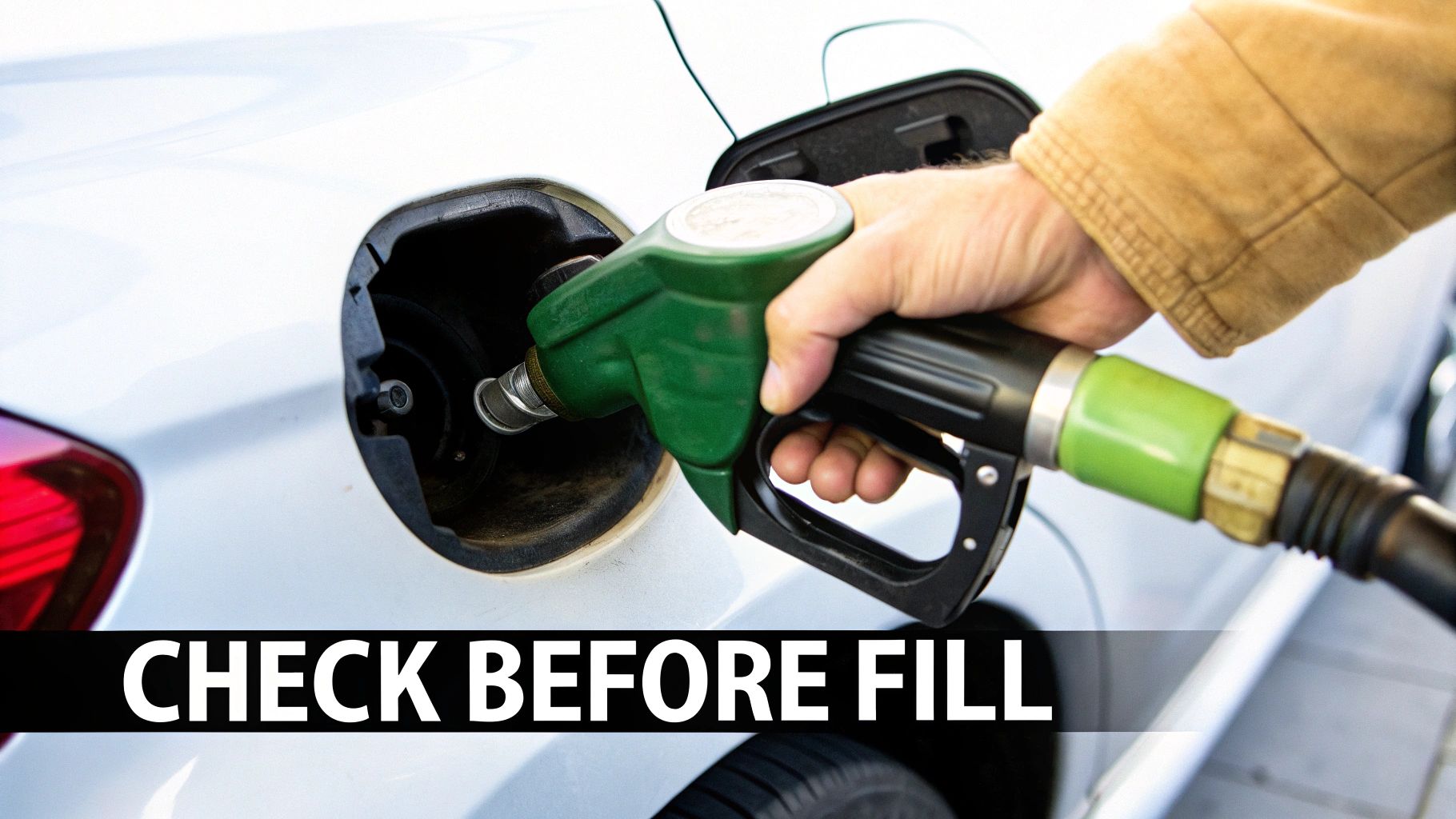
It all comes down to creating a little routine for yourself at the pump. Before you even think about lifting the nozzle, just get into the habit of reading the label on the pump and double-checking it against the one inside your fuel flap. That tiny pause—just a second or two—is often all it takes to snap out of autopilot and prevent a costly mistake.
This is especially critical if you frequently switch between vehicles, like work vans and personal cars, or when you’ve hired a car for a trip. Always take that extra moment to confirm whether you're behind the wheel of a petrol or diesel model.
Practical Tools and Reminders
Beyond just paying more attention, there are some clever physical tools you can use to add an extra layer of protection. These are particularly brilliant for diesel car owners, as the smaller unleaded petrol nozzle is the main culprit, fitting easily into the wider diesel filler neck.
Consider these simple but incredibly effective aids:
Colour-Coded Fuel Cap Stickers: A bright, bold sticker inside your fuel flap that screams "DIESEL" or "PETROL" is a fantastic visual reminder right when you need it.
Misfuelling Prevention Devices: You can actually buy special filler caps to replace your standard one. These clever devices physically block a smaller petrol nozzle from being inserted into a diesel tank, making it impossible to get it wrong.
Dashboard Reminders: A small, discreet sticker on the dashboard or near the fuel gauge can act as one last prompt before you even step out of the car.
Remember, misfuelling is a mistake of distraction, not intelligence. Putting simple systems in place removes the need to rely on memory alone, especially when you’re in a rush or your mind is elsewhere.
Ultimately, these small changes are all about building your confidence back up. By adding a few deliberate checks and simple tools to your refuelling process, you can make this frustratingly common mistake a thing of the past and keep yourself far away from the hassle of another fuel tank clean-out.
Common Questions About Cleaning Out a Fuel Tank
It's completely normal to have a few lingering questions, even when you know what needs to be done. Here are some straightforward answers to the things we get asked most often by drivers in this exact situation.
What if I Already Started My Car?
Okay, so you've turned the key or pushed the start button. It's not the ideal scenario, but it's usually far from a catastrophe if you act fast.
When the wrong fuel gets pulled from the tank, it starts making its way through the engine's veins – the fuel lines, filters, and injectors. To fix this, we don't just drain the tank; we perform a full system flush to get every last drop of contaminant out.
The most important thing you can do is stop the car immediately the moment you realise what's happened. The less time that engine runs, the better our chances of preventing any serious, long-term damage.
Will Misfuelling Void My Car's Warranty?
This is a big worry, and understandably so. The honest answer is that most standard warranties and insurance policies will not cover engine damage caused by misfuelling. It’s often classed as driver error.
However, what they do want you to do is prevent that damage from happening in the first place.
By calling a specialist service like ours for a professional fuel drain, you're taking the precise action that car manufacturers and insurers recommend. Always keep the receipt from the service – it’s your proof that you did the right thing to protect your vehicle.
How Is the Contaminated Fuel Disposed Of?
You definitely can't just tip it down the drain. In the UK, that mixture of petrol and diesel is legally classified as hazardous waste. As professionals, we have to follow very strict rules set out by the Environment Agency, which includes holding a special waste carrier permit.
This means we're licensed to safely transport the contaminated fuel we've drained from your car to a designated hazardous waste facility. There, it's processed and disposed of correctly, which keeps you on the right side of the law and protects the environment. It's one less thing for you to worry about.
If you're stuck with the wrong fuel in your tank, don't panic and definitely don't risk starting the engine. Contact Misfuelled Car Fixer for immediate, professional 24/7 assistance across Suffolk and beyond. Visit our website at https://www.misfuelledcarfixer-suffolk.co.uk or give us a call right now.


