



Engine Flush With Diesel A Risky Mechanic's Trick
- Misfuelled Car Fixer
- Nov 28, 2025
- 14 min read
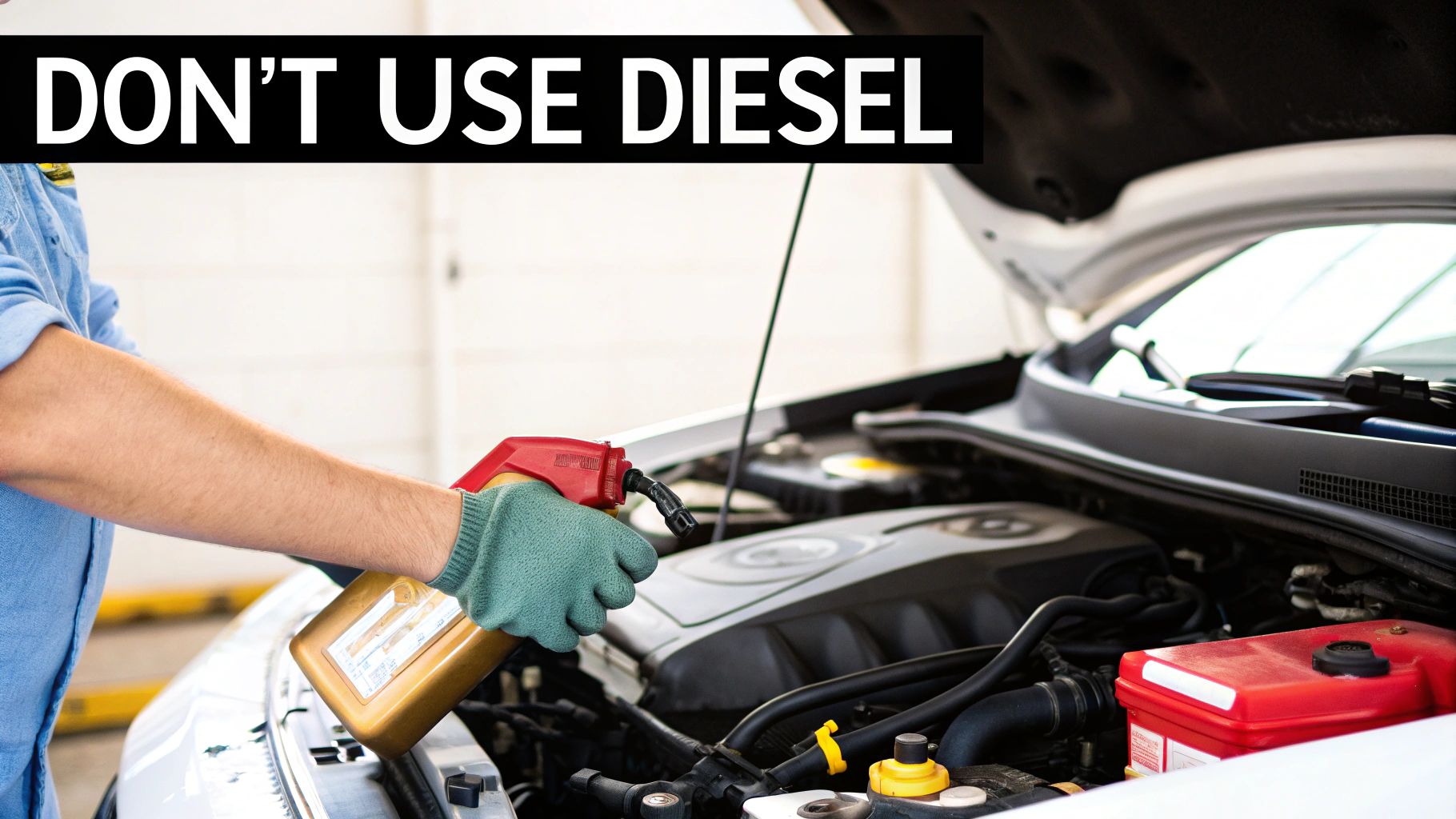
You might hear some old-school advice about using diesel to flush out a sludgy engine. It's a method that’s been floating around for decades, but let me be clear: this is a highly risky move for any modern vehicle and one I'd strongly advise against.
While it’s true that diesel has some solvent properties that can break down grime, it’s missing the crucial lubricating additives your engine oil is packed with. Running an engine on it, even for a few minutes, can cause some serious, and seriously expensive, damage.
Why Diesel is a Dangerous Choice for Engine Flushing
The whole idea of an engine flush with diesel dates back to a time of much simpler, more robust engines with looser tolerances. Back then, it was seen as a cheap and cheerful way to clean things out. But what might have worked on an old farm tractor is a recipe for disaster in the sophisticated, high-performance engines we see today.
The Lubrication Breakdown
Think of engine oil as more than just a slippery liquid; it's a complex chemical cocktail. It’s full of specialised additives designed to create a tough, protective film over every single moving part. This film is what prevents damaging metal-on-metal contact, especially under the intense heat and pressure inside your engine.
Diesel fuel has none of this.
When you drain the oil and run the engine with diesel, you’re effectively stripping away that vital protective layer. This leaves some of the most critical and expensive components completely exposed.
Turbochargers: These things spin at mind-boggling speeds—often over 150,000 RPM—and they depend entirely on a constant flow of high-pressure oil to survive. Starve them of proper lubrication, and you’re looking at catastrophic bearing failure in minutes.
Crankshaft and Camshaft Bearings: These bearings are under enormous stress. Without that oil film, they can wear down incredibly fast, leading to scoring, damage, and eventually, a seized engine.
Hydraulic Lifters & Timing Chain Tensioners: Many modern engines use oil pressure to make these parts work correctly. Diesel is much thinner than oil, and its low viscosity can stop them from functioning properly or cause them to fail altogether.
Damage to Seals and Gaskets
It's not just the metal parts at risk. Your engine is full of rubber and polymer seals and gaskets, all carefully engineered to withstand modern engine oil. Diesel is a different beast entirely. It can be far more aggressive, causing these materials to swell up, go hard and brittle, or just break down over time. The result? Persistent oil leaks that show up long after you thought the job was done.
The bottom line is simple: diesel is a fuel, designed to explode under pressure, not a lubricant designed to protect. Using it to clean an engine is like trying to wash your hands with sandpaper. It might get the dirt off, but it's going to do a lot of damage along the way.
Diesel Flush vs Commercial Flush: A Reality Check
This is exactly why dedicated, professionally formulated engine flush products exist and dominate the market. These aren't just solvents in a can; they're balanced products designed to do the job safely.
The table below breaks down the real-world differences.
Consideration | Engine Flush with Diesel | Professional Engine Flush Product |
|---|---|---|
Cleaning Power | Breaks down sludge but can leave behind harmful particulates. | Contains targeted detergents to dissolve sludge and suspend it safely in the old oil. |
Lubrication | None. Strips protective oil films, causing extreme wear on critical parts. | Formulated with lubricating agents to protect bearings, turbos, and other components during the flush. |
Seal/Gasket Safety | High risk. Diesel can degrade and damage modern seal materials, leading to future leaks. | Engineered to be compatible with engine seals, gaskets, and O-rings, preventing damage. |
Viscosity & Flow | Too thin. Can cause issues with oil pressure-dependent systems like tensioners and VVT. | Designed to maintain a safe viscosity, ensuring all oil passages get cleaned without starving parts. |
Cost vs. Risk | Seems cheap upfront but carries a massive risk of catastrophic, wallet-emptying engine failure. | A small, preventative investment that safely maintains engine health and performance. |
These purpose-built flush additives contain powerful detergents to dissolve sludge and carbon deposits but are mixed with essential lubricating agents. They are engineered to work quickly and effectively while ensuring every internal part stays protected.
To get a better handle on how different chemicals affect your vehicle, it’s worth reading our guide on what fuel additives are and how they work. It’s a real eye-opener.
What Is Engine Sludge and Why Should You Care?
Before we get into the nitty-gritty of cleaning an engine, it's crucial to understand what you're actually up against. Engine sludge isn’t just old, dirty oil. It's a thick, gooey, tar-like mess that builds up when oil degrades and mixes with contaminants like soot, moisture, and unburnt fuel.
Imagine cholesterol building up in an artery; that’s exactly what sludge does to your engine. It clings to internal surfaces, choking off the vital passages that oil needs to flow through. This forces your oil pump to work harder and can starve critical components of the lubrication they desperately need to survive.
How Sludge Builds Up in Day-to-Day Driving
You might not even realise it's happening. Sludge formation is a slow, insidious process, and your driving habits play a huge role. One of the biggest offenders? Short, stop-and-start trips around town.
When your engine never gets properly hot, it can't burn off the condensation and fuel that naturally contaminates the oil. This moisture hangs around and churns with the oil, creating the perfect conditions for sludge to form. Over thousands of miles, it thickens from a milky consistency into a damaging, solid-like deposit.
An engine full of sludge isn't just running poorly—it's actively damaging itself. Modern components like turbochargers or variable valve timing (VVT) systems rely on precise, clean oil flow. Even a minor blockage can lead to a huge repair bill.
The Diesel Engine Dilemma
Sludge is a universal problem, but it’s a whole different beast in diesel engines. Diesels naturally produce a lot more soot during combustion, which is a primary ingredient for sludge. That’s why keeping a diesel engine clean is non-negotiable if you want it to last.
This problem is so prevalent that diesel engines now represent the fastest-growing segment of the engine flush market right here in the UK. From fleet managers running commercial vans to individual owners, people are catching on that keeping soot and sludge in check is key to better fuel economy and a longer-lasting engine. You can read more about the European engine flush market outlook on openpr.com.
This is precisely why dumping a harsh solvent like diesel fuel into your crankcase is such a risky move. The goal is to gently dissolve and suspend the gunk so it can be drained out safely. You don't want to just break off large chunks that can travel downstream and create an even worse blockage. A purpose-made flush product is formulated to clean thoroughly without causing that kind of collateral damage.
How to Safely Flush Your Engine at Home
Right, so we've established that using diesel to flush your engine is a recipe for disaster on any modern car. Let's talk about how to do this job properly. A good quality, commercial engine flush product is what you need – it’s designed to be effective without being so aggressive it damages the delicate parts inside your engine. It's a fairly straightforward task for any competent DIY mechanic, as long as you follow the instructions to the letter and don't cut corners on safety.
Before you even think about lifting the bonnet, get all your kit together. There's nothing worse than having to stop mid-job, covered in oil, to dash to the motor factors.
Here’s what you’ll need:
The Right Tools: A decent socket set is a must, along with a good oil filter wrench that actually fits your car’s filter. You'll also need a sturdy drain pan – make sure it’s big enough to hold all the old oil – and a funnel to keep things tidy.
Safety Gear: Don't skip this. Always wear protective gloves and safety glasses. Hot engine oil can give you a nasty burn, and the chemicals in the flush can irritate your skin.
The Essentials: You'll obviously need your chosen engine flush additive, the correct grade and amount of new engine oil, and a new, high-quality oil filter. Don't cheap out on the filter.
This diagram gives you a quick visual rundown of the main stages, from getting set up to draining the old gunk out.

As you can see, a bit of preparation goes a long way. Getting everything in order before you start makes the whole process smoother and safer.
Preparing and Performing the Flush
First things first, you need to get the engine warmed up to its normal operating temperature. A quick 10-15 minute drive should do the trick. This thins out the old oil, making it flow better and helping the flush product get into all the nooks and crannies to dissolve those stubborn deposits.
Once it's warm, park the car on a completely level surface, switch off the engine, and pour the entire bottle of engine flush into the old oil through the oil filler cap.
Now, fire the engine back up and just let it idle. Don't touch the accelerator. The instructions on the bottle will tell you how long for, but it’s usually between 10 and 15 minutes.
A Word of Warning: Whatever you do, do not rev the engine or drive the car while the flush is in there. These products thin the oil out considerably. Putting the engine under load without proper lubrication is a surefire way to cause serious, and very expensive, damage.
Draining and Refilling Your Engine
As soon as the time is up, switch the engine off. While everything is still nice and warm, slide your drain pan underneath and carefully remove the sump plug. Let it all drain out. Here's a little tip from experience: just 'crack' the seal on the oil filter before you drain the oil completely. It's much easier to break it loose when there isn't a torrent of oil waiting to spill everywhere.
With the oil drained, you can now spin off the old filter. Give the mating surface on the engine block a quick wipe with a clean rag to make sure you get a good seal with the new one. Before you fit the new filter, smear a little fresh oil on its rubber gasket – it helps it seal properly and makes it easier to remove next time.
Pop the sump plug back in, ideally with a new crush washer, and tighten it to the correct torque specified by the manufacturer. Don't just guess. Now you can refill the engine with the correct amount of fresh, high-quality oil.
Keeping the inside of your engine clean is vital, but don't forget the outside. A clean engine bay not only looks better but makes spotting leaks much easier. You can find some useful advice on how to clean your car engine bay. And if you ever find yourself in the much more serious situation of putting the wrong fuel in, our guide on how to drain fuel tank safe steps tips is an essential read.
Time for one last check. Start the engine and let it run for a minute or so. Switch it off, have a quick look underneath for any leaks from the sump plug or filter, then check the dipstick. Top up the oil if needed, and you're all done.
When an Engine Flush Can Do More Harm Than Good
Sometimes, the best thing you can do for your car is absolutely nothing. An engine flush sounds like a great idea—a proper detox for your vehicle's heart. But if you're dealing with a high-mileage or poorly maintained engine, that "detox" can backfire spectacularly.
The very gunk you’re trying to clean out can become the instrument of your engine's demise.
Picture years, or even decades, of baked-on sludge clinging to the inside of the engine. It’s not pretty, but it’s sitting there, relatively stable. An aggressive flush acts like a jet wash, dislodging a big, solid chunk of this crud. This piece of debris is then immediately sucked towards the oil pump.

Here’s the killer part: the oil pickup pipe has a fine mesh screen over its inlet. A large piece of sludge can easily block this screen completely, starving the entire engine of oil in an instant. The result is catastrophic, terminal damage in a matter of seconds.
Assessing the Risk to Your Engine
So, how can you tell if your engine is a ticking time bomb? You need to play detective for a bit. If you’ve just picked up a used car and the service book is patchy or missing, you should be on high alert.
The biggest red flag is thick, black, tar-like sludge you can see right through the oil filler cap. Don't just give it a quick glance. Grab a torch and have a proper look down into the valve cover. If you spot heavy, caked-on deposits, a powerful flush is a massive gamble.
Believe it or not, in some older, sludged-up engines, those hardened deposits are the only things keeping worn piston rings or gaskets sealed. Blasting them away can suddenly reveal underlying issues, causing new oil leaks or a sudden spike in oil consumption.
When to Absolutely Avoid a Flush
To help you make the right call, I've put together a quick checklist. Use it to figure out if a flush is a sensible choice or a dangerous gamble for your car's specific situation.
Engine Flush Safety Checklist
Vehicle Condition or History | A Flush Might Be Okay (Proceed with Caution) | Avoid Flushing (Seek Professional Advice) |
|---|---|---|
Service History | Consistent, documented oil changes with quality oil. | Unknown, missed, or infrequent service intervals. |
Mileage | Low to moderate mileage (under 80,000 miles). | Very high mileage (over 150,000 miles) with unknown history. |
Visible Sludge | Light discolouration or a thin film inside the filler cap. | Thick, black, tar-like deposits visible in the valve train. |
Engine Noises | Runs quietly with no unusual rattles or ticks. | Exhibits tapping, knocking, or rattling noises. |
Oil Pressure | Normal, consistent oil pressure reading or no warning light. | Oil pressure warning light flickers, especially at idle. |
If your car falls into the "Avoid Flushing" column, it's time to get a professional opinion or choose a much gentler path. This is far safer than a risky DIY flush with diesel or a harsh chemical product.
For a neglected engine, the safest approach is often a series of oil changes at much shorter intervals. For instance, change the oil and filter, drive for 500-1,000 miles, and then do it again. Using a high-quality, high-detergent oil allows its additives to clean the engine gently over time, rather than all at once.
In the most severe cases, the only truly safe fix is for a mechanic to drop the oil sump, clean it out by hand, and manually clear the oil pickup screen.
Keep in mind that engine sludge can sometimes be a symptom of other issues. If you’re also dealing with rough running or a loss of power, it’s a good idea to understand the symptoms of bad fuel injectors in diesel engines to see if there’s an overlapping problem.
A Smarter, Safer Approach to Cleaning Your Engine
If pouring an aggressive chemical flush into your engine feels like a risky gamble, you’re right to be hesitant. There are much smarter, safer ways to tackle engine sludge that put long-term health first, rather than opting for a quick, potentially damaging fix. It's all about a more measured and gentle approach.
One of the best techniques I’ve come across over the years is what I call the 'gentle clean'. It’s a method that avoids harsh flush products altogether. Instead, you use the engine's own oil to do the heavy lifting, just over a slightly longer period. It's a surprisingly simple concept that works wonders, especially on engines where you're not sure about the service history.
The ‘Gentle Clean’ Using High-Detergent Oil
The whole idea here is to use a top-quality engine oil with high levels of detergents to carry out a few short-interval oil changes. Modern oils are brilliant; they're packed with additives designed specifically to clean internal parts and keep all the nasty stuff suspended so it can be drained away. By shortening the oil change interval, you're essentially putting these cleaning properties into overdrive.
Here's how you'd typically go about it:
First Oil Change: Start by draining the old oil and, crucially, fitting a new oil filter. Refill with a quality synthetic or semi-synthetic oil that’s well-regarded for its cleaning power.
A Short Run: Now, just drive the car as normal for about 500 to 1,000 miles. This gives the new oil's detergents enough time to start dissolving sludge without the oil becoming completely saturated with gunk.
Second Oil Change: Time to repeat the process. Drain the oil and change the filter again. Don't be alarmed if the oil that comes out looks absolutely filthy – that’s a good sign! It means the detergents have been hard at work, pulling contaminants off the engine's internals.
Check and Decide: Take a look at the state of the oil you just drained. If it was particularly black and thick, it might be worth doing one more short-interval change before you go back to the standard service schedule.
This gradual approach cleans the engine without the danger of breaking off large, solid chunks of sludge that could block up critical oil galleries or the oil pump pickup. For a high-mileage engine, it’s by far the safest DIY cleaning method you can use.
When to Call in the Professionals
If you want a really deep clean but don't want to risk an aggressive DIY flush, then booking it into a reputable garage is the way to go. They have specialised machines that connect directly to the engine's lubrication system.
This professional equipment circulates a purpose-made, heated cleaning solution through the engine at a controlled pressure. It’s a thorough process, but the key is that technicians are monitoring it the entire time, making sure it’s both safe and effective.
This controlled, professional method is leagues ahead of just pouring a can of flush into the engine and crossing your fingers.
Of course, the best strategy is always prevention. Using the right grade of high-quality oil and sticking to your car manufacturer’s service schedule like glue is the single most effective way to stop sludge from ever building up in the first place. A healthy engine is the result of consistent, quality maintenance, not a last-minute chemical rescue.
Still Got Questions About Engine Flushing?
Even after getting to grips with the process, it's completely normal to have a few more questions rattling around. Let's run through some of the most common things UK drivers ask about engine flushing to help you decide what’s right for your car.
One of the biggest questions I hear is about how often you should flush an engine. The truth is, it’s not something you should be doing regularly like an oil change. Think of it as a specific, one-off treatment for an engine you know is suffering from sludge build-up, maybe because it's missed a few services or just isn't running right. If you’ve always stuck to the manufacturer's service schedule and used good quality oil, you'll likely never need to do one.
Is it Safe for Turbos and Other Engine Parts?
A major worry, particularly for anyone with a modern turbo-diesel, is the risk of damaging the turbocharger. This is a very real concern. If an engine has a lot of heavy sludge, a flush can break off a chunk of gunk that gets sent straight into the very narrow oil passages feeding the turbo bearings. The result? Instant oil starvation and a wrecked turbo.
This is exactly why flushing a neglected, high-mileage engine with diesel or even some strong commercial products is such a risky business. The chance of dislodging a lump of debris big enough to block a critical oilway is just too great.
It's crucial to remember that an engine flush is not a magic fix for mechanical problems. If you've got a smoking exhaust, the cause is almost certainly worn piston rings or valve seals. A flush won't touch those issues. In fact, it could make oil consumption worse by washing away the carbon build-up that was actually helping to seal those worn parts.
Another common thought is using diesel to clean the outside of an engine. It cuts through grease, right? Well, yes, but it’s a terrible idea. Diesel is aggressive on rubber and plastic. It will cause hoses, seals, and the insulation on your wiring loom to swell, perish, and eventually fail. Stick to a proper automotive degreaser – it’s designed to be tough on grime but safe for all those delicate bits.
So, Should You or Shouldn't You?
At the end of the day, an engine flush has its place. For a well-looked-after engine, it's completely pointless. For an engine with moderate sludge where you've weighed up the risks, a high-quality commercial flush used by the book can be a good move.
But for an old, high-mileage engine with a patchy service history? It’s a gamble I wouldn't recommend. The much safer, gentler approach is to simply perform a couple of oil and filter changes in quick succession.
If your problem is more urgent, like putting the wrong fuel in your car, the worst thing you can do is start the engine. For immediate, expert help across Suffolk and the surrounding areas, get in touch with Misfuelled Car Fixer. Our 24/7 mobile fuel drain service is ready to help at https://www.misfuelledcarfixer-suffolk.co.uk.