



What happens if you put adblue in diesel tank: risks, costs, and prevention
- Misfuelled Car Fixer

- Dec 21, 2025
- 14 min read
Okay, let's get one thing straight right away: if you've just put AdBlue in your diesel tank, do not start the engine. I cannot stress this enough. It’s a serious mistake, yes, but acting fast can be the difference between a manageable problem and a repair bill that costs thousands of pounds. You've essentially introduced a water-based fluid into a system that is only designed to handle an oil-based fuel, and the consequences can be immediate and severe.
What Happens if You Put AdBlue In Diesel Tank
The instant AdBlue mixes with your diesel, a destructive chain reaction begins. Imagine pouring a glass of water into the delicate inner workings of a high-end camera—it’s just not meant to be there, and it will cause damage. AdBlue is a solution of 32.5% urea and 67.5% deionised water, making it completely incompatible with your car's fuel system.
Because water is heavier than diesel, the AdBlue doesn't just mix in. It sinks straight to the bottom of the tank. The problem? That's exactly where the fuel pump's pickup pipe sits. So, the very first thing your engine will try to suck through the lines isn't lubricating diesel, but a corrosive, watery solution.
To put the danger into perspective, here's a quick look at the immediate risks your fuel system faces, this what happens if you put adblue in diesel tank.
Immediate Risks of AdBlue in Your Diesel System
This table gives a quick overview of the primary dangers when AdBlue contaminates your diesel fuel system, highlighting the chemical and mechanical impacts.
Affected Component | Immediate Effect of AdBlue Contamination |
|---|---|
Fuel Tank & Lines | The water in AdBlue starts corroding metal surfaces almost instantly. |
Fuel Pump | Loses vital lubrication from diesel, leading to metal-on-metal grinding and catastrophic failure. |
Fuel Filter | Becomes clogged by crystallised urea, starving the engine of fuel. |
Injectors | Clogged by crystals and damaged by corrosion and lack of lubrication, leading to poor performance or seizure. |
Engine | In severe cases, internal components can be damaged by the contaminated fuel mixture. |
As you can see, the threat is widespread and affects every part of the fuel delivery process.
The Knock-On Effect of Contamination
The damage isn't slow or gradual; it's a domino effect that starts the second the AdBlue hits the diesel. Here’s how it unfolds:
Corrosion Kicks In: The water content gets to work corroding the sensitive metal parts inside your fuel tank, fuel lines, high-pressure pump, and injectors.
Lubrication Vanishes: Diesel fuel isn't just for combustion; it lubricates the high-pressure fuel pump and injectors. AdBlue provides zero lubrication, causing these incredibly precise components to grind against each other, leading to rapid and terminal wear.
Crystals Cause Chaos: As the AdBlue solution heats up within the fuel system, the urea crystallises. These tiny, hard crystals are like sending sandpaper through your engine's veins. They will clog your fuel filter, block the microscopic nozzles in your injectors, and physically score critical surfaces.
The golden rule after putting AdBlue in the diesel tank is do not start the engine—or even put the key in the ignition. Just turning the ignition on can prime the fuel pump, which will start circulating this corrosive cocktail. That simple action can turn a recoverable mistake into a full system replacement nightmare.
From the cheap fuel filter to the eye-wateringly expensive high-pressure pump and injectors, every single component that the AdBlue touches is at risk. Understanding this process is the first step in stopping a simple error from turning into a total mechanical catastrophe.
Why AdBlue and Diesel Are a Disastrous Mix
To really get your head around why putting AdBlue in your diesel tank is such a catastrophic mistake, you need to understand just how fundamentally different these two liquids are. It's not like mixing two similar fuels; it's more like trying to force oil and water together. They just don't play well. Diesel is an oil-based fuel that does two critical jobs: it powers the engine and lubricates all the delicate parts of the fuel system.
AdBlue, however, is a completely different beast. It's essentially a mix of 67.5% deionised water and 32.5% urea. It has zero lubricating properties. Because the water in AdBlue is much denser than diesel, it doesn't even attempt to mix. Instead, it drops like a stone and settles at the very bottom of your fuel tank.
This is where the real trouble begins. Your car's fuel pump is designed to pull fuel from the lowest point in the tank. This means the very first thing it will suck up isn't a diluted diesel mix, but a concentrated, corrosive shot of pure AdBlue.
The Corrosive Cocktail and Crystal Formation
As soon as this watery solution hits your fuel lines, a two-pronged attack kicks off. First, all that water immediately gets to work corroding the sensitive metal components inside your fuel pump, lines, and injectors. Modern diesel systems are precision-engineered with incredibly tight tolerances, and the tiniest speck of rust can spell disaster.
At the same time, as the AdBlue solution travels through the system and heats up, the urea undergoes a nasty transformation. It starts to precipitate, forming hard, sharp crystals.
Think of it like sending tiny, abrasive shards of glass hurtling through your vehicle's fuel system. These urea crystals act like sandpaper, scouring and scraping the finely-machined surfaces of the high-pressure pump and fuel injectors, causing permanent damage.
The one-two punch of water-based corrosion and the grinding action of urea crystals creates a perfect storm for total mechanical failure. This isn't a problem that develops over time; it's an aggressive, fast-acting assault on some of the most expensive parts of your engine. For a deeper dive into what AdBlue is and its intended purpose, check out our diesel driver's guide to see why it belongs in the exhaust system, never the fuel tank.
The Immediate Mechanical Impact
The fallout from this contamination is almost instant. Your fuel system is expecting a constant flow of lubricating diesel. When AdBlue arrives, it strips this protective film away, causing intense metal-on-metal friction inside the high-pressure pump.
This triggers a domino effect of critical failures:
Fuel Filter Blockage: The newly formed urea crystals rapidly clog the fuel filter. This chokes the engine of fuel, leading to poor running, stalling, or a complete failure to start.
Injector Damage: The fuel injectors, responsible for delivering a fine mist of diesel, get clogged with crystals and damaged by corrosion. The result is poor combustion and a struggling engine.
Pump Failure: The high-pressure fuel pump, which can easily cost over £1,000 to replace, often seizes completely from the lack of lubrication and internal damage.
In short, the chemical reaction and physical damage from mixing AdBlue and diesel quickly escalate a simple refuelling mistake into a complex, expensive, and engine-threatening disaster.
How AdBlue Contamination Destroys Your Fuel System
The moment AdBlue enters your diesel tank, it sets off a devastating chain reaction. Think of it as a domino effect, where a single mistake systematically takes down one component after another, leaving a trail of destruction from the fuel tank all the way to the engine.
It all starts at the bottom of the fuel tank. Because AdBlue is a dense, water-based solution, it sinks beneath the lighter diesel fuel. When you turn the key, the fuel pump immediately starts pulling this corrosive mixture into the system. Diesel fuel is naturally oily and acts as a lubricant for many of these parts; AdBlue offers none of this protection. The result? Instant metal-on-metal friction inside the low-pressure fuel pump, causing rapid wear and potentially sending tiny metal shards further down the line.
The Path of Destruction
From the tank, this nasty cocktail makes its way to the fuel filter. A filter is designed to catch tiny specks of dirt, but it’s completely unprepared for what's coming. As the AdBlue is exposed to heat and pressure changes, the urea within it starts to form hard, abrasive crystals. These crystals quickly clog the filter, effectively starving the engine of fuel.
But what if some of the contaminated fluid gets past the choked filter? Its next stop is the high-pressure fuel pump – the real heart of a modern diesel engine's fuel system.
This bit of kit is a marvel of precision engineering, built with incredibly tight tolerances measured in microns. The abrasive AdBlue crystals are like liquid sandpaper, scouring and destroying its delicate moving parts, while the high water content begins to rust it from the inside out.
The high-pressure pump is often the first major casualty, and its failure can easily cost over £1,000 to replace. Worse still, as it grinds itself to pieces, it sends a shower of metal filings into the fuel lines, contaminating everything that follows.
Reaching the Engine’s Core
The final, and most catastrophic, stage of the journey is the fuel injectors. These are responsible for spraying a perfectly atomised mist of diesel into the engine’s cylinders. When they get hit with a mixture of crystallised AdBlue and metal debris from the failing pump, the outcome is predictable and disastrous.
This diagram shows just how the contamination spreads and the damage it causes at each step.
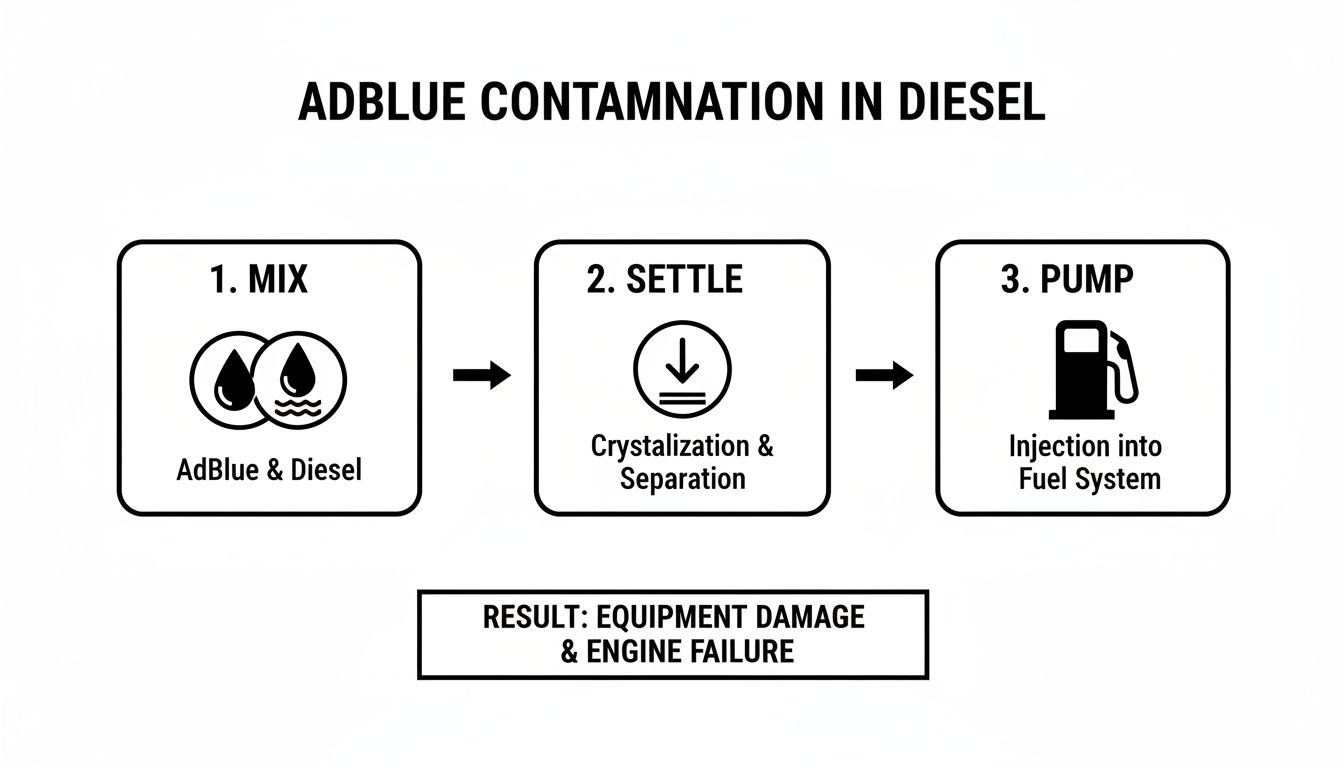
As you can see, the problem escalates rapidly once the pump starts circulating the mixture. The entire system is compromised. The key components that bear the brunt of the damage are:
Low-Pressure Fuel Pump: Robbed of lubrication, it quickly wears out and fails.
Fuel Filter: Gets completely blocked by solid urea crystals, stopping the flow of fuel.
High-Pressure Fuel Pump: Fails spectacularly from the combined assault of abrasive crystals and rust.
Fuel Injectors: The tiny nozzles become clogged with debris, disrupting the fuel spray and often seizing solid.
What starts as a simple, honest mistake at the filling station quickly becomes a full-blown attack on your car's most critical and expensive components. Every part of the fuel system becomes another point of failure, leading to a repair bill that can easily stretch into thousands of pounds.
Recognising the Telltale Signs of AdBlue Contamination

If you’ve already started the engine after putting AdBlue in the diesel tank, knowing the symptoms is your next line of defence. The signs of this mistake don’t take long to show up; as soon as the fuel pump kicks in, it starts pulling that corrosive solution from the bottom of the tank where it settled.
Spotting these warnings early gives you a chance to shut the engine down immediately and stop the damage from spreading. How bad the symptoms get really depends on how much AdBlue went in and how long the engine has been running. And don't feel too bad – this happens more than you'd think. The AA dealt with over 23,000 AdBlue-related breakdowns in a single year, which just shows how easy this mistake is to make. You can explore more about these trends and the rise in SCR system incidents to see how widespread the issue has become.
The Immediate, Obvious Symptoms
When things start to go wrong, it's usually dramatic and hard to miss. If you've just pulled away from the petrol station forecourt, you'll likely run into one or more of these problems very quickly:
Engine Won't Start: In a way, this is the best possible outcome. The AdBlue may have already clogged the fuel filter or damaged the pump, preventing the engine from ever turning over.
Rough, Shaky Idling: The engine might start, but it will sound awful. Expect it to stutter, shake, and run erratically as it tries and fails to run on the contaminated fuel.
Stuttering When You Accelerate: As you press the accelerator to pull away, the car might jerk and hesitate violently. This is a dead giveaway that the engine is being starved of clean diesel.
Total Loss of Power: A sudden, noticeable drop in power is another classic sign. The engine will feel sluggish and weak because the injectors and pump simply can't do their job.
Engine Cuts Out Completely: The engine could die on you while driving and then refuse to start back up. This usually means a critical part of the fuel system is now blocked or broken.
Your Dashboard Will Scream for Help
Modern cars are packed with sensors, and your vehicle’s onboard computer will know almost instantly that something is seriously wrong with the fuel. When AdBlue starts coursing through the system, expect your dashboard to light up like a Christmas tree.
The most common warnings you'll see are the Engine Management Light (EML) – the universal signal for a serious fault – or a more specific DPF (Diesel Particulate Filter) or emissions system light. Think of these lights as your car’s last-ditch effort to get your attention. Ignore them at your peril.
The moment you notice any of these signs, whether it's how the car feels or a warning light, you need to pull over as soon as it's safe and switch off the engine. Every second it runs, that destructive AdBlue solution is being forced further into your engine, turning a repairable problem into a catastrophic failure.
What to Do Immediately and What Happens Next

Realising you've put AdBlue in your diesel tank can send a jolt of panic through you, but what you do in the next few minutes is absolutely crucial. There's one golden rule: do not start the engine. Don't even turn the key to the 'on' position. Doing so primes the fuel pump, and that's the beginning of a very expensive journey for the AdBlue-diesel mix.
Your first step is to make sure you and your vehicle are safe. Flick on your hazard lights, and if you're on a busy forecourt or roadside, try to ensure you're visible and out of the flow of traffic. The car isn't going anywhere under its own power. Next, you need to call a professional mobile fuel drain service. This is a specialist job that a regular mechanic isn't equipped for; it requires specific pumps and a licence to handle and dispose of contaminated fuel correctly. Having a clear plan for roadside issues is always smart; a practical emergency response plan template can be a real lifesaver for any driver.
A Look at the Repair Process
When our specialists arrive, they’ll get to work on a systematic process to decontaminate your fuel system. How long this takes and how complex it is all hinges on that one big question: was the engine started?
Draining the Tank: The first order of business is getting every last drop of that corrosive mixture out of your fuel tank. We use specialised, explosion-proof pumping equipment to safely drain the entire contents.
Flushing the System: With the tank empty, the next job is to flush the whole fuel system with clean diesel. This is vital for pushing out any residual AdBlue and the tiny urea crystals that might be hiding in the fuel lines, filter housing, or pumps.
Inspecting and Replacing Parts: Finally, we'll carry out a thorough inspection of the key fuel system components. The fuel filter is almost always a casualty and will need replacing. We’ll also check the fuel pumps and injectors for any tell-tale signs of crystallisation or corrosion.
If you realised your mistake and never started the car, this drain-and-flush procedure is usually all that's needed to get you safely back on the road. But if the engine has run, even for a minute, the repair becomes far more involved and will likely require new, expensive parts. You can get a better sense of the technicalities in our guide on the safe steps and tips for draining a fuel tank.
What Could This Mistake Cost?
The financial damage from an AdBlue misfuel varies massively. Catching it early and calling for a roadside drain is by far the most wallet-friendly outcome.
According to UK industry estimates, a straightforward case of AdBlue contamination where the tank is drained, lines are flushed, and maybe a few sensors are replaced can cost anywhere from £800 to £1,500. However, in severe cases where the engine has run and damaged the high-pressure fuel pump or injectors, repair bills can easily shoot past £3,000.
These numbers really drive home just how critical it is to act fast and keep that key out of the ignition. That initial phone call to a mobile fuel drain expert is the single best investment you can make to stop a simple mistake from turning into a four-figure nightmare.
How to Prevent an AdBlue Misfuelling Disaster
As the old saying goes, the best repair is the one you never have to make. Now that you know just how catastrophic putting AdBlue in your diesel tank can be, let's talk about the simple steps that can save you a world of pain and protect your wallet.
Honestly, avoiding this mess boils down to a few conscious habits at the filling station. The most crucial thing you can do is simply to slow down and pay attention. Before you even touch a nozzle, take a second to double-check that you're grabbing the one for diesel. Read the pump, read your fuel cap—make sure they match.
Developing Good Refuelling Habits
Building a solid routine is your best defence against a misfuelling slip-up. While modern cars have features designed to prevent this exact mistake, a moment of distraction is all it takes to override them.
Here’s what to build into your routine:
Look for the Blue Cap: Your car's AdBlue filler is almost always a distinctive blue colour. It’s also noticeably smaller than the main diesel filler. Get into the habit of consciously looking for the right cap before you even think about fuelling.
Avoid Distractions: Let's face it, petrol stations are busy. But for the two minutes it takes to fill up, put your phone away, pause the conversation, and just focus on the task at hand. That small bit of mindfulness is your strongest safeguard.
Use Dedicated Refill Bottles: If you're topping up AdBlue between services, think about buying the smaller, sealed refill bottles. They often come with specially designed nozzles that simply won't fit into the wider diesel filler neck, making a mix-up physically impossible.
Turning these simple checks into second nature transforms refuelling from a mindless chore into a deliberate, safe action. For a broader look at what to do in any wrong fuel scenario, have a look at our guide to fast fixes and prevention.
A proactive approach to vehicle maintenance and operational protocols is vital for preventing costly mistakes. For a broader understanding of strategies to mitigate operational risks across your entire vehicle fleet, explore this comprehensive guide on fleet safety management in New Zealand.
At the end of the day, prevention costs nothing more than a moment of your time. The cure, on the other hand, can easily run into thousands of pounds. Make these habits stick, and you can refuel with total peace of mind, every single time.
Frequently Asked Questions About AdBlue Misfuelling
It's completely normal to have a few lingering questions, even after understanding the basics. We get calls about this every day, so let's tackle some of the most common queries we hear from drivers who've found themselves in this tricky situation.
How Much AdBlue in the Diesel Tank Is a Problem?
Honestly, even a tiny amount can kick off a world of trouble. People often think a small splash won't matter, but that's a dangerous assumption.
AdBlue is mostly water, which is heavier than diesel. It sinks straight to the bottom of the tank, right where your fuel pump intake sits. This means the pump will start sucking up that corrosive AdBlue solution almost instantly, no matter how full the tank is with diesel. Even just one or two litres is more than enough to start causing serious damage to your high-pressure pump and injectors the moment you turn the key.
Can I Just Top Up with Diesel to Dilute the AdBlue?
Please don't try this. It's a common myth, and a costly one at that. Adding more diesel won't dilute the AdBlue in any meaningful way.
Think of it like oil and water – they simply don't mix. The AdBlue will just sit in a concentrated puddle at the bottom of the tank, ready to be drawn into the fuel lines. All you'll achieve by adding more diesel is making the professional fuel drain more difficult and wasting more fuel.
The only proper fix is to have a specialist drain the entire fuel system and flush it out. There are no shortcuts or DIY tricks that will save the engine from damage.
Will My Car Insurance Cover This Kind of Mistake?
This is a real grey area and it completely depends on your policy. Some fully comprehensive plans do include cover for misfuelling, sometimes as a standard feature or as an optional extra you might have added.
However, a lot of insurers specifically exclude misfuelling, classing it as driver error. Your best bet is to dig out your policy documents or give your provider a call to find out where you stand. It's wise to assume you might have to foot the bill yourself, which is another reason why calling a professional right away is so important—it keeps the potential repair costs as low as possible.
If you've put AdBlue in your diesel tank anywhere in Suffolk or the nearby areas, take a deep breath. Don't touch the ignition. Just call Misfuelled Car Fixer for our 24/7 emergency fuel drain service. We'll come directly to you, sort the problem on the spot, and get you moving again. Visit us online or call now for immediate assistance.


