



What Is in Diesel Exhaust Fluid and How Does It Work
- Misfuelled Car Fixer

- Jan 27
- 9 min read
So, what exactly is in that blue-capped tank next to your diesel filler? You might be surprised to learn that Diesel Exhaust Fluid (DEF), or AdBlue as it's more commonly known here in the UK, is a remarkably straightforward fluid.
It’s made from just two things: 32.5% high-purity urea and 67.5% deionized water. That’s it. It’s not a fuel additive and it never goes into your diesel tank; think of it as a completely separate operating fluid that’s crucial for keeping your modern diesel car running cleanly.
Breaking Down the AdBlue Formula
Let's get one thing straight: AdBlue isn't some magic potion to boost your engine's performance. It’s better to think of it as a purification treatment for your exhaust fumes.
This specific, non-toxic blend is carefully engineered to tackle the harmful stuff your engine produces. Its sole job is to help your vehicle meet the strict UK and EU emissions standards by neutralising nasty pollutants before they ever leave your tailpipe. For a more detailed look, our guide on what every diesel driver should know about AdBlue has you covered.
The Two Key Ingredients
The secret to AdBlue's effectiveness lies in the precise ratio and purity of its components.
High-Purity Urea (32.5%): This isn't the same stuff farmers use on their fields. It's a special, automotive-grade synthetic urea that provides the ammonia needed for the chemical reaction in the exhaust.
Deionized Water (67.5%): This is far from ordinary tap water. It has been completely purified, with all mineral ions removed to prevent deposits from clogging and damaging the very sensitive emissions system.
To make this even clearer, here’s a quick breakdown of Diesel Exhaust Fluid's composition.
Diesel Exhaust Fluid Composition At a Glance
Component | Percentage | Function |
|---|---|---|
High-Purity Urea | 32.5% | The active ingredient; it converts to ammonia when heated, which is needed to neutralise NOx emissions. |
Deionized Water | 67.5% | Acts as the pure carrier for the urea, ensuring the fluid can be safely sprayed into the exhaust system without causing mineral buildup or damage. |
This simple yet precise formula is what makes the whole system work effectively.
In fact, the quality is so important that it's governed by an international standard, ISO 22241. This ensures that any AdBlue you buy with this certification is pure and safe for your vehicle’s advanced Selective Catalytic Reduction (SCR) system.
Now that we know exactly what AdBlue is made of, we can dive into how this simple liquid actually works its magic inside your car's exhaust. You can also learn more about the diesel exhaust fluid market and its composition.
How AdBlue Actually Cleans Your Exhaust
So, how does this surprisingly simple mixture manage to clean up your car's emissions so effectively? The magic happens inside a very specific bit of kit called the Selective Catalytic Reduction (SCR) system.
Think of the SCR system as a mini chemical processing plant tucked away in your exhaust. As your diesel engine does its thing, it pumps out hot exhaust gases loaded with pollutants. At just the right moment, your car sprays a fine mist of AdBlue directly into this hot gas stream.
This intense heat is the trigger. It instantly converts the urea in the AdBlue into ammonia gas, which is the real workhorse in this whole process.
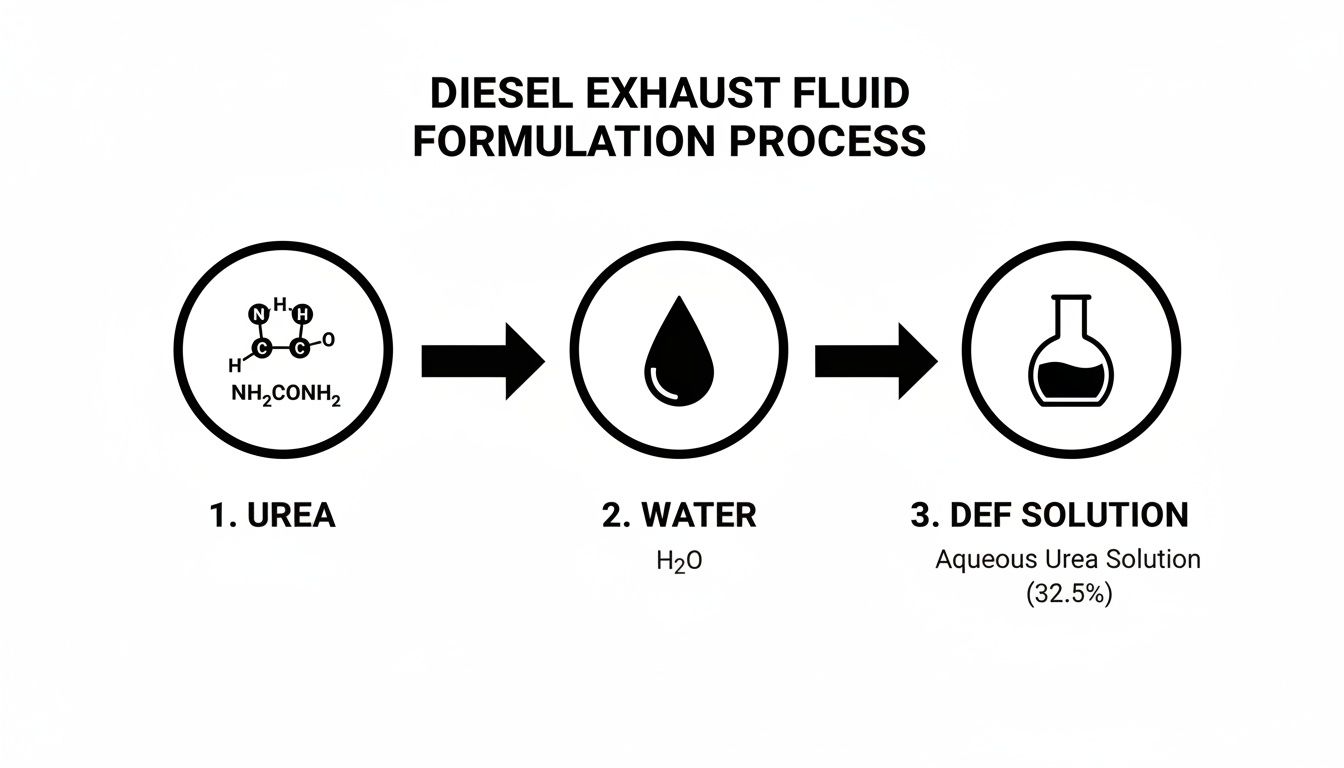
As you can see, it's a very precise formula. That specific blend of high-purity urea and deionised water is essential for the chemistry to work correctly.
The Chemical Magic Act
Now armed with ammonia, the exhaust gases flow into the main SCR catalyst chamber. Here, the ammonia reacts directly with the nasty nitrogen oxides (NOx) – a major component of air pollution.
This clever chemical reaction transforms the harmful NOx into two things that are completely harmless: simple nitrogen gas (which already makes up about 78% of the air we all breathe) and plain old water vapour.
The whole process is incredibly effective, slashing NOx emissions by as much as 95%. This is precisely why modern diesel cars are so much cleaner and are allowed to drive in the UK's expanding network of Clean Air Zones.
The push for AdBlue is all about tackling these NOx emissions, which are a particular problem for diesel engines. The strict 32.5% urea and 67.5% deionised water formula is non-negotiable for meeting emissions standards like Euro 6.
It's important to remember that AdBlue is not a fuel additive; it's a completely separate treatment fluid. If you're curious about products that do go in your tank, check out our guide on what fuel additives are and how they work.
The Critical Mistake of Putting AdBlue in Your Diesel Tank
It’s one of those simple, honest mistakes that can lead to a truly catastrophic and eye-wateringly expensive outcome. With the AdBlue filler cap often sitting right next to the diesel one, it’s an alarmingly easy mix-up to make on the forecourt. The moment AdBlue finds its way into your fuel tank, a destructive chain reaction is set in motion.
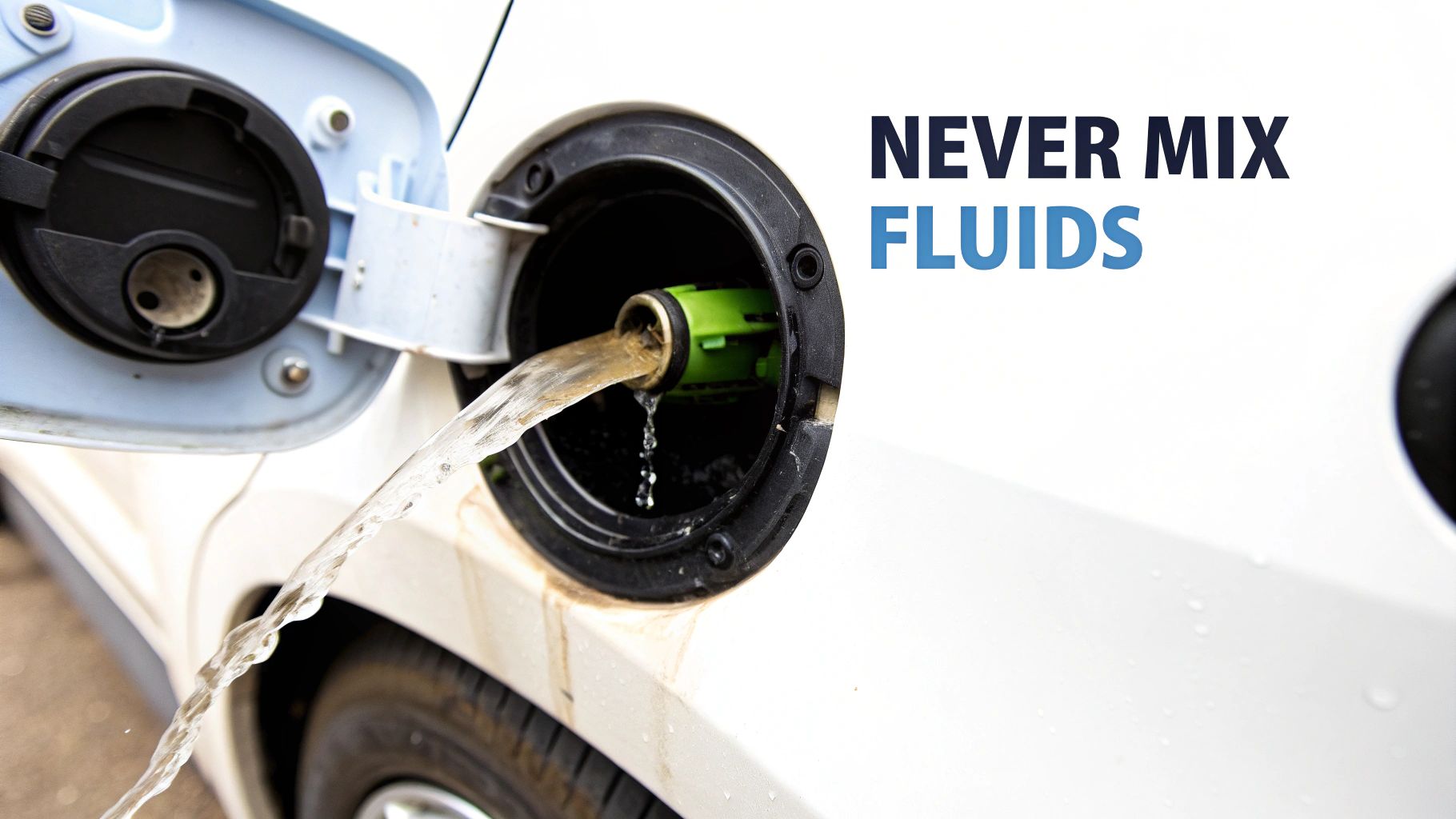
The fundamental problem comes down to basic chemistry. AdBlue is water-based; diesel is oil-based. As we all know, oil and water don’t mix. Since AdBlue is denser than diesel, it sinks straight to the bottom of the fuel tank—which is exactly where the fuel pump pickup draws from.
How AdBlue Destroys a Fuel System
The real damage kicks off the second you turn the key or press the start button. That single action primes the fuel pump, which immediately starts sucking the corrosive, water-based AdBlue solution from the bottom of the tank.
From there, it gets forced through the entire fuel system. This solution attacks sensitive metal components, clogs fuel filters as it crystallises, ruins high-precision fuel injectors, and can cause the high-pressure fuel pump to seize completely.
This misfuelling nightmare is becoming more and more common. As modern diesel cars have become widespread in the UK, incidents have surged. AdBlue's ammonia-based composition is brilliant at cleaning exhausts but wreaks havoc when it crystallises inside a fuel system. In Suffolk alone, AdBlue-related misfuels shot up by 22% in 2023, often because the filling nozzles look so similar to diesel pumps. You can dig deeper into the research on fuel system contamination to see the technical details.
Drivers who’ve made this mistake often report a few alarming symptoms just before a total breakdown:
The engine starts to sputter or run rough.
There's a sudden and dramatic loss of power.
The dashboard lights up like a Christmas tree with warning lights.
Soon after these signs appear, the engine will likely cut out completely, leaving you stranded at the side of the road.
Your Immediate Steps After an AdBlue Misfuelling Incident
So, you’ve just had that sinking feeling and realised you've put AdBlue into the diesel tank. What you do right now, in these next few moments, is absolutely crucial. Your actions can be the difference between a manageable mistake and a catastrophic repair bill.
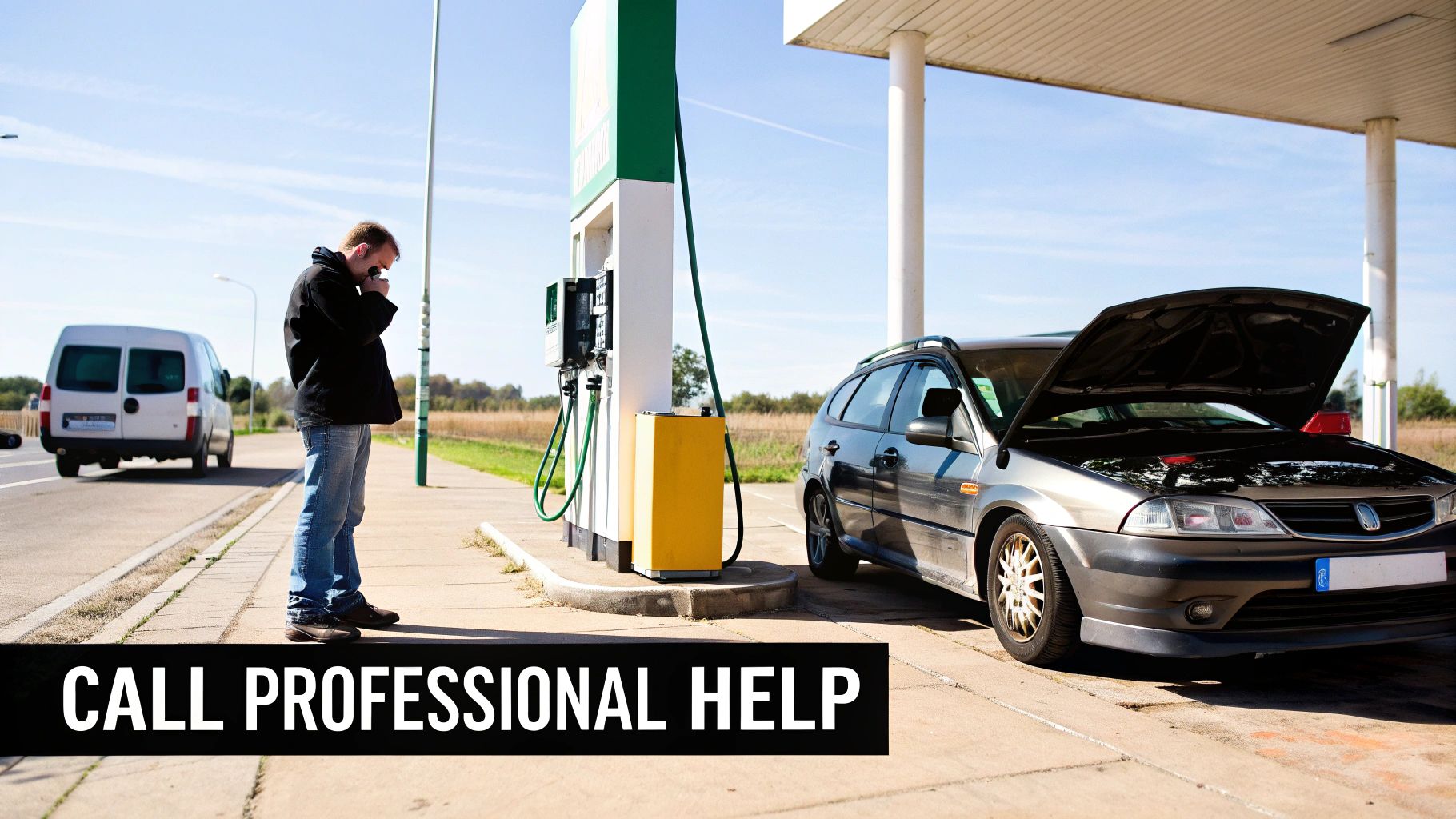
The single most important rule is DO NOT start the engine. Don't even put the key in the ignition or press the start button. That one action primes the fuel pump, which instantly starts to circulate the corrosive AdBlue solution through the entire fuel system.
Secure the Vehicle and Get Help
Once you’ve resisted the urge to start the car, your focus needs to shift to safety and getting the right help.
Move to a Safe Spot: Put the car into neutral. If you can do so safely, push it away from the pumps and into a designated parking bay.
Call a Specialist Immediately: This isn’t a job for a standard roadside mechanic, and it's definitely not a DIY task. You need a professional misfuel service.
A specialist has the dedicated equipment to safely drain the entire fuel system, flush all the lines, and properly dispose of the contaminated mixture. This process must follow strict UK environmental laws for hazardous waste, which is why attempting it yourself is out of the question.
Knowing what is in diesel exhaust fluid—a corrosive solution that crystallises—makes it clear why it’s so damaging. To get the full picture of the potential fallout, you can learn more about what happens if you put AdBlue in your diesel tank in our detailed guide.
Acting fast and calling an expert like Misfuelled Car Fixer is the only reliable way to prevent thousands of pounds in potential repair bills.
How to Store and Handle AdBlue the Right Way
Preventing a nightmare scenario for your car’s emissions system often comes down to what you do before you even twist open the AdBlue filler cap. How you store and handle this sensitive fluid is every bit as important as making sure it goes into the right tank. The absolute purity of AdBlue is the secret to keeping your SCR system happy and healthy for the long haul.
Your first line of defence is simple: always keep AdBlue in its original, sealed container. This protects it from everyday contaminants like dust, dirt, or even a splash of another fluid, all of which can completely ruin its chemical makeup.
Temperature and Sunlight: AdBlue’s Biggest Enemies
You might be surprised to learn just how sensitive AdBlue is to its surroundings, especially when it comes to temperature and direct sunlight. Getting these two things right is crucial for preserving its quality so it can do its job properly.
To keep your AdBlue in top condition, follow these golden rules:
Keep it out of direct sunlight. UV rays will literally break down the urea, making it useless.
Find a cool, dry, and well-ventilated spot for it.
Try to keep the storage temperature between -6°C and 25°C.
High heat is a real killer for AdBlue. If it's consistently stored above 30°C, the fluid will start to decompose and lose its potency. On the flip side, while freezing won't permanently damage it (it’s fine once it thaws out), repeated freeze-thaw cycles can cause issues with crystallisation.
When it's time to top up your vehicle, take a moment to prep. Wipe down the area around the filler cap before you open it and always use a clean, dedicated funnel. This tiny step is your best bet for stopping any stray grit or dirt from falling into the tank.
Pouring in old, degraded, or contaminated AdBlue can be just as destructive as putting diesel in the AdBlue tank. It's a fast track to blocked filters, damaged injectors, and a failing SCR system – all leading to eye-watering repair bills that are easily avoided with a little care.
Common Questions About AdBlue Answered
So, you've got the basics of what diesel exhaust fluid is made of, but what about using it day-to-day? Knowing the theory is one thing; dealing with it on the road is another. We get asked a lot of practical questions, so let’s clear up some of the most common ones to help you manage your car’s AdBlue system like a pro.
Getting to grips with AdBlue is actually pretty straightforward once you have the right info. It can save you from making a simple but very expensive mistake and keep your diesel running exactly as it should. Let's dive in.
How Often Do I Need to Refill AdBlue?
This is a bit of a "how long is a piece of string?" question because it really depends on your car, how you drive, and where you drive. Aggressive driving or lots of city stop-starts will use more than steady motorway cruising.
As a rough guide, though, you can expect a typical passenger car to get through about one litre of AdBlue for every 500-600 miles. Your car is designed to give you a massive heads-up, though. You’ll see a warning light on the dashboard thousands of miles before it's empty, giving you plenty of time to top it up.
Can I Drive If I Run Out of AdBlue?
The short, simple, and very firm answer here is no. Modern diesel cars are built to meet strict emissions laws, and the AdBlue system is a non-negotiable part of that. If the tank runs dry, the car’s brain is programmed to take action.
Once the AdBlue tank is critically low, your car will often go into a 'limp mode' with reduced power. If it runs out completely, the engine management system is designed to prevent the car from starting again. This isn't a mechanical fault; it's a built-in feature to ensure emissions compliance.
Is All AdBlue the Same Quality?
In theory, yes. The recipe is set in stone by the ISO 22241 standard: 32.5% urea and 67.5% deionised water. In reality, however, the quality can vary. That's why it is absolutely vital to buy your AdBlue from a reputable source.
Trying to save a few quid on cheap, uncertified fluid is a massive gamble. Contaminated or poor-quality AdBlue can wreck the sensitive and very expensive components of your SCR system. The catalyst alone can cost thousands of pounds to replace, so always check for the ISO 22241 certification on the bottle.
What If I Put Diesel in the AdBlue Tank?
This is just as bad as putting AdBlue in the diesel tank, if not worse. Diesel is an oily fuel, and it will completely contaminate the AdBlue system, coating everything from the pump and injector to the lines themselves. These parts are delicate and simply can't handle it.
The real disaster is when that diesel reaches the SCR catalyst, as it will destroy it. If this happens, you need to get the tank professionally drained and the system flushed immediately to prevent catastrophic damage.
If you've had a mishap with AdBlue or any other fuel, stay calm and, most importantly, do not start the engine. Give the experts at Misfuelled Car Fixer a call right away. We offer 24/7 emergency help across Suffolk and the surrounding areas. Our mobile team will come directly to you, fix the problem safely, and save you from a huge bill at the main dealer. Find out more at https://www.misfuelledcarfixer-suffolk.co.uk.


