
.jpg)


Wrong Fuel in a Car Fix and Prevention Guide
Realise you’ve topped up with the wrong fuel? Stop the pump right away and resist the urge to start the engine. Every second you wait risks contaminating injectors and fuel lines, leading to hefty repair bills.
Quick Fix For Wrong Fuel In A Car
Every moment after misfuelling counts. Keep calm, put on gloves, grab a fuel-safe container and reach out for help.
Don’t crank the engine under any circumstances.
Alert station staff or roadside assistance immediately.
Have a sturdy, labelled container ready for siphoned fuel.
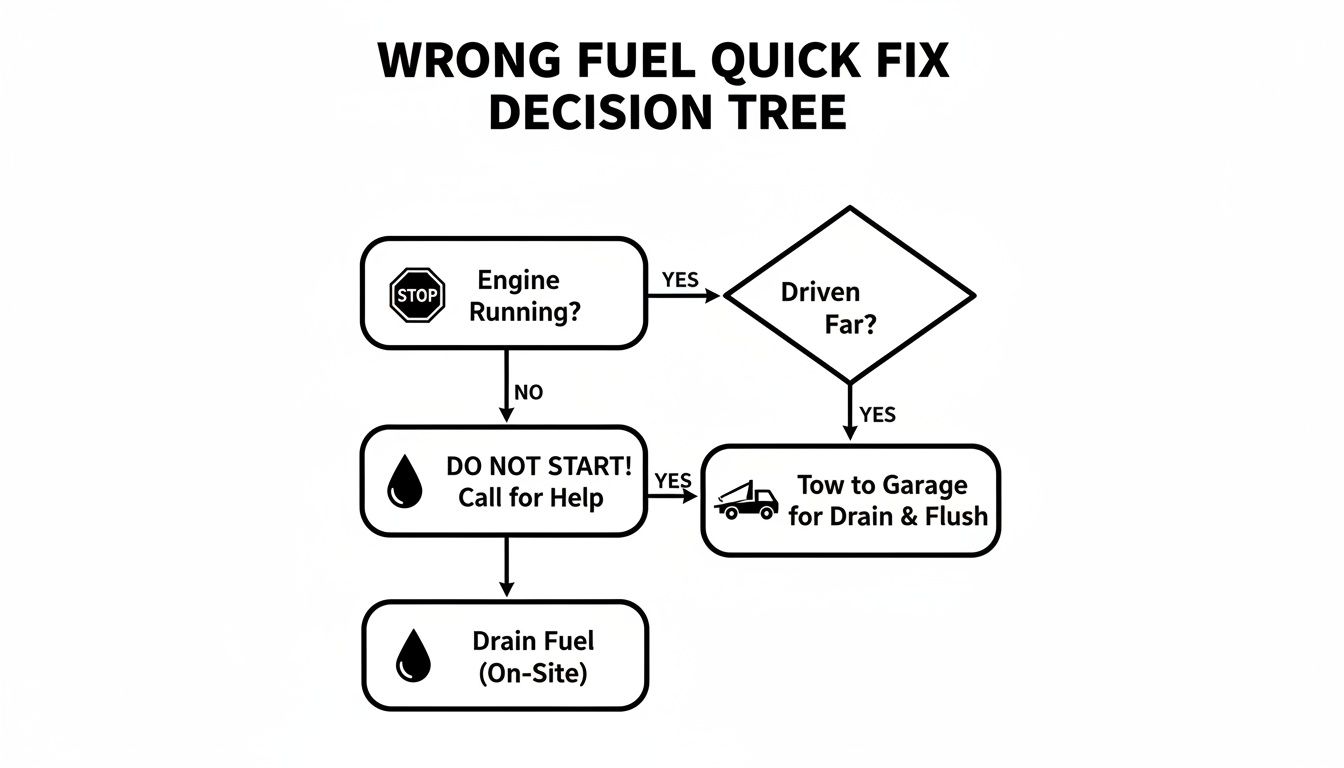
Stopping before ignition cuts potential damage by up to 90%.
Below is a quick reference to decide whether you can DIY drain or if it’s time to call in the pros.
Immediate Actions for Wrong Fuel Emergencies
This table summarises the safest next steps, depending on whether you’ve started the engine.
Action | Before Engine Start | After Engine Start |
|---|---|---|
Stop Fuel Flow | Turn off pump, remove nozzle | Shut off ignition, coast to a safe spot |
Drain Fuel | Unscrew tank cap, siphon into approved container | Use a specialist pump to extract from tank |
Decide Next | DIY drain if engine is cold | Arrange a tow or call Misfuelled Car Fixer |
Use these pointers to gauge your situation and act fast. For scenarios with a small diesel mix in petrol, see Managing a small amount of diesel in a petrol car.
When To Drain Or Tow
If the engine never turned over, a simple siphon kit can drain the tank in 20–30 minutes. But once you’ve fired up, the fuel is pushed deeper into injectors and you’ll need a specialist pump—or a tow.
A DIY siphon kit costs around £20 and can save you £100 in service fees.
Misfuelled Car Fixer aims to arrive within 30 minutes.
Local towing rates in Suffolk hover between £50–£80.
In one Ipswich case, a motorist removed 10L of petrol in half an hour and cut £200 off their bill.
Essential Safety Measures
Protect yourself before you touch any fuel.
Wear chemical-resistant gloves and eye protection.
Store contaminated fuel in clearly labelled, sturdy containers.
Keep a fire extinguisher within reach and park on level ground with the handbrake on.
Tools And Communication
A charged phone can be your biggest asset.
Share your exact location via WhatsApp or call.
Snap clear photos of the pump labels and your fuel gauge.
Clear, prompt communication can halve your costs and get you back on the road faster.
Spotting Symptoms Of Wrong Fuel In A Car
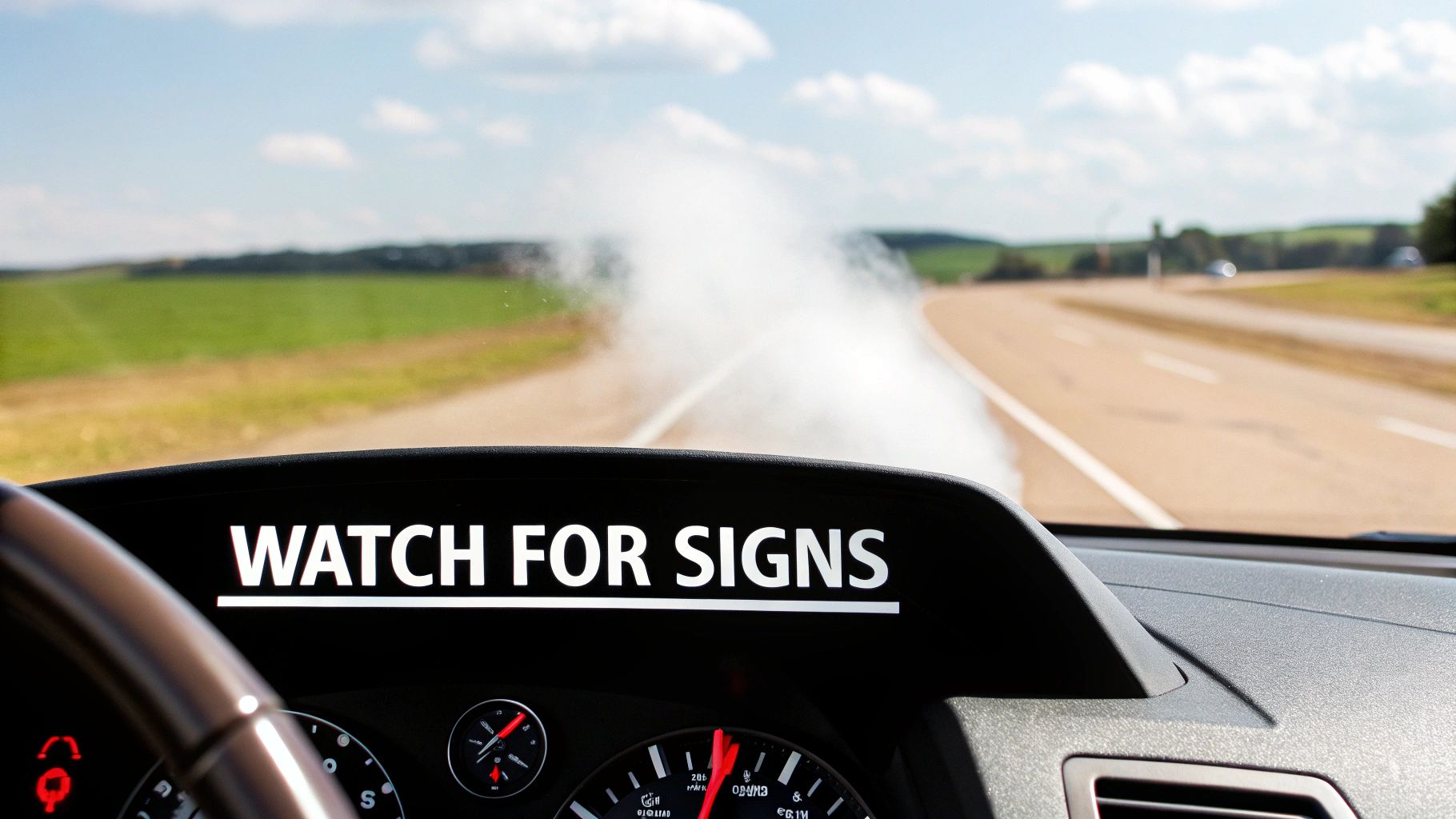
Real-life misfuelling often sends out subtle warnings under the bonnet. A sudden jerk or hesitation as you pull onto a slip road can spell petrol in a diesel engine.
Another clear clue is unusual exhaust smoke. White or blue clouds billowing out within minutes of ignition usually point to combustion problems after adding the wrong fuel.
Loss Of Power when accelerating suggests contaminated fuel disrupting the burn cycle.
Jerky Idling at traffic lights hints at irregular delivery from the tank.
Dashboard Alerts, like a flickering check-engine light, often accompany misfires.
You may also catch a rhythmic metallic knocking under light loads. That sound means petrol is stripping lubrication from the injector pump—ignore it, and serious damage follows.
A flat spot when you press the throttle is also a red flag. Many drivers recount sluggish motorway responses after topping up incorrectly. It’s a pattern that sets misfuelling apart from routine tune-up needs.
Listen closely to your exhaust note, too. A raspy or high-pitched rev can signal improper combustion. Cutting out ambient noise for a quick check could save you a hefty repair bill.
Common Noise And Smoke Indications
Identifying knocks or hisses early makes all the difference. In Suffolk, a taxi driver spotted a hiss at idle and pulled over straight away. That quick move spared his injection system significant harm.
Early detection of unusual engine noise can reduce repair bills by up to 50%.
Even without specialist gear, a simple torch helps. Shine it on the tailpipe to check smoke colour. White plumes mean unburnt diesel condensation, while black fumes point to a petrol-rich mix choking the system.
After switching off the engine, you might still hear drips or escaping air under the bonnet. That hiss often reveals stray fuel lines before you even place the call to Misfuelled Car Fixer.
Mapping issues against distance covered tells a clear story. Faults cropping up within a mile of filling up almost always tie back to wrong fuel. Other engine troubles tend to surface over longer drives and varied conditions.
Symptom | Likely Cause | Quick Check |
|---|---|---|
Sudden Power Loss | Fuel mix inconsistency | Smooth throttle test at low revs |
Exhaust Smoke | Combustion irregularity | Visual check with flashlight |
Knocking Noise | Lubrication stripping | Listen under bonnet when off |
When To Seek Help
If you spot two or more of these warning signs, call Misfuelled Car Fixer without delay. Their technicians reach most Suffolk locations in 30 minutes. Acting fast will prevent deeper damage to pumps and injectors.
Avoid driving further to get home. Coasting can minimise fluid circulation, but pushing on with wrong fuel compounds harm. Keep a hands-free phone mount ready and snap clear photos of any dashboard alerts to send via WhatsApp—this speeds up the diagnosis.
Misfuelled Car Fixer offers UK-wide support, so help is never far away.
Mistakes To Avoid After Misfuelling Your Car
It’s tempting to switch the ignition right back on after you’ve realised the wrong fuel’s in the tank. But that slight hesitation can activate high-pressure pumps, forcing contaminated petrol or diesel through sensitive injectors.
Similarly, reaching for DIY flush kits or mixing store-bought additives usually backfires. Without knowing your engine’s tolerance, you risk corroding seals or clogging critical filters.
Trying to limp home, even at a crawl, simply circulates the bad fuel deeper into every pipe. That only inflates repair bills by damaging injectors, pumps and fuel lines.
Repeated Ignition Attempts cause unnecessary wear on fuel pumps, pushing the wrong mix through delicate injector parts.
Short, Cautious Drives spread contamination into rail systems, often requiring a full injection-system rebuild.
Improvised Additives can attack rubber seals and sensors when incompatible compounds mingle with engine oil.
It might feel proactive to keep trying the starter, but it accelerates the damage. Waiting for an expert to drain the tank before any ignition is the safest move.
Why Repeated Attempts Harm Your Engine
Data from fleet operators shows one engine start after misfuelling can drive repair costs up by 90%. UK mechanics caution that running a diesel engine on petrol—or vice versa—overstresses fuel pumps, injectors and related components. Learn more at Right Fuel Card source.
Avoid turning the key again until you’re sure all contaminated fuel is drained.
Why You Should Heed Professional Advice
Underestimating a wrong-fuel situation often leads to hefty surprise invoices and invalid warranties. Many drivers skip the small print in service agreements and then get stung by hidden call-out or disposal fees.
Calling Misfuelled Car Fixer means trained technicians arrive with the right equipment to pump out, dispose of and replace fuel safely. You might also want to read our article on why an engine flush with diesel is a risky mechanic’s trick before chasing cheap quick fixes.
Insist on a breakdown-add-on specifically covering misfuelling to avoid nasty exclusions.
Always get a written estimate up front, listing labour, pump hire and disposal charges.
Check local coverage details – in Suffolk you can expect a response in about 30 minutes.
Confirm proper environmental handling so you don’t face fines for improper disposal.
Skipping these checks often means more expense and longer downtime. A prompt, professional response is almost always cheaper than a botched DIY rescue.
By steering clear of these traps, you safeguard both your engine and your wallet. Resist the lure of quick fixes: rely on specialists to protect your warranty, keep fees transparent and minimise disruption when you’ve misfuelled.
How to Clear Contaminated Fuel Safely
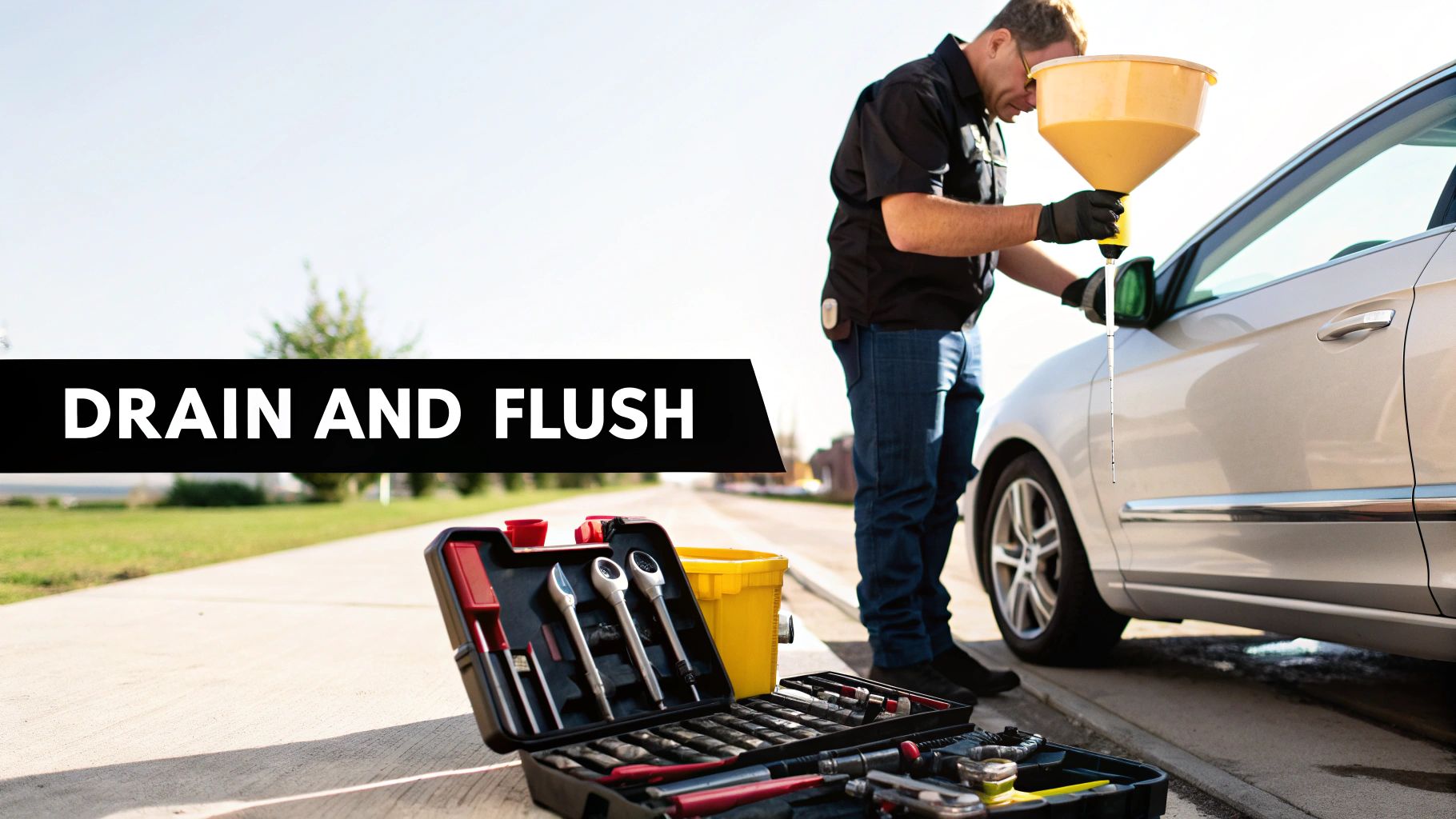
Misfuelling can happen to anyone, turning a simple drive into a tricky repair job. The most important action is stopping the engine immediately—you don’t want that wrong fuel circulating through sensitive components.
In fact, one driver slashed their repair bill by £200 simply by acting within the first 15 minutes.
Draining the tank early can shrink repair bills by up to 90%.
Securing Your Vehicle
Find level ground and apply the handbrake firmly.
Slip on chemical-resistant gloves and protective eyewear before you touch any fuel.
Remove the ignition key to eliminate any chance of an accidental start.
Gather these essentials before you begin:
Labelled, approved containers for petrol or diesel
A manual siphon pump with anti-static tubing
Absorbent mats or cloths to catch drips
Once everything’s prepped, unscrew the tank cap gently, slide in the siphon tube and start pumping at a steady pace.
Flushing Fuel Lines
Even after you’ve drained the bulk of the fuel, traces will hide in lines and filters.
Attach a clean hose to the fuel line outlet and flush it with a small amount of fresh fuel.
Catch the rinse fluid in a sturdy, labelled container
Seal the waste carefully and stow it for proper disposal
Repeat the rinse until the fluid runs clear
This process helps you remove stubborn residues that could damage your engine later.
Priming And Testing
Pour in 5L of the correct fuel and cycle the ignition without starting.
Listen for a smooth, continuous flow—any sputters or hesitations mean you need another rinse.
Before firing up, inspect under the bonnet for leaks or drips. A clean system should burst into life and settle into a steady idle.
You might be interested in our guide on how to empty a fuel tank in safe, simple steps at Misfuelled Car Fixer.
Key Takeaway: Check every connection before ignition to avoid repeat contamination.
When a Lowestoft driver stuck to this routine, they restarted on the first try and saved over £150 in towing and workshop fees. Keeping calm and methodical transforms a stressful mix-up into a straightforward fix.
Disposal Guidelines
Never pour contaminated fuel down a drain or onto the ground.
Deliver waste to licensed centres under WFD 16 05 04 regulations
Keep waste transfer notes for environmental compliance
Contact your local council if you’re unsure where to drop off
Proper disposal is as critical as the drain and flush process.
Finish by sealing your tank for a few minutes—this helps any leftover vapours dissipate. A quick dashboard check and a short test drive will confirm that your engine is back on the right fuel and running smoothly.
What to Expect from Professional Misfuelling Services
Putting the wrong fuel into your car can be a nightmare—but help is closer than you think. Misfuelled Car Fixer technicians arrive equipped with anti-static pumps, spill kits and plenty of know-how. Their priority? Isolate the tank, extract every last drop of contaminated fuel and leave your engine ready for fresh, clean petrol or diesel.
Typical On-Site Procedures
Extraction always comes first. A technician hooks up a specialist, anti-static pump to safely draw out the bad fuel without risking sparks.
Once the tank’s empty, filters and hoses get a close once-over for any stubborn residue. After that, a pressure test confirms your fuel lines are leak-free. The final check is a brief engine crank—just long enough to prove the system’s clear.
“A professional drain can reduce repair bills by up to 80%,” says a Suffolk-based technician.
This routine keeps deep-set contamination out of rails and injectors, so you avoid most downstream headaches.
Typical Misfuelling Service Costs
Here’s a quick look at what you might pay, depending on how deep the contamination runs:
Service Type | Cost Range | Response Time |
|---|---|---|
Basic Drain and Flush | £120–£200 | 30–45 minutes |
Moderate Contamination Procedure | £200–£400 | 45–60 minutes |
Severe Contamination Remediation | £400–£1,000+ | 60–90 minutes |
Remember, these figures can shift if your vehicle’s tucked away in a tight spot or on uneven ground.
Response Times And Cost Brackets
In Suffolk, most call-outs land within 30 minutes. Urban areas tend to be quickest, while rural or restricted sites sometimes carry extra travel or labour fees. Every year, around 150,000 UK motorists misfuel—costs typically start at £120 for a straightforward drain but can top £1,000 if contamination’s severe.Learn more about misfuelling stats on RAC media
How To Spot Hidden Fees
When you review your quote, watch out for:
Upfront call-out fees
Hourly labour rates beyond the agreed window
Waste disposal or environmental charges per litre
A transparent agreement lists pump hire, labour and disposal costs from the start. If anything looks vague, ask for a line-by-line breakdown before you give the go-ahead.
“Transparent pricing cuts unwelcome surprises,” advises a fleet manager in Bury St Edmunds.
Local Coverage
Misfuelled Car Fixer operates across Suffolk 24/7. Ipswich, Lowestoft and Felixstowe all enjoy the same fast response as Norwich or Stowmarket.
You can book online or send a WhatsApp message. A technician’s ETA and a detailed quote will land in your inbox or via text. Having your registration, pump position and current gauge reading at hand can shave £20–£50 off your final bill.
Getting Help Fast
To speed up your service, share:
A Google Maps link or clear landmark
Car make, model and whether it’s petrol or diesel
Estimated litres of incorrect fuel
Any access notes (for example, “narrow forecourt”)
This precision cuts out back-and-forth calls and gets the pump working sooner.
“Clear info equals faster fix,” notes a workshop supervisor.
Local Case Study
In Ipswich, a motorist poured diesel into a petrol hatchback. Misfuelled Car Fixer arrived in 28 minutes, completed a full drain and flush in under 45, and charged £150—right in the basic service range.
For reliable support across Suffolk and beyond, visit Misfuelled Car Fixer or call 24/7 on 0800 123 4567. Don’t let the wrong fuel leave you stranded—trust the pros to sort it out.
Prevent Wrong Fuel in a Car With Simple Strategies
Misfuelling nightmares often begin long before you pull into the forecourt. A handful of simple habits can completely eliminate the risk of pumping the wrong fuel.
By repeating the same steps—whether you’re filling up at home or stopping off during a busy run—you’ll rely on muscle memory instead of a rushed glance. Even on the tightest schedule, these routines become second nature.
Try setting a daily reminder on your phone so every fuel stop gets your full attention. That gentle nudge shifts your focus right back to the pump label.
Colour-code your garage: green buckets or tags for unleaded, black for diesel. Those bold hues act as instant prompts when you juggle bags, kids or work kits.
Apps like Forecourt Finder let you scan pump codes before lifting a nozzle. They flag high-risk stations and help you steer clear of costly mistakes.
Labelled nozzle covers offer a bright visual cue.
Repeating phone alarms slot checks into even the busiest day.
Forecourt-scanning apps supply real-time pump information.
Setting Up Your Fuel Check Routine
Start each fill-up with a quick two-second glance at the fuel flap. Look for “diesel” or “unleaded” stamped in bold letters—no hunting around.
Get everyone on board. Ask passengers or fellow drivers to call out the fuel type as you head back to the car. A brief chat about diesel versus petrol often stops mistakes in their tracks.
Give the nozzle a gentle tap on the pump guard before inserting it. If it doesn’t slot in neatly, you’ve already spotted the wrong size. It’s a simple, tactile trick most people overlook.
I remember a driver in Lowestoft who caught a near-disaster this way. He tested both nozzles, noticed the wider spout fit perfectly, and walked away unscathed. No expensive drain required.
Tool | Function |
|---|---|
Keyring Colour Tags | Instant fuel type identification |
Reminder App | Automated fuelling prompt |
Forecourt Apps | Verified pump data in real time |
Training New Drivers And Teams
Include your fuel-check routine in every induction. Ten per cent of misfuelling mishaps happen on that very first fill-up, so spend 60 seconds demonstrating the process.
We circulate short clips in our WhatsApp groups showing colleagues run through the checks. Watching someone else go step-by-step makes it stick far quicker than a memo ever could.
One Suffolk delivery fleet slashed wrong-fuel incidents by 65% after adding magnetic reminder strips at every truck doorway. Those little metallic cues are now part of their daily ritual.
Quick Habits Checklist
Before you grab the nozzle, run through this mini checklist:
Glance at the flap—diesel or unleaded?
Match the nozzle colour to your keyring tag.
Let a phone alarm ping five minutes before your usual fill-up.
Double-check the pump type with your chosen app.
Tap the nozzle on the guard to confirm the fit.
Key Takeaway This swift five-point check can cut wrong-fuel errors by up to 90%.
Keep a compact “fuel prevention kit” in your glovebox: colour-coded keyrings, a laminated checklist and QR codes linking to quick-start guides. With these tools at hand, fuelling becomes a foolproof part of your routine.
Frequently Asked Questions
How Long Can I Run A Misfuelled Engine Before Serious Damage OccursEven drifting for a few seconds on the wrong fuel can wreak havoc. In diesel engines, petrol strips vital lubrication from the injectors and high-pressure pump. The moment you realise the mistake, switch off and arrange for a full drain and flush.
Will My Breakdown Cover Help With Wrong Fuel In A CarMost standard policies won’t step in when you’ve put the wrong fuel in your tank. However, many insurers offer a misfuel add-on that covers fuel removal, system flushing and towing. It pays to confirm your exact cover with your broker or provider before an incident.
“Immediate shutdown reduces repair costs by up to 90%,” notes a Suffolk technician.
Insurance And Coverage
Can I Drive To A Nearby Garage After Putting Wrong Fuel In My TankIf you haven’t started the engine and only added a tiny amount, you might be able to push the car a short distance. But once the engine fires on the incorrect fuel, even gentle driving invites costly damage. Best practice? Call for a professional tow and a proper fuel-system cleanse.
What Habits Prevent Putting The Wrong Fuel In A Car
Developing simple routines stops these mishaps in their tracks:
Colour-coded keyring tags for an instant fuel-type reminder
Phone alarms set for your regular fill-up times
Forecourt apps that verify pump data before you lift the nozzle
Key Takeaways
• Cutting power within seconds can slash repair bills by up to 90%.• Never drive on the wrong fuel – a tow and a proper drain are safer.• Double-check pump labels, and use reminders or tags to avoid mistakes.
Reach out to Misfuelled Car Fixer Suffolk for rapid response, transparent pricing and a local team ready to help.


