
.jpg)


diesel in petrol car: Immediate steps and costs
It’s a heart-sinking moment every driver dreads. You’ve just finished filling up, you look down at the nozzle, and the horrible realisation dawns: you've put diesel in your petrol car. Before the panic sets in, take a breath. What you do in the next few minutes is absolutely crucial.
The single most important rule is simple: DO NOT start the engine. Don’t even turn the key to the 'on' position to listen to the radio. The moment you turn that key, the fuel pump whirs into life and starts sending the wrong fuel through the lines. This is what turns a simple fix into an expensive nightmare.
Your Immediate Misfuelling Action Plan

Realising your mistake is stressful, but a calm and methodical approach now will save you a world of trouble later. Your number one priority is to stop that diesel from ever reaching the sensitive parts of your engine.
First Things First: Don't Panic
Your first instinct might be to start the car, perhaps to quickly move it out of the way. Resist this urge at all costs. As I mentioned, the fuel pump primes the system as soon as you turn the ignition. That’s all it takes to start the contamination process.
So, keys out of the ignition. Just leave them in your pocket.
If you’ve already started driving and only just realised your error, pull over as soon as it's safe and turn the engine off immediately. Every second the engine runs with the wrong fuel increases the potential for damage.
The golden rule is simple: no keys in the ignition, no engine start. Following this one piece of advice can be the difference between a straightforward fuel drain and a repair bill running into thousands of pounds.
Secure Your Vehicle and Get Help
Now you need to get your car to a safe spot. You can’t drive it, so put the car in neutral. If there are people around, ask for a hand to push it into a parking bay.
If you're at a petrol station, let the staff know what’s happened. Trust me, you won’t be the first person this has happened to today. They can help cone off the area and will know exactly what to do.
Once the car is safely out of the way, it’s time to call in a professional. A mobile fuel drain service is your best bet here. These specialists come to you, whether you’re stuck on the forecourt or stranded at the side of the road. A quick search for a fast, professional fuel drain service 24/7 should find a local expert. They have all the right gear to safely pump out the contaminated fuel, flush the system, and get you back on your way.
Why Diesel Is So Damaging to a Petrol Engine
To get your head around why putting diesel in a petrol car is such a big deal, you need to understand just how different the two fuels are. This isn't like mixing two brands of cola; it's more like trying to make a world-class sprinter run on a diet of thick treacle instead of water and energy gels. The two simply work on completely different principles.
Petrol is a very thin, volatile liquid that evaporates easily. Your car’s engine is designed to mix it with air, creating a fine, flammable mist. A spark plug then ignites this mixture with a perfectly timed spark to power the engine. Diesel, on the other hand, is much thicker and oilier. It doesn’t need a spark; instead, it ignites under the immense pressure and heat of a highly compressed pocket of air.
The Clash of Oil and Spark
When you pour diesel into a petrol car's tank, its thick, oily nature starts causing havoc almost immediately. A petrol engine’s entire fuel system—from the pump to the injectors—is built to handle a thin, watery liquid. Forcing thick, heavy diesel through these delicate parts is like trying to push mud through a drinking straw. The strain is immense.
Because of its oily consistency, the diesel can’t be vapourised into the fine mist needed for ignition. Instead of a clean, flammable cloud, the fuel injectors just squirt out thick droplets. This sets off a chain reaction of problems right through your engine.
Clogged Fuel Injectors: The tiny nozzles on petrol injectors quickly get gummed up by the oily diesel. This messes up the spray pattern and will eventually block them completely.
Fouled Spark Plugs: Unburnt diesel coats the tips of the spark plugs with a greasy residue. This oily film stops the spark from being able to jump across the gap, so you get no ignition. Without a spark, your engine is dead in the water.
Strained Fuel Pump: Your car's fuel pump has to work overtime to push the sludgy diesel through the system, which can cause it to overheat and fail.
A Growing Problem in a Changing Market
It's possible that the shifting trends in the UK car market are making these misfuelling mistakes more common. As more people move away from traditional fossil fuels, general familiarity with the different pump nozzles seems to be fading.
Consider this: new diesel car registrations plummeted to just 71,500 units in 2023. At the same time, registrations for battery electric vehicles shot up by nearly 18% to over 314,000 units. This huge shift means there are more drivers on the road today who have little to no experience with diesel pumps, which could easily lead to an accidental mix-up. You can dig deeper into these figures on UK vehicle registrations at Statista.
Putting diesel in a petrol car doesn't just make it run badly; it actively starts wrecking critical engine parts. The thick, oily fuel can't be ignited by spark plugs. Instead, it clogs injectors, gums up sensors, and overloads the fuel pump, turning a simple mistake into a potentially catastrophic mechanical failure.
At the end of the day, the diesel just won't burn properly. It will circulate through your engine as a contaminant, coating parts that are meant to be clean and failing to ignite when it's supposed to. The result? Your car will stutter, puff out clouds of white smoke from the unburnt fuel in the exhaust, and then grind to a halt. This is precisely why calling a professional for a fuel drain isn't just a suggestion—it's the only way to prevent serious, and seriously expensive, damage.
Assessing the Damage: Did You Turn the Key?
The scale of the problem—and the dent in your wallet—really boils down to one single question: did you start the engine? Your answer places you into one of two very different situations, each with its own path to getting back on the road. Figuring out which one you're in is the first crucial step.
Best Case: You Realised Before Starting the Engine
If you caught your mistake right there at the pump, before even touching the ignition, you can let out a huge sigh of relief. Honestly, this is the best possible outcome.
Right now, the diesel is just sitting harmlessly in your fuel tank, floating on top of whatever petrol was left. It hasn't been sucked into the delicate fuel system—the lines, the pump, the injectors. It's contained.
The fix is pretty straightforward from here. A mobile fuel drain specialist can simply pump out the wrong fuel, flush the tank to get rid of any residue, and pop in some fresh petrol to get you on your way. Problem solved, with no lasting damage.
The More Serious Scenario: The Engine Has Been Turned On
The moment you turn that key, everything changes. Even turning it to the 'on' position without starting the engine can prime the fuel pump, which starts sending the diesel-petrol mix on a journey it should never take. If you actually start the car and drive off, that contaminated fuel gets forced through the entire system. This is where things can get complicated and expensive.
Petrol engines are simply not built to handle the oily, heavy nature of diesel. The symptoms will be almost immediate and impossible to ignore:
A struggle to start: The engine will crank but won't catch, as the spark plugs get coated in oily diesel and can't create a spark.
Misfiring and juddering: If it does start, the car will run horribly. Expect violent shaking and spluttering as the engine fails to burn the fuel correctly.
No power: You'll notice a massive drop in performance. The accelerator will feel like it's connected to nothing.
Lots of smoke: You’ll likely see clouds of white or grey smoke pouring from the exhaust. That's the engine trying, and failing, to burn off the diesel.
Engine cuts out: Ultimately, the engine will probably stall and then refuse to start again.
If you’ve started the car and notice any of these signs, pull over as soon as it's safe and turn the engine off immediately. The longer it runs, the further that diesel travels, increasing the risk of serious damage to expensive parts like the catalytic converter, fuel pump, and injectors.
This decision tree gives you a quick visual on just how critical that one action—starting the engine—really is.
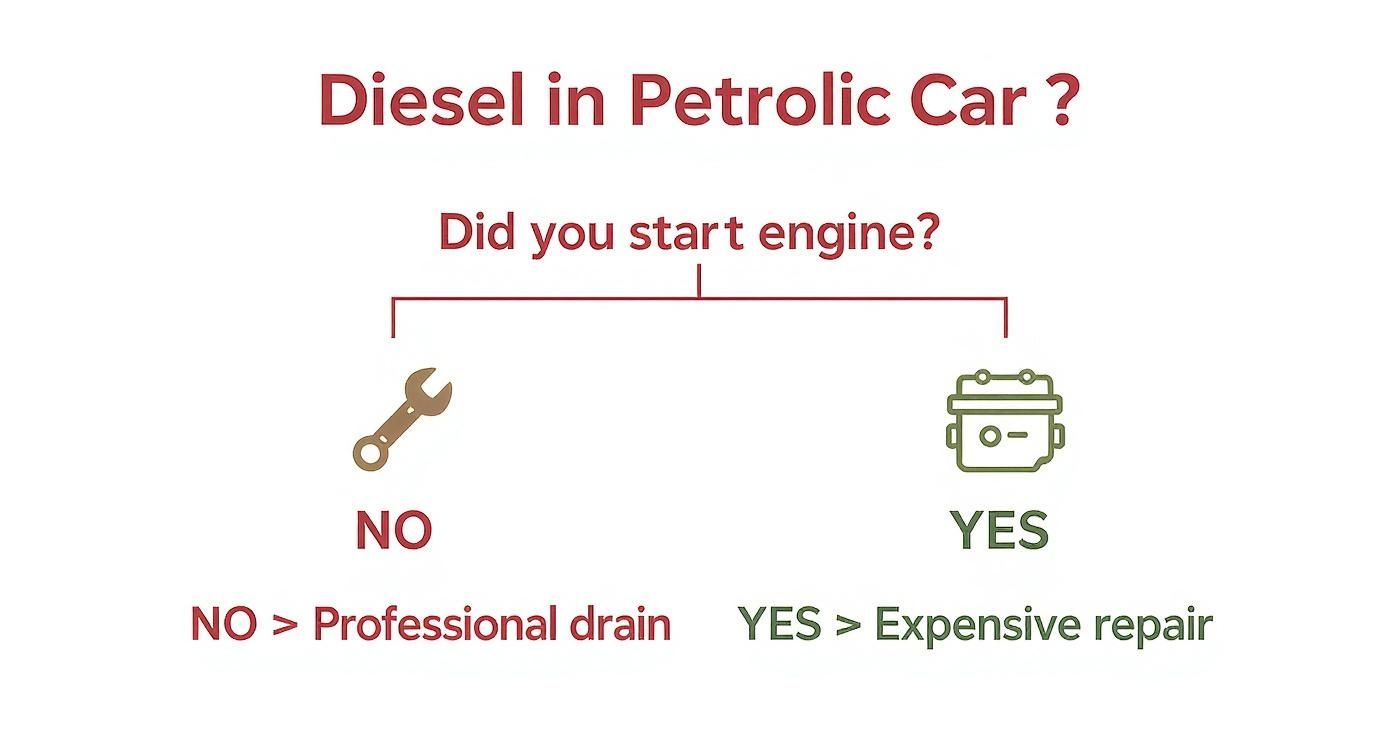
As you can see, leaving the engine off means you're looking at a simple drain and flush. Start it up, and you're potentially facing a much more involved and costly repair. It's vital to be upfront with the mechanic about whether the car was run; it's the key to getting the right fix.
The Professional Fuel Drain Process

While the idea of siphoning the fuel out yourself might seem tempting, this is definitely a job for the experts. Calling a professional fuel drain service isn't just the easiest option—it's the safest and most reliable way to sort out a "diesel in petrol car" mishap. These specialists arrive with certified, purpose-built equipment designed to handle flammable liquids without any risk.
Once on the scene, the technician's first job is to secure the area. They'll then use a specialised pump and hose system—all anti-static and spark-free—to carefully extract every drop of the contaminated fuel from your tank. This is far more sophisticated than a simple garden hose siphon; it's a controlled procedure that prevents spills, keeping both you and the environment safe.
The tainted diesel-petrol mix is pumped directly into a secure container in their van, ready for proper, environmentally compliant disposal.
What Is Included in the Service
A proper, professional fuel drain is much more than just emptying the tank. The technician will also flush the entire fuel system to get rid of any sticky diesel residue that’s started to travel through it. This part is absolutely crucial, particularly if you’ve turned the ignition or started the car.
Here's what a comprehensive service looks like:
Draining the Fuel Tank: Every last bit of the wrong fuel is safely removed.
Flushing the Fuel Lines: Clean petrol is pushed through the lines, injectors, and fuel rail to clear out any diesel.
Cleaning or Replacing the Fuel Filter: The filter is checked and cleaned to make sure no contaminants are left behind.
Replenishing with Fresh Fuel: They'll add a small amount of the correct petrol to get you up and running again.
This meticulous process ensures every trace of diesel is gone. It’s what protects sensitive engine parts like fuel injectors and oxygen sensors from costly long-term damage. If you're curious about the nitty-gritty, you can read more about how to drain a fuel tank safely and the steps involved.
Costs and Response Times in the UK
Naturally, one of your first thoughts will be about the cost. The good news is that a mobile fuel drain in the UK is a fraction of the price you'd pay for a main dealer recovery and repair. You can generally expect the service to cost between £150 and £300. The final price often depends on your location, the type of vehicle you have, and whether it’s a daytime or middle-of-the-night call-out.
It's worth remembering this price range is for a standard job where the engine hasn't been started. If the car has been driven, requiring a more in-depth flush and diagnostics, the cost will likely be higher.
As for how long you'll be waiting, the response times are usually excellent. Most mobile fuel drain services operate 24/7 and aim to reach you within 45 to 90 minutes of your call. Once the technician arrives, the whole job is typically done and dusted in under an hour, getting you back on the road with minimal fuss.
How to Avoid Misfuelling in the Future
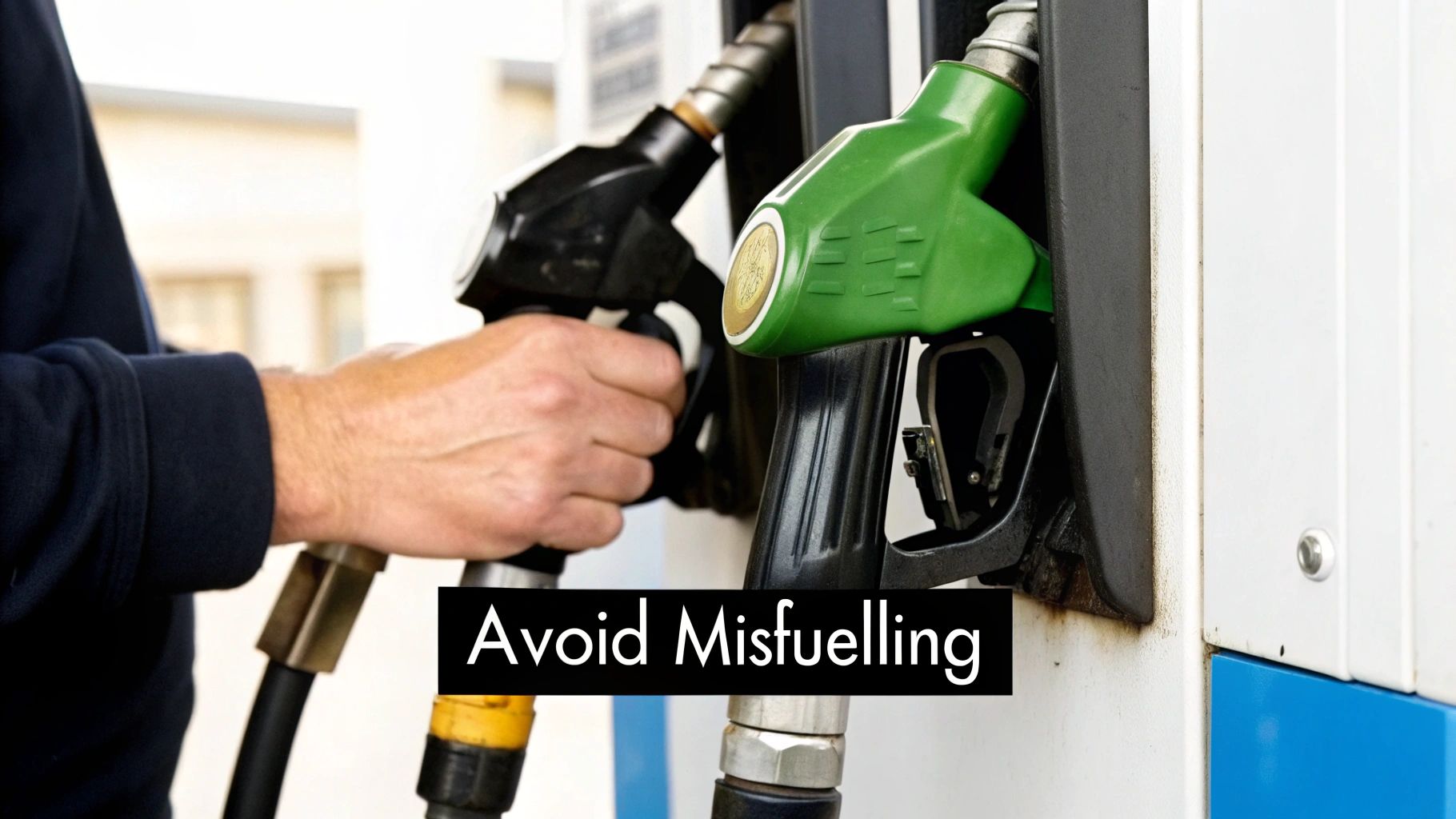
After the stress and expense of sorting out a misfuelled car, you’ll want to make absolutely certain it never happens again. The good news? A few simple habits are all it takes to prevent a repeat performance. Forecourts are designed to help you, but it’s amazing how easy it is to overlook the clues when you’re in a hurry.
The most basic physical safeguard is the pump nozzle itself. The standard UK diesel nozzle is noticeably thicker and wider than a petrol one, meaning it shouldn't even fit into the filler neck of most modern petrol cars. But don’t rely on this entirely—it’s not a foolproof system, especially with older vehicles or if a specific pump has a non-standard nozzle.
Create a Foolproof Pumping Routine
The best defence is a mental checklist that becomes second nature. Treat it like checking your mirrors before pulling out; make it an automatic habit every single time you fill up.
Look for the Colour Code: UK fuel pumps follow a standard colour scheme. Green is for unleaded petrol, and black is for diesel. Always pause and register the colour of the handle before you even lift it.
Read the Label on the Pump: Every pump handle and trigger is clearly labelled with the fuel type (e.g., Unleaded, Diesel). Just take that one extra second to read it, even if you’re 99% sure you've grabbed the right one.
Cut Out Distractions: This is a big one. Trying to chat on the phone, manage kids in the back, or rush to pay can easily lead to a lapse in concentration. That’s all it takes to grab the wrong nozzle.
Here's a handy tip I often share with families who run both petrol and diesel cars: put a small, colour-coded sticker on the inside of each car's fuel cap. A green sticker for the petrol car and a black one for the diesel serves as a brilliant final reminder right when you need it most.
A Quick Word on the UK's Changing Car Scene
It’s also worth remembering that the UK’s roads are changing. Diesel car sales have seen a dramatic decline, driven by new regulations and a major shift in what buyers want. In fact, diesel's share of new car registrations has plummeted from nearly 48% in 2015 to just 6% in 2024.
What does this mean for you? Well, fewer people are used to handling diesel pumps regularly. This growing unfamiliarity could actually make accidental misfuelling more common, which is why those simple prevention tips are more important than ever. If you're interested, you can read more about the reasons for diesel's market decline at Motoring Research.
By making a conscious effort to double-check the colour and the label every time, you can turn a potential disaster into a complete non-issue.
Common Questions About Misfuelling
Once the immediate panic subsides and help is on the way, you’ll probably have a few questions running through your mind. It’s a stressful thing to happen, and getting straight answers can really help. Let's tackle some of the most common things drivers ask after putting diesel in a petrol car.
Will a Small Amount of Diesel Damage My Car?
It’s the first question on everyone's lips: "I only put a little bit in, surely it'll be fine?" It’s a nice thought, but sadly, even a small amount of diesel can cause big headaches for a petrol engine. This isn't like watering down a strong drink; it's more like pouring oil into a glass of water. They just don't mix.
Even a contamination level below 5% is more than enough to start causing problems. Petrol engines need a fine, vapourised mist of fuel to be ignited by the spark plugs. Diesel is far too thick and oily to vapourise like that. Instead, it just coats your spark plugs, stopping them from creating a spark.
That unburnt diesel then moves through the system, quickly clogging your fuel filter and putting a huge strain on the fuel pump. A tiny splash might just lead to a lot of smoke and rough running, but the risk of permanent damage to your injectors and sensors is just too high to gamble with.
The only truly safe bet is a professional fuel drain. It doesn't matter if it was a thimbleful or a full tank—getting it all out is the only way to be certain you've avoided a much bigger, more expensive repair bill down the road.
Does Car Insurance Cover Misfuelling?
This is a tricky one. Whether your insurance will cover the cost of a misfuelling mishap depends entirely on your specific policy. In the UK, most standard comprehensive policies will actually exclude damage from using the wrong fuel. They often file it under driver error or negligence.
That said, some premium policies or optional add-ons might include misfuelling cover, so it's always worth checking. Another place to look is your breakdown cover. Services like the AA and RAC often include roadside fuel drains in their top-tier packages.
Before you make any assumptions, dig out your policy documents or just give your provider a call. Dealing with insurance after a mistake like this can be a real minefield; if you find your car insurance claim denied, it's crucial to know what your next steps are.
How Long Does a Fuel Drain Take?
A big worry for most people is how long they'll be stranded on the forecourt or at the side of the road. The good news is that once a technician arrives, the whole process is remarkably quick. For a standard car that hasn’t been started, the actual job usually takes between 30 and 60 minutes.
Here's what a professional will typically do:
Safely pump the contaminated fuel out of your tank.
Flush the fuel lines and filter to clear out any leftover diesel.
Add a small amount of the correct fuel to prime the system and get you running again.
The biggest variable, of course, is the call-out time. This can be anything from 45 minutes to a couple of hours, depending on your location and how busy the service is. From the moment you pick up the phone to the moment you drive away, you should realistically plan for the whole thing to take between one and three hours. For a deeper dive into the numbers, have a look at our guide on the costs associated with putting the wrong fuel in your car.
Putting the wrong fuel in your car is a common mistake that feels like a disaster, but it doesn't have to be. If you've put diesel in your petrol car in Suffolk or the surrounding areas, stay calm and, most importantly, don't start the engine. Contact Misfuelled Car Fixer for immediate, professional 24/7 assistance at https://www.misfuelledcarfixer-suffolk.co.uk.


