



How to drain gas tank: UK guide to safe misfuelling
- Misfuelled Car Fixer
- Jan 21
- 17 min read
You've just hung up the nozzle, twisted the cap back on, and then it hits you. That cold, sinking feeling in the pit of your stomach—you've just used the wrong fuel.
Right now, the single most important thing you can do is absolutely nothing. Do not start the engine. Don't even turn the key to the 'on' position to listen to the radio. This one simple action is the difference between a manageable mistake and an engine-wrecking disaster that can cost thousands.
Understanding the Misfuel Mistake
That moment of panic at the pump is a far more common experience for UK drivers than you might think. We see it every day. A momentary distraction, a new car, or an unfamiliar petrol station is all it takes. While your first instinct might be frustration, take a deep breath. It's a fixable problem, but only if you handle it correctly from this point forward.
Let's get this crystal clear: do not start your car. The second you turn that key, the fuel pump whirs into life and starts sending the contaminated fuel through the lines, injectors, and filters. What was a simple tank-drain job just became a complex, invasive, and potentially ruinous mechanical failure.
What Happens When You Use the Wrong Fuel
The damage caused by misfuelling depends on what you've put in, but both scenarios are serious trouble. Modern engines are finely tuned machines, and each fuel has very different properties.
Petrol in a Diesel Engine: This is the mistake we see most often, and it's by far the most destructive. Diesel fuel isn't just a fuel; it's also a lubricant for high-pressure components like your fuel pump and injectors. Petrol is the opposite—it's a solvent. It systematically strips away that vital lubrication, leading to metal grinding on metal. This can quickly destroy those delicate parts, sending tiny metal fragments through the entire fuel system.
Diesel in a Petrol Engine: It's less common because the diesel nozzle is typically wider than a petrol filler neck, but it still happens. Diesel is much thicker and oilier than petrol and doesn't ignite easily with a spark. It will quickly clog the fuel filter, coat the spark plugs, and gum up the injectors. You'll usually get a lot of smoke, rough running, and then the engine will cut out.
No matter the mix-up, the longer the wrong fuel is allowed to circulate, the worse—and more expensive—the damage gets. That’s why keeping your hands off the ignition is absolutely non-negotiable. For a deeper dive into the specific risks, our complete guide on what to do if you've put the wrong fuel in your car offers much more detail for UK drivers.
Key Takeaway: The moment you realise you've misfuelled, treat your car like a crime scene. Don't touch a thing. Leave the engine off, and you'll contain the problem before it spreads.
Immediate Symptoms If You've Started The Engine
Maybe you didn't realise your mistake until you'd already driven off the forecourt. If so, you'll probably notice some pretty alarming signs very quickly. The second you experience any of these, pull over as soon as it's safe to do so.
A loud, metallic knocking or rattling noise from the engine.
Lots of smoke billowing from the exhaust.
The car feeling sluggish, with a sudden loss of power.
The engine stuttering, misfiring, or feeling jerky.
The engine management light suddenly flashing on your dashboard.
If any of these things happen, kill the engine immediately. Every single second it continues to run is drastically increasing the odds of catastrophic damage. The situation is now much more serious, but if you stop the car quickly, it might still be salvageable. At this stage, however, a DIY fix is completely out of the question. Your only safe move is to call a professional emergency service like Misfuelled Car Fixer to prevent any further harm.
Should You Attempt a DIY Fuel Drain?
Before you even think about reaching for a siphon pump, it's time for a frank assessment of the situation. Draining a fuel tank yourself can be a straightforward job on an old classic, but on a modern car, it can quickly become dangerous, if not impossible. Get this decision wrong, and a simple mistake could spiral into a very expensive repair bill.
The truth is, the days of easily siphoning fuel from a car's filler neck are long gone for most of us. For years, manufacturers have been fitting anti-siphon devices as a standard security and safety measure. These are essentially blockers—often a simple mesh screen or a rollover valve—designed specifically to stop a hose from ever reaching the fuel in the tank. If your car was built in the last 15-20 years, you can bet it has one, making a simple siphoning job a non-starter.
Modern Cars vs Older Models
The complexity of modern fuel systems is another massive hurdle. On an older vehicle, say something from the 80s or early 90s, the setup was much simpler. You might be able to drain the tank just by disconnecting a fuel line or, if you were lucky, accessing a dedicated drain plug.
Today's cars are a different beast entirely. They run on high-pressure, sealed fuel systems that are incredibly intricate and surprisingly delicate. If you try to drain one without the right knowledge and specialised gear, you risk wrecking expensive components like fuel pumps, sensors, and injectors. Worse, you could introduce contaminants into the system, causing even more headaches down the line.
This decision tree helps visualise that first, critical moment of assessment.
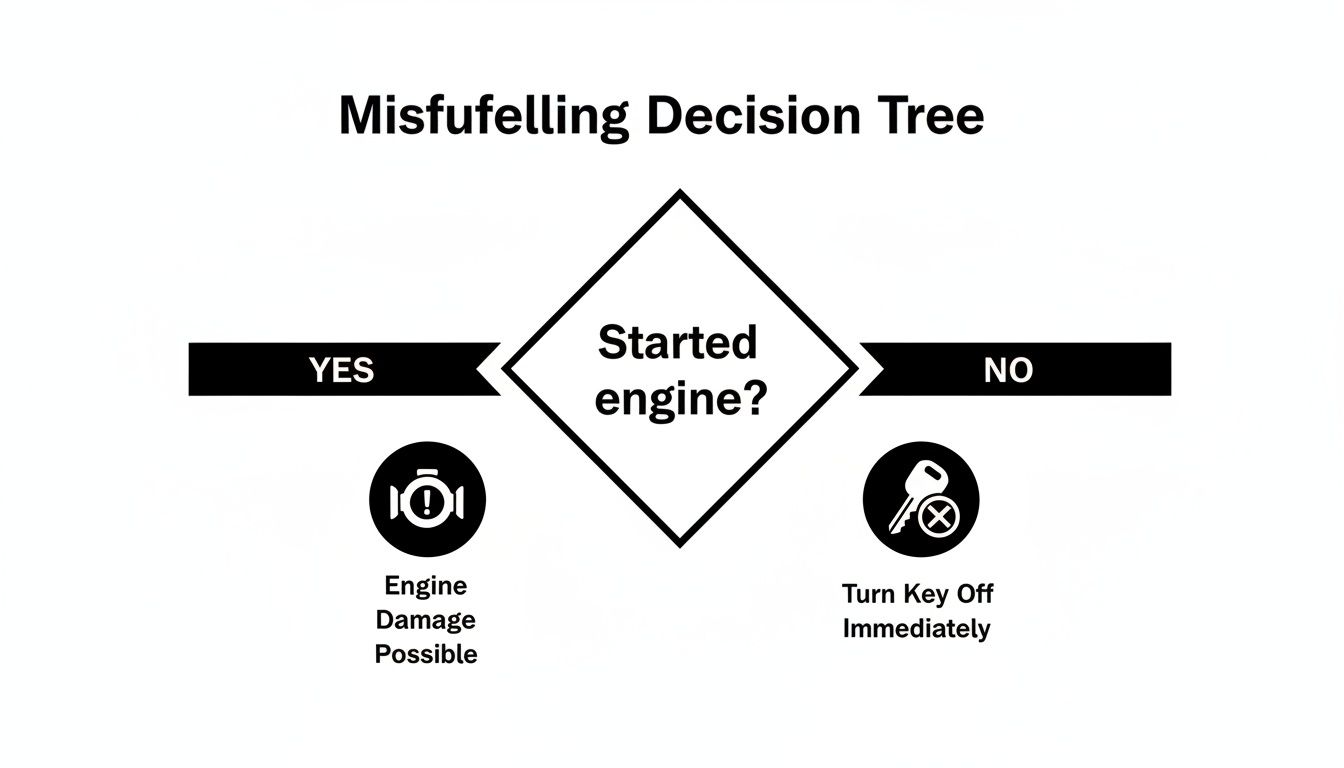
The message here is crystal clear: if that engine has been turned over, the risk of serious damage skyrockets. At that point, professional help isn't just a good idea—it's essential.
The Fuel Itself Presents Unique Dangers
It’s easy to forget just how hazardous petrol and diesel are. We handle them every week, but they demand respect, especially outside the controlled environment of a pump.
Petrol is incredibly volatile and flammable. Its fumes can ignite from the tiniest spark—static from your clothes, a dropped tool, even your mobile phone. Working with petrol in an enclosed space like a garage is playing with fire.
Diesel is less flammable, but it's a greasy, persistent contaminant. A spill is a nightmare to clean up, can eat away at tarmac, and is classified as hazardous waste. You can't just pour it down the drain.
A quick comparison can help put the DIY vs. professional choice into perspective.
DIY Fuel Drain vs Professional Service: A Quick Comparison
Deciding what to do next under pressure is tough. This table breaks down the key factors to help you make a safe and informed choice.
Factor | DIY Fuel Drain | Professional Service (Misfuelled Car Fixer) |
|---|---|---|
Safety Risks | High (fire, fume inhalation, skin contact, environmental spills). | Minimal for you; handled by trained technicians with full PPE. |
Vehicle Damage Risk | High, especially on modern cars with complex, high-pressure systems. | Very low; technicians use specialised, non-invasive equipment. |
Required Tools | Siphon pump, approved fuel containers, PPE, fire extinguisher, drip trays. | All specialist equipment is provided and vehicle-specific. |
Effectiveness | Often impossible on modern cars due to anti-siphon devices. | Guaranteed full drain and flush of the entire fuel system. |
Time & Effort | Can be time-consuming, messy, and stressful, especially for a first-timer. | Fast and efficient; typically resolved at the roadside within an hour. |
Fuel Disposal | Your responsibility to find a licensed hazardous waste disposal site. | Included in the service; fuel is disposed of safely and legally. |
Cost | Cheaper upfront for tools, but potential for huge repair bills if things go wrong. | A fixed, transparent cost that prevents much more expensive engine damage. |
Ultimately, while the idea of a quick DIY fix is tempting, the risks associated with modern vehicles almost always outweigh the benefits. A professional service provides peace of mind and a guaranteed solution.
Misfuelling is a more common problem than you might think, especially in areas with a lot of diesel vehicles. Here in Suffolk, we see it all the time. With rising fuel prices causing a bit of confusion at the pump and more traffic on the roads across East Anglia, mistakes happen.
In fact, our team at Misfuelled Car Fixer, which is based right here in Suffolk, saw a 28% increase in diesel-in-petrol callouts last year alone. In many of those cases, we helped drivers avoid catastrophic injector failure, a repair that can easily cost around £3,200. For a broader view, you can check out some interesting UK fuel demand trends in the roadside retail reports at EdgePetrol.com.
So, what's the bottom line? Your decision must be about safety first and preventing further damage. If your car is modern, if you're stuck on a public forecourt, or if you have even the slightest doubt, the answer is simple: don't risk it. Make the call.
How to Siphon Fuel From an Older Vehicle
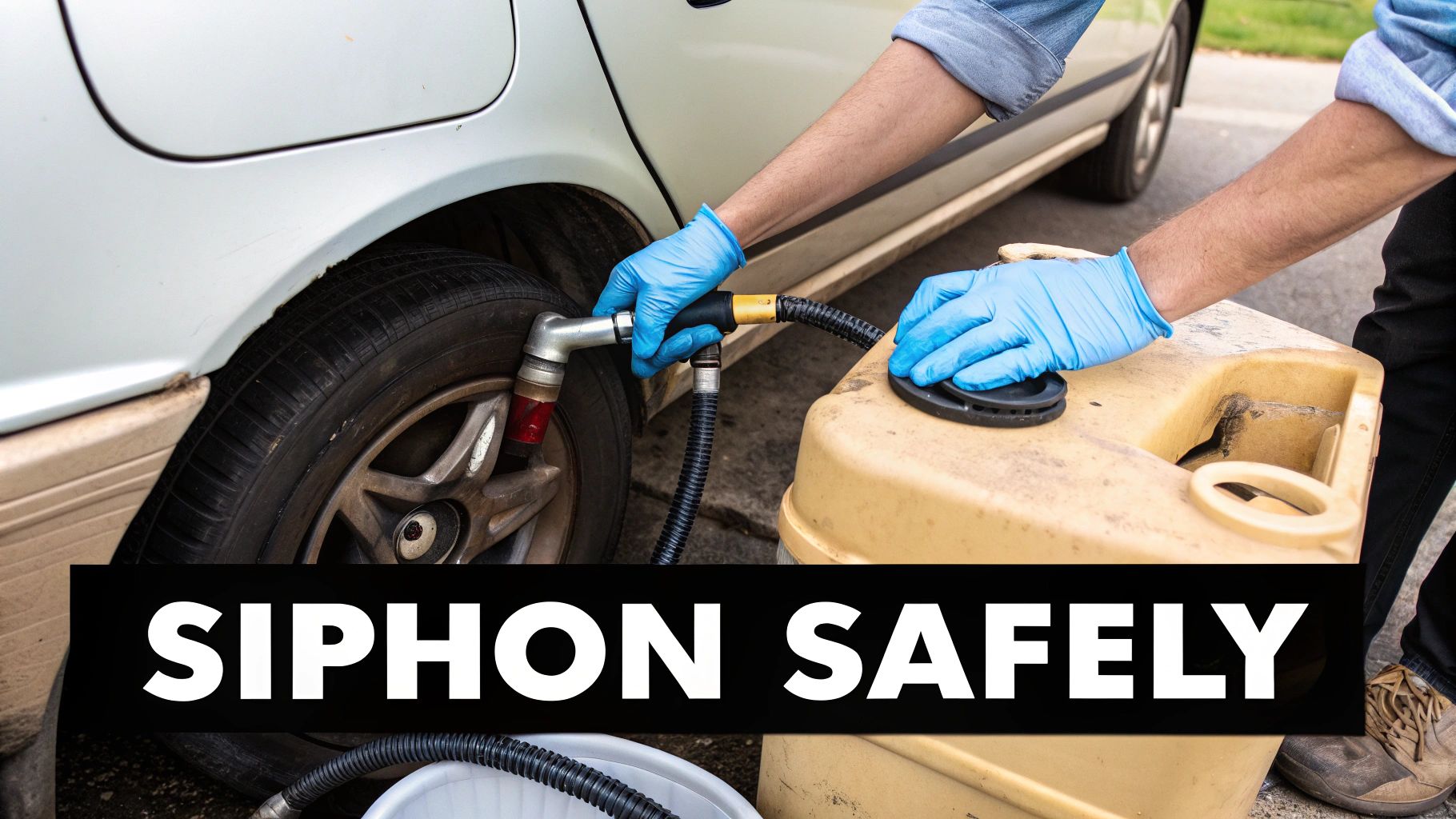
If you've put the wrong fuel in a classic or older car, you might be able to sort it yourself with a hand siphon. It’s a classic fix for a classic problem.
This method really only works for older models that don't have an anti-siphon valve in the filler neck—something most modern cars have. Before you start, remember you're dealing with petrol or diesel. Take your time and treat it with respect.
Getting Your Workspace Ready
First things first, find a safe spot. You need plenty of fresh air, so outdoors is best, but a very well-ventilated garage will do.
Make sure the ground is level, clear any clutter out of the way, and slide a drip tray under the tank area just in case. It's a good habit to keep your tools on a clean tray or cloth to prevent any grit from getting into the fuel system.
Have a quick look around for any ignition sources—things like hot engine parts or dodgy wiring. Turn off everything electrical nearby, and pop your phone somewhere safe and well away from the work area.
Gearing Up for Safety
This part is non-negotiable. Handling fuel requires proper personal protective equipment (PPE).
Gloves: Wear chemical-resistant gloves to keep fuel off your skin. Standard washing-up gloves won't cut it.
Eye Protection: Goggles are much better than safety glasses as they provide a proper seal to protect your eyes from fumes and splashes.
Clothing: A long-sleeved coverall will protect your clothes, and a pair of sturdy, closed-toe boots will keep your feet safe.
Fire Safety: Keep a fire extinguisher rated for fuel fires close by. You hope you'll never need it, but you'll be glad it's there if you do.
The Right Tools for the Job
You'll need a manual siphon pump with a clear, flexible hose. This lets you see the fuel moving and helps you position the tube correctly.
You’ll also need an approved, sealable fuel container designed specifically for petrol or diesel to collect the contaminated fuel. Don't be tempted to use old milk cartons or water bottles. A small funnel, ideally with a filter, is also useful for catching any sediment.
Never, ever be tempted to use your mouth to start the siphon. It's incredibly dangerous.
Getting the Siphon Tube in Place
Carefully loosen the fuel cap to let any built-up pressure escape, then remove it completely.
Gently feed the siphon tube down the filler neck. You're aiming for the very bottom of the tank to get as much of the wrong fuel out as possible. If you feel resistance, don't force it. Jiggle and twist it gently to find a path down.
Make sure the pump end of the siphon is higher than the container you're draining into. This simple bit of gravity prevents fuel from flowing back into the tank.
Starting the Siphon
Now, get a firm grip on the pump and give it 8–12 smooth, steady compressions. You're building up the vacuum needed to get the fuel flowing.
Keep an eye on the clear hose. As soon as you see fuel start to move through it, you can switch to slower, more gentle pumps to maintain a steady flow. If the fuel suddenly gushes, you've likely got air in the system, so slow right down.
Controlling the Flow
Aim the outlet hose into your container at a shallow angle to minimise splashing.
It’s a good idea to pause every now and then to let any bubbles settle. This stops the fuel from foaming up and overflowing the container. If you have a lot of fuel to drain, it’s much safer to fill a few smaller containers than to try and manage one huge, heavy one.
Pro Tip: Rushing is your enemy here. A slow and steady approach is the key to preventing spills and getting the job done right.
Keep Contaminants Out
As the tank gets near empty, stop pumping. You want to leave a tiny amount of fuel at the bottom—maybe 2–3 centimetres. This is because all the sediment and gunk settles at the very bottom, and you definitely don't want to suck that into your pump.
Sealing and Labelling
As soon as you’re done, securely cap the container to trap the fumes. Grab a permanent marker and clearly label it ‘Contaminated Fuel’ so there are no mix-ups later.
Store the container upright in a cool, well-ventilated spot, away from direct sunlight, until you can dispose of it properly. If you need guidance on what to do next, check out our guide on how to clean out fuel tanks safely.
When Is It Time to Call a Professional?
If you're trying this on a more modern car and the tube just won't go in, you've likely hit an anti-siphon valve. Don't force it.
Likewise, if the fuel flow stops unexpectedly or you’re spending ages trying to get it to work, it's time to stop. The longer you spend, the higher the risk of vapours igniting or causing damage.
This is where a professional service like Misfuelled Car Fixer comes in. Our technicians have specialised equipment that can bypass anti-siphon devices safely and drain the tank completely, right there on the forecourt or at the roadside. It saves you time, stress, and potentially thousands in engine repairs.
Final Safety Checks
Once the contaminated fuel is out, screw your car’s fuel cap back on securely. Wipe up any spills with an absorbent cloth and double-check for any leaks.
Place any used rags or gloves into a sealed bag to contain the fumes before disposal.
Give the area one last scan to make sure you haven't left any tools or drips behind. Finally, wash your hands thoroughly and make sure to launder your coveralls separately from your other clothes. A job well done is a safe job done.
What to Do With the Contaminated Fuel
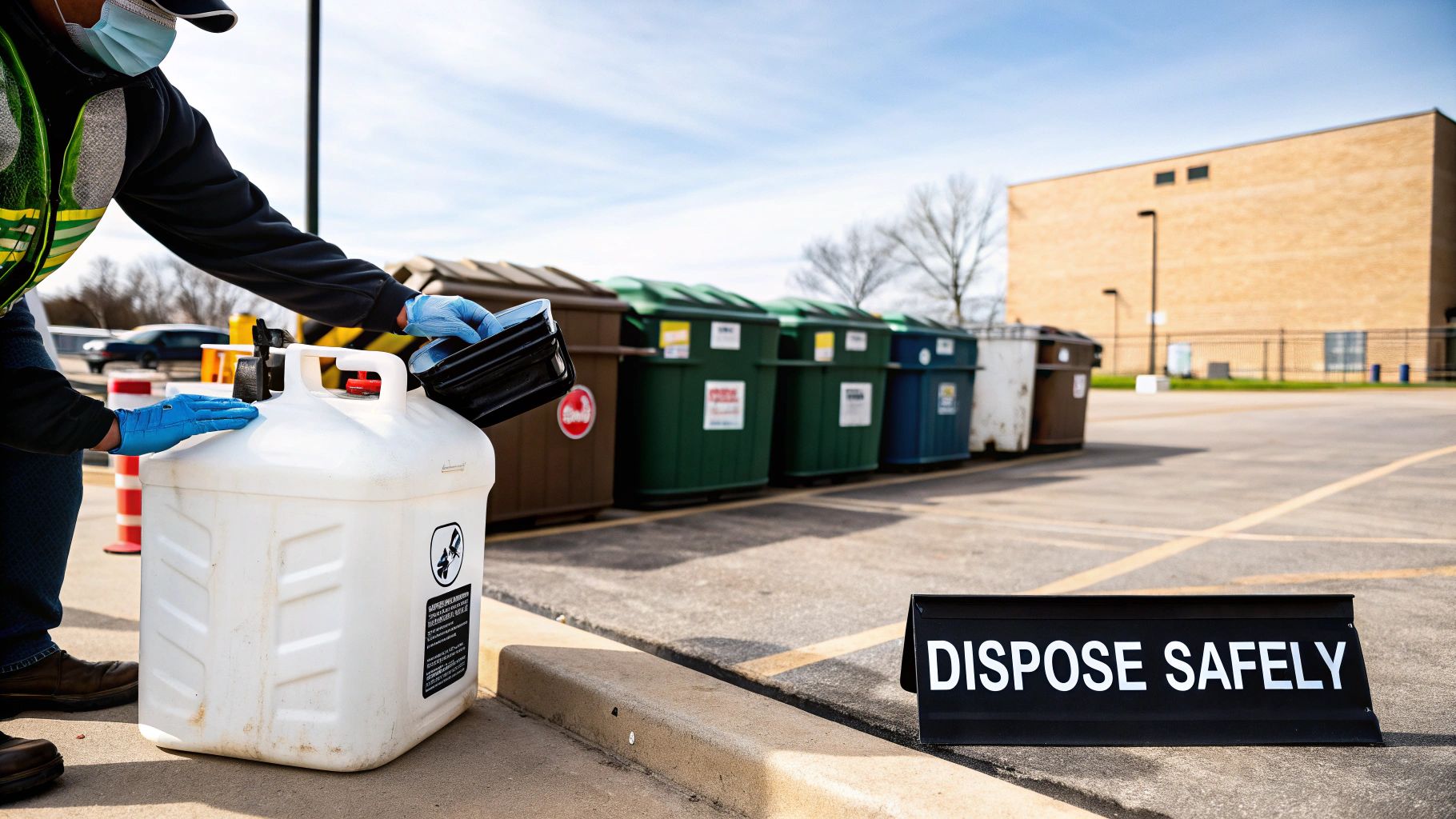
Right, you've managed to get the contaminated fuel out of your car. It feels like a massive win, but don't get ahead of yourself – the job isn’t finished. You’re now responsible for a container full of hazardous waste, and what you do with it is hugely important.
Let’s be crystal clear: under no circumstances should you pour petrol or diesel down a drain, onto the ground, or stick it in your wheelie bin. The environmental impact is staggering. It's said that a single litre of petrol can contaminate up to one million litres of drinking water. The fines for fly-tipping fuel are severe, and councils absolutely will prosecute. Getting this final step right is the most crucial part of draining a fuel tank responsibly.
Finding a Proper Disposal Site
The only correct and legal way to dispose of old or mixed fuel is to take it to a licensed hazardous waste facility. These are usually run by local councils and are often part of the main household recycling centre, but they have a special section for this kind of waste.
You can't just rock up and drop it off. Every council has its own set of rules, so your first port of call should be their website. Search for "hazardous waste disposal" or "fuel disposal" to get the specifics for your area.
Here's what you need to look for:
Quantity Limits: Many sites have a cap on how much they'll accept from the public in one go.
Container Rules: They'll expect the fuel to be in a secure, approved container that's properly sealed and labelled. Don't show up with it sloshing around in an old milk jug.
Appointments: Some centres require you to book a slot, ensuring a trained staff member is on hand to deal with it safely.
A Quick Word of Advice: Disposing of fuel isn't like dropping off cardboard. It’s a regulated process for a reason – to protect everyone. A five-minute check on your council's website can save you a world of trouble and potential legal action.
The Professional Service Advantage
This whole disposal headache is precisely where a professional fuel drain service proves its worth. When you call in an expert, the responsibility for safely and legally getting rid of the contaminated fuel is completely off your plate.
A service like Misfuelled Car Fixer handles everything from start to finish. Our technicians are trained to manage hazardous materials according to strict environmental laws. The mixed fuel we drain is securely transported and taken to a licensed commercial disposal facility, not just the local tip. This removes all the risk and hassle for you and ensures you're fully compliant with UK law.
Think about it. You pull into a busy service station in Ipswich, Suffolk, and accidentally fill your diesel van with petrol. It happens more than you'd think. The potential repair bill for running the engine on the wrong fuel can easily top £5,000, especially for commercial vehicles. Misfuelled Car Fixer's Suffolk team dealt with over 1,200 such incidents in 2025 alone. A key part of our service is ensuring that every drop of contaminated fuel is disposed of correctly, in line with all UK regulations, so our customers never have to worry about fines. You can see more on regional fuel trends in the Department for Transport's road fuel quarterly updates.
Ultimately, when you hire a professional, you're not just paying someone to drain your tank. You're investing in a complete, stress-free solution that's safe, legal, and environmentally sound.
When to Call in a Professional Fuel Drain Service
Look, trying to sort a misfuelling mess yourself is a big call, and frankly, there are times when it’s not a choice at all. For most drivers on UK roads, a DIY fix isn't just a bit risky—it's often physically impossible and downright dangerous. Knowing when to put the tools down and pick up the phone is the smartest decision you can make.
If you're driving anything built in the last couple of decades, the choice is pretty much made for you. Modern cars are fitted with anti-siphon devices in the filler neck. It’s a simple bit of tech designed to stop fuel theft, but it also slams the door on any attempt to get a siphon hose into the tank. You can try, but you'll hit a solid block, and forcing it is a great way to break expensive components.
And if you've made the mistake on a busy petrol station forecourt? That's an absolute no-go for DIY. It's a high-risk area, buzzing with moving vehicles and countless potential ignition sources. Trying to drain gallons of highly flammable fuel here isn't just against the rules; it's an accident waiting to happen that puts you and everyone else in serious danger. This is a non-negotiable "call the pros" situation.
The AdBlue Contamination Crisis
One of the worst and increasingly common mix-ups is putting AdBlue into the diesel tank. If this happens, do not, under any circumstances, even turn the key. AdBlue isn't fuel; it’s a corrosive, urea-based fluid that will chew through the seals, plastics, and high-precision metal parts of your fuel system.
Letting that mixture circulate will wreck your high-pressure fuel pump and injectors, landing you with a repair bill that can easily rocket into the thousands. This is way beyond what a simple siphon can handle. The entire system, from the tank right through to the engine, needs to be professionally drained, flushed with specialist cleaning solutions, and carefully checked for damage.
AdBlue in the diesel tank is a code-red emergency. The risk of catastrophic engine damage is incredibly high, and only a specialist has the right equipment and know-how to properly deal with it and minimise the damage.
This is a massive headache for commercial drivers and fleet managers. We're seeing a huge rise in these incidents across the UK. Here in Suffolk, our team at Misfuelled Car Fixer handled 450 AdBlue cases just last year. Our ability to get on-site in under 45 minutes for 95% of those callouts helped prevent an estimated £1.8 million in potential repair costs for local businesses. You can see more on this trend in the latest fuels industry statistics for 2025.
What to Expect from a Professional Service
When you call an emergency fuel drain service like Misfuelled Car Fixer, you turn a full-blown crisis into a managed fix. You’re not just getting a bloke with a pump; you're getting a rapid, safe, and comprehensive solution brought directly to your location.
Here’s what the process should look like:
Round-the-Clock Emergency Line: Misfuelling doesn’t keep office hours, so neither should your help. You’ll speak to someone who understands the problem and can give you immediate safety advice—starting with "don't touch the ignition."
A Mobile Workshop on its Way: A certified technician will be dispatched to you, whether you’re at the pump, on your driveway, or stranded on the A14. Their van is a fully equipped workshop.
Safe, Certified Draining: They’ll use specialist, ATEX-approved pumping gear to safely empty your tank. This equipment is specifically designed to be non-sparking—the gold standard for handling flammable liquids.
A Thorough System Flush: Just draining the tank isn't enough. The technician will then flush the fuel lines, filters, and injectors to get rid of every last drop of contamination. This is a vital step to prevent future damage.
Fresh Fuel and a Restart: With the system clean, they’ll put in enough of the correct fuel to get you going again and will run the engine to make sure everything is running smoothly.
Legal Disposal of Waste Fuel: That contaminated fuel has to go somewhere. A professional service will transport and dispose of it legally and safely, following strict environmental regulations, taking that worry completely off your shoulders.
Opting for a professional service isn’t just about making life easier. It’s a crucial investment in preventing the kind of engine damage that can cost thousands and keep your car off the road for weeks. If you’re in a tight spot, our guide on finding a reliable fuel drain near you has some great tips for getting help fast.
Your Misfuelling Questions, Answered
Once the heart-sinking moment of realising you've used the wrong pump passes, the questions start flooding in. What now? How bad is it? We get these calls all the time, so let's walk through the most common queries and clear up some dangerous misconceptions.
Every misfuel is a little different, but the goal is always the same: protect your engine and get you back on your way safely.
How Much Wrong Fuel Is a "Serious" Problem?
This is the number one question we're asked, and the answer is always the same: any amount of the wrong fuel is a serious problem. There's no "safe" limit. Modern engines are incredibly sensitive. Even a small splash of petrol in a diesel tank can act like a solvent, stripping away the essential lubrication diesel provides and setting the stage for catastrophic damage.
You might be tempted to just top up the tank with the correct fuel, hoping to dilute the mistake away. Please don't. This is a myth that could cost you thousands. All you're doing is forcing that damaging cocktail deeper into your fuel lines, pump, and injectors. The only real fix is to get it all out.
Can't I Just Drive It and "Burn It Off"?
Absolutely, categorically not. Trying to drive the car is the single worst thing you can do. It's the difference between a simple drain and a four-figure repair bill.
If you’ve put petrol in a diesel engine, you're pumping a solvent through a high-pressure system that needs the oily lubrication of diesel to survive. The fuel pump and injectors can be destroyed in a matter of miles.
The cost of calling out a mobile fuel drain expert is a drop in the ocean compared to the price of replacing a modern fuel system. The risk is simply not worth it.
If you've already started the engine and driven off, pull over somewhere safe as soon as you can and kill the engine. The less time it runs, the better your chances of avoiding serious damage.
Have I Just Voided My Car's Warranty?
It’s a fair question, and unfortunately, the answer is often yes. Most manufacturer warranties don't cover damage resulting from driver error, and misfuelling falls squarely into that category.
This is precisely why acting fast is so important. Getting the wrong fuel drained before you start the engine prevents the damage from ever happening. If there's no damage, there's no need for a warranty claim. If you've run the car and caused a problem, you'll almost certainly be paying for the repairs out of your own pocket.
Is It Okay to Leave My Car at the Petrol Station?
Yes, if you've misfuelled on a forecourt, it's perfectly safe to leave the car while you sort out a solution. Just make sure you do it correctly.
Tell the Staff: First things first, pop inside and let the attendant know what's happened. They've seen it all before and can help secure the area, maybe by putting out a few cones.
Don't Touch the Ignition: The car stays off. No exceptions. Put the handbrake on, lock up, and take your keys.
Push, Don't Drive: If you're blocking a pump, don't be tempted to start the engine just to move it a few feet. Ask the staff or a kind stranger to help you push it to a designated parking spot.
The beauty of a mobile fuel drain service is that they come to you. You won't have to leave your car stranded for long before help arrives.
If you're in the middle of a misfuelling mess, stop, think, and call for professional help. The Misfuelled Car Fixer team is on call 24/7 to provide a fast, safe, and professional fuel drain right where you are. Get immediate help by visiting us at https://www.misfuelledcarfixer-suffolk.co.uk.