
.jpg)


Misfuelled Your Car? The Ultimate Fuel Doctor Guide
24/7 Hotline Nationwide: 0330 122 6640
National Wrong Fuel Rescue: https://www.misfuelledcarfixer.co.uk
If you found this page, we cover you in England!
It’s a heart-sinking moment. You’ve just filled up the tank, the nozzle clicks off, and then you see it—you’ve grabbed the wrong one. Putting petrol in a diesel car, or vice versa, is a mistake that can happen to anyone.
This is where a fuel doctor comes in. Think of them as the emergency service for misfuelling. It’s a specialist mobile service that comes directly to you, wherever you are, to fix the problem on the spot. They’ll safely drain the contaminated fuel, flush the entire system, and get you back on your way, often preventing catastrophic and costly engine damage.
What To Do The Moment You Realise You've Misfuelled
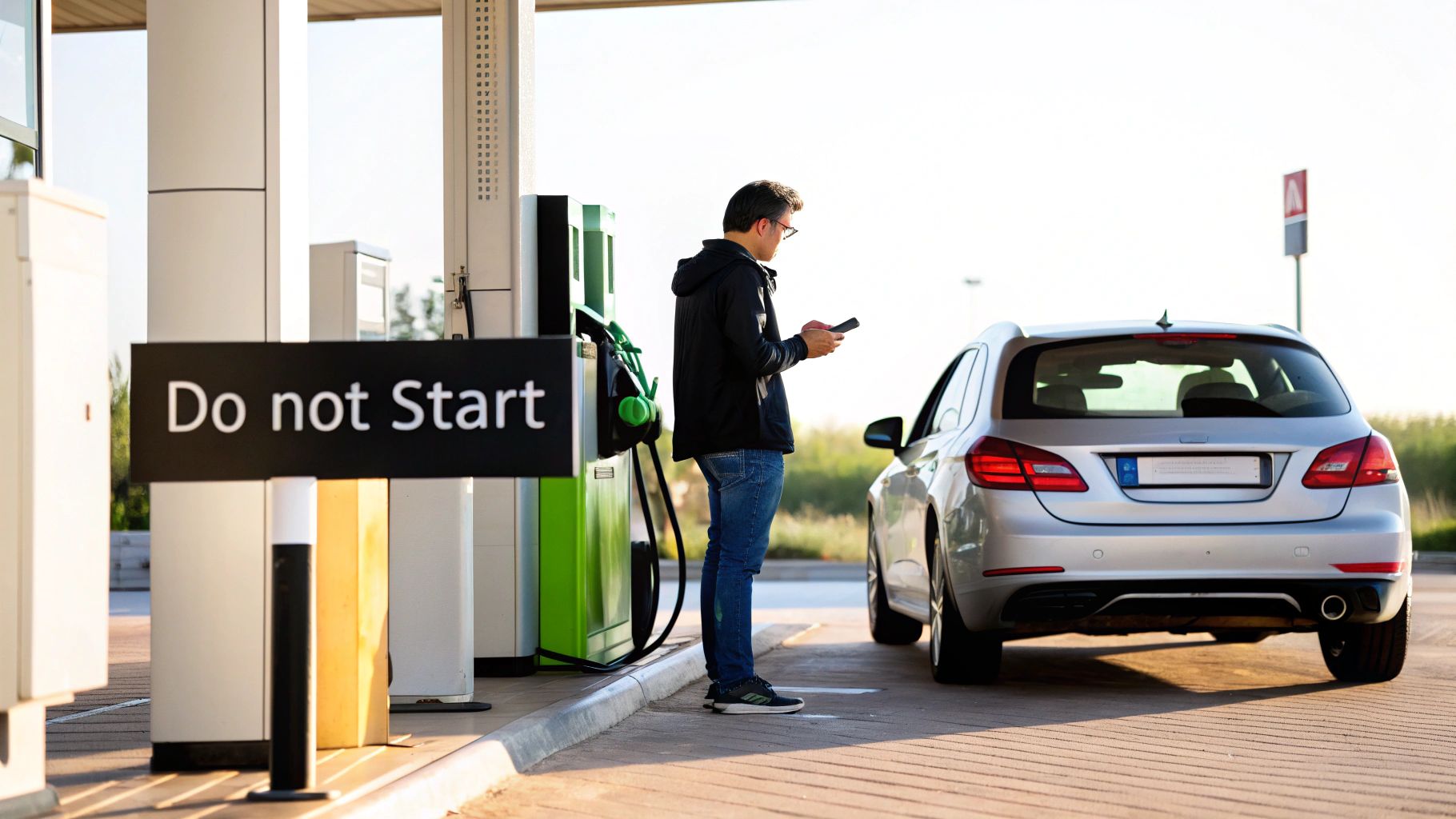
That sudden rush of dread is horrible, but what you do in the next few minutes is absolutely crucial. Your immediate actions will decide if this is a simple fix or a bill for thousands of pounds.
The golden rule? It's simple, but it's everything.
Do NOT start the engine. Seriously. Don’t even turn the key to power up the electronics. This one simple act keeps the wrong fuel from being pumped through the fuel lines and into the sensitive engine components.
If this has just happened to you, trust me, you are not the first and you won't be the last. It's a surprisingly common slip-up. In fact, studies show that a staggering 29% of UK drivers admit to having misfuelled their vehicle at some point. That works out to roughly 150,000 drivers every single year.
The key is to handle it calmly and correctly. Here's a quick reference guide to help you manage the situation without causing any further damage.
Immediate Do's and Don'ts After Misfuelling
Action to Take (DO) | Action to Avoid (DON'T) |
|---|---|
Tell the petrol station staff immediately. | Do not start the engine or turn on the ignition. |
Put your car in neutral. | Do not attempt to drain the fuel yourself. |
Push the car to a safe parking space. | Do not panic or leave the vehicle unattended. |
Call a professional fuel drain service. | Do not drive the car, even for a short distance. |
Following these steps minimises the risk and ensures you're handing the problem over to professionals who can sort it out safely.
Your On-Scene Checklist
Once you've taken a deep breath, it’s all about safety and damage control. Instead of panicking, just work through this checklist.
Tell the petrol station staff. Let them know what's happened. They've seen it all before and can help by coning off the pump to keep the area safe for everyone.
Move the car safely. Put the gearstick in neutral. With a bit of help from the staff or a kind bystander, push the vehicle to a designated parking bay, away from the busy pumps. This clears the way and gets you out of the main flow of traffic.
Call for an expert. Now's the time to ring a professional fuel doctor. This is by far the fastest and most cost-effective way to solve the problem. A mobile fuel drain service will come right to you, whether you’re stuck on a forecourt in Ipswich, Bury St Edmunds, or a rural lane somewhere in Suffolk.
For a more detailed walkthrough, have a look at our immediate action plan for Suffolk drivers. Getting an expert on the phone right away ensures the situation is handled correctly from the very start.
Recognising the Telltale Signs of Wrong Fuel
It’s one thing to realise your mistake while you’re still standing at the pump, but what if you’ve already driven away? It won't take long for your car to start sending out some serious distress signals. Spotting these signs quickly is your best defence, giving you a chance to pull over safely before the wrong fuel causes any real, expensive damage.
The symptoms can crop up within minutes. Often, they start small – a slight hesitation, a funny noise – before becoming impossible to ignore. A misfuelled engine is an unhappy engine, and trust me, it will let you know.
Common Misfuelling Symptoms
If you have even a slight suspicion you've put the wrong fuel in, keep your senses sharp for these red flags. The very second you notice one, your only job is to find a safe place to stop and kill the engine.
A Spluttering or Misfiring Engine: Your car might start to jerk or hesitate, feeling rough, especially when you try to accelerate. This is the engine literally struggling to combust a fuel it was never designed for.
Sudden Loss of Power: You put your foot down, but there's just... nothing. The car feels sluggish and weak. This is a classic sign that the fuel isn't generating the power your engine needs.
Excessive Smoke from the Exhaust: A quick glance in your rearview mirror might reveal clouds of thick smoke billowing out behind you. It’s often white or grey and a dead giveaway that something is seriously wrong internally.
The real danger isn't just that the car won't run properly. Petrol in a diesel engine acts like a solvent, stripping away the essential lubricating film that diesel provides. This leads to grinding, metal-on-metal friction in critical parts like the fuel pump and injectors, which can cause catastrophic, wallet-emptying failure.
Petrol in Diesel vs. Diesel in Petrol
The specific mix-up makes a massive difference to the symptoms and just how bad the potential damage can be. While both situations need an urgent call to a fuel drain specialist, putting petrol into a diesel car is by far the more destructive mistake.
A diesel engine relies on the natural oiliness of its fuel to keep its high-precision parts moving smoothly. Petrol, on the other hand, cleans and strips. When it gets into a diesel system, it washes away that vital lubrication, causing rapid, grinding wear on some of the most expensive components you own.
Putting diesel in a petrol car is less of a horror story, but it will still bring you to a halt. Diesel is much thicker and less flammable, so it will quickly clog up the spark plugs and fuel system. The engine simply can't ignite it, so it will run terribly for a short while before cutting out. It’s a serious headache, for sure, but it rarely causes the same kind of mechanical carnage as the other way around.
No matter what you're noticing or which fuels you've mixed, the next step is always the same: stop driving immediately and call for professional help.
How A Mobile Fuel Drain Service Actually Works
So, you’ve made that dreaded call. What actually happens next? It’s not just a bloke with a hose and a jerry can; a professional fuel drain is a precise, carefully managed operation. We use specialist equipment and a methodical approach to get your vehicle back on the road safely and without any lasting damage.
The first thing our technician will do upon arrival is make the scene safe. That means setting up cones and, if it’s dark, safety lighting – especially crucial if you’re stranded on a busy A-road. They'll have a quick chat with you, confirm exactly what's happened, and walk you through the process so you know what to expect.
The Draining and Flushing Process
At the heart of the job is the fuel drain itself. We don't just siphon the fuel out. Our vans are fitted with certified, explosion-proof pumping equipment designed specifically for this task. A suction line is carefully guided into your fuel tank to remove 100% of the contaminated fuel. This petrol-diesel mix is then transferred into a secure, baffled tank inside our van for safe, licensed disposal later on.
But just draining the tank isn’t the whole story. The wrong fuel can still be hiding in the fuel lines, filter, and even the injectors. That’s why a full system flush is essential.
Flushing the Lines: We push a small amount of fresh, correct fuel through the system to chase out any lingering contaminants.
Purging the Engine: The engine is often turned over a few times (without actually firing up) to ensure any bad fuel is cleared from the pump and injectors.
Checking the Filter: Your fuel filter is designed to catch debris, and it will have caught some of the wrong fuel. We'll inspect it and, if needed, clean or replace it.
This isn’t a step to be skipped. It’s what separates a professional job from a quick fix that could lead to bigger, more expensive problems down the line.
Once we're certain the entire system is completely clean, we'll put around 5-10 litres of the correct fuel back into your tank. This is just enough to get the system primed and ready to start.
Final Checks and Getting You Moving
With some fresh fuel in the tank, it's time for the moment of truth. We'll start the engine and let it tick over for a few minutes, listening carefully for any odd sounds and keeping an eye on the dashboard for any warning lights. This final check is our confirmation that the job is done right and your car is happy.
The infographic below highlights the classic tell-tale signs that lead people to call us in the first place.
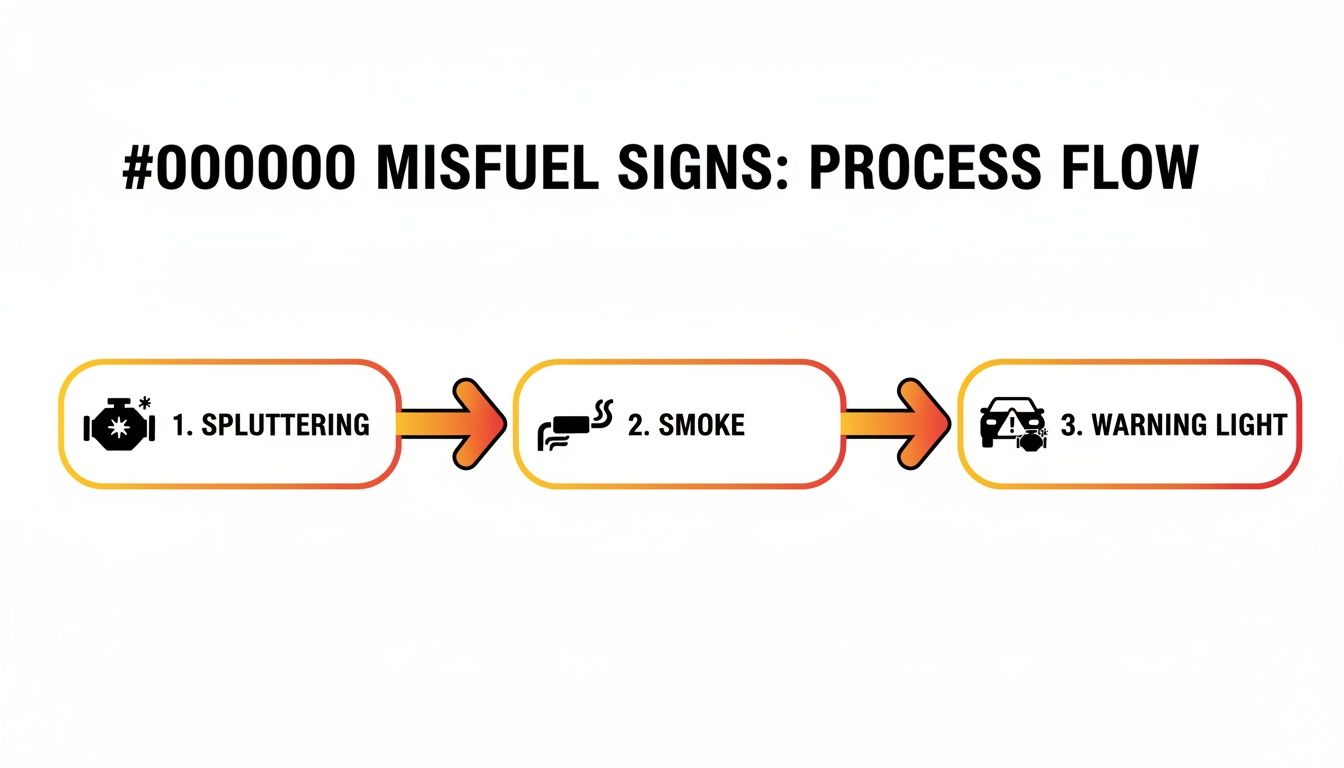
From a sputtering engine to that dreaded warning light, our systematic process is designed to completely resolve these issues. You can find out more about getting help quickly in our guide on finding a mobile fuel drain near you.
Finally, we transport all the contaminated fuel away for disposal in line with strict Environmental Agency regulations. It’s a clean, green, and effective solution to a messy problem.
How Much Does A Fuel Drain Cost and How Long Does It Take?
When you’ve put the wrong fuel in your car, two questions immediately pop into your head: "How much is this going to set me back?" and "How long am I going to be stuck here?" Getting a clear picture of the costs and timings can make a stressful situation feel a lot more manageable.
Nine times out of ten, calling out a mobile fuel drain service is going to be your most wallet-friendly option. It completely cuts out the hefty bill for a recovery truck to tow you to a garage. Plus, you avoid the premium labour rates that dealerships and workshops charge, which can easily send the final bill soaring into the hundreds, if not thousands, of pounds.
What Goes Into the Price?
The quote you get isn't just a number plucked from thin air. It's based on a few key things about your specific predicament.
Your Vehicle: A large SUV or a car with a tricky fuel tank design might take a bit longer to access and work on compared to a standard hatchback.
How Much Fuel: The amount of contaminated fuel we need to safely drain and dispose of is also a factor.
Whether You Started the Engine: This is the big one. If you turned the key, the job is more involved. It means we need to do a full flush of the fuel lines and system, which naturally costs more than a straightforward tank drain.
For a really detailed look at what to expect, have a read of our complete UK guide to wrong fuel costs.
A Look at Different Misfuel Solutions
To give you a clearer idea, let's compare the common routes people take after a misfuel. It really highlights why a mobile service is often the best choice.
Misfuel Recovery Options Cost and Time Comparison
Recovery Method | Estimated Cost | Typical Time to Resolution |
|---|---|---|
Mobile Fuel Drain (Recommended) | £150 - £300+ | 1-2 hours (from call to driving away) |
Garage/Dealership (via Towing) | £400 - £4,000+ | 1-3+ days (towing, waiting, and repair time) |
DIY Attempt (Not Recommended) | Variable + High Risk | Highly unpredictable, risk of damage |
As you can see, the difference is huge. A mobile service gives you a clear, fixed price and gets you back on the road in the time it might take just to get a tow truck out to you.
From Roadside to On The Road: How Long It Really Takes
For most drivers we help, the whole process is remarkably fast. We always aim to be with you in under an hour. Once we're on site, the actual fuel drain and flush typically takes somewhere between 30 to 60 minutes.
This means from the moment you realise your mistake and give us a call, you could be safely back on your way in about 90 minutes.
This quick turnaround is a lifesaver, especially for people who depend on their vehicle for their livelihood, like taxi drivers, couriers, or anyone with a busy schedule. It's a surprisingly common mistake—experts reckon that around 150,000 UK drivers do it every single year, leaving them stranded and facing unexpected bills.
The bottom line is simple: a mobile fuel drain gives you a predictable, one-off cost and minimal downtime. It’s a world away from the open-ended expense and delays of being towed to a garage where your car could sit for days before anyone even looks at it.
Once you're back on the road, it's also worth thinking about other ways to save on running costs. Learning about improving fuel economy can help you manage your vehicle expenses over the long term.
Finding a Fuel Doctor Service You Can Trust
Let's be honest, when you're stuck on the side of a dual carriageway or blocking a pump at a busy petrol station, the last thing you need is more hassle. You need a calm, professional fuel doctor who can sort the problem out quickly and efficiently, not someone who adds to the stress. Choosing the right service isn't just about Googling the nearest number; it's about finding someone dependable in a moment of crisis.
The first thing you need to look for is 24/7 availability. Misfuelling never happens at a convenient time, does it? It’s always late at night, on a bank holiday weekend, or just as you're rushing to an important meeting. A genuinely trustworthy service knows this and operates around the clock. You need a team that actually answers the phone when you call, no matter the hour.

A rapid response is just as crucial. A good fuel drain service should give you a realistic ETA and actually stick to it, ideally aiming to be with you in under an hour. For a taxi driver in Ipswich or a fleet manager in Bury St Edmunds, every minute your vehicle is off the road is money down the drain. A swift arrival isn't a luxury; it's a fundamental part of a quality service.
Key Qualities of a Reputable Fuel Drain Service
When you make that frantic call, you're putting your vehicle—and your trust—into a stranger's hands. Before you agree to anything, here are a few non-negotiable signs of a professional outfit.
Transparent Pricing: The price you're quoted over the phone should be the price you pay, full stop. A reputable company gives you clear, upfront costs with no nasty surprises like hidden call-out fees or late-night surcharges.
Safety and Environmental Certifications: Don't be afraid to ask if their technicians have an SPA Passport for working safely on petrol forecourts. They must also be compliant with Environmental Agency guidelines for disposing of the contaminated fuel. This isn't just red tape; it's a legal and ethical duty.
Specialist Equipment: A proper fuel doctor arrives in a van kitted out with industry-standard, explosion-proof pumps and sealed tanks. This is not a job for a bit of tubing and a jerry can; it demands specific, safe, and certified gear.
A trustworthy fuel doctor prioritises safety and compliance above all else. They understand the risks of handling flammable liquids and have the training and equipment to manage the situation professionally, protecting you, your vehicle, and the environment.
Verifying Trust and Reliability
Beyond the technical bits, you need to feel confident in the company you're hiring. Look for real proof of their reliability. Genuine, recent reviews on platforms like Google are worth their weight in gold. They give you unfiltered insight into what other drivers have experienced, from the technician's professionalism to how quickly they arrived.
Clear communication is another massive trust signal. From that first phone call, the person on the other end should be calm, reassuring, and able to answer your questions without hesitation. A professional service will walk you through the process, confirm the cost again, and keep you updated on their arrival.
For business owners and fleet managers, finding a reliable fuel doctor is about building a long-term relationship. A service that offers fleet accounts and consistent, dependable support is an invaluable partner. When you choose wisely, you turn a driver's simple mistake into a minor inconvenience, not a major operational disaster.
Your Misfuelling Questions Answered
That sinking feeling at the petrol station is often followed by a flood of questions. It’s a stressful spot to be in, and you need clear answers, fast. We've been there, on the roadside with countless drivers, so let's cut through the noise and tackle the most common worries head-on.
The most important thing to remember is this: it's a very common mistake, and as long as you act correctly, it's almost always fixable without any lasting damage. Here's what you really need to know.
Did I Permanently Damage My Engine By Putting In The Wrong Fuel?
This is always the first question, and the answer is a reassuring no—if you haven't started the car. The real trouble starts when you turn the key, which engages the fuel pump and sends the contaminated fuel circulating through your engine's delicate components.
Petrol, for example, is a solvent. In a diesel engine, it strips away the vital lubrication that the high-pressure fuel pump and injectors rely on to function.
By leaving the ignition off and calling a specialist for a full drain and flush, you contain the problem to the tank. It’s a simple fix at that stage. The faster you get an expert out, the better the odds for your engine.
The single most critical factor in preventing expensive engine damage is what you do immediately. Don't turn the key. Keeping the wrong fuel in the tank makes it a straightforward, reversible problem for a professional.
Will My Car Insurance Cover The Cost Of A Fuel Drain?
It's a fair question, but unfortunately, the answer is usually no. Most standard car insurance policies do not cover misfuelling. It's generally categorised as driver error, and many insurers specifically list it as an exclusion. In fact, some studies show that over 60% of policies won't pay out for a fuel drain service.
Some top-tier comprehensive plans might have an add-on for it, but it's worth digging out your policy documents to be sure. Honestly, in most situations, the cost of calling out a mobile fuel drain service is often less than the insurance excess you'd have to pay anyway. It's almost always the quicker, cheaper, and more sensible option.
Which Is Worse: Petrol In Diesel Or Diesel In Petrol?
Both situations need an immediate fuel drain, no question. But putting petrol in a diesel car is significantly worse and carries a much higher risk of causing serious, expensive damage.
Here’s why: diesel fuel is naturally oily and acts as a lubricant for the high-pressure fuel pump and injectors. Petrol does the exact opposite; its solvent properties strip this lubrication away, causing metal-on-metal friction that can destroy those critical components in minutes.
Putting diesel in a petrol car is less destructive. Diesel is thicker and oilier, so it won’t ignite properly from a spark plug. It clogs up the system and causes the engine to misfire, smoke, and eventually cut out. It’s still a problem that needs fixing, but you're far less likely to face catastrophic mechanical failure.
Can I Just Top Up The Tank With The Correct Fuel?
Absolutely not. This is a common and dangerous myth that can turn a simple mistake into a repair bill running into the thousands. You can't just dilute the problem away.
Even a tiny amount of the wrong fuel can be enough to wreck a modern engine's sensitive fuel system. A modern high-pressure diesel pump, for instance, has incredibly fine tolerances and will not survive being run on contaminated fuel.
The only safe and guaranteed solution is a professional drain and flush. A qualified technician will remove every drop of contaminated fuel from the tank and fuel lines before you refill with the right stuff.
If you've misfuelled your car, don't take a chance. Contact Misfuelled Car Fixer for immediate, 24/7 assistance across Suffolk and the surrounding areas. We’ll get you sorted and safely back on your way. https://www.misfuelledcarfixer-suffolk.co.uk


