



Protect Your Engine: adblue in diesel tank? Here's What to Do
- Misfuelled Car Fixer

- Dec 13, 2025
- 13 min read
It's a moment of pure, gut-wrenching panic that every diesel driver hopes to avoid: you've just put AdBlue in the diesel tank. If this is you, right now, take a deep breath. The single most important thing you can do is also the simplest: DO NOT start the engine.
Don't even put the key in the ignition or press the start button. That one small action is the difference between a manageable problem and a wallet-emptying mechanical nightmare.
That Sinking Feeling: Your First 60 Seconds

The realisation often hits you just as you're hanging up the blue nozzle. You see the words "AdBlue" or "Diesel Exhaust Fluid," and your heart drops. Your first instinct might be to start the car, maybe to "just see what happens" or move it to a safer spot. Resist this urge with everything you've got.
Even switching on your car's electronics can prime the fuel pump. This initial whirring sound is enough to suck the contaminated mixture from the tank and send it hurtling toward the most delicate, high-pressure parts of your fuel system.
A Table of Do's and Don'ts For AdBlue in a Diesel Tank
When you're stood on the forecourt feeling stressed, it's easy to make a wrong move. Here's a simple, quick-reference guide to what you should and shouldn't do in the immediate aftermath.
Action to Take Immediately (DO) | Action to Avoid at All Costs (DON'T) |
|---|---|
Stay calm and don't panic. | Do not put the key in the ignition. |
Tell the petrol station staff what has happened. | Do not turn on the car's electronics. |
Put the car in neutral. | Do not attempt to drive the car, even a few feet. |
Ask for help to push the car to a safe place. | Do not try to drain the tank yourself without proper gear. |
Call a professional misfuel recovery service immediately. | Do not assume a small amount won't cause damage. |
Following these steps buys you crucial time and gives you the best possible chance of avoiding serious damage.
Why This Mistake Is So Serious
Unlike putting petrol in a diesel car, AdBlue isn’t a fuel at all. It's a non-flammable liquid made of urea and deionised water, designed to be injected into the exhaust system, not the engine's combustion chamber.
When it gets into your diesel, it starts a destructive chain reaction.
The water-based solution offers absolutely zero lubrication. This is a death sentence for precision-engineered components like your high-pressure fuel pump and injectors, which rely entirely on the oily properties of diesel to function without tearing themselves apart.
Worse still, as the AdBlue solution starts to dry, it forms hard, abrasive crystals. These tiny saboteurs will clog fuel filters, jam injectors solid, and permanently score expensive engine parts.
Key Takeaway: The damage isn't caused by the engine running on AdBlue. It's caused by the corrosive, non-lubricating fluid circulating through the fuel system. Keeping that system off is your only defence against a potential four-figure repair bill.
A Growing Problem on UK Forecourts
With AdBlue pumps becoming a standard feature at UK service stations, this mistake is happening more and more often. There are still around 11 million diesel cars on UK roads, and while a full tank of AdBlue can last for thousands of miles, the sheer convenience of filling up at the pump has created a new risk for confusion.
As the filling station infrastructure expands to meet demand, driver awareness is the last line of defence against misfuelling.
If you find yourself in this situation, it’s vital to understand what's needed to protect your vehicle. For a deeper dive into the specific steps to take, have a look at our comprehensive emergency guide for UK drivers on AdBlue contamination.
What AdBlue Actually Does to a Modern Diesel Engine
Right, let's get one thing straight. AdBlue has absolutely nothing to do with fuel. It’s not an additive, it’s not a cleaner, and it definitely doesn’t belong in your diesel tank. It's a chemical solution made for your exhaust, and when it gets into the fuel system, it unleashes a wave of destruction on some of your engine's most expensive parts.
Think of diesel as an oily, lubricating liquid. It’s not just there to burn; it keeps the whole fuel system running smoothly. Parts like your high-pressure fuel pump and injectors are engineered to incredibly fine tolerances, and they rely on that diesel film to stop metal from grinding against metal.
Now, consider AdBlue. It's 67.5% deionised water and 32.5% urea. It has zero lubricating properties. Pouring it into your fuel system is like swapping your engine oil for water – the results are immediate and catastrophic.
A Corrosive Journey From Tank to Engine
The trouble starts the second AdBlue hits the tank. It's denser than diesel, so it sinks straight to the bottom, right where the fuel pick-up pipe is waiting. The moment you turn the key (even without starting the engine), the low-pressure pump sucks this corrosive cocktail into the lines.
From that point, it’s a quick and messy trip through your vehicle's veins:
Fuel Lines & Seals: AdBlue is surprisingly aggressive. It attacks the metals, plastics, and rubber seals found throughout the fuel system, causing them to swell, crack, and break down.
The Fuel Filter: Your filter's job is to catch dirt, not a chemical solution. It quickly gets swamped. As the water evaporates, the urea starts to form solid crystals, choking the filter and starving the engine of fuel.
High-Pressure Pump: This is where the real damage happens. The pump is the heart of your common rail system, and without lubrication, its delicate internal parts start to tear themselves apart, creating tiny metal shards.
Fuel Injectors: These microscopic metal splinters are then blasted, along with AdBlue crystals, directly into your highly sensitive fuel injectors. The result? Clogged nozzles and permanent, expensive damage.
Crystallisation: The Silent Killer
Here’s the part many people don't realise. Even if you only put a tiny bit of AdBlue in, the damage is already done. The water content alone can start causing rust inside the tank and fuel lines. But the real enemy is what happens when it dries: the urea crystallises.
Imagine hard, white crystals, a bit like salt or sugar, forming throughout your entire fuel system. These crystals are solid, abrasive, and they don't dissolve in diesel.
They act like liquid sandpaper, scouring every surface they touch and blocking the microscopic passages inside your injectors and pressure regulators. This is exactly why just draining the tank is never enough. You need a full, professional flush to get every last one of these hidden crystals out before they cause engine failure weeks or even months down the line.
With AdBlue's presence at filling stations growing – the UK market is set to expand by 6.9% annually – the risk of this happening to diesel drivers is higher than ever. It's no longer just a concern for lorry drivers; it's something every diesel car owner needs to be aware of. Getting a professional flush isn't just a repair; it's your only way to be certain the job is done right.
How We Fix It: Draining and Flushing Your System
If you’ve realised the mistake before turning the key, you’re in luck. Getting a professional fuel drain service out quickly can almost certainly prevent any serious, long-term damage. But this isn't just a simple case of siphoning out the contaminated fuel. It’s a thorough, methodical process to make sure every last drop of that corrosive AdBlue is gone for good.
First things first, we have to get the contaminated mixture out of your fuel tank. Our technicians use specialist equipment, including ATEX-approved pumps built specifically for flammable liquids, to safely empty the entire tank. You should never try this yourself with a bit of hosepipe – the AdBlue and diesel mix is hazardous waste and needs to be handled and disposed of following strict environmental rules.
Hunting for Hidden Crystals
Once the tank is empty, the real work begins. AdBlue is mostly water and urea, and it’s much denser than diesel. This means it sinks straight to the bottom of the tank and starts to settle. As the water evaporates, that urea forms hard, white crystals that cling to the inside of the tank.
To get rid of them, we need to get inside. This usually means taking out the fuel sender unit, which is often found under the back seats or in the boot. With the sender removed, we can use inspection cameras and special tools to see what we're dealing with and physically scrape out any crystal deposits.
A simple drain only gets the liquid out. It's the physical inspection and hands-on cleaning that stops those hidden crystals from breaking loose later and wrecking your engine.
Flushing Every Pipe and Part
With the tank itself clean, our focus moves to the rest of the fuel system. Just turning on the ignition – without even starting the engine – can be enough to prime the fuel pump and pull the AdBlue mixture into the fuel lines. A comprehensive flush is the only way to be sure everything is clear.
Here’s what that involves:
Purging the Lines: We'll disconnect the fuel lines at key points and push a cleaning solution through, followed by fresh diesel, to flush everything out from the tank right up to the engine.
Replacing the Fuel Filter: This is absolutely essential. Your old filter has done its job and trapped a lot of the corrosive mix and tiny crystals. It’s now contaminated and must be replaced with a brand-new, manufacturer-approved one.
Bleeding the System: After everything is flushed and reconnected, we have to bleed the air out of the system before adding clean fuel.
This diagram shows the destructive journey AdBlue takes through your car, which really brings home why a full system flush is so critical.
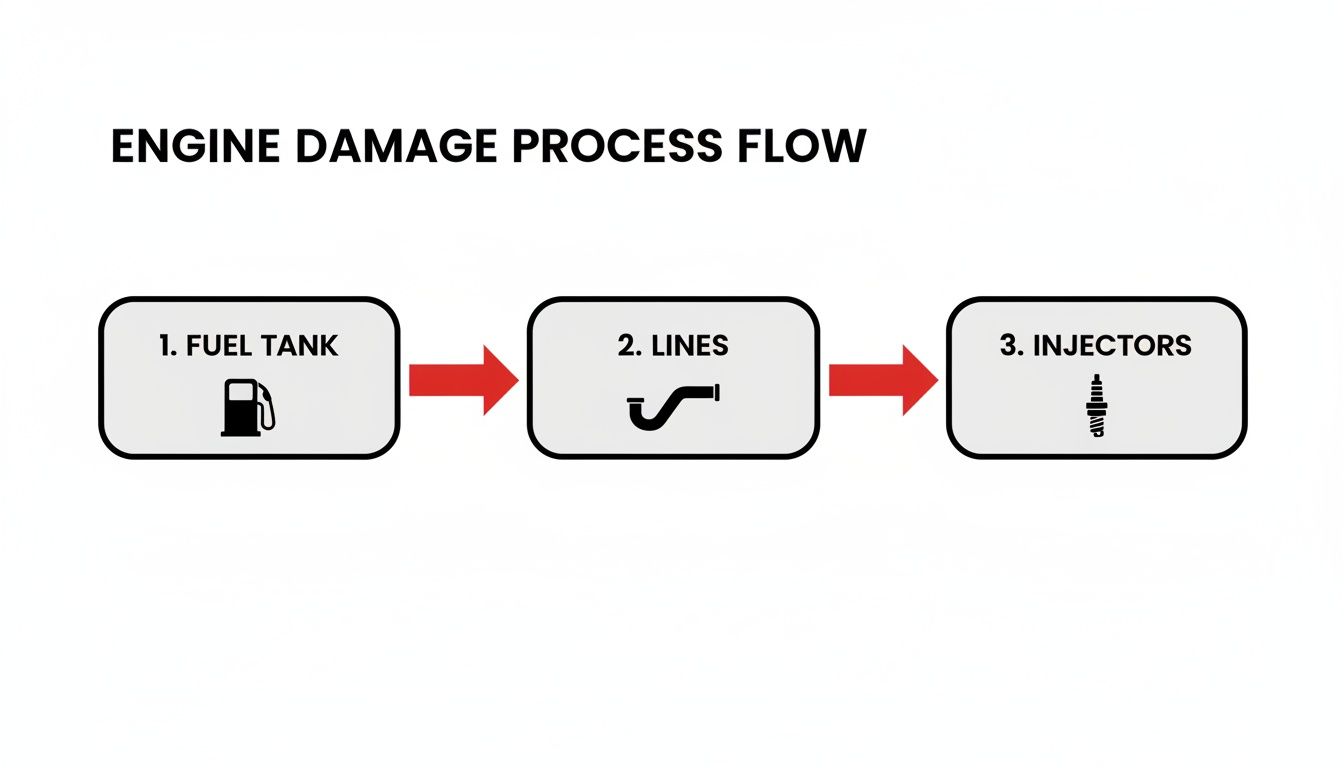
As you can see, the contamination works its way from the tank, through the lines, and right into the most delicate and expensive parts of your engine. A complete flush is the only way to stop it in its tracks.
Finally, we'll put a good amount of clean, fresh diesel in the tank and prime the system. We’ll then start the engine and let it run for a while, keeping a close eye out for any warning lights or performance hiccups. A specialist mobile service like Misfuelled Car Fixer has all the right kit to do this entire job right where you are, saving you the hassle and cost of a tow truck.
If you’re interested in the specifics of the equipment we use, our guide on how to drain a fuel tank safely offers a deeper look. Trust me, getting it done professionally is the only way to be 100% certain your vehicle is safe to drive.
Counting the Cost: Potential Repairs and Insurance
The moment you realise you’ve put AdBlue in the diesel tank, one question immediately flashes through your mind: how much is this going to cost me?
The honest answer is that it varies enormously. The final bill all hinges on one single, critical action: whether or not you started the engine.
If you caught the mistake at the pump and never so much as touched the ignition, you're in the best-case scenario. The fix is relatively straightforward – a mobile fuel drain, a thorough tank flush, a new fuel filter, and a top-up with fresh diesel. It's an unexpected expense, for sure, but it’s a tiny fraction of what could come next.
The financial picture changes dramatically the second that contaminated fuel begins to circulate. Once the engine runs, even just for a moment, the corrosive AdBlue mixture is pumped through the entire fuel system. That’s when the real damage starts.
The Financial Fallout: Engine On vs. Engine Off
Let's not beat around the bush. The cost difference between catching it early and running the car is staggering. A simple roadside fuel drain is an inconvenience; a full system replacement is a potential financial disaster.
To put it in perspective, here’s a look at how the repair bills can stack up.
Estimated UK Repair Costs For AdBlue Contamination
The table below shows just how quickly the costs can escalate once the ignition is turned. It highlights the massive financial benefit of not starting the engine.
Repair Stage | Engine Not Started (Estimated Cost) | Engine Started (Estimated Cost) |
|---|---|---|
Initial Action | Professional fuel drain and flush | Full system diagnostic and strip-down |
Parts Required | New fuel filter | New fuel filter, injectors, high-pressure pump, low-pressure pump, fuel lines, potentially the fuel tank |
Labour | 1-2 hours at the roadside | 10+ hours in a garage |
Total Estimated Bill | £200 - £500 | £3,000 - £8,000+ |
As you can see, the bill can multiply by more than ten times. A new set of diesel injectors for a modern car can easily top £1,500, and a high-pressure fuel pump can be even more. Factor in garage labour costs, and the total can quickly approach the value of the car itself.
Your car's common-rail diesel system operates at incredibly high pressures, with parts engineered to microscopic tolerances. These sensitive components rely entirely on the lubricating properties of diesel fuel. AdBlue completely strips away that lubrication, causing metal parts to grind together and fail almost instantly.
The numbers speak for themselves. The smartest financial decision you can make is to call for a professional fuel drain immediately.
Will My Car Insurance Cover This Mistake?
This is the next logical question, but the answer is often a disappointing one. The vast majority of standard car insurance policies do not cover misfuelling as part of their basic package.
Why? It’s usually listed as a specific exclusion because it's considered an avoidable driver error, not an insured event like a collision or theft.
Some fully comprehensive policies might include accidental damage cover that could be used for a misfuelling claim. You absolutely have to check your policy wording carefully. Even if you are covered, making a claim will almost certainly mean losing your no-claims bonus and paying a hefty excess. In many cases, the excess alone could be more than the cost of a simple fuel drain.
A few insurers offer specific "misfuelling cover" as an optional add-on, which is the ideal situation. If you have this, you're in a much better position, but it’s still quite a rare feature.
The bottom line? Read your policy documents thoroughly and don't just assume you're covered.
How to Never Make This Mistake Again
Let's be honest, going through the hassle and expense of sorting out AdBlue in your diesel tank is something you'll want to avoid ever repeating. The good news is that preventing it from happening again is actually quite simple once you build a few habits and stay mindful at the pump. It's a surprisingly common mistake, usually made when we're rushed, tired, or driving a car we're not used to.
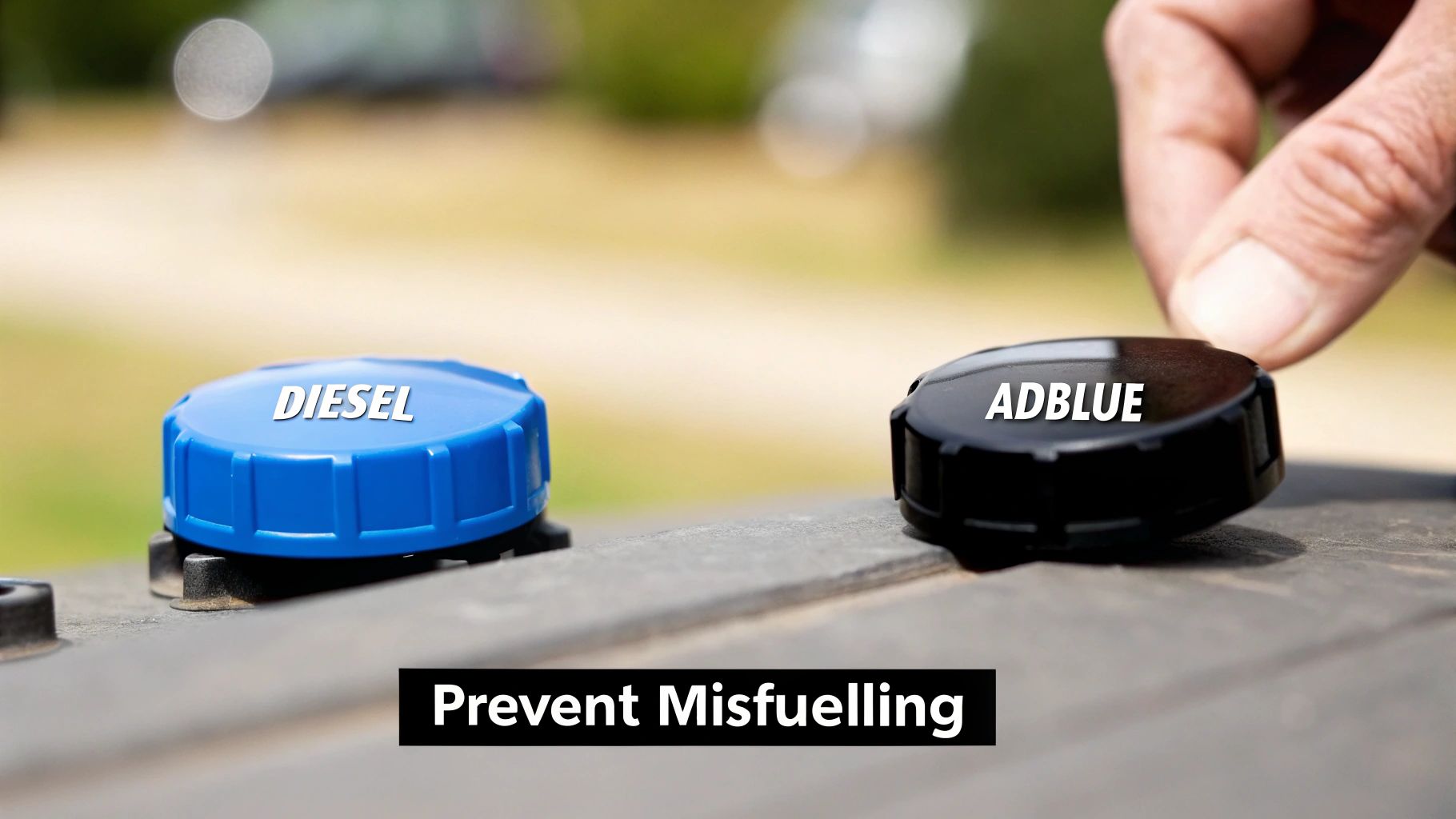
Car manufacturers have tried to design this problem away. You'll notice the AdBlue filler neck is much smaller than a standard diesel pump nozzle, making it pretty much impossible to accidentally put diesel in the AdBlue tank. The problem is, it doesn't always work the other way around. That smaller AdBlue nozzle can easily fit into the wider diesel filler neck, and that's where the trouble begins.
Building Your Prevention Routine
The single best defence you have is a consistent routine at the filling station. Think about it – what's the number one cause of misfuelling? Distractions. A phone call at the wrong moment, kids causing a fuss in the back, or just the mental fog from a long day on the road can easily lead to grabbing the wrong nozzle.
By consciously adopting a few simple actions, you can create a mental checklist that quickly becomes automatic.
Pause and Double-Check: Before you even touch a nozzle, just take two seconds. Stop. Read the label on the pump and then read the label on your car's fuel flap. That tiny pause is often all it takes to snap out of autopilot and catch a mistake before it happens.
One Cap at a Time: Make it a rule to never have both the diesel and AdBlue caps open at the same time. Finish with one fluid completely before even thinking about the other. This removes any possibility of a mix-up.
Think Blue: Create a strong mental link: blue is for AdBlue. The cap is almost always blue, and the pump nozzles usually are too. If you train your brain to associate that colour strictly with the exhaust fluid, you'll instinctively hesitate before putting it anywhere else.
Practical Tips for All Drivers
The risk of putting AdBlue in diesel is even greater if you drive multiple vehicles, perhaps as part of a company fleet. The location of the fuel and AdBlue fillers can differ from one manufacturer to another, which makes it incredibly easy to get confused when you switch cars.
At the end of the day, the most reliable prevention strategy is just knowledge and habit. Knowing your vehicle's layout and building an unbreakable routine at the forecourt will protect your engine—and your wallet—better than anything else.
Of course, there are gadgets you can buy, like brightly coloured aftermarket caps or special misfuelling prevention devices that create a physical block. While these can certainly help as a backup, they're no substitute for being present and mindful every single time you fill up. Your best tool for prevention is your own attention.
Your AdBlue Misfuelling Questions Answered
That sinking feeling at the petrol station is often followed by a flood of questions. What have I done? How bad is it? We get these calls all the time, so let's cut through the noise and give you the straight answers you need right now.
One of the first things drivers ask is, "How much AdBlue is too much?" The honest answer? Even a tiny amount is bad news. AdBlue is denser than diesel, meaning it sinks straight to the bottom of your fuel tank—exactly where your fuel pump draws from. A single capful is enough to start sending a corrosive, non-lubricating liquid towards your engine.
Can I Just Top It Up with More Diesel to Dilute It?
This is a widespread and dangerous myth. Please, do not try to fix this by adding more diesel.
AdBlue and diesel don't mix, a bit like oil and water. The AdBlue will just sit at the bottom as a concentrated globule. Topping up the tank won't dilute it; it just swishes it around and ensures that damaging fluid is the first thing to get sucked into your fuel system. The only real solution is to have the tank professionally drained and flushed.
What Happens If I've Already Driven Away?
If you didn't realise your mistake and have already started the engine, you'll know about it very quickly. The symptoms are hard to miss and usually show up within minutes.
You should be on the lookout for:
Engine Spluttering: The car will likely start to misfire or run very rough.
A Sudden Drop in Power: Your accelerator pedal will feel unresponsive, and the car will struggle to pick up speed.
Dashboard Warning Lights: Expect the engine management light (EML) to light up like a Christmas tree.
White Smoke from the Exhaust: This is a classic sign of contamination.
The Engine Cutting Out: In most cases, the engine will stall completely and then refuse to start again.
The moment you notice any of these signs after refuelling, your immediate priority is to pull over safely, switch off the engine, and call for help. Every second the engine runs, the AdBlue is being circulated further, making the potential damage much worse.
Understanding exactly what AdBlue is and why it has its own separate tank is the best way to avoid this mishap in the future. We've put together a simple guide for diesel drivers about what AdBlue is to explain it all.
If you've put AdBlue in your diesel tank, don't take a chance. Call Misfuelled Car Fixer for 24/7 emergency roadside assistance across Suffolk. We’ll get you back on the road safely and without fuss. https://www.misfuelledcarfixer-suffolk.co.uk
Comments