



Put Diesel in a Petrol Car? Your Essential Suffolk Driver's Guide
- Misfuelled Car Fixer

- Feb 4
- 12 min read
24/7 Hotline Nationwide: 0330 122 6640
National Wrong Fuel Rescue: https://www.misfuelledcarfixer.co.uk
If you found this page, we cover you in England!
That horrible, sinking feeling when you realise you've put diesel in a petrol car... it's a moment of pure panic most drivers dread. But the most critical rule is surprisingly simple: do not start the engine. Seriously, don't even turn the key to the 'on' position. Doing so can prime the fuel pump, which starts circulating the wrong fuel and kicks off a whole world of expensive trouble.
Your First Moves After a Misfuelling Mistake
If you've realised your mistake right there at the pump, take a deep breath. This is actually the best-case scenario. It means the thicker, oilier diesel is still sitting harmlessly in your fuel tank, well away from the intricate and sensitive components of your petrol engine.
What you do in the next few minutes can be the difference between a straightforward, affordable fuel drain and a repair bill that could easily run into thousands of pounds. This isn't just about saving your wallet; it's about keeping the forecourt safe for everyone else too.
Creating a Safe Situation
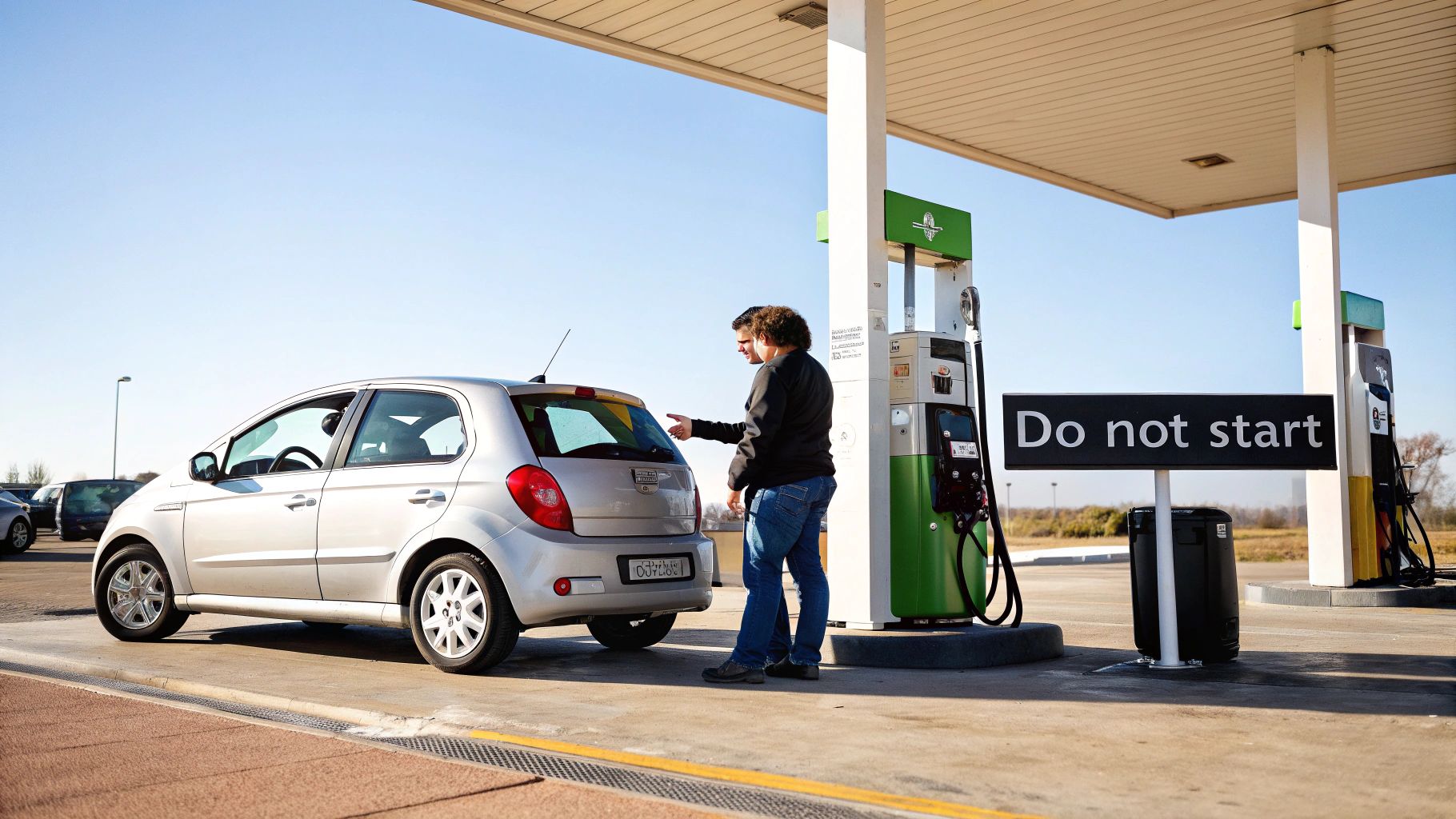
First things first: safety. Pop your hazard lights on immediately to let other drivers know there's an issue. If you can, put the car into neutral. The absolute last thing you want is for anyone to accidentally start the engine.
Next, let the petrol station staff know what's happened. They've seen it all before and are trained for these situations. They can help by coning off the pump and managing the area to prevent any potential hazards. With their help, you should be able to push your vehicle to a safe parking spot, away from the busy fuelling lanes. This simple step gets you, your car, and other motorists out of harm's way while you sort out professional help.
For a more detailed breakdown of what to do on the forecourt, our guide offers a complete immediate action plan for wrong fuel situations in Suffolk.
To make it even clearer, here's a quick-reference table outlining exactly what you should and shouldn't do in those first few moments.
Immediate Do's and Don'ts for Misfuelling
Action | What to Do (The 'Do's') | What NOT to Do (The 'Don'ts') |
|---|---|---|
Engine | Keep the engine OFF. Don't even turn the ignition to the 'on' position. | DO NOT start the car to "see what happens." You will cause damage. |
Position | Put the car in neutral and get help to push it to a safe parking area. | DO NOT leave the car blocking the fuel pump, creating a hazard. |
Alerts | Switch on your hazard lights immediately. | DO NOT panic. A calm approach prevents further mistakes. |
Inform | Let the petrol station staff know about the mistake. They are there to help. | DO NOT attempt to drain the fuel yourself. It's dangerous and requires specialist tools. |
Help | Call a professional misfuelling service like Misfuelled Car Fixer. | DO NOT assume your breakdown cover includes misfuelling – many policies don't. |
Following these simple 'Do's' and avoiding the 'Don'ts' is your best defence against turning a minor slip-up into a major mechanical nightmare.
The single most important action is to prevent the contaminated fuel from leaving the tank. Pushing the car to a safe spot is a small effort that saves your engine from catastrophic damage.
This decision tree gives you a clear visual guide on the crucial first steps, showing how a couple of smart choices can minimise any potential damage to your engine.
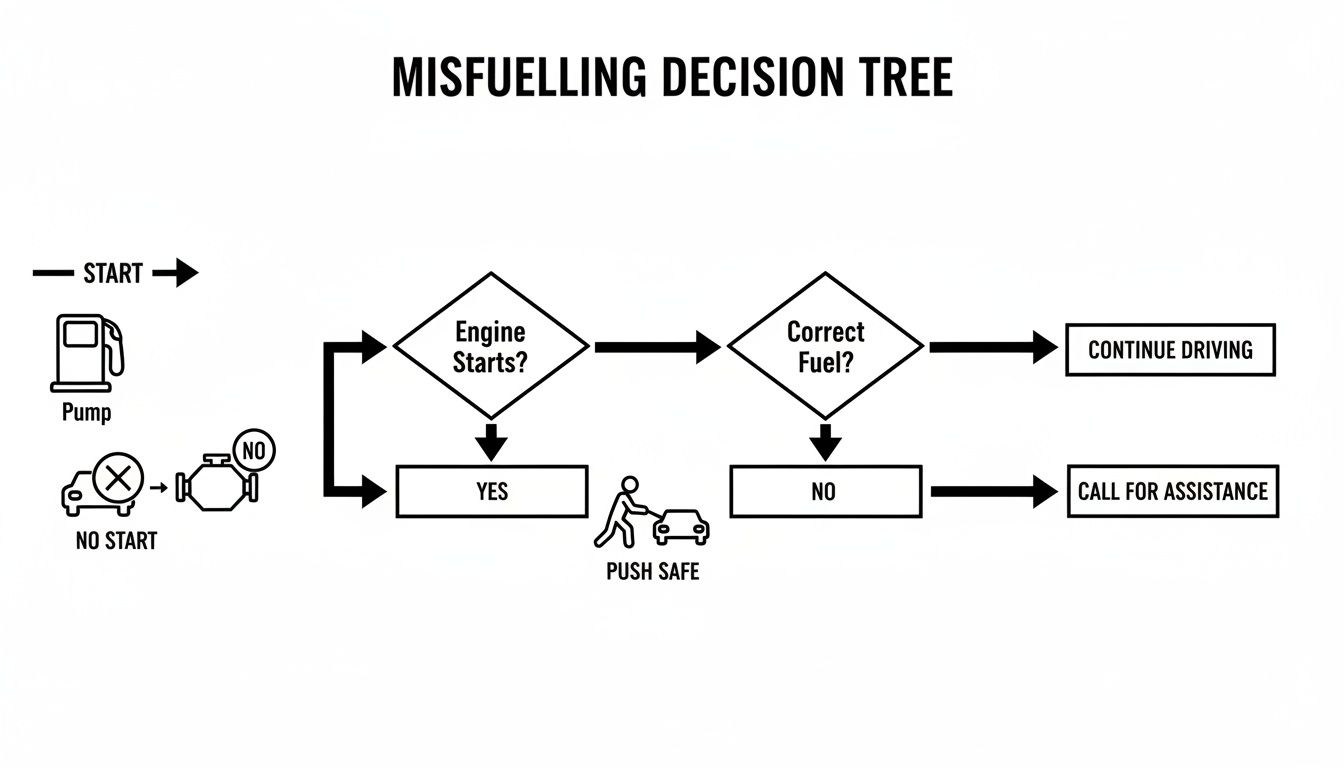
As the flowchart shows, keeping that engine off is the key decision that leads to a simple, clean resolution.
How Diesel Wrecks a Petrol Engine
So, what’s the big deal? You've put the wrong fuel in, but they're both just fuel, right? Unfortunately, it’s not that simple. Putting diesel in a petrol car causes serious problems because the two fuels are chemically worlds apart, and the engines are engineered to handle them in completely different ways.
Petrol is a light, thin solvent that vaporises easily. It's designed to ignite with a quick, controlled spark from a spark plug. Diesel, on the other hand, is a thick, oily lubricant. It doesn’t vaporise in the same way and needs to be ignited by high compression alone, no spark required.
Trying to run a petrol engine on diesel is a bit like trying to power a Formula 1 car with treacle. The entire system, from the tank to the engine, is designed for a thin, fast-flowing liquid. Introduce thick, oily diesel, and things start to go wrong almost immediately.
The Mechanical Mayhem Unleashed
The moment that diesel enters your petrol car's fuel system, it starts its destructive journey. First, the fuel pump—a delicate component designed to move a light liquid—suddenly has to force a thick, heavy oil through narrow fuel lines. The strain is immense, often causing the pump to overheat and burn out. That's an expensive fix right from the get-go.
If any diesel manages to get past the struggling pump, it hits the fuel filter. This filter is designed to catch tiny specks of dirt, not a glut of thick, oily fluid. The diesel clogs it almost instantly, effectively starving the engine of fuel.
From there, the chaos just escalates inside the engine:
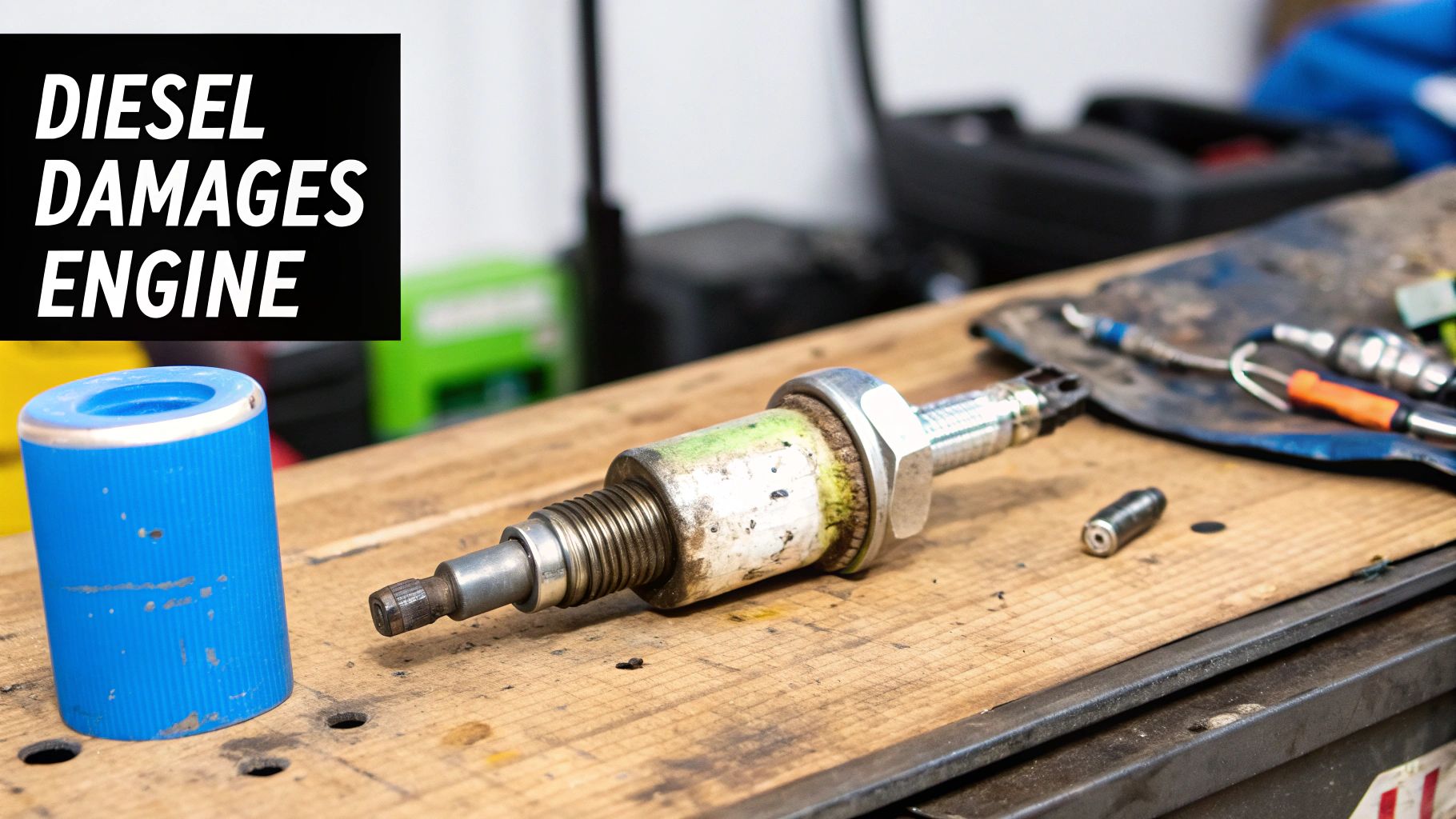
Smothered Spark Plugs: Instead of vaporising, the diesel coats the tips of your spark plugs in a greasy film. A coated spark plug can't create a spark, meaning no ignition.
Clogged Fuel Injectors: These injectors have microscopic nozzles designed to spray a fine mist of petrol. Thick diesel gums them up, ruining the spray pattern and causing the engine to misfire badly.
Engine Knocking: Diesel drastically lowers the fuel’s octane rating. This can make the fuel detonate at the wrong time, creating a violent and damaging 'knocking' sound that can wreck pistons and cylinder walls.
A Familiar Scene on Suffolk Roads
Picture this: a local driver in Bury St Edmunds has just misfuelled their petrol hatchback. They start the engine, pull out onto the A14, and within a few minutes, the car begins to cough and judder violently. A plume of thick, white smoke starts billowing from the exhaust as the engine desperately tries (and fails) to burn the oily diesel.
This isn't just a bit of rough running; it's the sound of an engine in serious distress. Every stutter is a direct result of the internal chaos we just described—the pump straining, the injectors clogging, and the spark plugs failing.
In a petrol engine, diesel isn't just the wrong fuel; it's a contaminant. It doesn't just burn poorly—it actively prevents the entire fuel system from working by coating, clogging, and gumming up every component it touches.
This is precisely why the golden rule is do not start the engine. Keeping the diesel confined to the fuel tank is the single most important thing you can do. It prevents this cascade of expensive damage and turns a potential engine-destroying disaster into a much more straightforward fix.
Spotting the Symptoms After You've Driven
Ideally, you’d realise the mistake right there at the pump before even turning the key. But life isn’t always that straightforward. It’s easy to get distracted, pay, and drive off, only for your car to start acting very, very strangely a few miles later.
This is your car sending out a serious SOS signal. A petrol engine just isn't built to handle the thick, oily consistency of diesel fuel. As it tries to process something it can't burn, the symptoms show up fast and are often quite dramatic. Think of it as the engine literally choking on the wrong fuel.
Common Signs Your Petrol Car Is Running on Diesel
The first thing you’ll likely notice is a major drop in power. The car will feel incredibly sluggish and weak, struggling to accelerate as if you're suddenly trying to pull a heavy trailer. As more diesel works its way into the system, things will get worse and become impossible to ignore.
Keep an eye out for these classic tell-tale signs:
Violent Engine Juddering: Your car will probably start shaking and shuddering, especially when you press the accelerator. This is the engine misfiring because the spark plugs are getting coated in oily diesel, preventing them from creating the spark needed for combustion.
Excessive Exhaust Smoke: You might see thick clouds of white or grey smoke billowing from the exhaust pipe. That’s unburnt diesel being spewed out of the engine – a dead giveaway that something is seriously wrong.
Engine Cutting Out: The engine will likely stall, especially when you're idling at a junction or stopped in traffic. It won't be long before it gives up completely and refuses to start again, leaving you stranded.
Loud Knocking Noises: A heavy knocking or clattering sound coming from under the bonnet is another bad sign. Diesel has a much lower octane rating than petrol and can detonate at the wrong time, putting a huge amount of stress on the engine's internal parts.
For a more in-depth look, our quick guide to the symptoms of wrong fuel in your car breaks these down even further.
As soon as you recognise any of these signs, your absolute priority is to pull over somewhere safe and switch off the engine. Every second you keep driving forces more of that damaging diesel through the system, dramatically increasing the odds of expensive, permanent damage.
Picture this: a family is driving home to Ipswich after a day out in Felixstowe. As they join the A14, the car starts losing speed. The accelerator feels dead, and a violent judder shakes the whole car. That's a textbook case of diesel in a petrol car. By immediately recognising the problem, pulling over safely, and killing the engine, they can turn a simple mistake into a manageable fix, rather than a catastrophic engine failure that could cost thousands.
What to Expect From a Professional Fuel Drain
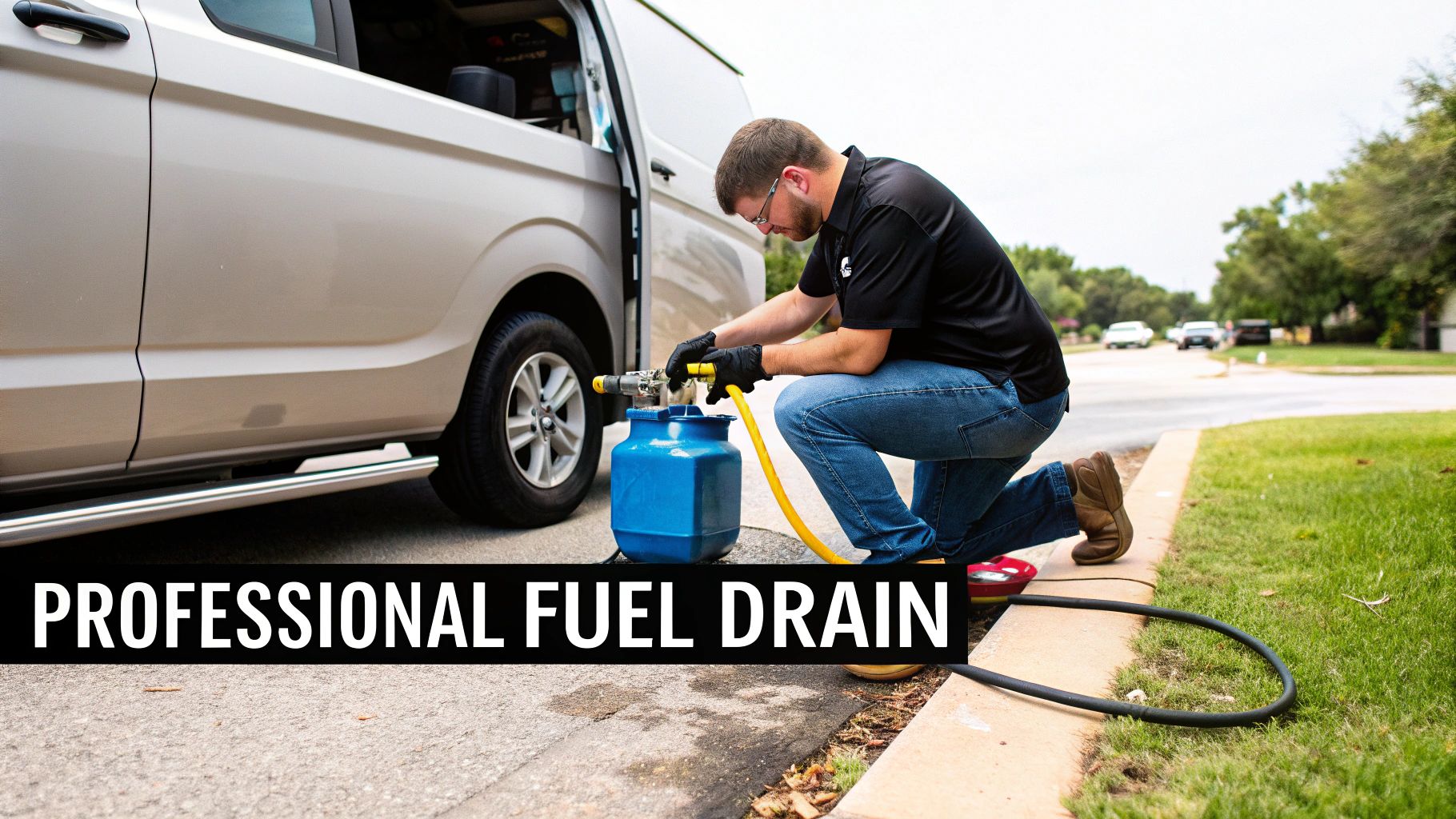
So, you’ve made the call and a mobile technician is on their way. What actually happens next? It’s a bit more involved than just siphoning out the bad fuel – it’s a full system cleanse, carried out right there at the roadside, on the forecourt, or even on your driveway.
Our mobile units, whether they’re in Ipswich or out in the sticks near Framlingham, arrive with highly specialised, ATEX-approved equipment. This is a crucial detail. It means every pump and tool is intrinsically safe and won't create a spark, which is non-negotiable when you’re dealing with fuel vapours.
Emptying the Contaminated Fuel
First things first, we need to get the diesel and petrol mix out of your tank. The technician will typically access the fuel tank by removing the sender unit, which is usually found under the back seats. This gives them direct access to drain every last drop.
The contaminated mix is pumped into a secure, purpose-built container in our van. It's then taken away for safe, environmentally-friendly disposal. We don’t just empty the tank and call it a day, though. The real danger lies in the dregs of diesel left in the fuel lines.
Flushing the System Clean
This is where the real expertise comes in. Once the tank is empty, we flush the entire fuel system. This pushes out any residual diesel from the fuel lines, pumps, and injectors. It’s like a deep clean for your car’s fuel delivery system, ensuring no nasty surprises later on.
After the flush, we'll put in around 5-10 litres of fresh, clean petrol. This is just enough to get the system primed and ready to go.
A professional fuel drain isn't just a "drain." It's a full decontamination service. The goal is to make sure that when you restart the engine, it's running on pure petrol, with no lingering diesel to cause problems down the line.
Finally, the moment of truth. The technician will start the car and let it run for a while, keeping an eye on the engine and listening for any issues. They’ll run a quick diagnostic check to make sure there are no warning lights. We won’t leave until we’re 100% certain your car is running perfectly and is safe to drive away.
It’s a meticulous process, but it’s also surprisingly quick – usually all wrapped up in under an hour. If you're curious about the technical side, we have a guide that details how to drain a petrol tank safely and the equipment involved.
Estimated Costs and Times for Fuel Drain Services
When you're stuck, knowing the potential cost and time is a huge relief. A mobile service is almost always faster and more cost-effective than getting recovered to a garage.
Service Provider | Estimated Cost Range (£) | Estimated Time (On-Site) | Key Benefit |
|---|---|---|---|
Mobile Fuel Drain (Like Us) | £150 - £250 | 45-60 minutes | Fast, convenient, and prevents costly recovery fees. |
Dealership / Main Garage | £300 - £500+ (plus recovery) | 4-8 hours (or next day) | May be required for warranty, but much slower and pricier. |
As you can see, calling a mobile specialist not only saves you a significant amount of money but also gets you back on your journey in a fraction of the time.
It Happens to the Best of Us: The Reality of Misfuelling in the UK
That heart-sinking moment when you realise you’ve just put diesel in a petrol car can make you feel like the only person on earth to make such a basic error. Trust me, you're not. In fact, you've just joined a very large club. This is easily one of the most frequent mishaps on UK petrol forecourts.
It’s estimated that a driver somewhere in the country makes this mistake once every three minutes. That adds up to over 150,000 incidents every single year. From new drivers just getting used to their car to seasoned motorists who’ve been driving for decades, it’s an easy slip-up to make when you're distracted or in a hurry.
You’re Not Alone: The Surprising Numbers
A revealing survey from Go.Compare really puts the scale of the problem into perspective. They spoke to over 1,000 UK drivers, and an incredible 29% admitted they’d put the wrong fuel in their car at least once. Think about that – almost one in every three drivers you see on the road has been in the exact same situation.
The research also uncovered some fascinating patterns:
Experience vs. Age: It seems youthful confidence plays a part. A huge 54% of drivers aged 18-24 owned up to the mistake, a stark contrast to just 12% of drivers over 55.
Location, Location, Location: While it's a major issue in congested cities—48% of Londoners have done it—the problem isn't confined to the capital. It happens everywhere, from the M25 rush hour to a quiet village pump in Suffolk.
A Slight Gender Gap: The numbers showed that men (33%) were a little more likely to get it wrong at the pump compared to women (23%).
What this all proves is that misfuelling isn't some careless blunder. It’s a common, everyday accident. You can dive deeper into the prevalence of misfuelling across the UK in the full report.
Here's the kicker: the same study found that 62% of standard car insurance policies do not cover misfuelling as standard. This often leaves the driver to cover the entire cost of the recovery and repair, a bill that can easily spiral into hundreds, if not thousands, of pounds.
This is exactly why calling a specialist mobile fuel drain service is nearly always the smartest and most affordable route. Instead of getting tangled up in an insurance claim that will probably be denied anyway, you have an expert come directly to you. They solve the problem on the spot, saving you a world of stress, time, and money.
Your Misfuelling Questions Answered
It’s completely normal to still have questions running through your head, even after you know the basic steps. Putting the wrong fuel in your car is a stressful moment, and the 'what ifs' can be overwhelming. We've been doing this for years, so we’ve heard every question in the book. Here are the answers to the most common concerns we hear from drivers.
Will a Small Amount of Diesel Really Damage My Engine?
In a word, yes. It's a question we get all the time, and the answer never changes. Even a little bit of diesel can cause some serious headaches for a petrol engine.
Think of it this way: your petrol engine is designed for a very specific type of controlled explosion, which relies on petrol's high octane rating. Diesel is an oil, not a solvent like petrol, and it smothers that process. We've seen engines with as little as 5% diesel contamination suffer from fouled spark plugs and clogged fuel injectors. In the worst cases, it can even ruin your catalytic converter—and that’s an expensive fix.
Diesel doesn't combust with a spark. Instead, it just coats everything in a greasy film, stopping vital parts from doing their job. Trust me, it’s never worth the gamble to just 'drive it and see'. A professional fuel drain is always the safest and, in the long run, the cheapest option. It turns a simple mistake into a problem solved, rather than a potential four-figure repair bill.
Is Misfuelling Covered by Insurance or Breakdown Services?
This is a huge point of confusion for many drivers, and unfortunately, the answer is almost always no. Most standard UK car insurance policies specifically list misfuelling as an exclusion. You might find it covered on some top-tier, all-singing-all-dancing policies, but even then, you'll likely have to pay an excess and could see your premiums go up at renewal. You might even lose your no-claims bonus.
What about your breakdown provider? Again, it’s unlikely. Their standard service will usually just offer to tow you to a garage. That means you’re stuck with the cost of the tow, garage labour rates, and a much longer wait. It's always worth checking your policy documents, but nine times out of ten, calling a mobile specialist like us is the quickest, most direct, and most cost-effective way to get moving again.
The reality for most drivers is that the cost of a specialist fuel drain is far less than the combined cost of an insurance excess, a potential premium hike, and garage labour charges.
How Can I Avoid Making This Mistake Again?
The best way to prevent a repeat performance is just a little bit of mindfulness at the pump. It’s so easy to get distracted, but taking a moment to double-check can save you a world of hassle.
Check the nozzle: Diesel nozzles are almost always black and are physically larger than the green petrol ones.
Check the fuel cap: Match the colour on the pump with the label inside your car's fuel flap before you even lift the nozzle.
Ditch the distractions: Put your phone away for the 30 seconds it takes to start fuelling. Your texts can wait.
If you regularly drive different cars (maybe a petrol personal car and a diesel work van), a simple coloured sticker on the inside of the fuel flap can be a fantastic visual reminder.
If you've put diesel in your petrol car in Suffolk, don't panic and absolutely do not start the engine. Call the experts at Misfuelled Car Fixer for immediate, 24/7 roadside assistance. We’ll get you safely back on your way. Get immediate help from Misfuelled Car Fixer
Comments