


What Causes Black Smoke From Exhaust in the UK?
- Misfuelled Car Fixer

- Dec 3, 2025
- 14 min read
It’s a sight that can make any driver's heart sink: a thick plume of black smoke billowing from the exhaust pipe. While it looks dramatic, the cause is usually quite straightforward. It almost always means your engine is burning too much fuel without enough air to burn it cleanly.
This imbalance is what mechanics call a "rich" fuel mixture. A good way to picture it is to think of a campfire. If you get the balance of wood and air just right, you get a clean, hot flame. But if you smother it with too much wood (fuel), it struggles for air and produces a lot of thick, black smoke. Your engine is doing the exact same thing.
Why Is Black Smoke Coming From My Exhaust?
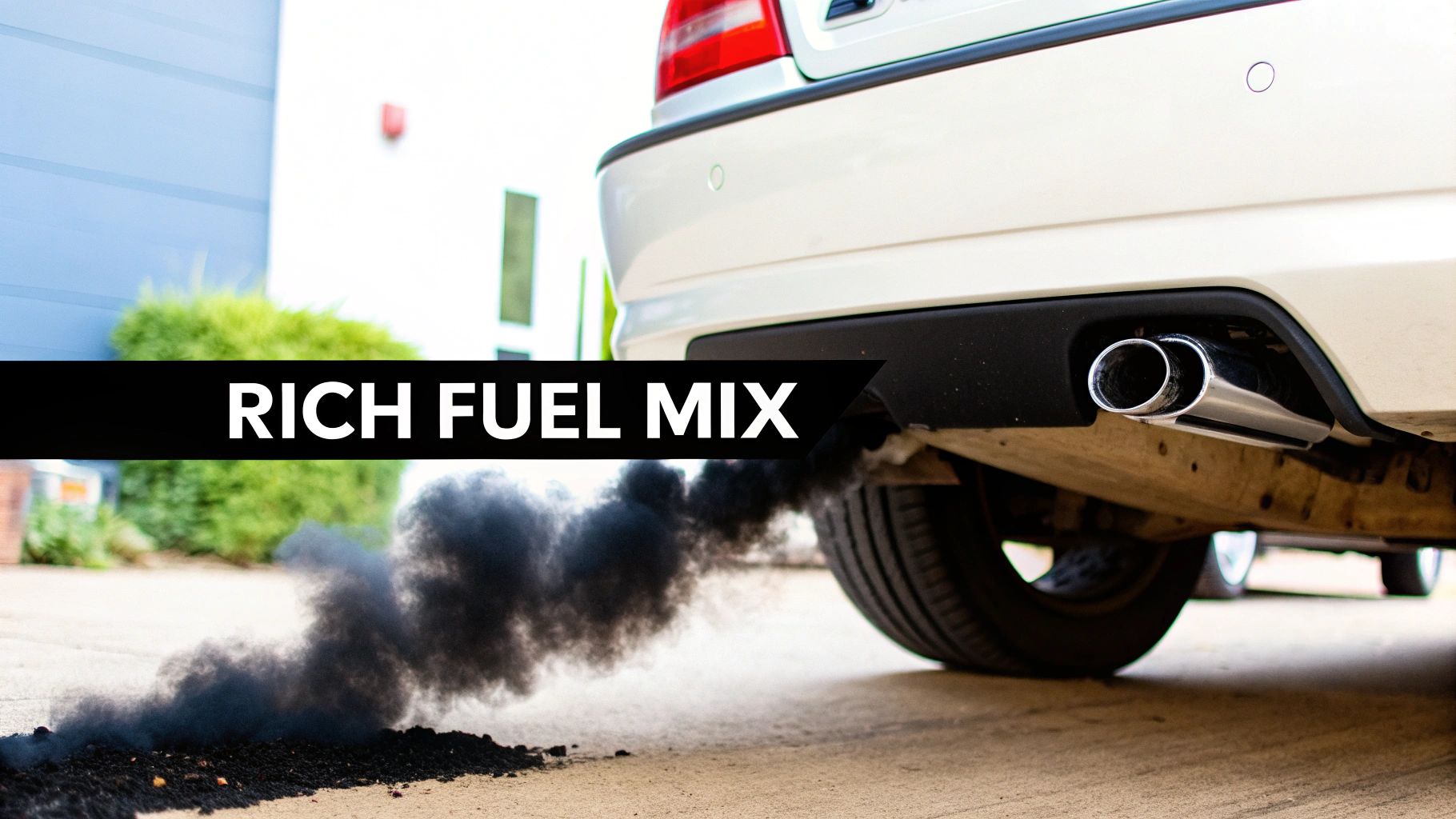
A healthy engine relies on a very precise recipe of fuel and air to create efficient combustion. That black smoke is the tell-tale sign that the recipe is off. Those dark, sooty particles you see are essentially tiny bits of unburnt fuel being chucked out of your tailpipe.
Not only is this bad for the environment, but it's also hitting you in the wallet. Your car's performance will suffer, and its fuel economy will plummet. Letting it go unchecked can lead to more serious and expensive engine damage down the line.
Pinpointing the Common Culprits
So, what could be messing up that delicate air-fuel balance? In the UK, the problem often comes down to incomplete combustion caused by a handful of common mechanical faults.
Something as simple as a dirty or clogged air filter can be the villain, literally starving the engine of the oxygen it needs. On the other hand, a faulty fuel injector might be leaking, spraying far too much petrol or diesel into the combustion chamber. As vehicle breakdown experts at the RAC explain, sorting these issues out quickly is key to stopping the smoke and getting your fuel efficiency back.
Here are the usual suspects we see time and time again:
Clogged Air Filter: This is the easiest fix. It restricts airflow, creating an instantly rich mixture because the engine can't breathe properly.
Faulty Fuel Injectors: These can get stuck open or leak, dumping excessive fuel into the engine's cylinders and causing poor combustion.
Malfunctioning Sensors: A dodgy Mass Air Flow (MAF) sensor is a classic example. It misreads how much air is entering the engine and tells the car's computer to inject way too much fuel.
Failed Fuel Pressure Regulator: If this component goes bad, it can allow fuel pressure to spike, overwhelming the injectors and flooding the engine.
Common Causes of Black Exhaust Smoke at a Glance
To help you get a quick idea of what might be wrong, we've put together a simple table summarising the most frequent causes. This is a great starting point for figuring out the problem.
Potential Cause | Common Symptom | Affected Component |
|---|---|---|
Rich Fuel Mixture | Poor fuel economy, strong petrol smell | Fuel System / Air Intake |
Clogged Air Filter | Reduced engine power and acceleration | Air Intake System |
Faulty Fuel Injector | Rough idling, engine misfires | Fuel Delivery System |
Bad MAF Sensor | Stalling, hesitation during acceleration | Engine Management System |
Looking at this table can help you match the symptoms your car is showing to a potential fault, giving you a better-informed starting point before we dive into the details.
How The Engine's Air and Fuel Balance Works
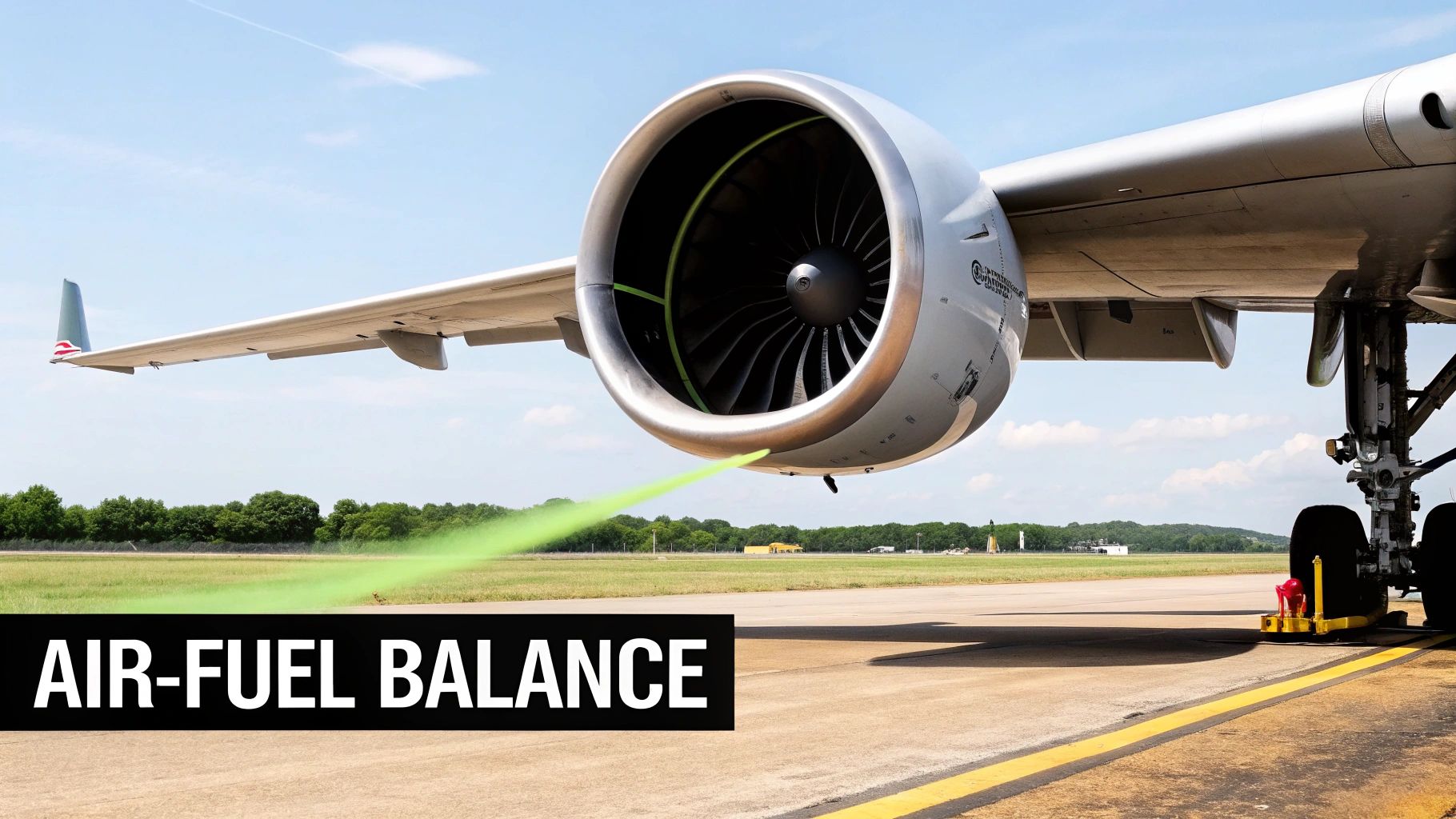
Every engine, whether it runs on petrol or diesel, is a master of controlled explosions. It all hinges on a very precise recipe: a specific blend of fuel and air that ignites to create the power that moves your vehicle. When that balance is spot on, the combustion is clean and efficient, giving you maximum power with minimal waste.
Think of it like trying to light a barbecue. If you have the right amount of air flowing through the coals, you get a strong, clean heat. But if you smother it, cutting off the oxygen, you end up with a lot of smoke and not much fire. Your engine works in much the same way when its air-to-fuel ratio goes wrong.
This fuel-heavy imbalance is known as running "rich". With too much fuel and not enough oxygen, the fuel can't burn completely. Instead of being converted into energy, these unburnt particles get cooked into soot and are forced out of the exhaust pipe as that thick, black smoke you're seeing.
The Role of The Air Intake System
More often than not, a rich mixture is down to a simple problem: the engine isn't getting enough air. Your engine needs to breathe freely, and anything that restricts that airflow can throw the whole delicate balance out of whack.
One of the most common and easily fixed culprits is a clogged air filter. Its job is to keep dust, leaves, and other road grime from getting inside your engine. Over thousands of miles, it naturally gets dirty and starts to block the airflow, essentially suffocating the engine. With less air getting in, the fuel system keeps injecting its standard amount of fuel, creating an instant rich mixture that leads directly to black smoke.
A restricted air filter is a leading cause of a rich fuel mixture. It forces the engine to work harder for less power, hitting your fuel economy hard and producing the tell-tale black smoke that signals something is wrong.
Getting the air and fuel balance right isn't just about stopping black smoke; it's also key to efficiency. This same principle helps operators learn how to boost semi-truck fuel economy, because a clean-burning engine is always a more economical one.
When Engine Sensors Get It Wrong
Today’s cars are packed with technology. A whole network of sensors constantly feeds information to the Engine Control Unit (ECU) – your car’s brain – which fine-tunes the air and fuel mix on the fly. But if one of those sensors starts sending bad data, the ECU will make the wrong call.
A prime suspect here is the Mass Air Flow (MAF) sensor. This clever bit of kit measures the precise volume of air entering the engine. If the MAF sensor gets dirty or fails, it can start sending wildly inaccurate readings to the ECU.
For instance, it might tell the ECU that a huge amount of air is flowing in when, in reality, there's much less. The ECU, trusting this faulty data, injects a load of extra fuel to match the non-existent air, creating a rich mixture. The end result? Wasted fuel, sluggish performance, and those embarrassing clouds of black smoke. While a blocked filter and a bad sensor both lead to the same outcome, one starves the engine of air while the other tricks it into adding too much fuel.
Keeping this balance is also where quality fuels come in, and you can learn more about how they help by reading our post on what are fuel additives and how do they work.
Common Mechanical Faults Behind Black Smoke
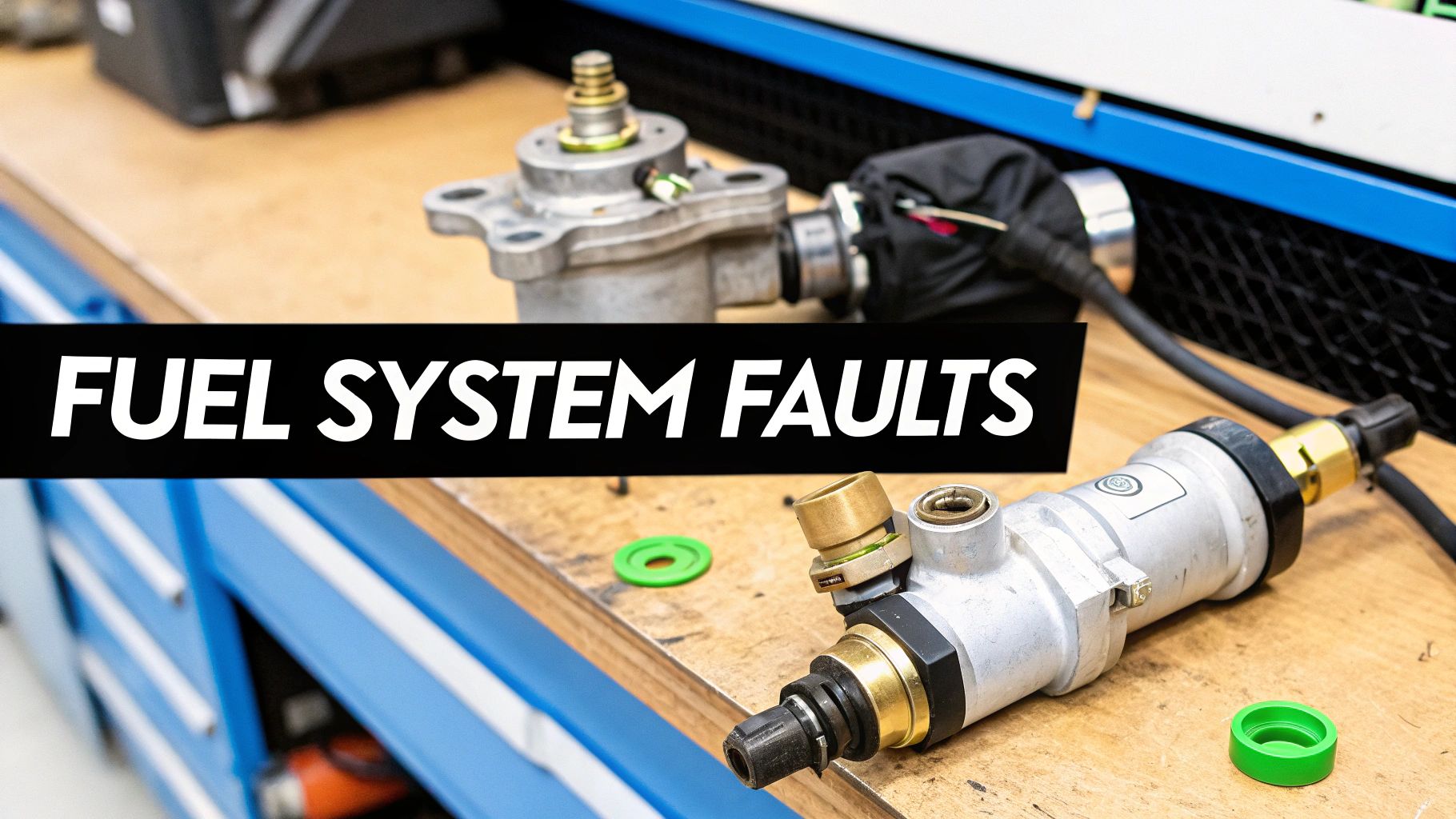
While a blocked air filter or a dodgy sensor can easily mess with your engine's fuel-to-air recipe, sometimes the root of the problem is more physical. The mechanical parts responsible for getting fuel into the engine can and do wear out. When they fail, they often dump far too much fuel into the cylinders, leading directly to those plumes of black smoke.
Unlike a sensor sending bad information, a mechanical failure means a part is physically broken or worn down. This kind of problem won't fix itself; in fact, it's guaranteed to get worse. Ignoring it will not only hurt your car's performance but could also lead to serious and expensive engine damage down the line.
Faulty Fuel Injectors
Think of fuel injectors as highly precise spray nozzles. Their job is to deliver a fine, atomised mist of fuel into the engine at exactly the right time and in exactly the right quantity for a clean burn.
Over thousands of miles, however, injectors can get clogged with carbon build-up or simply fail from old age. This can make them leak or even get stuck wide open, constantly dribbling raw fuel into a cylinder. This uncontrolled fuel supply instantly creates a rich mixture, causing the classic black smoke, along with a rough idle and a very real drop in power. You can dive deeper into the tell-tale symptoms of bad fuel injectors in diesel engines, as many of the signs are similar for petrol cars.
Failing Fuel Pressure Regulator
Another key player in this system is the fuel pressure regulator. It acts like a gatekeeper, making sure the pressure in the fuel lines stays consistent and at the perfect level for the injectors to do their job properly.
If this regulator gives up the ghost, fuel pressure can skyrocket. This immense pressure effectively forces the injectors to spray way more fuel than the engine's computer is asking for. The result is a severely rich running condition that not only produces clouds of black smoke but often brings other problems with it:
A strong, unmistakable smell of unburnt petrol around the car.
A dramatic and noticeable drop in your miles per gallon.
Spark plugs quickly becoming black and sooty.
A failed fuel pressure regulator can quickly turn an efficient engine into a fuel-guzzling, smoke-producing machine. It’s a classic example of how one small part can have a very big and visible impact on your vehicle's health.
Beyond these issues, other mechanical faults can also throw off the air-fuel balance. For example, some bad spark plug symptoms can lead to incomplete combustion, which also contributes to sooty smoke. A good mechanic has the tools to test fuel pressure and check how the injectors are performing, allowing them to pinpoint the real reason for the smoke and get your car running cleanly again.
Why Diesel and Petrol Engines Smoke Differently
While black smoke from any exhaust is a clear sign something’s wrong, you're far more likely to see it puffing from a diesel vehicle than a petrol car. This isn't just a quirk; it’s rooted in the fundamental way these two engines work and the different kit they use. Getting your head around these differences is the first step to figuring out why your car is suddenly channelling a steam train.
Petrol engines are all about precision. They mix air and fuel into a fine mist, which is then ignited by a spark plug. When they kick out black smoke, the villain of the piece is almost always too much fuel flooding the engine. Think of it like a badly mixed cake recipe – too much of one ingredient throws the whole thing off. This could be down to a leaking injector or a dodgy sensor telling the engine to dump in more petrol than it needs.
Diesel engines, on the other hand, play by different rules. They don't use spark plugs. Instead, they squeeze air so tightly that it becomes incredibly hot, and then inject diesel directly into it, causing a spontaneous explosion. This process is naturally a bit messier and creates more soot. To deal with this, modern diesels are packed with clever emissions systems designed to trap those sooty particles before they ever see the light of day.
The key takeaway is this: black smoke from a petrol car almost always points to a simple fuel-to-air mix-up. In a modern diesel, it's often a sign that the sophisticated system built to prevent smoke has failed.
Common Diesel-Specific Faults
Because diesels naturally produce more soot, they need special components to keep things clean. When one of these fails, the system gets overwhelmed, and that’s when you see thick, black clouds billowing from the exhaust.
Clogged Diesel Particulate Filter (DPF): The DPF is essentially a soot trap in your exhaust pipe. It catches particles and is meant to periodically burn them away in a cycle called 'regeneration'. If it gets too blocked to clean itself, pressure builds up, and smoke can be forced past it.
Stuck EGR Valve: The Exhaust Gas Recirculation (EGR) valve is a clever bit of kit that feeds some exhaust gas back into the engine. This cools things down and cuts emissions. If it gets jammed open by carbon deposits, it messes with the air-fuel balance, causing inefficient combustion and, you guessed it, black smoke.
Turbocharger Issues: Most modern diesels have a turbo. If the seals on the turbo fail or it isn't boosting correctly, the engine won't get enough air. This creates an overly rich fuel mixture that doesn't burn properly, resulting in visible smoke.
For a bit more background on how these fuels work, our quick guide on the difference between petrol and diesel fuel is a great place to start.
Petrol Engine Faults Revisited
If you’re a petrol car owner seeing black smoke, your focus should be squarely on the fuel delivery system. The cause isn't likely to be a complex emissions filter but rather a straightforward mechanical or sensor fault that's causing the engine to over-fuel. Things like a faulty fuel pressure regulator or a bad Mass Air Flow (MAF) sensor are often the culprits here.
Black Smoke Causes Petrol vs Diesel Engines
To make it even clearer, here's a quick side-by-side look at the most common reasons you'll see black smoke in either type of vehicle.
Symptom/Cause | More Common in Petrol | More Common in Diesel |
|---|---|---|
Rich Fuel Mixture (Too much fuel, not enough air) | Very Common. Usually from a faulty injector or sensor. | Common. Often linked to turbo or EGR valve issues. |
Clogged Diesel Particulate Filter (DPF) | N/A. Petrol cars don't have a DPF. | Very Common. A leading cause in modern diesel cars. |
Faulty EGR Valve | Less Common. Can happen but is more of a diesel issue. | Very Common. Carbon build-up causes it to stick. |
Turbocharger Failure | Less Common. Only affects turbocharged petrol models. | Common. Widespread use means more potential failures. |
Misfuelling (Wrong fuel in the tank) | Can cause smoke, but engine usually won't run for long. | Can produce significant smoke before severe damage occurs. |
As you can see, while the symptom is the same, the underlying reasons are often worlds apart, which is why a correct diagnosis is so important.
What to Do When You See Black Smoke
Seeing black smoke puffing out of your exhaust can be alarming, but there’s no need to panic. The key is to stay calm and figure out what’s actually happening. Is it just a little puff when you put your foot down, or is a thick, black cloud trailing behind you?
Think of it as being a detective. Your car is giving you clues. Look at the dashboard – are any warning lights on, like the dreaded engine management light? Listen carefully. Can you hear any strange knocking or sputtering sounds from under the bonnet that weren't there before? Piecing these symptoms together will be a massive help if you end up needing to call a mechanic.
When to Pull Over Immediately
What you do next really depends on how bad the smoke is and what other symptoms you’ve noticed. A tiny, fleeting puff might mean you can drive carefully to the nearest garage, but thick, constant smoke is a different story altogether.
You need to pull over as soon as it's safe to do so if you notice any of these serious signs:
Thick, continuous black smoke that makes it hard for drivers behind you to see.
A major loss of engine power, making it a struggle to accelerate.
Any dashboard warning lights flashing or staying lit.
Loud or unusual noises coming from the engine.
Trying to push on in these conditions is a recipe for disaster. You could be looking at serious, wallet-busting engine damage, not to mention it's just not safe. Find a safe spot to stop, kill the engine, and call for breakdown assistance.
Black smoke isn’t just bad for the environment; it’s a clear signal that your engine isn't running efficiently and could be on the verge of a serious problem. It’s a modern echo of a long-understood issue. The link between visible smoke and public health was tragically cemented during events like the Great Smog of London in 1952, which showed just how devastating particulate pollution from poor combustion can be. While today's cars are worlds apart in terms of emissions, black smoke is still a critical warning that something is wrong with your vehicle. You can learn more about this historic event and its impact on UK air quality legislation.
This flowchart helps break down the common culprits for both petrol and diesel engines.
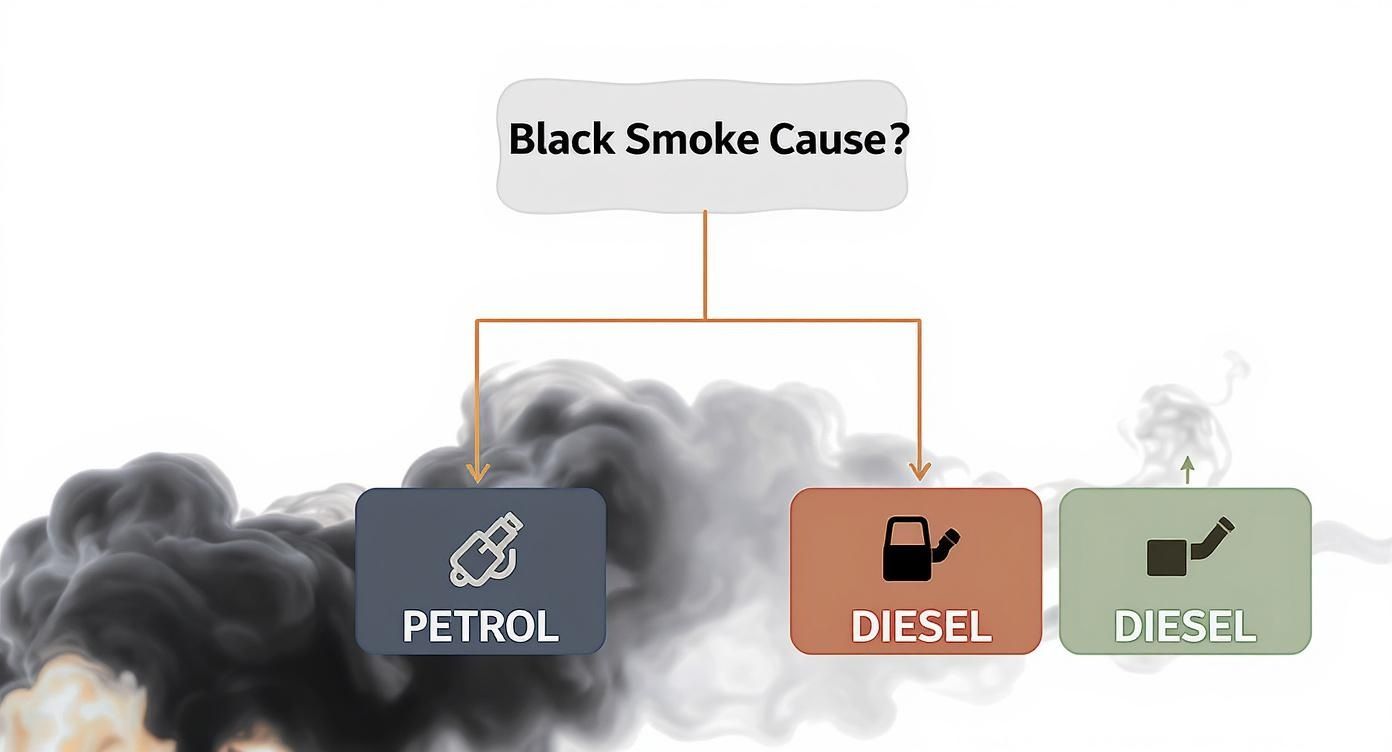
As the chart shows, both fuel types can have issues with the fuel/air mix, but problems with specific emissions systems like the DPF and EGR valve are almost always a diesel-only headache.
If You Suspect Misfuelling
One of the most dramatic causes of black smoke is putting the wrong fuel in your car. If you've just been to the petrol station and this problem starts moments later, do not drive any further. This is an emergency stop situation.
Pull over, turn the engine off immediately, and don't be tempted to restart it. Running a car on the wrong fuel can cause thousands of pounds of damage in minutes. Your next call should be to an emergency wrong-fuel drain service for immediate help.
Why You Should Never Ignore Black Smoke
That puff of black smoke from your exhaust isn't just an ugly inconvenience; it's a clear cry for help from your engine. Turning a blind eye is one of the most expensive mistakes you can make, as it allows a small, fixable hiccup to snowball into a catastrophic mechanical failure.
Think of it this way: the black smoke means your engine is running "rich," getting far more fuel than it can actually burn. If you keep driving like this, you risk ruining expensive oxygen sensors, clogging up your catalytic converter (a very costly repair), and even causing serious internal engine damage over time.
Beyond the mechanical risks, your wallet takes a direct hit. A car belching out black smoke is guzzling fuel, as all that unburnt petrol or diesel is just being wasted straight out of the tailpipe. It's also a guaranteed way to fail an MOT emissions test, which will take your car off the road until it's fixed.
Your vehicle’s health and the environment are directly at risk. Black smoke indicates poor combustion, leading to increased particulate pollution and reduced engine longevity. Taking swift action is essential.
And it’s not just about the car or your money. Those emissions are a genuine health hazard. In the UK, diesel exhaust fumes—the kind that produce black smoke—are officially recognised as a serious occupational health risk, linked to everything from breathing problems to an increased risk of cancer. The UK Health and Safety Executive has detailed information on the health implications.
So, what's the takeaway? The moment you see black smoke, get your car booked in with a trusted mechanic for a diagnostic check. Don't wait.
Still Have Questions? Let's Clear the Air
When you see black smoke billowing from your exhaust, it’s natural to have a lot of questions. Let's tackle some of the most common ones we hear from drivers, giving you the straight answers you need to figure out what's going on and what to do next.
Can a Dirty Air Filter Really Cause So Much Trouble?
Yes, it absolutely can. A clogged air filter is one of the most common culprits behind black smoke, and thankfully, it's usually the easiest to sort out.
Imagine your engine is trying to breathe. A clean filter lets it take a deep, clear breath of air. But a dirty, clogged one is like trying to breathe through a dusty old rag. The engine is starved of air, but its computer often doesn't realise this and keeps injecting the standard amount of fuel. The result? A fuel-rich mixture where there's far too much fuel for the little air available. That unburnt fuel turns into the thick, sooty smoke you see coming out of the exhaust.
Is a Little Puff of Black Smoke Normal for a Diesel?
It depends entirely on the car's age. If you're driving an older diesel, one from before Diesel Particulate Filters (DPFs) became the norm, then a small puff of black smoke when you put your foot down hard isn't unusual.
But a constant stream of thick black smoke is never normal, no matter how old the vehicle is.
For modern diesels fitted with a DPF, you should see practically no smoke at all. If your newer diesel car is producing black smoke, it’s a red flag. It points directly to a fault with the engine, the fuel system, or the emissions system itself.
So, while a brief puff from a classic might be part of its character, any persistent smoke from a modern car means it's time for a professional check-up.
Will My Car Fail Its MOT Because of Black Smoke?
Without a doubt. In the UK, emitting visible smoke is a surefire way to fail your MOT. The emissions test is a key part of the inspection, and it’s designed to catch exactly this kind of problem.
Your car will get a major fault and fail if it does either of the following:
Pumps out thick smoke for five continuous seconds at idle.
Shows any visible smoke during the accelerated part of the test.
You’ll have to get the root cause fixed before your car can be considered roadworthy and pass its MOT. It's not something you can ignore—that smoke is telling you something is wrong under the bonnet.
If you've misfuelled and now your car is smoking, don't turn the key. The best thing you can do is call for help. Contact Misfuelled Car Fixer for a 24/7 emergency fuel drain service and let the experts handle it safely.


