



What Happens If You Put Petrol in a Diesel Engine?
- Misfuelled Car Fixer

- Dec 24, 2025
- 12 min read
That sinking feeling hits you right at the pump. You've just filled your diesel car with petrol. It’s a moment of pure panic, but what you do in the next few minutes is absolutely crucial.
The single most important thing you can do? Do not start the engine. Don't even turn the key to the 'on' position.
What To Do Right Now, On The Forecourt
Realising your mistake is half the battle. Acting calmly and correctly can save you a fortune in potential repairs. Your main goal is to stop that petrol from getting anywhere near your engine’s delicate parts. The moment you turn the key, the fuel pump kicks in and starts circulating the contaminated fuel. That's the one thing we need to avoid.
Here's a quick, practical checklist to run through.
Your Immediate Misfuelling Checklist
This table breaks down the essentials. It’s all about taking the right steps while avoiding the wrong ones.
Action to Take (DO) | Action to Avoid (DON'T) |
|---|---|
Leave the engine off. This is the golden rule. | Don't start the car. Not even to move it a few feet. |
Tell the petrol station staff. They can cordon off the pump and help ensure the area is safe. | Don't panic. This is a common mistake and it's completely fixable if handled correctly. |
Put the car in neutral. It'll make it easier to push. | Don't try to drain the fuel yourself. It's dangerous and requires specialist equipment. |
Push your vehicle to a safe spot. Get help to move it away from the busy pumps. | Don't just call any recovery service. A standard tow truck will likely take you to a garage, costing you more time and money. |
Once the car is safely out of the way, you can breathe a little easier. The next step is getting professional help.
This decision-making process is really quite simple, as this flowchart shows.
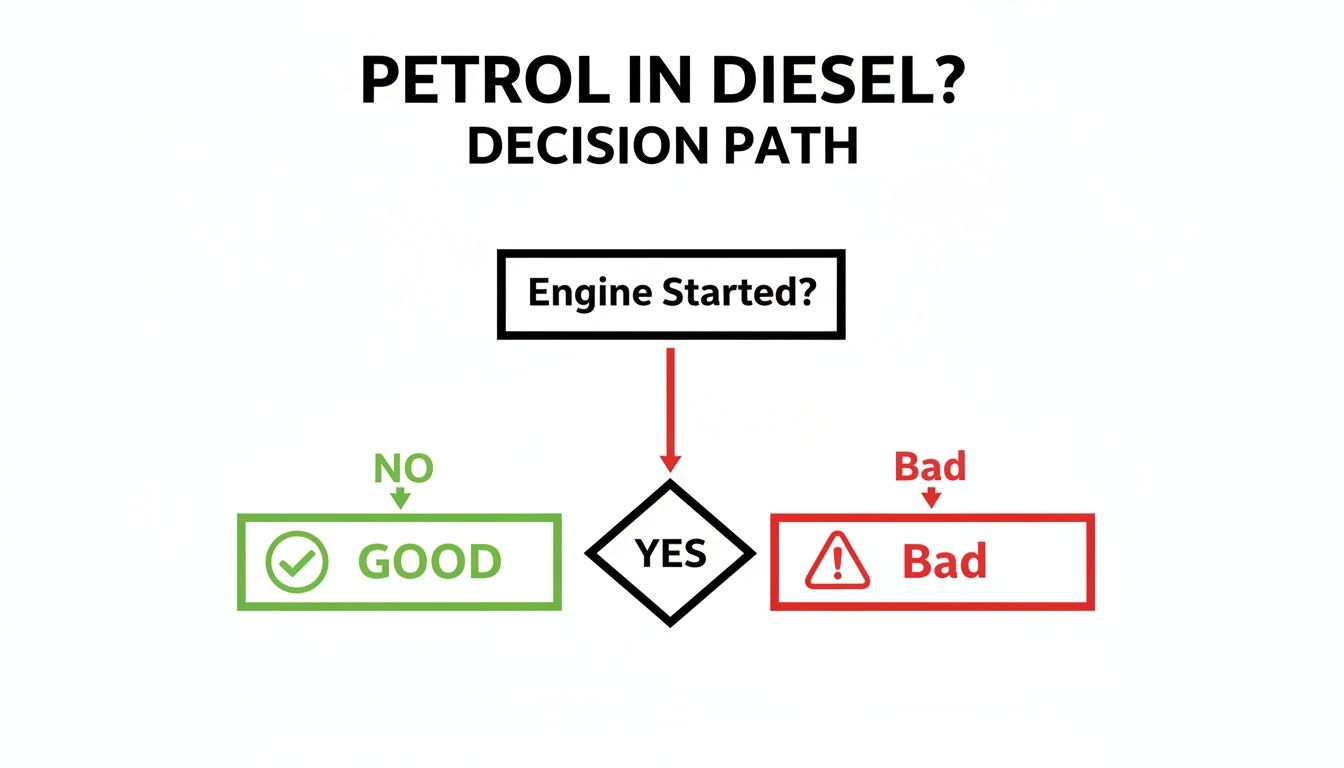
As you can see, keeping the engine off is the key to a simple, straightforward fix. Starting it is what leads down the path to costly damage.
Calling in the Experts
With the car secured, it’s time to call a mobile wrong fuel specialist. It can be tempting to ring your usual breakdown service, but they’ll probably just tow you to a garage. A dedicated fuel drain technician is a much better choice.
These specialists come directly to you, whether you’re stuck at a petrol station in Ipswich or stranded on the side of the A14. Knowing what to look for when you need a fuel drain near me is a massive help in a stressful situation. They have all the right gear in their vans to safely drain the contaminated fuel, flush the entire system, and get you back on your way, usually in about an hour.
How Petrol Wrecks a Modern Diesel Engine
Putting the wrong fuel in your car is an easy mistake to make, but for a modern diesel engine, the fallout can be catastrophic. It’s not just a minor hiccup; it kicks off a chain reaction of mechanical damage that can lead to eye-watering repair bills.
To get why it's so bad, you need to know that diesel fuel does more than just burn – it’s also a lubricant.
Think about the consistency of diesel; it's oily. This isn't an accident. Your engine’s high-pressure fuel pump and injectors are incredibly sophisticated pieces of kit, built with microscopic tolerances. They depend on that oily film to keep moving parts gliding smoothly over one another. Petrol, in stark contrast, is a solvent. It cleans things.
The moment petrol hits your diesel tank, it starts to dissolve that essential lubricating layer. Instead of slick, protected metal surfaces, you get raw metal grinding against raw metal.
It All Starts With Friction
This metal-on-metal contact is where the real trouble begins. It creates a huge amount of friction and heat, which in turn starts to shave off tiny fragments of metal. We call these filings swarf. The high-pressure fuel pump, now stripped of its lubrication, essentially begins to tear itself apart from the inside.
And those tiny metal particles don't just stay put. The fuel system pushes them forward at incredible pressure, sending a wave of contamination down the line.
"It's a bit like running an engine with no oil. The outcome is just as devastating, but it's happening inside your fuel system. The petrol acts like a degreaser, causing a catastrophic failure of components that are engineered to perfection."
This toxic mix of petrol and metal swarf races through the fuel lines, into the injectors, and potentially right into the engine itself. Every part it touches is at risk of being damaged beyond repair.
A Cascade of Expensive Failures
The damage isn't confined to a single component. It's a domino effect, with one failing part taking out the next. The initial damage to the fuel pump is just the start of a very expensive problem.
Here’s a breakdown of the typical path of destruction:
High-Pressure Fuel Pump: This is ground zero. It grinds itself to pieces, creating the swarf that poisons the entire system.
Fuel Injectors: The microscopic metal filings quickly block the incredibly fine nozzles on your injectors. This stops them from spraying the precise mist of fuel needed for combustion, causing misfires, rough running, and eventually, total failure.
Fuel Lines and Rails: Swarf can physically score the inside of fuel lines and common rails, leading to blockages that starve the engine of fuel.
Diesel Particulate Filter (DPF): Unburnt petrol and metal particles will quickly clog the DPF, a component that’s already notoriously expensive to fix or replace.
Just turning the key in the ignition is the single biggest factor that escalates the cost and complexity of the repair. If you haven't started the engine, a simple fuel drain and filter change might be all you need. The second you start it, the odds of needing a new high-pressure pump and a full set of injectors shoot up.
That’s the difference between a couple of hours off the road and a bill running into thousands of pounds, with your vehicle out of action for days. For a deeper dive into the technical side, you can find more on diesel properties and incident management to understand the full scope of potential issues.
What Our Technicians Actually Do At The Roadside
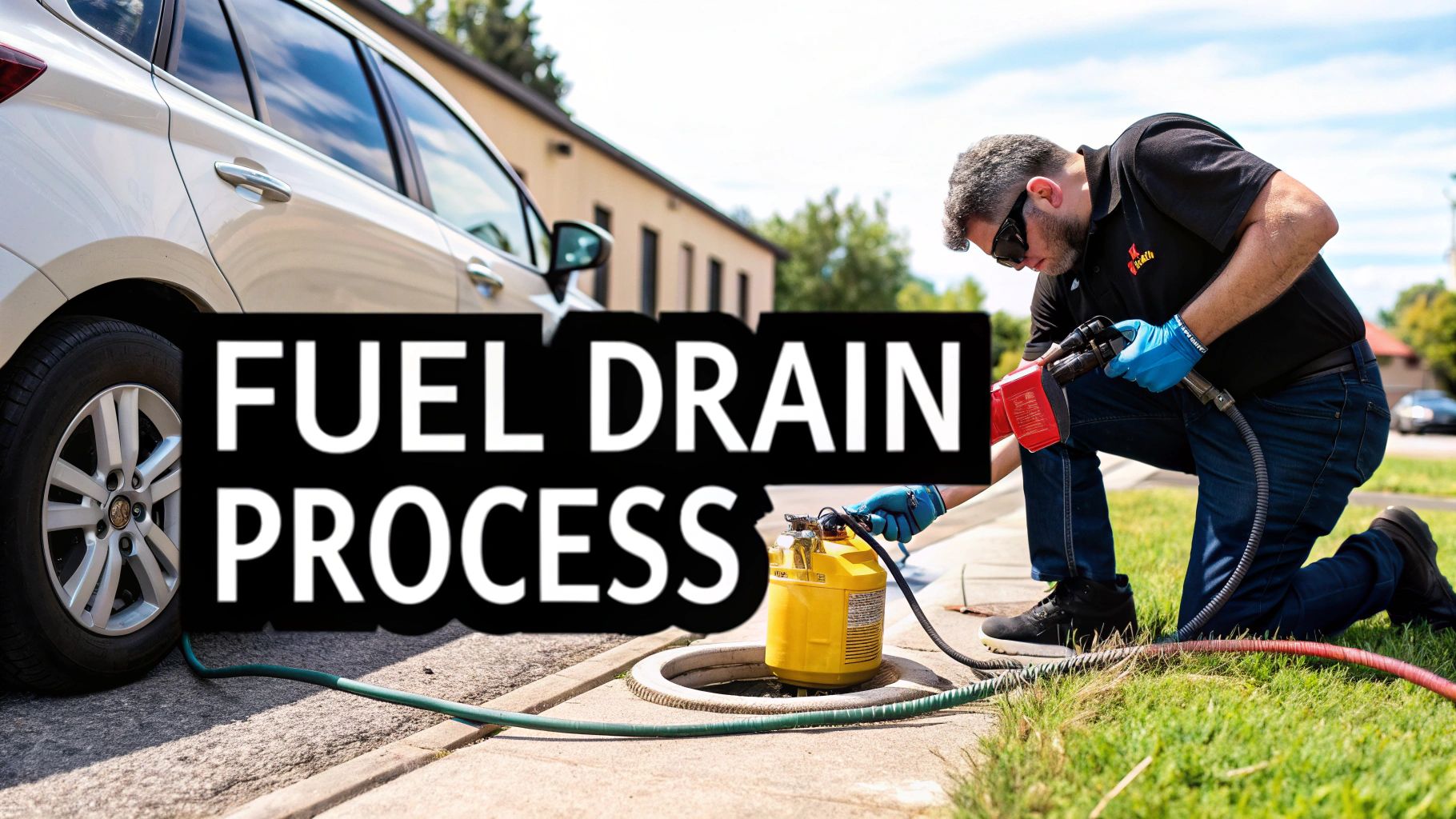
When you make that dreaded call after misfuelling, it can all feel a bit mysterious. A van arrives, our technician gets to work, and before you know it, your car is (hopefully) running again. But what really happens during that time?
It’s a lot more than just siphoning out the bad fuel. A professional fuel drain is a meticulous process, designed to get every last drop of petrol out of your diesel system and protect your engine from lasting damage. It takes specialist gear and a methodical approach learned from years of experience.
First Things First: Safety and Assessment
The moment we pull up, our first job is making the area safe. Petrol fumes are incredibly flammable, so we immediately check for any potential ignition sources and secure the scene. We’ll then connect our equipment to your car’s battery to power the pumps we need to get started.
At this point, we’ll have a quick chat with you. The big question is always: "Did you start the engine?" Your answer helps us understand how far the petrol has travelled and what we need to do to put things right.
Many people think a fuel drain is just about emptying the tank. The real, crucial work is in flushing the entire fuel system—the lines, pumps, and filters—to remove every trace of petrol contamination.
The gear we use isn't something you'd find in a DIY shop. Our technicians use ATEX-approved pumps, which are certified as explosion-proof. They're specifically built for safely handling flammable liquids like petrol. Trying to use a standard pump for this job would be a massive fire hazard.
Getting It All Out: Draining and Flushing
To begin the drain, we’ll access your fuel tank. This is usually done through the filler neck, but sometimes it's easier to get at the fuel sender unit, which is often under the back seats. Our pump then gets to work, sucking the entire mix of petrol and diesel out of your tank and into a secure, purpose-built container in our van.
But once the tank is empty, the job is only half done. Now for the most important part: flushing the system. We circulate a small amount of clean diesel through the fuel lines, pump, and filter housing, washing out any leftover petrol. This step is absolutely vital. Even a tiny amount of petrol left behind can strip the lubrication from critical engine parts and cause serious wear.
While it might seem tempting to try this yourself, our guide on how to empty a fuel tank breaks down why professional equipment is non-negotiable for doing the job safely and properly.
The Finishing Touches: New Filter and Priming
After a thorough flush, there's one step we will never skip: replacing the fuel filter. Your old one is now completely saturated with the wrong fuel mix and could be full of tiny metal particles (swarf) from the fuel pump running dry. A fresh filter is non-negotiable for a clean start.
Finally, we’ll add some clean, fresh diesel back into your tank. We then prime the entire fuel system, bleeding out any air locks before we even think about turning the key. We'll start the car and let it run for a good few minutes, listening for any odd noises and keeping an eye out for warning lights.
Once we’re satisfied the car is running smoothly, we take the contaminated fuel away with us for safe, environmentally responsible disposal.
What a Fuel Drain Costs in the UK
Once the initial panic of putting petrol in your diesel car subsides, two thoughts usually take over: "How much is this going to cost me?" and "How long am I going to be stuck here?"
Let's start with the good news. If you realised your mistake before turning the key, the fix is usually quick and a lot less painful on the wallet than you might be imagining.
A professional roadside fuel drain is a very specific skill, designed to get you out of this exact situation with minimal fuss. For most standard call-outs, you should expect the cost to start from around £200-£300. That price typically includes the technician's journey to you, the careful drainage of the wrong fuel, a system flush, and the environmentally safe disposal of the contaminated mixture.
From the moment we arrive, the whole job usually takes between 60 and 90 minutes.
Factors That Influence the Final Price
Of course, that's a ballpark figure. A few things can nudge the final bill up or down, and it helps to know what they are so there are no surprises.
Your Location: Getting to a remote country lane in the Suffolk countryside will naturally involve more travel time than meeting you at a petrol station in central Ipswich.
Time of Day: An emergency call-out on a Sunday evening is going to cost more than a job on a Tuesday afternoon. It’s just the nature of emergency services.
Vehicle Type: Some high-end cars or larger commercial vans have more complex fuel systems that can take a bit longer to drain completely and safely.
Amount of Fuel: There's a big difference between draining 5 litres of petrol from the top of your tank and having to deal with a brimmed 80-litre tank. More contaminated fuel means more time and resources.
The single biggest factor that determines the cost, by an enormous margin, is whether you started the engine. A roadside drain is a manageable expense. Replacing damaged engine parts is a whole different financial headache.
The difference in cost is genuinely staggering. Once that contaminated fuel gets pulled into the engine, repair bills can spiral. We've seen industry reports and dealer quotes ranging from a few hundred pounds for flushing the system to well over £3,000 when high-pressure fuel pumps and injectors are wrecked. For a look at wider industry data, you can read about past fuel contamination incidents.
This is exactly why what you do (or don't do) in those first few moments is so vital. By leaving the engine switched off, you keep the problem contained in the fuel tank, making it a straightforward fix for a specialist.
For a more in-depth look at all the variables, have a read of our guide on the full cost of putting the wrong fuel in your car.
Smart Habits to Prevent Misfuelling Forever
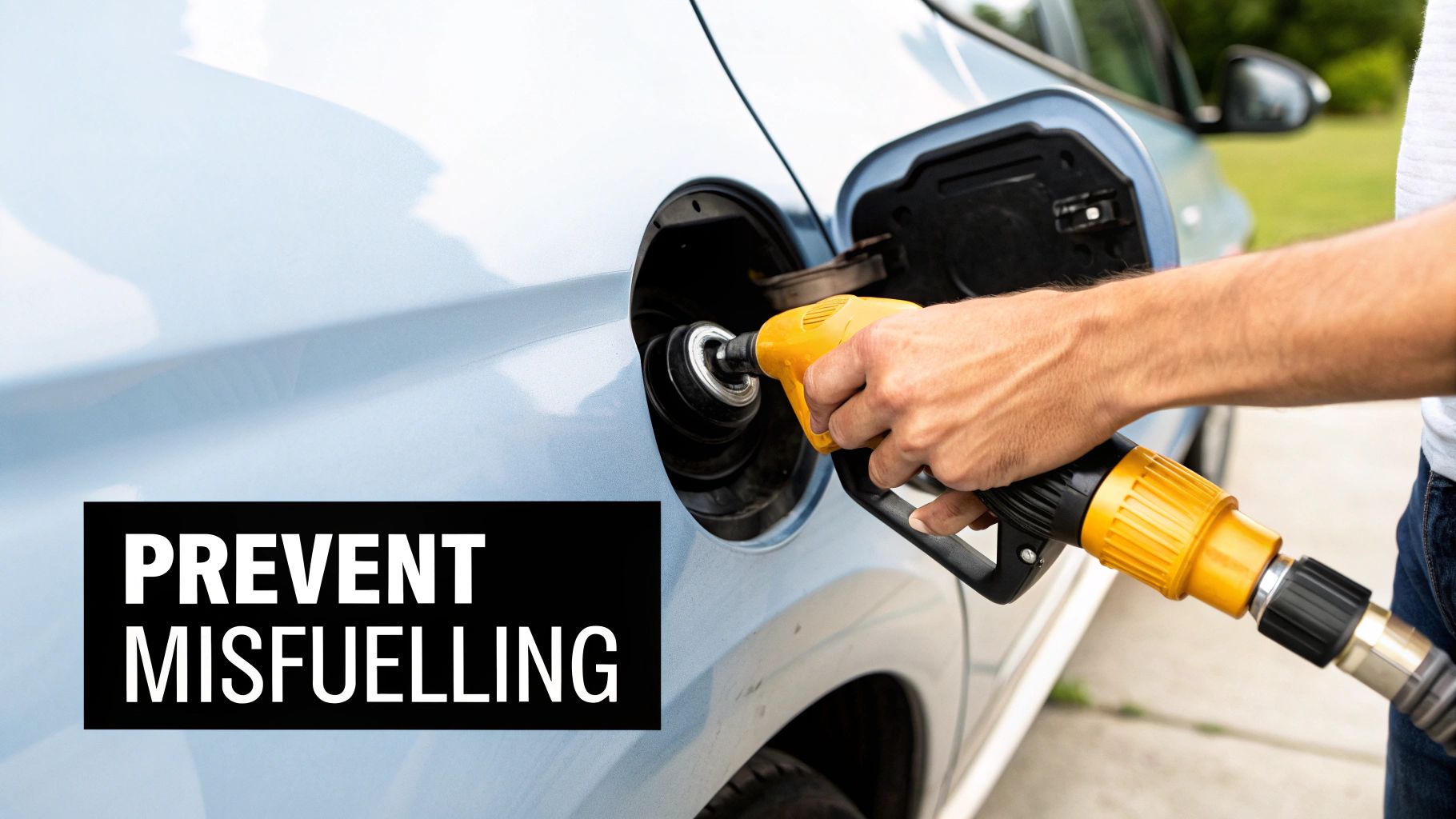
Putting petrol in a diesel engine is one of those mistakes you only want to make once. It's stressful, expensive, and a huge waste of time. The good news? You can pretty much guarantee it never happens again by building a few simple habits into your refuelling routine.
This isn't just about "paying more attention." Life is full of distractions, and it’s easy to slip up when you’re tired or in a hurry. Instead, let's look at some genuinely practical steps and physical tools you can use to make misfuelling almost impossible.
Creating a Pre-Pump Checklist
One of the best things you can do is create a quick mental checklist before you even grab the fuel pump nozzle. This is particularly useful if you often drive different cars for work or share vehicles with your family, as that’s a classic recipe for this kind of mix-up.
Just pausing for a second to consciously confirm the car and its fuel type can snap your brain out of autopilot mode.
Ask yourself: "Right, which car am I driving today?"
Check the fuel cap: Most modern diesel cars will have "DIESEL" written clearly inside the fuel flap. Make it a habit to look every single time.
Look at the nozzle colour: In the UK, diesel pump handles are black, and unleaded petrol handles are green. A quick glance is all it takes.
That tiny pause can make all the difference. It turns a thoughtless, routine action into a deliberate one, massively cutting your risk of making a costly mistake.
Using Misfuelling Prevention Devices
If you want a more permanent, foolproof solution, think about fitting a misfuelling prevention device. These are really clever gadgets that replace your existing filler cap. They’re designed to physically block the narrower unleaded petrol nozzle, preventing it from ever entering your wider diesel filler neck.
A prevention device is your ultimate backstop. It doesn't rely on your memory or how focused you are at the end of a long day. It just makes it physically impossible to put the wrong nozzle in. For a small, one-off cost, you get complete peace of mind.
You can find these devices easily, and they can be fitted to most modern diesel vehicles in a matter of minutes. It’s a solid final line of defence against a simple lapse in concentration.
Advice for Suffolk Fleet Managers
For any business that relies on a fleet of vehicles, a single misfuelling incident means more than just a repair bill. It means vehicle downtime, missed appointments, and serious disruption. A clear prevention strategy is absolutely essential for fleet managers here in Suffolk.
Label Everything: Use big, bold "DIESEL ONLY" stickers on the fuel flap of every vehicle. Put another one on the dashboard or the driver's side door frame where it can't be missed.
Driver Training: Don't just assume drivers know. Make misfuelling prevention a specific topic during new driver inductions and mention it in regular refresher training.
Use Smart Fuel Cards: Where possible, issue fuel cards that can be restricted to diesel-only purchases. This adds a fantastic layer of protection right at the till.
For more insights into general vehicle care and smart driving habits that help avoid common pitfalls like misfuelling, you might find some useful guides when you Explore other automotive blogs and car care tips.
Common Questions About Putting Petrol in Diesel
That sinking feeling on the forecourt often comes with a flood of questions. It's a stressful mistake, and your mind starts racing. What have I done? Is this going to cost a fortune?
We get it. We've heard all the questions over the years from drivers across Suffolk. Here are the straight answers to some of the most common ones we hear.
Will My Car Insurance Cover This?
This is usually the first thing people worry about, and unfortunately, there’s no simple "yes" or "no" answer. Most standard car insurance policies won't cover misfuelling as a basic feature. Insurers often see it as a preventable mistake, not a typical accident.
However, all is not lost. Some comprehensive policies do include misfuelling cover, sometimes as an optional add-on you might have selected. The best thing to do is dig out your policy documents or give your insurer a quick call to check. Just remember to ask about your excess and how a claim might impact your no-claims bonus before you decide.
Is Just a Little Bit of Petrol Okay?
It's a tempting thought: "I only put a little bit in, maybe it'll just burn through?" This is a dangerous gamble to take with your engine. Even a small amount of petrol, as little as 5% of the fuel in the tank, can do serious harm.
Think of diesel as an oily, lubricating fuel that keeps your high-pressure fuel pump and injectors happy. Petrol, on the other hand, is a solvent. It strips away that vital lubrication, causing metal components to grind against each other. While a tiny amount might not cause the engine to seize immediately, it will definitely cause accelerated wear and tear, leading to a much bigger bill down the road.
Our rule of thumb is simple: if you've put petrol in a diesel engine, no amount is safe. Whether it's one litre or a full tank, the only correct and safe solution is a professional fuel drain.
Can I Use an Additive to Fix It?
You'll see all sorts of additives on the shelves promising to clean your engine or boost performance. But let's be clear: there is no magic additive that can undo the damage of putting petrol in a diesel tank. These products simply can't restore the essential lubricating properties that the petrol has stripped away.
Trying to solve the problem with a bottle off the shelf is a false economy. It gives you a misleading sense of security while the petrol is silently damaging your engine's delicate and expensive components. Modern diesel engines are incredibly sophisticated, but that also makes them very sensitive to the wrong fuel. Given the ongoing concerns about diesel emissions and their health effects, ensuring your engine runs cleanly and correctly is more important than ever. Studies have already linked excess NOx emissions from UK diesel vehicles to serious health issues, a problem you don't want to make worse. You can read more about the findings on diesel emissions' health impacts.
If you're stuck somewhere in Suffolk with the wrong fuel in your tank, don't leave it to chance. Contact Misfuelled Car Fixer for a fast, professional, and affordable 24/7 mobile fuel drain service. We'll get you back on your journey safely. Call us now at https://www.misfuelledcarfixer-suffolk.co.uk.


