



What happens if you run out of adblue: Quick fixes & warning signs
- Misfuelled Car Fixer

- Jan 12
- 13 min read
If you've run out of AdBlue, the most immediate and frustrating consequence is simple: your car won't start after you turn the engine off. This isn't a mechanical failure, but a deliberate feature programmed into your car's brain to keep it compliant with emissions regulations.
The Engine Won't Start: What Happens When You Run Out of AdBlue?
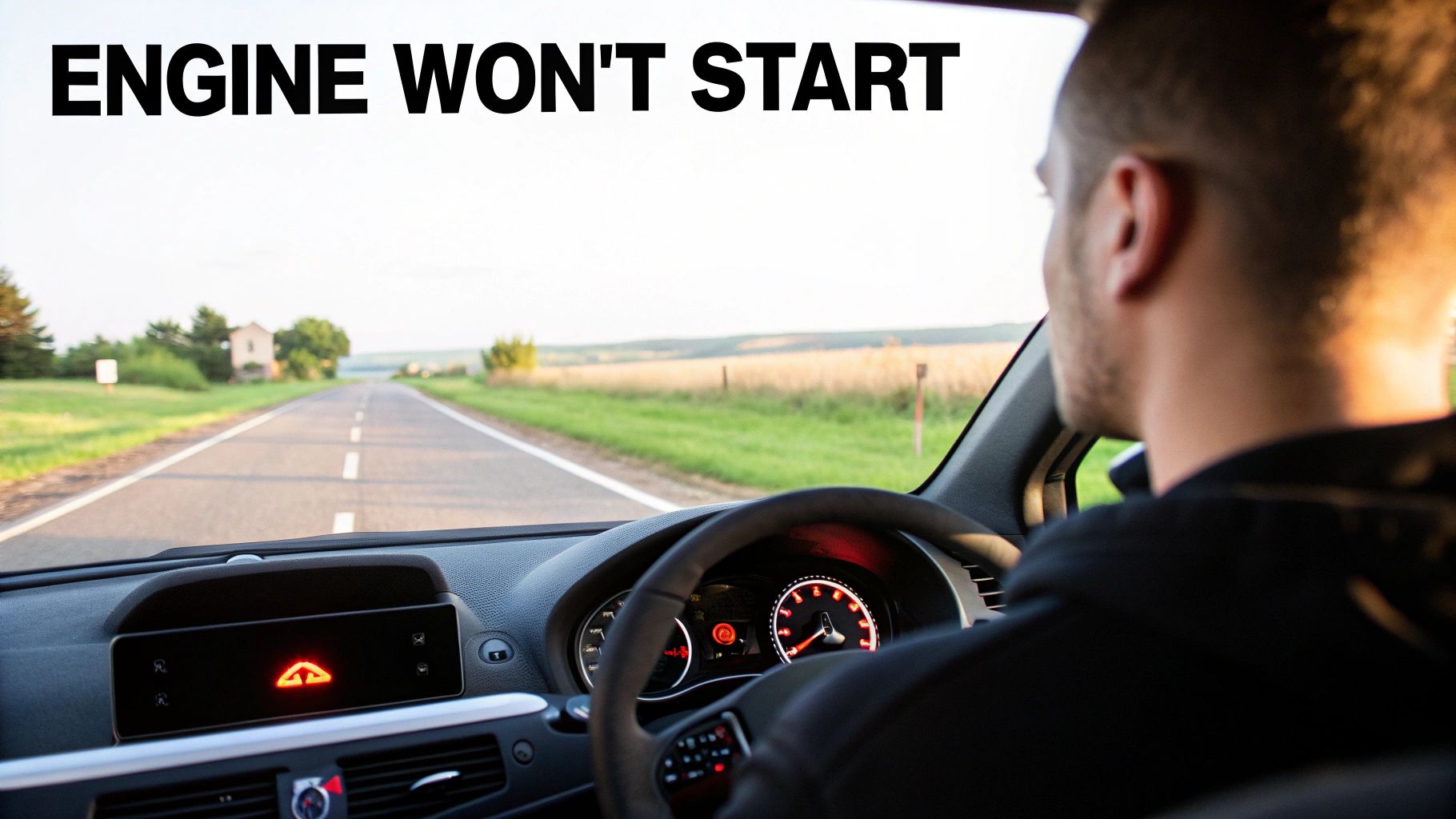
Running out of AdBlue sets off a chain reaction within your vehicle's management system. It's all carefully designed to stop you from driving a car that's pumping out illegal levels of pollution. Don't think of AdBlue as just another fluid like screenwash; it's a non-negotiable requirement for your engine to run legally. Once the tank is empty, the car's software effectively puts it into lockdown.
Thankfully, this doesn't happen out of the blue. Your car gives you plenty of notice. But if you ignore the escalating alerts, you'll find yourself facing some pretty serious restrictions.
The Countdown Begins
It all starts with a gentle nudge. Your dashboard will light up with a warning, usually when you still have well over 1,000 miles of AdBlue range remaining. This is your first cue to plan a refill.
As you keep driving and the level drops, the warnings get more forceful. You'll see the message more often, the light might change from amber to red, and you’ll probably hear an annoying chime. The countdown is on.
Entering Limp Mode
Keep ignoring the warnings, and your car will take more drastic action by entering 'limp mode'. The Engine Control Unit (ECU) deliberately slashes the engine's power and limits your speed. It’s a safety measure designed to minimise the harmful nitrogen oxide (NOx) emissions now that the AdBlue has run out.
You'll feel it immediately. The car will be sluggish, acceleration will be a struggle, and you might find it hard to get up hills or maintain motorway speeds.
It's important to know that the engine won't just cut out while you're driving. You can finish your current journey, but limp mode is a very clear signal that you need to sort the AdBlue out as soon as you stop.
The Final Shutdown
This is the point of no return. The most critical consequence of running dry is the non-start condition. Once the AdBlue tank is empty and you switch off the ignition, the engine will not restart.
This isn't a fault; it's the final step programmed into the software to ensure the car meets Euro 6 emissions standards. You're now stranded, and the only way to get going again is to refill the AdBlue tank.
To make it clearer, here's how the situation typically unfolds.
AdBlue Depletion Stages At a Glance
The table below summarises the sequence of events you can expect as your AdBlue level drops from the first warning to completely empty.
AdBlue Level | Typical Dashboard Warning | Vehicle Performance Impact |
|---|---|---|
Low (e.g., 1,500 miles range) | Amber warning light, message shows remaining range | None. Normal driving performance. |
Very Low (e.g., 500 miles range) | Red warning light, audible chime, persistent message | May enter 'limp mode' with reduced power and speed. |
Empty | Final warning, 'Engine will not restart' message | Once the engine is switched off, it is disabled. |
Remember, these are typical stages. The exact warnings and mileage countdowns can vary slightly between different car manufacturers, so always check your vehicle's handbook for specific details.
Why Your Diesel Car Depends on AdBlue
To get your head around what happens when you run out of AdBlue, it first helps to understand why your modern diesel car needs it at all. It's easy to mistake it for some kind of fuel additive, but that's not its job. Think of it more like a crucial ingredient in a sophisticated cleaning process that happens right inside your exhaust.
At the end of the day, it's a legal and environmental requirement – not just an optional extra.
AdBlue itself is a surprisingly simple, non-toxic, and colourless liquid. It's just a mix of highly purified water and urea, and its only purpose is to tackle the nasty pollutants your diesel engine naturally kicks out.
The Chemistry of Cleaner Air
When your diesel engine is running, it produces harmful gases known as nitrogen oxides (NOx). These are a major source of air pollution and contribute to things like smog and acid rain. To stop this, modern diesel cars come equipped with a clever piece of kit called a Selective Catalytic Reduction (SCR) system. This is where AdBlue works its magic.
A tiny, precisely-timed spray of AdBlue is injected into the hot exhaust stream. The heat from the exhaust instantly converts the urea in the AdBlue into ammonia. This ammonia then acts as a catalyst inside the SCR converter.
What follows is a chemical reaction that transforms up to 90% of the harmful nitrogen oxides into two things that are completely harmless: ordinary nitrogen gas (which makes up most of the air we breathe anyway) and simple water vapour.
Essentially, the SCR system acts like a powerful filter, neutralising pollutants before they even get a chance to leave your tailpipe. Without AdBlue, that entire emissions control system is completely useless, and your car goes back to pumping out illegal levels of NOx. For a deeper dive, check out our simple guide for diesel drivers that explains AdBlue in more detail.
Why Your Car Takes It So Seriously
Here in the UK, meeting the Euro 6 emissions standards isn't optional; it's the law. Because of this, your vehicle’s engine management system is specifically programmed to make sure you comply. It treats an empty AdBlue tank with the same level of urgency as a major engine fault.
The system is constantly keeping an eye on the AdBlue level. Once it senses the tank is empty, it has one simple, overriding command: prevent the vehicle from being driven illegally while it’s polluting. This is exactly why it will put the car into a restricted 'limp mode' and, eventually, refuse to restart the engine altogether.
It's important to realise this isn't a mechanical breakdown. It's a deliberate, pre-programmed safety measure designed to ensure diesel vehicles on our roads are running cleanly and legally. This is why ignoring those warnings leads to such an abrupt and inconvenient end to your journey. Your car isn't broken; it's just following the rules.
What Your Car's AdBlue Warnings Really Mean
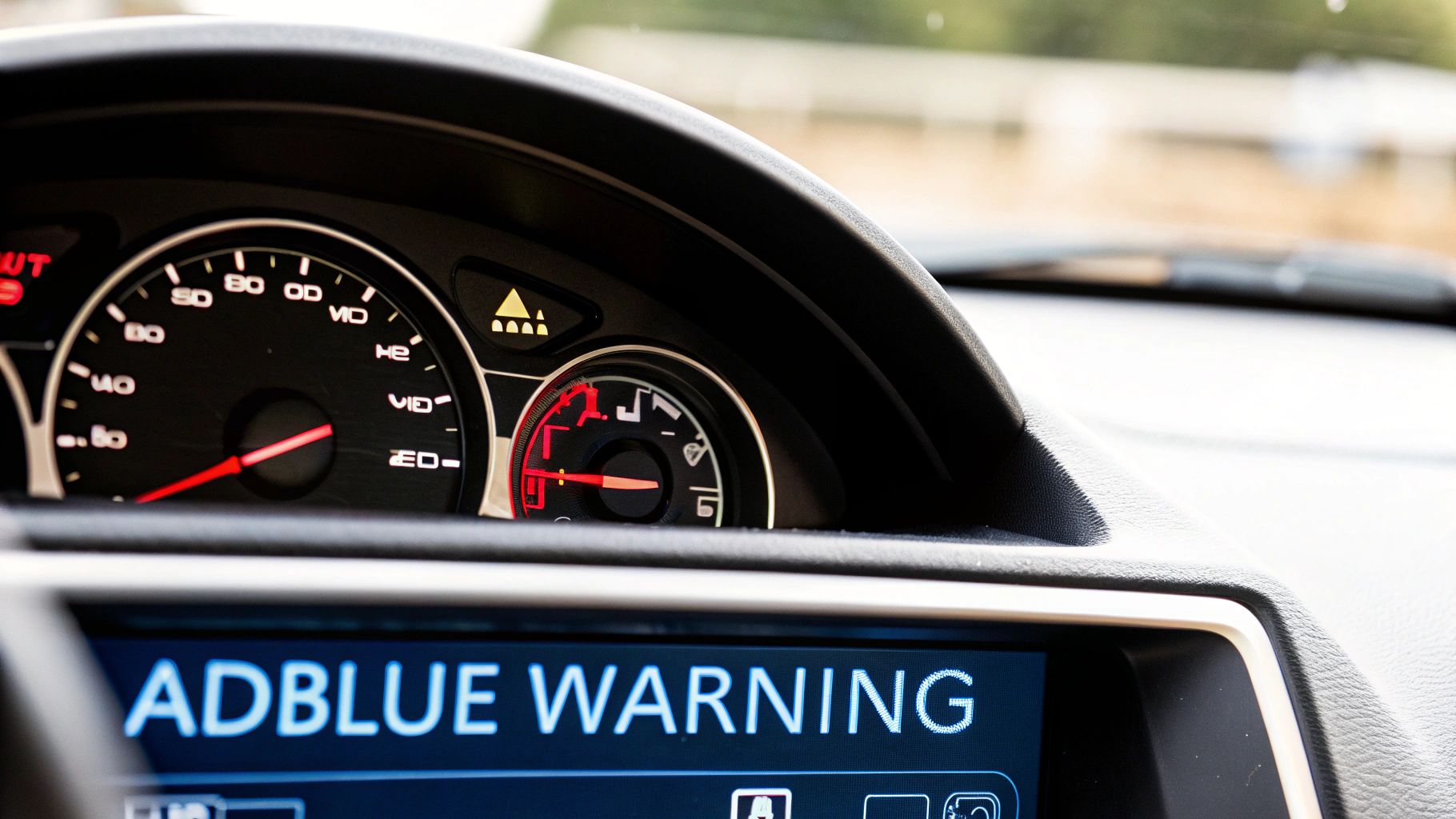
Thankfully, your car is designed to give you plenty of warning before the AdBlue tank runs dry. You won't just suddenly find yourself in trouble. Instead, modern diesel vehicles use a multi-stage warning system that gets progressively more insistent, giving you every opportunity to sort it out.
Think of it as a series of reminders, starting as a polite whisper and ending as a firm, unignorable command. Learning to read these signals is the key to avoiding the headache of a car that refuses to start.
The First Gentle Nudge
The whole process kicks off with a low-key, "heads-up" style notification. This is your car's way of telling you that a refill is on the horizon, but there's no immediate rush.
What you’ll see: A friendly amber warning light usually pops up on your dashboard, often with a message on the info screen.
What it means: The message will let you know the AdBlue level is getting low and give you an estimated range, typically around 1,500 miles.
What to do: Just relax. You have loads of time. Simply add "buy AdBlue" to your to-do list and plan to top it up when it's convenient.
At this stage, your car's performance is completely unaffected. It’s purely an informational alert designed to give you ample time to get organised.
The Amber Alert Gets Louder
If you keep driving without a top-up, the system will start making a bit more noise about it. As the AdBlue level drops further, the warnings become harder to ignore, signalling that it’s time to take action.
You might notice the dashboard message appearing every time you start the engine, and some cars will even add an audible chime to make sure you get the message. By now, your remaining range could be down to just a few hundred miles, and finding a place to refill should move up your priority list.
This escalation is completely intentional. It's a built-in safety net to prevent drivers from accidentally running out, making the need for a refill more and more obvious as the tank gets emptier.
Ignoring these persistent alerts is what triggers the more serious consequences. If you let it run too low, your car will protect itself and the environment by limiting its own performance. The engine control unit will eventually force the vehicle into a "limp mode," drastically cutting power to as little as 20-30% of its normal capacity. This is to prevent harmful NOx emissions, which could otherwise skyrocket by up to 400% above the legal Euro 6 limits. If you want a deeper dive, you can learn more about our guide to AdBlue and how these systems work.
The Final Red Warning: No More Second Chances
This is the system’s last resort. When the AdBlue level is critically low and about to run out, the warning light will switch from amber to an unmissable red.
The message on your dashboard will be blunt and to the point, often stating that the engine will not restart once you turn it off. This isn't a threat; it’s a guarantee. The non-start countdown has begun.
If you see this red light, your very next stop must be to refill the AdBlue tank. Don't stop for a coffee, don't pop into the shops. Turning off the ignition before you've refilled will mean you’re going nowhere.
The Legal and Mechanical Minefield of an Empty AdBlue Tank
Let's be clear: ignoring that AdBlue warning light isn't a small oversight. It's a choice that lands you in a whole world of legal, financial, and mechanical trouble. The second your AdBlue tank hits empty, your car isn't just being difficult—it's breaking the law.
Those 'limp mode' and no-start functions aren't bugs; they're features. They are deliberately built in to ensure your vehicle complies with emissions laws. Driving without AdBlue means your exhaust is churning out dangerously high levels of nitrogen oxides, failing to meet the Euro 6 standards that are legally required on UK roads.
MOT Failures and Roadside Penalties
This isn't just a technicality; it has real-world consequences for your car's roadworthiness. If your engine management light is on because of an AdBlue fault, that’s an instant MOT failure. Simple as that. The car is no longer deemed legal for public use until the system is working correctly.
It doesn’t stop there. The police and the Driver and Vehicle Standards Agency (DVSA) are empowered to carry out roadside emissions checks. If they find your vehicle is non-compliant, you’re looking at significant fines and an order to get it fixed immediately.
Your vehicle is legally required to use AdBlue to meet emissions standards. Intentionally driving without it or attempting to bypass the system is a breach of regulations and will result in a failed MOT.
The Hidden Damage Brewing in Your Engine
Beyond the legal drama, trying to run your car without AdBlue—or attempting to trick the system—is a fast track to severe and costly mechanical damage. The Selective Catalytic Reduction (SCR) system is an incredibly sophisticated and expensive piece of kit.
Forcing the engine to run dry can cause any leftover AdBlue fluid to crystallise in the lines and injector, leading to stubborn blockages. Worse still, you risk permanently damaging the SCR catalyst itself. Replacing that component can easily cost thousands of pounds, a shocking bill compared to the price of a bottle of AdBlue.
It’s also vital to avoid putting anything else in the AdBlue tank. For a closer look at that particular disaster, our guide explains exactly what happens if you put AdBlue in your diesel tank. When you understand the risks, the conclusion is obvious: dealing with an AdBlue warning promptly and properly is the only smart move.
What To Do The Moment That AdBlue Light Comes On
Seeing an AdBlue warning light pop up on your dashboard can be a bit of a heart-stopper, but there’s no need to panic. Think of it as a helpful, if slightly insistent, reminder from your car. Acting promptly is key to avoiding any real trouble.
The second you see that warning, your dashboard will almost always give you a countdown – a distance you can travel before the tank is completely empty. Pay close attention to this number. It's your window of opportunity to sort things out. Your immediate priority is finding somewhere to buy AdBlue, which is thankfully stocked at most petrol stations, supermarkets, and car part shops.
Taking Action Before The Engine Stops
Once you’ve got your hands on a container of AdBlue, topping it up is usually a simple job. But, you need to be careful. AdBlue can be corrosive to paintwork, so take your time and use the flexible spout that nearly always comes with the bottle to avoid any messy spills.
A crucial tip: don't overfill the tank. It’s also important to know that most cars need a minimum amount of AdBlue added before the sensor will recognise the refill and switch off the warning. This is often around 5 litres, so just adding a tiny splash won't do the trick.
It's a straightforward task, but one mistake you absolutely cannot afford to make is putting AdBlue into your diesel tank. It's a surprisingly common and serious error. If you find yourself in that situation, our guide on what to do when you put AdBlue in the diesel tank is a must-read.
What To Do If The Car Won't Restart
So, what happens if you’ve already switched the engine off and now it refuses to start? This is the non-start mode we talked about earlier. Don't worry, you still have options. The first thing to try is a simple DIY top-up. Get a decent amount of AdBlue into the tank, and in many cases, the system will reset itself after a few moments and allow you to start the engine.
However, life isn't always that simple. Sometimes the system is a bit stubborn and won't reset immediately. Or, you might be stuck somewhere dangerous, like the hard shoulder of a motorway, where getting out to refill the tank just isn't safe. This is exactly when you need to call in a professional.
This decision tree shows just how quickly things can escalate from a simple warning to a major headache if you choose to ignore it.
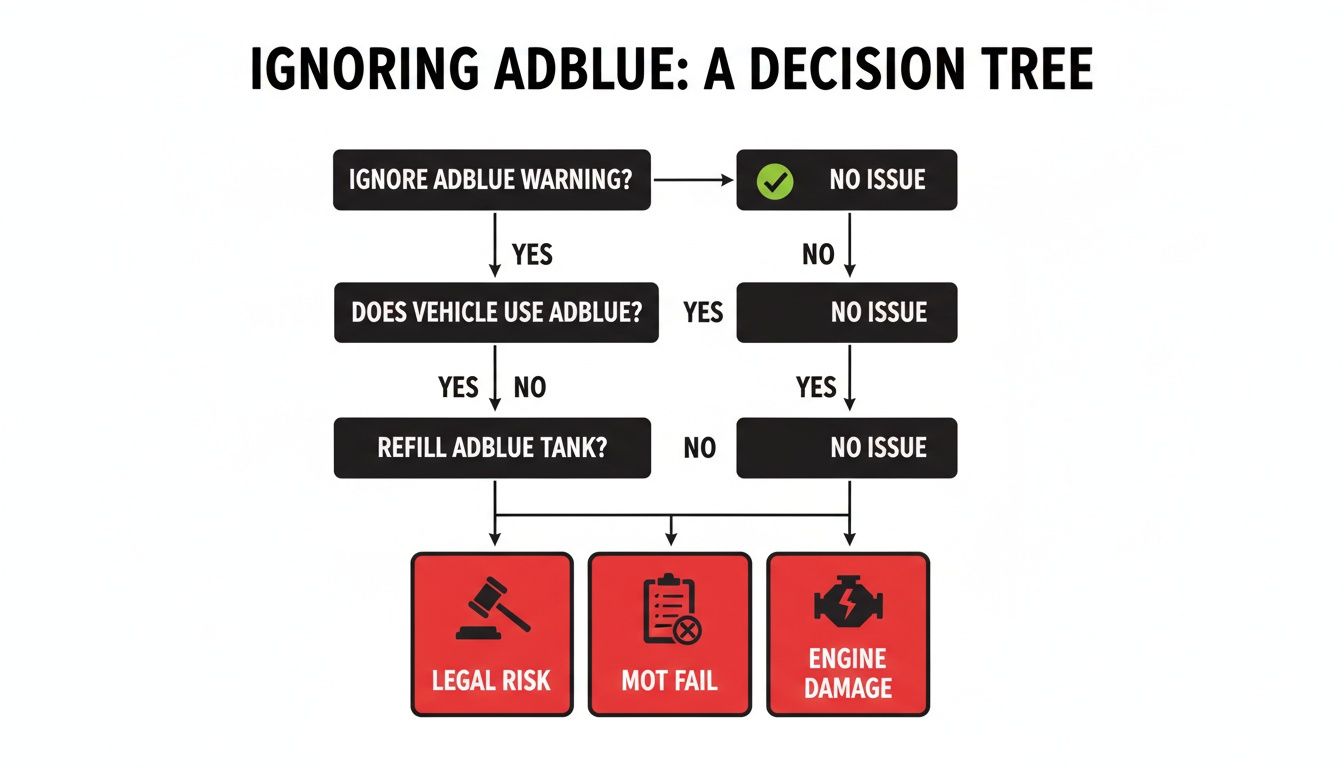
As you can see, what starts as a minor inconvenience can spiral into legal issues or even engine damage if left unchecked.
DIY Refill vs Professional Mobile Service
If you're stuck, you essentially have two choices: attempt a refill yourself or call a mobile service. This table breaks down the pros and cons to help you decide.
Action | Best For | Potential Risks | Typical Cost |
|---|---|---|---|
DIY Refill | Drivers who are close to a supplier, in a safe location (e.g., home, car park), and confident they can perform the task correctly. | Spillage on paintwork; system not resetting after refill; putting AdBlue in the wrong tank. | £10 - £30 for the fluid itself. |
Professional Call-Out | Drivers stranded in an unsafe location (motorway), those whose vehicles won't restart after a DIY top-up, or anyone wanting guaranteed peace of mind. | None, as the technician handles the entire process, including diagnostics and system resets if needed. | £120 - £250 depending on location and time. |
For a simple top-up when you're safely parked, a DIY approach is perfectly fine and cost-effective. But if you’re stranded, especially by the roadside, the safety and expertise of a mobile service is invaluable.
If you find yourself in a non-start situation, the smartest and safest move is to call a 24/7 mobile AdBlue service. A trained technician can get to you wherever you are – at home, at the office, or on the hard shoulder. They'll not only supply and refill the AdBlue correctly but can also plug into your car’s computer to reset any persistent warning lights and ensure the system is working properly.
A mobile service completely removes the need for an expensive tow truck to a garage. They solve the problem right there and then, getting you back on your way far more quickly and with much less stress.
When Should You Call for an Emergency AdBlue Refill?
Topping up your AdBlue at a petrol station is usually a straightforward job. However, there are times when a simple DIY fix isn't just tricky—it can be risky, or might not even solve the problem. Knowing when to put down the bottle and pick up the phone is key to getting back on your journey without causing more headaches.
Picture this: the final "no restart" warning flashes up, and you find yourself stuck on the hard shoulder of the M25 or a fast-moving A-road. This is absolutely not the place to be standing next to your car, trying to pour fluid into a small filler cap. Your safety comes first, always. In high-traffic, high-risk spots like these, the only smart move is to stay in your vehicle with your hazards on and call for professional roadside assistance. A mobile technician has the training and equipment to manage the situation safely.
It's Not Always Just an Empty Tank
Sometimes, the problem runs deeper than a low fluid level. You might have managed to add the required 5-10 litres of AdBlue, but the engine still won't turn over. This is a classic sign of a more stubborn fault. The vehicle’s system might have a faulty sensor, or the dashboard warnings might need a diagnostic tool to properly reset them before the engine will fire up again. This is where a mobile emergency service really shines, as they can diagnose these electronic gremlins right there at the roadside.
The biggest AdBlue-related mistake you can make? Accidentally pouring it into your diesel tank. This is a potentially catastrophic error that needs immediate, professional help. Do not, under any circumstances, start the engine. AdBlue is highly corrosive to fuel system components and can wreck fuel lines, pumps, and injectors, leading to repair bills that can run into the thousands.
Putting AdBlue in the wrong tank is a clear-cut emergency. You need a specialist wrong-fuel service, fast. They have the equipment to drain the contaminated fuel, flush the entire system, and prevent the kind of devastating damage that would otherwise require a recovery truck and a very expensive visit to a main dealer. In a situation like this, a professional call-out isn't a convenience—it's absolutely essential.
Your AdBlue Questions Answered
Alright, let's tackle some of the most common questions we get from drivers about AdBlue. Knowing the answers here can save you a real headache—and a lot of money—down the line.
In a pinch, can I just use water instead of AdBlue?
Under no circumstances should you ever top up with water. It might seem like a harmless temporary fix, but it will cause severe, and very expensive, damage to your car's Selective Catalytic Reduction (SCR) system.
The sensors in your car are incredibly precise; they’re looking for a specific chemical composition. Pouring in water, or anything else that isn't AdBlue, will trigger an immediate fault and could land you with a repair bill running into the thousands.
How much AdBlue should my car be using?
This really depends on your car, how you drive, and what you're carrying. As a rough rule of thumb, a modern diesel car will typically get through about one litre of AdBlue for every 600 miles of driving.
But remember, that's just an average. If you're doing a lot of towing, or most of your driving is stop-start city traffic, you'll find your car gets through it much quicker.
What if I've accidentally put AdBlue in the diesel tank?
This is a serious mistake that requires immediate action. Do not start the engine under any circumstances. AdBlue is corrosive to the seals, pumps, and other components in your fuel system.
Putting AdBlue in your fuel tank is one of the worst mix-ups you can make. The only safe solution is to call a 24/7 wrong fuel specialist immediately. They'll need to drain and professionally flush the entire system to prevent catastrophic damage to your engine. Don't even turn the key – just pick up the phone.
If you've found yourself stranded because your AdBlue tank is empty and the car won't start, or you've had that sinking feeling of putting it in the wrong tank, don't risk driving it. Get in touch with Misfuelled Car Fixer for 24/7 emergency help across Suffolk and the surrounding areas. Our mobile team comes directly to you, getting you sorted and safely back on the road without needing a tow truck. https://www.misfuelledcarfixer-suffolk.co.uk


