
.jpg)


Will a Diesel Car Run on Petrol and What Happens Next
Let's cut right to the chase: no, a diesel car absolutely cannot run safely on petrol.
You might get a few spluttering coughs out of the engine if you turn the key, but every single one of those coughs is the sound of catastrophic, eye-wateringly expensive damage being done. It's the single worst thing you can do in this situation.
Understanding What’s Happening Inside Your Engine
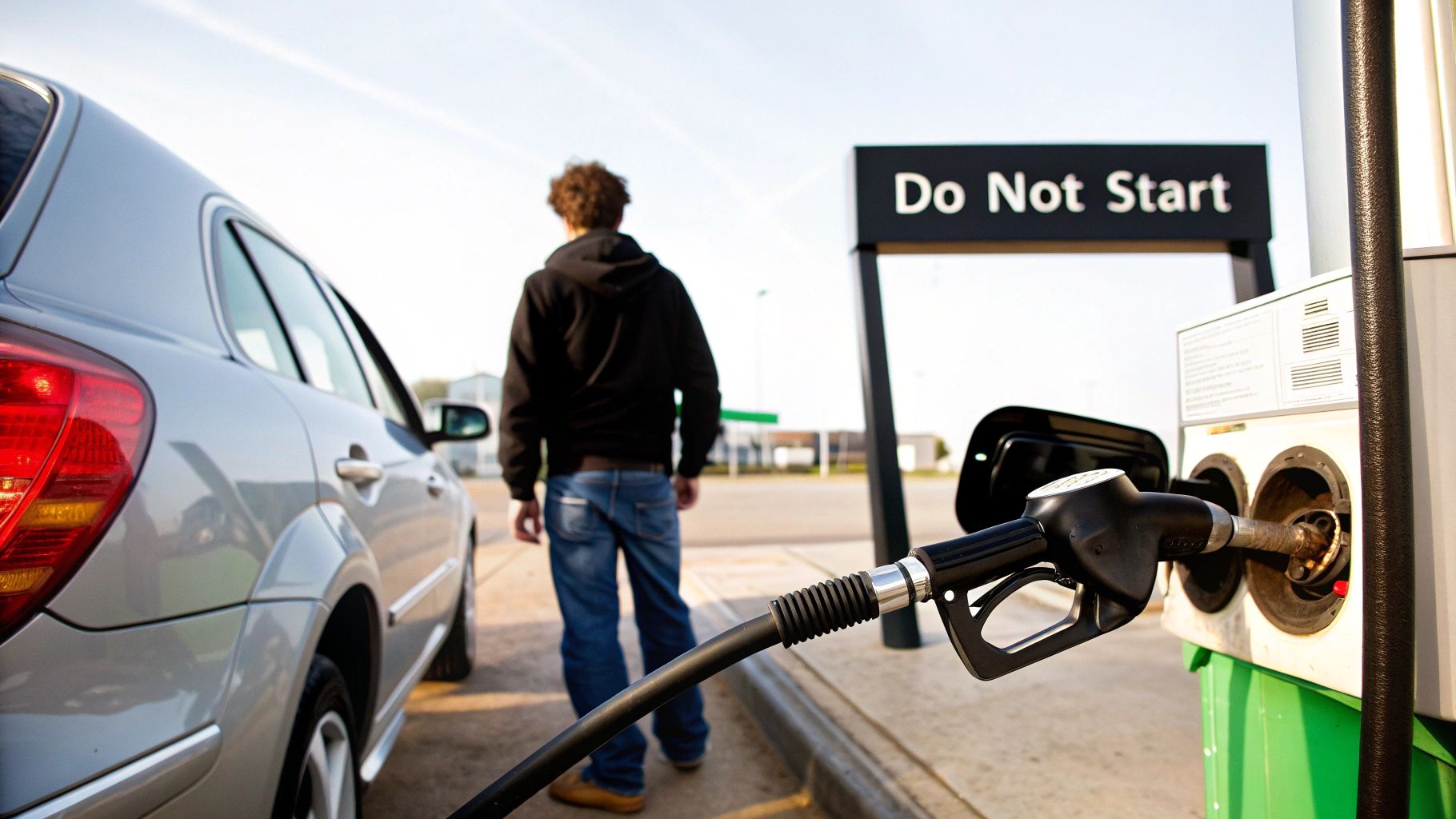
That sinking feeling in your stomach when you realise you’ve used the wrong pump is horrible, but knowing why it’s such a big deal is the key to getting it sorted properly. It all comes down to the simple fact that diesel and petrol are fundamentally different beasts. A modern diesel engine relies on its fuel for two jobs: combustion and lubrication.
Think of it this way: your engine’s high-pressure fuel pump and injectors are a marvel of engineering, with parts moving at incredible speeds under immense pressure. They need lubrication to survive, just like your own joints need fluid to move smoothly. Diesel fuel is naturally oily and provides this vital lubricating film.
The Destructive Power of Petrol
Petrol, on the other hand, is the complete opposite. It’s a solvent. So, instead of lubricating those delicate, high-precision components, it strips that protective oily layer right off.
Asking "will a diesel car run on petrol?" is a bit like asking "what happens if I replace my engine oil with degreaser?"
The answer is instant, brutal friction. Metal grinds directly on metal. This creates tiny metallic shavings (called swarf) which are then fired through the rest of your fuel system, contaminating everything from the fuel lines and filter to the injectors. This destructive process kicks off the second petrol is drawn from the tank.
The most crucial thing to remember is this: Starting the engine is what turns a simple mistake into a potential financial nightmare. Ignorance isn't bliss here—it’s what circulates the damaging solvent, turning a straightforward fuel drain into a possible full system replacement.
At a Glance: Petrol vs Diesel Fuel Properties
To truly grasp why this is so bad for your car, a quick side-by-side comparison of the fuels makes it crystal clear. Their differences aren't subtle; they are polar opposites in the areas that matter most to a diesel engine.
Property | Diesel Fuel (The Correct Fuel) | Petrol Fuel (The Wrong Fuel) |
|---|---|---|
Lubrication | High (Oily texture) | Low (Acts as a solvent) |
Combustion | Ignites under high compression | Ignites with a spark plug |
Energy Content | Higher energy density | Lower energy density |
What this table shows is that you’ve introduced a liquid that strips lubrication, ignites at the completely wrong time (or not at all) under compression, and doesn't deliver the right kind of energy. This total mismatch is what causes the juddering, knocking, loss of power, and smoke that are all signs of an engine in serious distress.
Understanding this helps explain why your next actions are so incredibly important.
Why Petrol Is So Destructive to a Diesel Engine
Putting petrol in a diesel car isn't just a simple mistake; it's a fast track to mechanical catastrophe. To really grasp why the answer to "will a diesel car run on petrol?" is a firm "no," we need to look at two crucial jobs diesel fuel does that petrol is completely wrong for. The whole problem comes down to two things: lubrication and combustion.
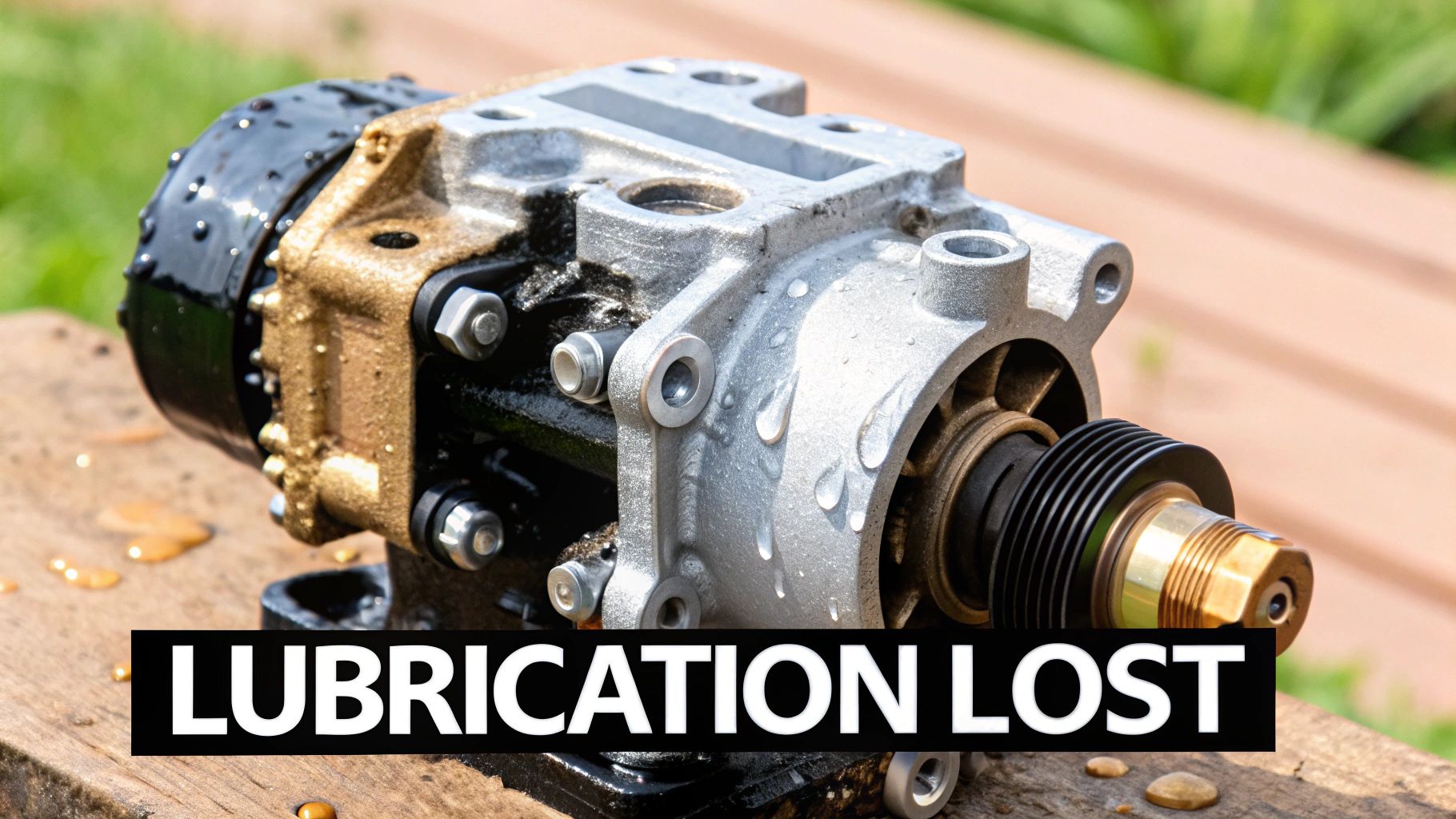
It’s a more common slip-up than you might think. Even though diesel car sales have dropped off, there are still around 11 million of them on UK roads. With so many drivers potentially switching between petrol and diesel family cars, the risk of a misfuelling mishap is always there. You can see the full breakdown of vehicle stats over on the GOV.UK website.
The Problem of Lost Lubrication
Think of a modern diesel fuel system as a high-precision, high-pressure network. The fuel pump and injectors are engineered with microscopic tolerances—finer than a human hair—and operate under immense pressures, often hitting over 2,000 bar. To survive this, they rely completely on the natural oiliness of diesel fuel to keep things moving.
Diesel acts as a lubricant, creating a protective film that stops critical metal parts from grinding against each other. It’s absolutely essential for preventing catastrophic wear.
Petrol, on the other hand, is a solvent. When it gets into the diesel system, it acts like a degreaser, immediately stripping away that vital lubricating film.
Imagine running a high-performance engine without any oil. The result is instant, aggressive friction. Metal grinds directly on metal, generating intense heat and creating tiny metal shavings, or swarf. These fragments are then pumped right through the fuel lines, injectors, and back to the tank, contaminating the entire system.
This is where the real damage starts. It isn't a slow wear-and-tear process; it's an immediate mechanical assault on the most complex and expensive components of your engine. For a closer look at what makes these fuels so different, have a read of our guide on the topic: https://www.misfuelledcarfixer-suffolk.co.uk/post/difference-between-petrol-and-diesel-fuel-a-quick-guide.
The Danger of Uncontrolled Combustion
The second part of the puzzle is how the two fuels actually burn. A diesel engine is a masterpiece of engineering that works on a very specific principle: compression ignition.
Diesel Engines Use Compression: Air is squeezed in the cylinder until it becomes incredibly hot.
Fuel Is Injected at the Perfect Moment: Diesel is then sprayed into this super-heated air, where it ignites instantly, creating a powerful and controlled push on the piston.
Notice there are no spark plugs. The timing is all controlled by the fuel injection.
Petrol, however, is designed to be ignited by a spark and has a much lower flashpoint. When you introduce it into a high-compression diesel engine, it ignites way too early in the cycle, all on its own. This isn't a controlled burn; it's a violent, uncontrolled detonation.
This is often called "knocking," and it's incredibly damaging. Instead of a smooth, powerful shove, the piston gets hit with a series of explosive shockwaves.
What This Detonation Can Damage:
Pistons: The force can crack or even shatter the top of the piston.
Connecting Rods: These can be bent by the extreme, poorly-timed pressure.
Cylinder Walls: The shockwaves can score and permanently damage the cylinders.
Head Gaskets: The violent pressure spikes are notorious for blowing head gaskets.
In short, you're asking the engine's internal parts to withstand a series of small explosions they were never designed for. This is why a misfuelled diesel will run rough, make loud metallic noises, and quickly grind to a halt. The combination of stripped lubrication and violent combustion is a guaranteed recipe for a very expensive repair bill.
What Happens If You Drive a Diesel Car with Petrol in It?
So, you’ve put the wrong nozzle in, turned the key, and driven off. It happens. But your car won’t let you get far before it starts protesting, and it won't be subtle about it. Understanding these warning signs is crucial – it can mean the difference between a simple tank drain and a bill for thousands in engine repairs.
The first thing you’ll likely notice is the sound. It's an ugly, loud, metallic 'knocking' noise from under the bonnet, especially when you put your foot down. That isn’t just your engine being a bit noisy; that's the sound of petrol detonating prematurely and violently inside the cylinders. It's a cry for help, signalling immense stress on the pistons and other critical parts.
A Sudden Drop in Performance
Besides the racket, the car will feel completely wrong. A diesel engine forced to run on petrol will feel gutless and weak because petrol simply can't provide the right kind of burn under diesel-style compression.
You'll quickly spot the signs of power loss:
Trouble Accelerating: The car will feel like it’s wading through treacle. You’ll press the accelerator, but nothing much will happen.
Engine Stuttering: It will feel jerky and erratic, misfiring and shaking as it desperately tries to make sense of the wrong fuel.
Cutting Out: Often, the engine will run for a minute or two, then just die and refuse to start again. This is a bad sign, indicating the fuel system has lost pressure or, worse, internal components are starting to seize from a lack of lubrication.
If you notice any of this right after filling up, your immediate reaction should be to pull over as soon as it's safe and kill the engine. Don't try to limp home.
The Smoke Signals Are a Dead Giveaway
Look in your rearview mirror. The exhaust pipe is another place you'll see a huge red flag waving. The colour and amount of smoke tell a story of what’s going wrong inside.
You’re looking for excessive white or bluish smoke billowing out from the back. This isn't just a bit of condensation; it's a thick, acrid cloud of unburnt petrol and vaporised engine oil being spat out. The petrol is acting like a solvent, stripping the vital lubricating oil off the cylinder walls, which then gets burned up.
This is a visual confirmation that serious internal damage is happening in real-time. Every second you keep that engine running, you’re essentially scrubbing away its protection, leading to catastrophic failure of the high-pressure fuel pump, injectors, and the engine block itself. The longer it runs, the more expensive the fix will be.
Your Immediate Action Plan to Minimise Damage
That sinking feeling when you realise you’ve just put the wrong fuel in your car is horrible. It’s a common mistake, but what you do in the next few minutes is absolutely critical. Acting calmly and quickly can be the difference between a simple fix and a four-figure repair bill.
The most important rule, above all else, is this: DO NOT START THE ENGINE. Don't even turn the key to the 'on' position or press the start button. The moment you do, the fuel pump kicks in and starts pulling that petrol-diesel mix from the tank. That's when the real, expensive damage begins.
What to Do Right Now at the Petrol Station
Your first job is to stop that contaminated fuel from going anywhere. Every second the engine stays off, you're winning.
Leave the car where it is: If it’s safe, don’t move it an inch.
Tell the staff: Let the petrol station attendant know what’s happened. They can put some cones out and help keep the area safe.
Pop it in neutral: If the car absolutely has to be moved from the pump, put the gearstick in neutral.
Push, don't start: Get some help to push the car to a safe parking spot. This simple act keeps the damaging petrol mixture safely contained in the fuel tank.
Once the car is parked and the engine is off, you’ve successfully contained the problem. Now you need to call in the right kind of help.
This is what you'd be looking for if you had started the engine after wondering, "will a diesel car run on petrol?"
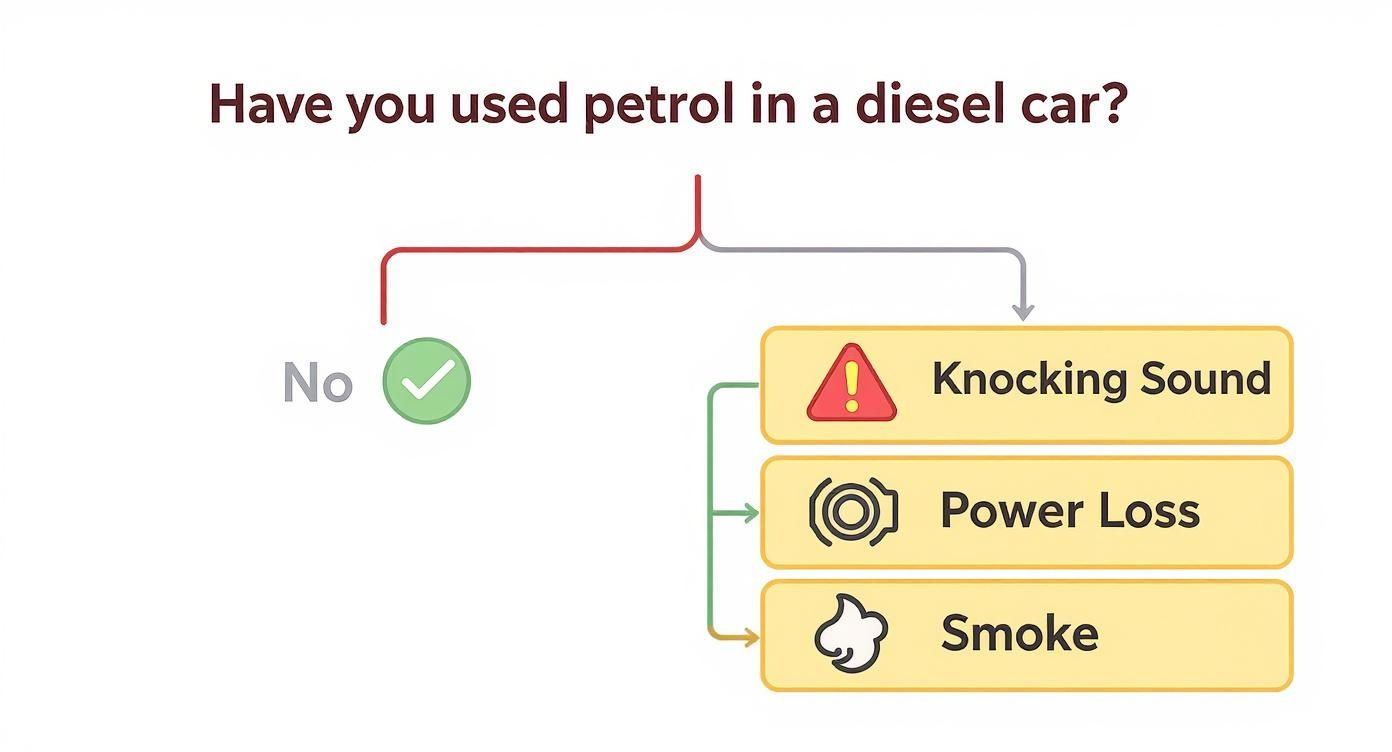
The key takeaway is that if you've put petrol in your diesel and started the car, you need to watch for knocking sounds, a sudden loss of power, or smoke from the exhaust.
Who to Call and What to Tell Them
This isn't a job for your usual breakdown service. You need a specialist mobile fuel drain service. These technicians are the experts, carrying specific equipment to safely remove the contaminated fuel right where you are.
Calling a specialist directly is almost always faster and cheaper. A standard recovery service will probably just tow your car to a garage, which adds time, hassle, and cost. A mobile fuel drain expert solves the problem on the spot.
When you ring them, have this information handy. It helps them get the right person and equipment to you as fast as possible.
Your Location: The full address of the petrol station.
Car Details: The make, model, and registration of your car.
The Problem: State it clearly: "I've put petrol in my diesel car."
Fuel Amounts: Give them a rough idea of how much petrol you added and how much diesel was already in there (e.g., "I put in about 20 litres of petrol, and the tank was nearly empty").
The Golden Rule: And most importantly, tell them, "I have not started the engine." This is the best thing they can hear and means the fix should be quick and straightforward.
If you did start the car, just be honest. Let them know what happened—if you heard a knocking sound, noticed smoke, or felt the power die—and how long the engine ran for. This information is vital for the technician to assess the potential damage.
For a deeper dive into the process, check out our emergency guide to getting a fuel drain near you. Following these steps is your best defence against turning a simple mistake into a mechanical nightmare.
What's the Fix? A Look at the Repair Process and Costs
That sinking feeling after you've put petrol in your diesel car is horrible, but knowing what comes next can make a stressful situation much more manageable. The repair bill and the complexity of the fix all come down to one simple question: did you start the engine?
If you caught the mistake at the petrol station and left the keys out of the ignition, you're in luck. Seriously, breathe a sigh of relief. The wrong fuel is just sitting in the tank, and getting it out is a relatively quick and painless job.
But if you turned the key—even for a second—the game changes. The moment the engine starts, it pulls that petrol into the delicate, high-pressure fuel system, where it starts stripping away the lubrication and causing havoc.
The Best-Case Scenario: A Simple Fuel Drain and Flush
If you didn't start the car, the solution is straightforward enough for a mobile misfuelling specialist to handle right there on the forecourt. This is by far the most common and cheapest outcome.
Here’s what the technician will do:
Drain the Tank: Using specialist, certified pumps, they'll completely empty the tank of the petrol and diesel mixture.
Flush the Lines: They'll then use a small amount of clean diesel to flush the fuel lines, clearing out any stray petrol that might have seeped in.
Refuel and Prime: Finally, they'll prime the system with fresh diesel and make sure your car starts and runs perfectly before they leave.
The whole process is usually done and dusted in under an hour. For a professional fuel drain service in the UK, you can expect to pay somewhere between £200 and £400, depending on your vehicle and location. It's a small price to pay when you consider the alternative.
The Worst-Case Scenario: When You've Driven the Car
If you started the car and drove off, the costs can spiral. The answer to "will a diesel car run on petrol?" becomes a painful list of damaged and failing parts. Petrol acts like a solvent, and the tiny metal shavings created from the lack-of-lubrication damage mean you're likely looking at replacing multiple expensive components.
Here’s a breakdown of what a garage might need to fix, along with some ballpark costs:
New Fuel Filter: This is your engine’s first line of defence, and it will be completely clogged. It's a must-replace item. (Cost: £50 - £150)
Fuel Injectors: The microscopic nozzles in modern injectors are easily damaged by the debris. Replacing a full set can be eye-wateringly expensive. (Cost: £800 - £2,000+)
High-Pressure Fuel Pump: This is the heart of the system and often the first major part to die from the lack of lubrication. It’s also one of the priciest. (Cost: £1,000 - £3,000+)
Full System Clean: The tank, fuel lines, and rails all need to be professionally stripped and cleaned to get rid of any lingering metal particles. (Cost: £200 - £500)
In a serious case where the car has been driven for a few miles, the total bill can easily hit £3,000 to £6,000, and sometimes even more. For some older vehicles, this can be more than the car is worth. You can find a more detailed exploration of these expenses by reading our guide on the repair costs after putting petrol in a diesel car.
When you're staring down a big repair bill, understanding the choice between OEM and aftermarket parts can make a real difference to the final cost, so it’s always worth discussing the options with your mechanic.
This huge financial jump just goes to show how sensitive modern diesel engines are. They're built for incredible efficiency—a diesel Nissan Qashqai might get you 50 mpg while the petrol version gets 38 mpg—but that performance depends on a system that simply cannot tolerate the wrong fuel. One mistake with the wrong nozzle wipes out any savings and introduces a massive financial risk.
Right, so you've just been through the headache of putting petrol in your diesel car. It's stressful, it's a hassle, and it can hit your wallet hard. The good news? You can make sure it never, ever happens again by adopting a few simple habits. It's all about making refuelling a conscious act, not just something you do on autopilot.
Let's be honest, most misfuelling happens because we're distracted. You're on a phone call, chatting to the kids in the back, or just in a tearing hurry. That's when you grab the wrong nozzle without thinking. The single most effective thing you can do is treat those two minutes at the pump as a "no-distraction zone." Phone away, conversation paused. Just focus on the task at hand.
Create a Simple Pump Routine
The best way to avoid a mistake is to build a mental checklist that becomes second nature. It doesn't have to be complicated, just a few quick steps you run through every single time you fill up.
Look for the Colour: In the UK, the forecourt colours are your first big clue. Diesel pump handles are almost always black. Unleaded petrol is green. Make a deliberate point of looking at the colour before you even touch the nozzle.
Check Your Fuel Flap: Before you even think about putting a nozzle in, flip open your car's fuel flap. It will say ‘DIESEL’ right there on the cap. This tiny action acts as a final, physical reminder of what your engine needs.
Say It Out Loud: This might sound a bit odd, but quietly saying "Diesel" to yourself as you pick up the handle really works. It brings the decision to the front of your mind and helps cement the right choice.
We often see misfuelling when someone's routine is disrupted. Maybe you're in a hire car, borrowing a mate's van, or you're just exhausted after a long day. Your normal muscle memory can let you down in these moments, which is why having that conscious checklist is so crucial.
For a Truly Failsafe Fix
If you're still anxious about it happening again, or perhaps you run a business with several diesel vehicles, there's a brilliant bit of kit you can get. A misfuelling prevention device is a special cap or insert that you fit into your car's filler neck.
It’s a clever, simple idea. The device is designed to physically block the narrower unleaded petrol nozzle from going into the tank. The only thing that will fit and open the mechanism is the correct, wider diesel nozzle. It's a one-off, affordable installation that gives you total peace of mind by making it physically impossible to make the same mistake twice. When you compare the small cost of the device to a potential bill for thousands in engine repairs, it's a no-brainer.
Got Questions About Misfuelling? We've Got Answers
Standing at the pump after realising you've put petrol in your diesel car is a stomach-dropping moment. Your mind is probably racing with a dozen questions. It's a horrible feeling, but getting some straight answers can make all the difference in what you do next.
Let's walk through some of the most common things we get asked by drivers who find themselves in this exact spot.
"But I Only Put a Little Bit of Petrol in..."
We hear this all the time. People often hope that if they just top up the rest of the tank with diesel, it'll all dilute and be fine. Unfortunately, that’s a myth, and a very expensive one at that.
Petrol is a solvent, and it doesn't take much to cause chaos. A mix of just 5% petrol to 95% diesel is enough to strip away the lubricating properties of the diesel fuel. Your high-pressure fuel pump and injectors rely on that lubrication to function without grinding themselves to pieces.
Even if the car starts and seems to run, you're causing accelerated wear and tear on some of the most critical and costly parts of your engine. It's simply not worth the gamble. The only truly safe move, no matter how little you put in, is to leave the engine off and get the tank drained properly.
The biggest mistake we see is people thinking a "small" amount of petrol is harmless. The hard truth is, for a modern diesel engine, there's no such thing as a 'safe' amount.
Will My Insurance Cover Misfuelling?
This one is a real "it depends" situation. Some fully comprehensive insurance policies do include misfuelling cover, either as part of the standard package or as an add-on you can select. Many others, however, don't. They often class it as driver error, leaving you to foot the bill.
The only way to know for sure is to dig out your policy documents and check the fine print. And while your breakdown service will almost certainly get your car towed to a garage, they won't typically cover the cost of the fuel drain or any subsequent repairs. That part will be down to you.
Can't I Just Siphon the Tank Myself?
Tempting as it might be to try and save a few quid, draining a modern fuel tank is a job best left to the professionals. We can't stress this enough: it is extremely dangerous.
Petrol is incredibly volatile, and its fumes are highly explosive. Without the right anti-static equipment, specialised pumps, and safety gear, you're risking fire, serious injury, and causing an environmental hazard if you spill it.
On top of that, most modern cars have anti-siphon devices built into the fuel filler neck, making it nearly impossible to get a simple hose in there anyway. A professional service not only has the correct tools to do the job safely but also knows how to dispose of the contaminated fuel legally. The risks of doing it yourself just aren't worth it.
If you've put the wrong fuel in your car, the smartest and safest thing to do is call an expert. The team at Misfuelled Car Fixer provides a 24/7 mobile fuel drain service across Suffolk and the surrounding areas. We offer a fast, professional, and affordable fix right at the roadside. Don't take a chance—give us a call immediately at https://www.misfuelledcarfixer-suffolk.co.uk.


