



Wrong Fuel In The Car A Suffolk Motorist's Emergency Guide
- Misfuelled Car Fixer

- Dec 28, 2025
- 13 min read
That sinking feeling when you realise you’ve just put the wrong fuel in your car is one every driver dreads. But what you do in the next few seconds is absolutely critical. The golden rule, above all else, is this: do not start the engine.
Don't even turn the key to the 'on' position to listen to the radio. That single action can kick the fuel pump into life, and that’s when a simple, fixable mistake spirals into a very expensive mechanical nightmare.
What to Do the Moment You Realise

If this has happened to you, don’t beat yourself up. It's an incredibly common slip-up. An estimated 150,000 UK motorists do it every single year—that’s more than 400 drivers every day. It can happen to anyone, especially when you’re tired, distracted, or in an unfamiliar hire car.
Think of your car's fuel system like its veins and arteries. The second you turn that key, the fuel pump primes itself to send what's in the tank straight to the engine. If that's the wrong fuel, you’re essentially pumping a contaminant through the heart of your vehicle. It gets drawn into delicate, high-precision components, and the damage starts almost instantly.
Your First Response Playbook
Your immediate priority is to keep that contaminated fuel quarantined in the tank where it can’t do any harm.
To help you get it right, here’s a quick-reference table of the absolute do's and don'ts right there on the forecourt.
Immediate Do's and Don'ts After Misfuelling
Action | What To Do (The 'Do's') | What To Avoid (The 'Don'ts') |
|---|---|---|
Ignition | Leave the engine completely off. Take the keys out of the ignition. | Do not turn the key, even to accessory mode. |
Vehicle | Put the car in neutral. Ask for help to push it to a safe spot. | Do not attempt to start the engine to "see what happens". |
Information | Let the petrol station staff know what’s happened. They can help. | Do not feel embarrassed. It happens all the time. |
Next Step | Call a specialist mobile fuel drain service. | Do not call a general recovery service that might just tow you to a garage. |
Sticking to these simple actions makes a world of difference.
Once you’ve moved the car safely out of the way (and cleared the pump for other drivers), the next job is to call a professional. You're looking for a specialist mobile fuel drain service – a technician who can come directly to you, wherever you are in Suffolk.
By not starting the car, you've already dodged the worst-case scenario. The problem is contained and 100% fixable with a professional fuel drain, potentially saving you thousands in engine repair bills.
While you're waiting for the technician to arrive, it's a good idea to read up on the potential wrong fuel in car symptoms. That way, if you did start the engine—even for a few seconds before you realised—you can give the expert a clear and accurate picture of what happened.
Petrol In Diesel Vs Diesel In Petrol
It’s a heart-sinking moment, but not all misfuelling mishaps are the same. The type of wrong fuel in the car dramatically changes the outlook, from the potential for serious damage to how urgently you need to act. Getting your head around the difference is the first step to understanding why a professional fuel drain isn't just a suggestion—it's essential.
The most frequent call-out we get, and by far the most destructive mix-up, is putting petrol into a modern diesel engine.
Why Petrol In A Diesel Engine Is So Serious
You have to think of diesel as more than just fuel; it's also a lubricant. Its oily quality is crucial for keeping high-precision parts in your fuel system, like the high-pressure pump and injectors, running smoothly without grinding against each other.
Petrol does the exact opposite. It's a solvent. The moment it enters the system, it starts stripping away that essential lubricating film from all the metal surfaces. What happens next is immediate, aggressive friction between components that were never meant to make direct contact.
This friction quickly creates tiny metal fragments—swarf, essentially—which are then pumped right through the entire fuel system. This gritty debris acts like liquid sandpaper, shredding delicate injectors and the high-pressure pump. It’s a recipe for catastrophic and eye-wateringly expensive engine damage.
The longer that engine is on, even just for a minute or two, the further that damage spreads.
The Tell-Tale Signs
If you've managed to drive off the forecourt, even a short distance, with petrol in your diesel tank, your car will start protesting pretty quickly. Keep an ear and eye out for these classic symptoms:
A loud, knocking or rattling noise from the engine as it runs dry.
A major loss of power and sluggish acceleration.
Heaps of smoke billowing from the exhaust.
The engine is likely to cut out completely and then refuse to start back up.
The potential bill from this scenario can be staggering. To get a better idea of the chaos unfolding under the bonnet, have a look at our detailed guide on what happens if a diesel car runs on petrol.
What About Diesel In A Petrol Car?
Putting diesel into a petrol car is a less frequent mistake, and there's a simple reason for it: the black diesel pump nozzle is usually too wide to fit into the filler neck of most petrol cars. Still, it does happen.
While it's absolutely a problem that needs a full fuel drain, this scenario is generally less catastrophic than the other way around. Petrol engines rely on spark plugs to ignite the fuel. Diesel is much thicker and far less volatile than petrol, so it simply won’t be ignited by a spark.
Instead of burning, the oily diesel will just clog up the spark plugs and gum up the fuel system. Your car will probably misfire, run incredibly rough, belch out smoke, and eventually just stall. It’s not great for the engine, but it avoids the rapid, wallet-emptying self-destruction you see when petrol contaminates a diesel system.
Industry data confirms that petrol-in-diesel jobs are always more complex, typically needing a full drain, system flushes, and at least one new fuel filter. Costs can start from a few hundred pounds for a straightforward roadside drain but can soar into the thousands if key components like the fuel pump have been wrecked. The bottom line? Getting a professional out to you immediately is the best way to avoid a four-figure repair bill, especially for diesel drivers here in Suffolk.
How A Professional Fuel Drain Actually Works
You're stranded on the side of a Suffolk road with the wrong fuel in your car, and your mind is probably racing. You've made the call for help, but what exactly happens next? It might seem like a complex, mysterious process, but a professional fuel drain is actually a very precise, safe, and surprisingly quick procedure designed to get you moving again with minimum fuss.
The first step actually starts with you. When you make that call, the technician will have a few key questions. Be ready to give them your exact location—whether you're stuck at a petrol station in Ipswich or pulled over on the A14 near Bury St Edmunds. Crucially, they'll need to know if you started the engine. That one detail determines whether it's a straightforward tank drain or a more involved system flush.
The On-Site Procedure
Once the specialist van arrives, the technician's first job is to make the area safe. They'll secure the space around your vehicle, often with safety cones, and make sure there are no potential ignition sources nearby. All the equipment they use is specifically designed for handling flammable liquids, with anti-static properties and spark-proof connections to completely eliminate any risk.
Next comes the main event: draining the tank. This isn't just a basic siphon job. The technician uses a certified, professional-grade pumping system to extract every last drop of the contaminated fuel. They'll connect directly to your car’s fuel lines or filler neck to ensure the tank is completely emptied.
I find a lot of drivers think a fuel drain is going to be a messy, drawn-out affair. The reality is that a skilled technician can often be done and dusted in under an hour, all while following strict environmental and safety rules.
After the tank is empty, there’s still a crucial step left. The technician will flush the fuel lines and filter housing with a small amount of clean, correct fuel. This is essential for purging any lingering contaminants that could cause trouble later on.
The flowchart below breaks down the two main misfuelling scenarios and shows why calling a professional is so important, especially when petrol goes into a diesel engine.
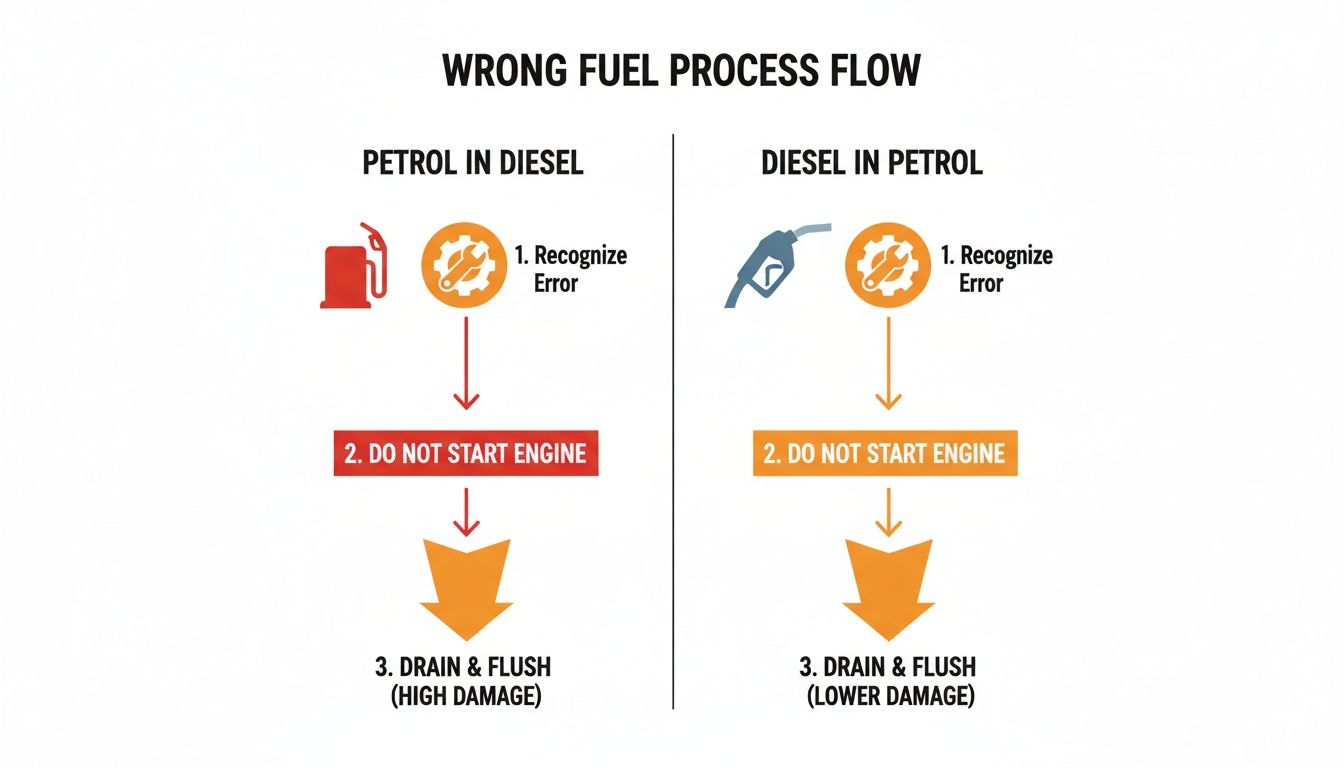
As you can see, while both mistakes need fixing, petrol in a diesel system is the one that carries a much higher risk of serious, expensive engine damage.
Final Steps to Get You Moving
With the system clean, the technician will put around 5-10 litres of the correct fuel into your tank. It’s just enough to get you safely to the nearest petrol station for a proper fill-up.
Before they leave, they’ll ask you to start the car. This final check is just to make sure the engine is running smoothly and the problem is completely solved.
Finally, what about the contaminated fuel? It's all stored safely in a specialised container inside the van, ready to be disposed of at a licensed waste facility in an environmentally friendly way. This is why checking the importance of a service provider's online reputation is a good idea; it helps you find a reputable company that follows all these professional standards. The whole process is designed to be transparent, efficient, and above all, to get you safely back on your way.
What To Expect For Cost And Timelines In Suffolk
So, you’ve put the wrong fuel in your car. After the initial sinking feeling, two questions probably jump to mind: "How much is this going to cost me?" and "How long am I going to be stuck here?"
The good news is, getting a mobile specialist out to you in Suffolk is often much quicker and cheaper than you might imagine. Let's get straight to the point.
Breaking Down The Costs
The final bill for a fuel drain always depends on a few things: your vehicle, how much of the wrong fuel is in the tank, and precisely where you are. Draining a small hatchback on a forecourt in Ipswich is a different job to a full system flush on a 4x4 that’s been driven for a bit on the A14 near Bury St Edmunds.
But here’s the key thing to remember: calling a mobile fuel drain specialist is almost always your most cost-effective option.
If you go through a main dealership, you’re often looking at towing fees on top of main-dealer labour rates, and the bill can rocket. Similarly, some national breakdown services don't carry the specialist gear themselves. Their only option is to tow you to a garage, which just adds more time and expense to your day.
A specialised mobile service cuts out the middleman. You're paying for one expert to come directly to you and solve the problem on the spot, which is why the cost is often around half that of going through a main dealer.
To give you a clearer picture, here’s how the costs generally stack up depending on who you call.
Estimated Wrong Fuel Fix Costs Comparison
Service Provider Type | Typical Cost Range (£) | Key Considerations |
|---|---|---|
Mobile Fuel Drain Specialist | £180 – £350 | Comes to you. Fastest solution. Specialist equipment on-board. |
National Breakdown Service | £250 – £500+ | May subcontract or tow to a garage, adding costs and delays. |
Main Dealership | £400 – £1,000+ | Involves towing, dealer labour rates, and often unnecessary part replacements. |
As you can see, a dedicated mobile service offers a clear advantage on price by getting the job done efficiently at the roadside.
Realistic Timelines Across Suffolk
Time is money, especially when you’ve got places to be. As a dedicated local service, my entire focus is on getting to you as fast as I can. Whether you're stranded in a busy Felixstowe port lorry park or a quiet village near Stowmarket, emergency calls are the top priority. I always aim to be with you promptly, usually within the hour, traffic permitting.
Once I arrive, the actual work is remarkably fast. It's a process I've got down to a fine art.
Typical On-Site Duration: You can expect the whole job—from arrival and safety prep to draining, flushing, and adding the right fuel—to take less than an hour.
Back on the Road: As soon as the correct fuel is in and we've got the engine running smoothly again, you’re free to drive off and get on with your day.
This rapid, on-the-spot solution is all about minimising your hassle. Instead of writing off a whole day waiting for a tow truck and a garage to fit you in, you can be back on your way in about the time it takes to grab a coffee and make a few calls.
For a complete overview of what influences the final bill, our comprehensive guide on wrong fuel in car cost provides even more detail.
Simple Habits to Avoid Putting the Wrong Fuel in Your Car
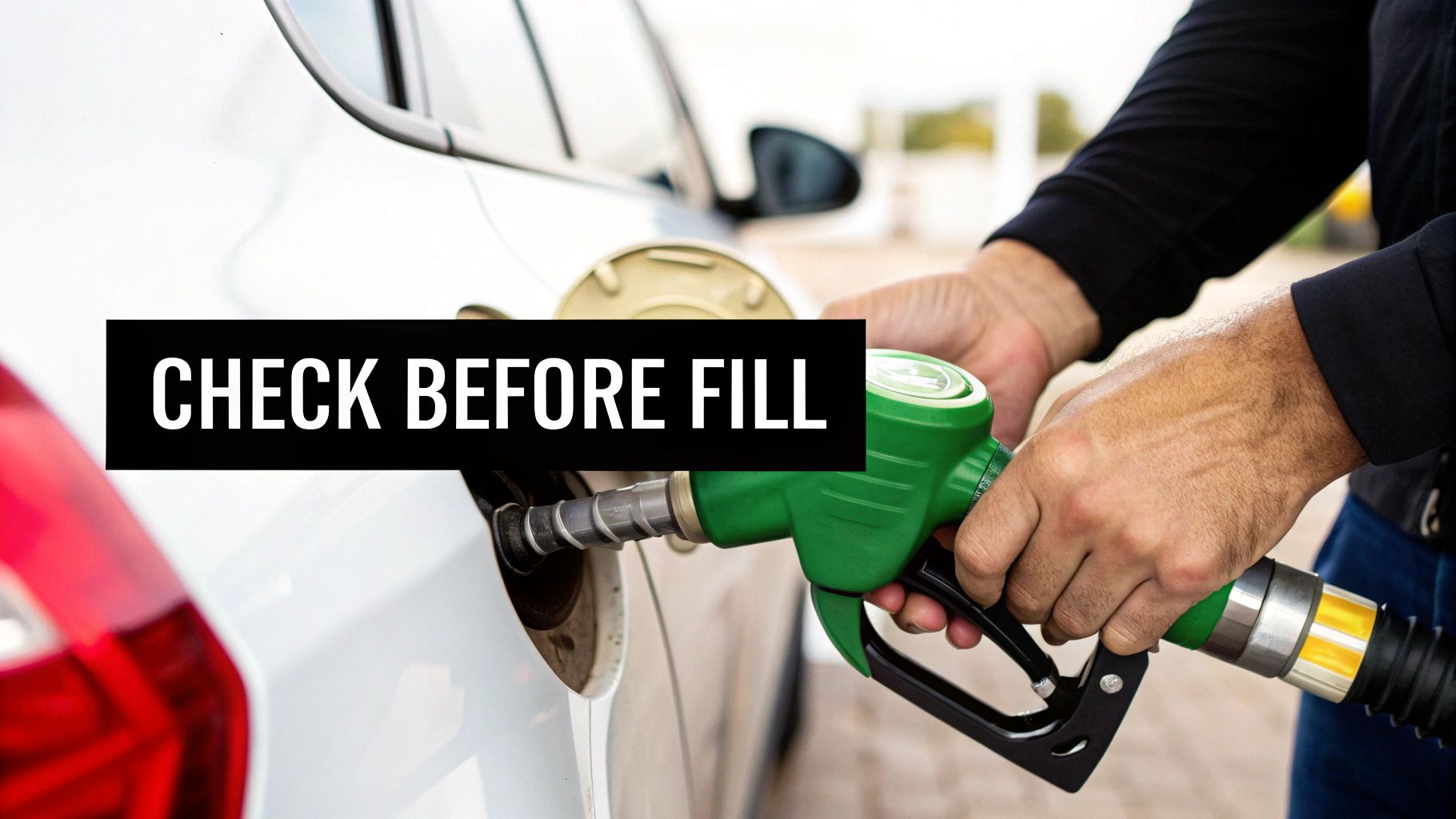
Once you’ve gone through the hassle and expense of a misfuelling incident, you’ll want to make sure it never, ever happens again. The good news is that preventing it is surprisingly easy. It’s all about building a few simple, conscious habits at the pump.
Let's be honest, misfuelling usually happens when we're distracted. A phone call, a chatty passenger, or simply being in a rush – that's when you grab the wrong nozzle on autopilot. The solution is to create a small, deliberate routine that you follow every single time you pull up to refuel.
Top Tips for Suffolk Motorists
For the everyday driver, avoiding this common mistake just means creating a quick mental checklist. It takes seconds but can save you hundreds of pounds and a whole day of stress.
Colour & Label Check: In the UK, diesel nozzles are black and petrol nozzles are green. It’s a simple visual cue. Always give the nozzle a quick glance and double-check the label on the pump before you start.
Look at Your Fuel Cap: Most modern cars spell it out for you, with 'DIESEL' or 'UNLEADED ONLY' printed right there on the fuel cap or flap. Make a habit of looking at it every time you open it.
Ditch the Distractions: Put your phone down. End your conversation before you get out of the car. Just giving your full attention for the minute it takes to select the pump and fill the tank is the most effective prevention method there is.
For extra peace of mind, you could invest in a misfuelling prevention device. These are special caps that replace your standard one and physically block the smaller unleaded petrol nozzle from fitting into a wider diesel filler neck.
Smarter Prevention for Fleet Managers
If you’re running a commercial fleet here in Suffolk, a single misfuelling incident is more than just a repair bill. It means vehicle downtime, lost income, and a major logistical headache. Getting proactive is non-negotiable.
One of the best strategies is to use a fuel card system. Many providers offer cards that can be locked to a specific fuel type. This makes it physically impossible for a driver to buy petrol for a diesel van because the transaction is simply declined at the till.
Beyond that, here are a few practical steps you can take:
Make it Obvious: Use large, clear stickers inside the fuel flap and even on the dashboard as a constant reminder of the correct fuel.
Driver Training: Don't just assume drivers know. Make misfuelling prevention a specific topic in your onboarding process and in regular team updates. Explaining the real-world consequences for the business helps drive the message home.
By adopting these straightforward habits and tools, both individual drivers and fleet operators can all but eliminate the risk of ever dealing with the wrong fuel in a vehicle again.
Your Top Wrong Fuel Questions Answered
Even with the best advice, that sinking feeling when you realise you’ve misfuelled leaves you with a lot of urgent questions. When you’re stranded at the roadside somewhere in Suffolk with the wrong fuel in your car, you just want clear, straight answers. We get it. Here are the most common things people ask us, designed to give you some quick reassurance and a clear path forward.
I've Already Started The Car! What Do I Do Now?
Okay, don't panic. If you've already started the engine and driven off, the single most important thing to do is pull over somewhere safe as soon as you realise the mistake. Turn the engine off immediately.
Whatever you do, don't be tempted to restart it to "see if it's okay." Every second the engine runs, it's pulling that incorrect fuel further into the system. This dramatically increases the risk of serious, and seriously expensive, damage to sensitive parts like your fuel pump and injectors.
Your only job now is to stop that fuel from circulating any further. Once you're safely stopped, call a professional wrong fuel recovery service. We've seen this scenario hundreds of times and have the equipment to perform a full system flush to get the bad stuff out and minimise any potential damage.
Am I Covered? Will This Void My Warranty or Insurance?
This is a huge worry for most drivers, and the honest answer is... it's complicated. Most standard car insurance policies, unfortunately, don't cover misfuelling. They tend to classify it as your own error, not an 'accident' in the traditional sense.
It's a similar story with manufacturer warranties; they almost always have clauses that exclude damage caused by using the wrong fluids. It’s always best to dig out your policy documents and check the small print to be certain.
Key Takeaway: Your best defence is acting fast. Getting a professional to drain and flush the system properly not only prevents major damage but also shows you've taken responsible steps to fix the issue. This is far better than risking a catastrophic mechanical failure that would almost certainly cause future warranty headaches.
How Long Will It Take For a Technician to Get to Me in Suffolk?
We run a dedicated mobile service, so our entire operation is geared towards getting to you fast. We know you're stuck, and we treat every call as an emergency.
Of course, response times depend on exactly where you are in the county and what the traffic is like at that moment, but we always aim to be with you as quickly as possible—often within the hour. When you call, we'll give you a realistic ETA so you’re not left guessing.
Once we arrive, the actual fuel drain and flush is a very streamlined process. For most cars, we can have you sorted and ready to go in less than an hour.
What Is AdBlue Contamination? Is It Really That Bad?
AdBlue contamination is when the AdBlue exhaust fluid is accidentally poured into the main diesel tank instead of its dedicated, smaller filler cap. And yes, it is an extremely serious mistake—often far more damaging than putting petrol in a diesel engine.
AdBlue is corrosive to many of the seals and plastics used in a fuel system. Worse, when it mixes with diesel, it can form hard crystals. These crystals will wreak havoc, causing blockages and quickly destroying incredibly expensive parts like the high-pressure fuel pump and the injectors.
If you suspect you've put AdBlue in your fuel tank, it is absolutely critical that you do not start the engine. Don't even turn the key to the 'on' position. The system needs an immediate and painstaking professional drain to prevent permanent, wallet-emptying damage.
If you've put the wrong fuel in your car in Suffolk, don't wait and hope for the best. For a fast, professional, and affordable mobile fuel drain service, contact Misfuelled Car Fixer 24/7. Call us now or find out more at our Misfuelled Car Fixer Suffolk website to get immediate help.


