



Can: can petrol car run on diesel? A Quick Misfuelling Guide
- Misfuelled Car Fixer

- Jan 26
- 11 min read
Let's get straight to the point: no, a petrol car absolutely cannot run on diesel fuel. Even a small amount can cause serious, expensive problems. The single most critical rule if you've made this mistake is to DO NOT START THE ENGINE. Turning that key is what circulates the damaging diesel through your entire fuel system, turning a simple fix into a potential nightmare.
Why Your Petrol Car Rejects Diesel Fuel
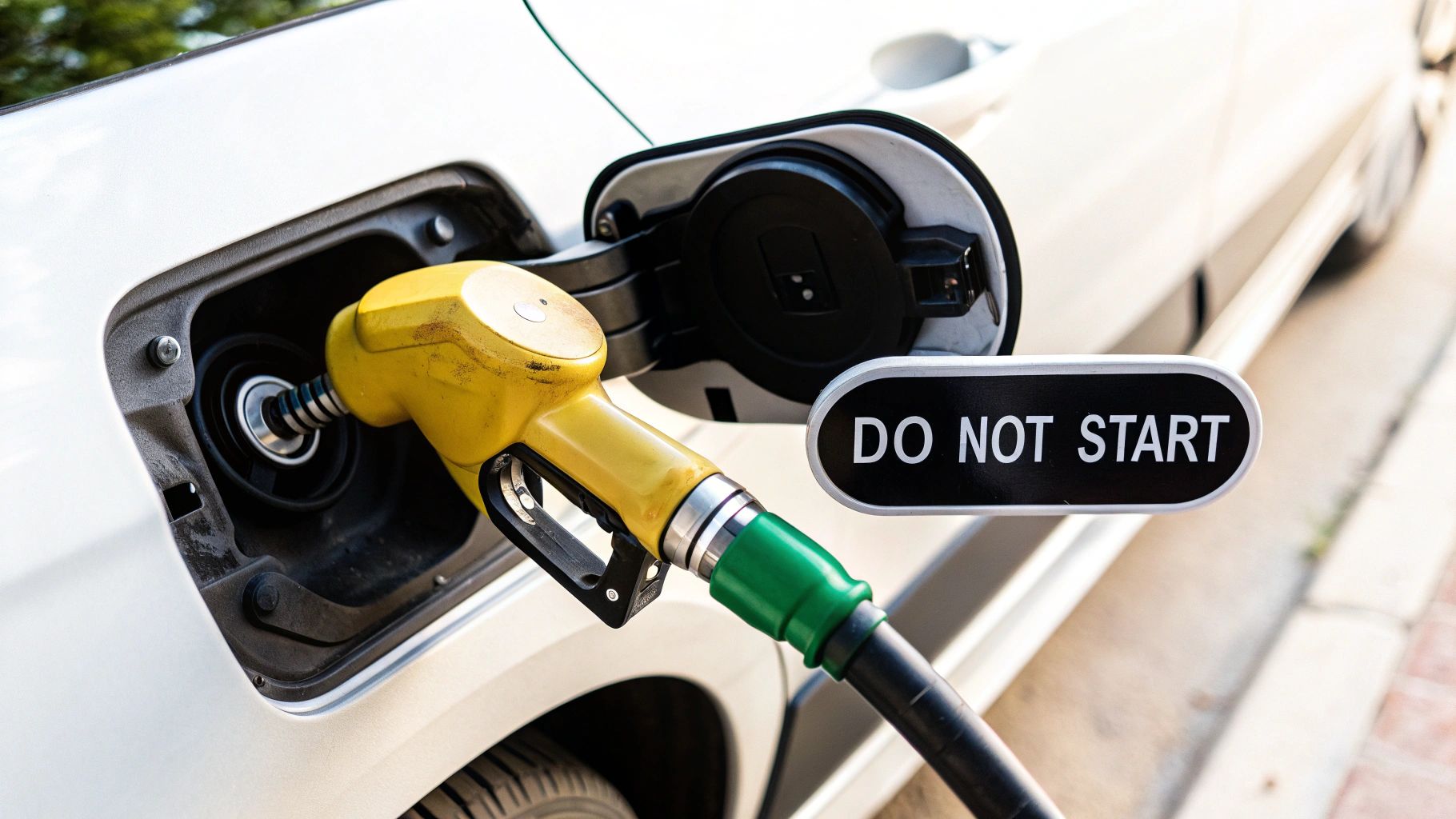
That sinking feeling when you realise you've grabbed the black pump instead of the green one is something many drivers have experienced. If it’s just happened to you, trust me, you're not alone. It's a surprisingly common mistake on UK forecourts. In fact, research from Go.Compare found that about 29% of UK drivers have accidentally put the wrong fuel in their car at least once. It shows just how easily a moment of distraction can lead to this mess. You can explore more data on UK misfuelling incidents to see just how frequent it is.
The fundamental problem comes down to the completely different nature of petrol and diesel. Think of petrol as a thin, highly flammable solvent. It's designed to vaporise easily and ignite with a tiny spark from your spark plugs. Diesel, on the other hand, is a thick, oily substance. It needs to be atomised and ignited under immense pressure, not by a spark.
The Analogy of Two Different Drinks
Imagine your car's engine is a person. A petrol engine is used to drinking light, crisp water (petrol). Now, imagine you try to make it drink a thick, greasy milkshake (diesel) instead. It simply can't process it. The milkshake will clog the straw (your fuel lines), coat the inside of its mouth (the spark plugs), and bring everything to a messy, grinding halt.
Crucial Takeaway: A spark plug works by igniting a fine mist of petrol and air. When it gets coated in thick, oily diesel, it can't create a spark at all. This makes combustion impossible and puts immense strain on your engine if you try to force it to turn over.
Understanding this core difference is the first step. It helps you see why calling for professional help isn't just a suggestion—it's the only way to prevent a simple error from turning into a catastrophic and costly engine failure.
How Petrol and Diesel Engines Fundamentally Differ
To really get to the bottom of why putting diesel in a petrol car is such a disaster, we need to pop the bonnet and look at the mechanics. A petrol engine and a diesel engine aren't just slight variations of the same thing; they are two completely different beasts, each designed for a specific diet. The problem goes way beyond just using the wrong liquid—it’s about two totally different ways of making a car move.
A petrol engine relies on what's called spark ignition. Picture it like a tiny, perfectly timed lightning strike. A fine mist of petrol is mixed with air, squeezed a bit by the piston, and then—zap!—a spark plug ignites the whole mixture. This creates a rapid but controlled bang that forces the piston down, turning the engine and, ultimately, the wheels. It's all about a quick, explosive burst of energy.
Now, a diesel engine is a different animal altogether. It’s all about brute force and works by compression ignition. Forget spark plugs; they don't exist here. A diesel engine sucks in nothing but air and compresses it with incredible force. This squeeze is so intense that the air heats up to a blistering 540°C or more. Only at that precise moment of peak heat and pressure is a spray of diesel fuel injected, and it combusts instantly on contact with the super-heated air.
The Spark Plug Versus Pure Pressure
Herein lies the crux of the problem. You're introducing a thick, oily fuel (diesel) into a system built for a light, volatile one (petrol).
Diesel is simply too heavy, too oily, and not flammable enough to be set alight by the tiny spark from a spark plug. It’s designed to ignite under immense pressure, something a petrol engine just isn't built to create. If you want a deeper dive into what makes these fuels so different, we've covered it in our guide on the difference between diesel and petrol explained.
This core difference makes the two systems totally incompatible.
Petrol Engine: Needs a spark to light a fine, vaporised fuel.
Diesel Engine: Uses extreme pressure to auto-ignite a heavy, oily fuel.
Trying to run a petrol car on diesel is like asking a thoroughbred racehorse to pull a farmer's plough. It's the wrong tool for the job, and it’s just not going to work.
An Analogy: Your Kitchen Blender
Think about it like this. Your petrol engine is a high-speed smoothie maker, engineered to blitz thin liquids like fruit juice and water into a perfect drink.
Now, imagine trying to make a smoothie by filling that blender with a solid block of lard. That lard is your diesel fuel.
Switch it on, and what happens? The blades will strain, the motor will groan and overheat, and the whole system will get clogged with a thick, greasy mess. It won't blend anything; it will just seize up. This is a pretty accurate picture of what happens inside your engine. The fuel pump, injectors, and spark plugs are all designed for the "fruit juice" consistency of petrol. The "lard" of diesel simply gums up the works, preventing ignition and putting immense strain on every component it touches.
The Chain Reaction of Damage Inside Your Engine
So, you’ve turned the key. What happens next is a devastating chain reaction, a rapid-fire sequence of failure that cascades through your car’s fuel system. This isn't just about the car failing to start; it's an active process of contamination and destruction that kicks off the very second the fuel pump hums into action.
The journey of destruction begins at the fuel pump. Think of this component as the heart of your fuel system, specifically designed for the thin, almost watery consistency of petrol. In fact, petrol acts as both a lubricant and a coolant for the pump's finely-tuned internal parts. When you force it to suck up thick, oily diesel, it’s like asking it to drink a thick milkshake through a cocktail straw.
Almost immediately, the pump starts to struggle. It strains, overheats, and begins to wear itself out. Without the lubricating effect of petrol, friction skyrockets, and the pump can quickly burn out. This is usually the first, and most expensive, casualty.
Clogs, Coatings, and Catastrophe
If the groaning pump manages to force some of this sludgy diesel forward, it immediately hits the fuel filter. The filter's job is to catch tiny particles, but it’s completely overwhelmed by a heavy, greasy liquid. The diesel clogs the filter's pores, effectively creating a dam and starving the engine of fuel.
At this point, the car’s performance will plummet. The fuel pressure drops off a cliff, and only a dribble of contaminated fuel might make it past the blockage. Any diesel that does squeeze through continues its destructive march towards the engine’s most delicate components.
The Critical Difference: Petrol is designed to vaporise into a fine, flammable mist. Diesel, on the other hand, is an oil. Instead of a mist, the injectors spray thick, oily droplets into the combustion chamber, coating everything they touch – especially the spark plugs.
A spark plug needs a clean, clear gap to generate the powerful spark needed for ignition. Once the tip is coated in a film of diesel, that spark is effectively smothered. It's like trying to light a damp match.
The Unmistakable Signs of Trouble
By the time the unburnable diesel floods the cylinders, your car’s struggle becomes impossible to ignore. The problem is no longer hidden away inside the engine; the symptoms are loud, clear, and alarming.
As the engine desperately tries (and fails) to burn the oily mixture, you’ll notice a few tell-tale signs:
Violent Juddering: The engine will misfire, shake, and buck violently. It will feel as if it's trying to tear itself from its mountings.
Thick White Smoke: A huge plume of white smoke will start pouring from the exhaust. This is essentially hot diesel being boiled and vaporised in the exhaust system – a dead giveaway that the fuel isn’t combusting properly.
Total Power Loss: The car will quickly lose all power and grind to a halt. In most cases, it will refuse to restart.
This entire sequence is exactly why the answer to "can a petrol car run on diesel?" is a firm and final "no". From the pump to the plugs, every part of the system is choked and contaminated, leading to a complete and often costly shutdown.
Your Step-by-Step Misfuelling Recovery Guide
That sinking feeling when you realise you've put diesel in a petrol car is a horrible one. But panic is your worst enemy. A calm, methodical approach is your best defence against a hefty repair bill.
What you do next hinges on one simple question: have you started the engine? How you answer will dictate whether this is a minor hiccup or a major headache.
This decision tree lays out the two paths and their potential outcomes.
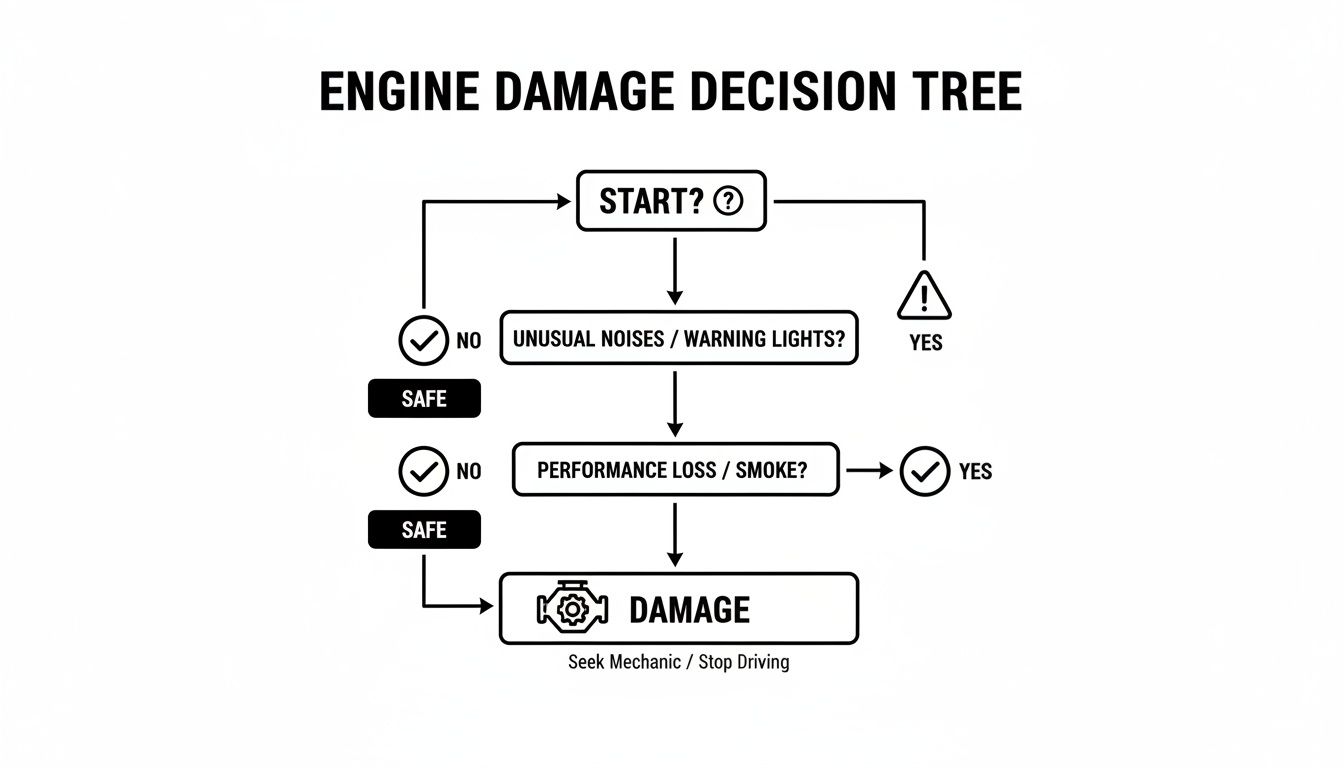
As you can see, keeping that engine off is the single most important thing you can do to prevent serious, expensive mechanical damage.
Scenario 1: You Haven't Started the Car
If you caught the mistake while still at the pump, breathe a sigh of relief. You're in the best possible position. The diesel is sitting harmlessly in the fuel tank and hasn't gone anywhere else.
Just follow these steps to the letter to keep things simple.
Don't Touch the Ignition: This is the golden rule. Seriously, don't even turn the key to the first position to listen to the radio. This can prime the fuel pump and start pulling the diesel into the fuel lines.
Pop it in Neutral: Put the car into neutral and release the handbrake.
Get to a Safe Spot: Ask for a hand to push your car to a safe parking bay, well clear of the busy pumps.
Tell the Staff: Let the petrol station staff know what’s happened. They can cone off the area and make sure everyone is safe.
Call in a Specialist: Your next move is to ring a 24/7 mobile fuel drain service. It’s by far the quickest and most effective way to sort this out.
By keeping the engine switched off, you've contained the contamination. A professional fuel drain will get the wrong fuel out, and you can be back on the road, often in under an hour, with no damage done.
Scenario 2: You've Started the Car
Maybe you drove away from the forecourt and are now noticing the car juddering, chugging out smoke, or losing power completely. Your priority now is to stop any further damage from happening.
Pull Over Safely: The moment you suspect something is wrong, indicate and find a safe place to pull over, like a lay-by or a quiet side road.
Turn the Engine Off Immediately: Every second the engine runs, it's forcing more of that thick, oily diesel through components that were never designed for it.
Get Your Hazard Lights On: Make sure other drivers can see you clearly.
Call for Professional Help: Whatever you do, do not try to restart the car. You need to call a misfuelling specialist or a roadside recovery service to get towed to a garage.
In this situation, a fuel drain is still the first job, but it's not the only one. Your mechanic will need to check the fuel pump, filter, and injectors to see what, if any, damage has been caused. Even if you've only put a small amount of diesel in a petrol car, acting fast is the key to protecting your engine.
What to Expect from a Professional Fuel Drain Service
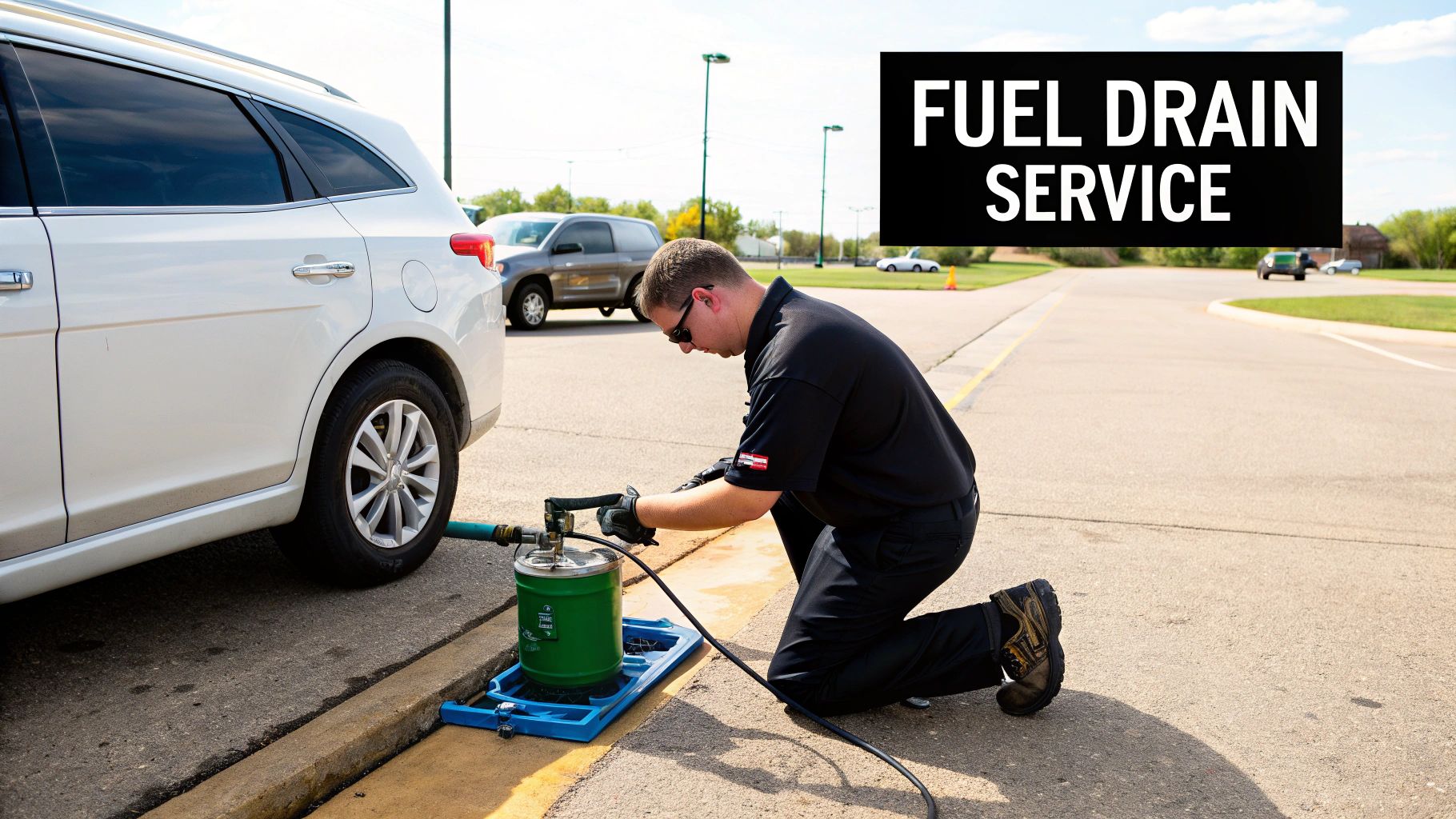
Calling a mobile fuel drain expert after putting diesel in your petrol car might sound daunting, but it's a surprisingly slick and routine operation. Knowing what happens next can really take the anxiety out of the situation and show you why it’s the smartest move for both your car and your bank balance.
A good mobile fuel drain service is all about speed, safety, and getting you back on the road with as little disruption as possible.
When the technician turns up, their first job is to make the area safe. They’ll secure your vehicle's location, often with safety cones, and check for any potential fire hazards. These professionals are trained to handle flammable fuels and stick to strict safety procedures every step of the way.
Draining the Contaminated Fuel
The main event starts with getting the wrong fuel out of your tank. The technician will access your fuel tank and use specialised, industry-grade pumps to drain every last drop of the contaminated mixture. This isn't just any old pump; the equipment is anti-static and spark-proof to keep the entire process completely safe.
The diesel-petrol mix is siphoned out into secure, sealed containers, ready to be taken away for proper disposal. It’s a precise job to make sure the tank is bone dry before moving on to the next crucial step.
Flushing the Entire Fuel System
Just draining the tank isn’t the end of the story, particularly if you’ve tried to start the car. Diesel is an oil, and its greasy residue will still be clinging to the inside of your fuel lines, filter, and injectors. To fix this, the technician performs a complete system flush.
They’ll introduce a small amount of fresh, clean petrol into the fuel system and circulate it through. This acts like a deep clean, dissolving any leftover diesel contamination and ensuring every part is clear and ready to work as it should. This step is absolutely vital to stop future problems like clogged injectors.
Key Insight: A professional flush is what truly separates a specialist service from a simple drain. It removes the residue that causes lasting damage, ensuring your engine runs smoothly once the correct fuel is added and is a crucial part of understanding the immediate steps and costs of diesel in petrol car recovery.
With the system flushed and clean, the technician will add some fresh petrol to your tank. They’ll then get you to start the engine to make sure everything is ticking over nicely. As for the contaminated fuel they removed? It’s taken away to be disposed of according to strict environmental laws, so it’s one less thing for you to worry about.
Your Misfuelling Questions Answered
That sinking feeling you get when you realise you've grabbed the wrong nozzle at the pump is often followed by a flood of questions. Let's cut through the panic and get you some clear, expert answers to the most common queries we hear every day.
Will My Insurance Cover Misfuelling Damage?
This is a tricky one, and the honest answer is: it depends entirely on your policy. Many standard insurance plans won't cover misfuelling because they class it as avoidable driver error, not a genuine accident.
While some fully comprehensive policies might include it, often as an optional extra, you need to read the fine print. Even if you are covered, think carefully before claiming. It will likely impact your no-claims bonus and could hike up your premiums for years to come, making a specialist call-out the cheaper and faster option in the long run.
Is It Worse to Put Petrol in a Diesel Car?
Yes, without a doubt. While neither situation is good, putting petrol into a diesel engine is usually far more destructive. Think of it this way: diesel fuel isn't just a fuel; it's also a lubricant for the high-pressure fuel pump and injectors.
Petrol acts like a solvent, stripping away that vital lubrication. When you run the engine, it causes metal parts to grind against each other, leading to catastrophic and eye-wateringly expensive damage. Putting diesel in a petrol car will choke the engine and stop it from running, but it's less likely to cause such rapid, irreversible mechanical destruction.
Can I Just Top Up with Petrol to Dilute It?
Absolutely not. Please, whatever you do, don't fall for this old myth. It’s the single worst thing you can do and a surefire way to turn a simple problem into a massive repair bill.
No amount of the correct fuel can magically make the wrong fuel work. Attempting to dilute the diesel in your petrol tank just forces that thick, oily mixture through components that were never designed for it. The only safe and effective solution is to have the entire system professionally drained and flushed.
If you've put the wrong fuel in your car, don't risk it. Contact Misfuelled Car Fixer for immediate, professional 24/7 mobile fuel drain services across Suffolk and beyond. Visit us at https://www.misfuelledcarfixer-suffolk.co.uk or call for rapid assistance.


