



Protect Your Engine: small amount of adblue in diesel tank by mistake
- Misfuelled Car Fixer

- Jan 31
- 13 min read
Updated: Feb 1
24/7 Hotline Nationwide: 0330 122 6640
National Wrong Fuel Rescue: https://www.misfuelledcarfixer.co.uk
If you found this page, we cover you in England!
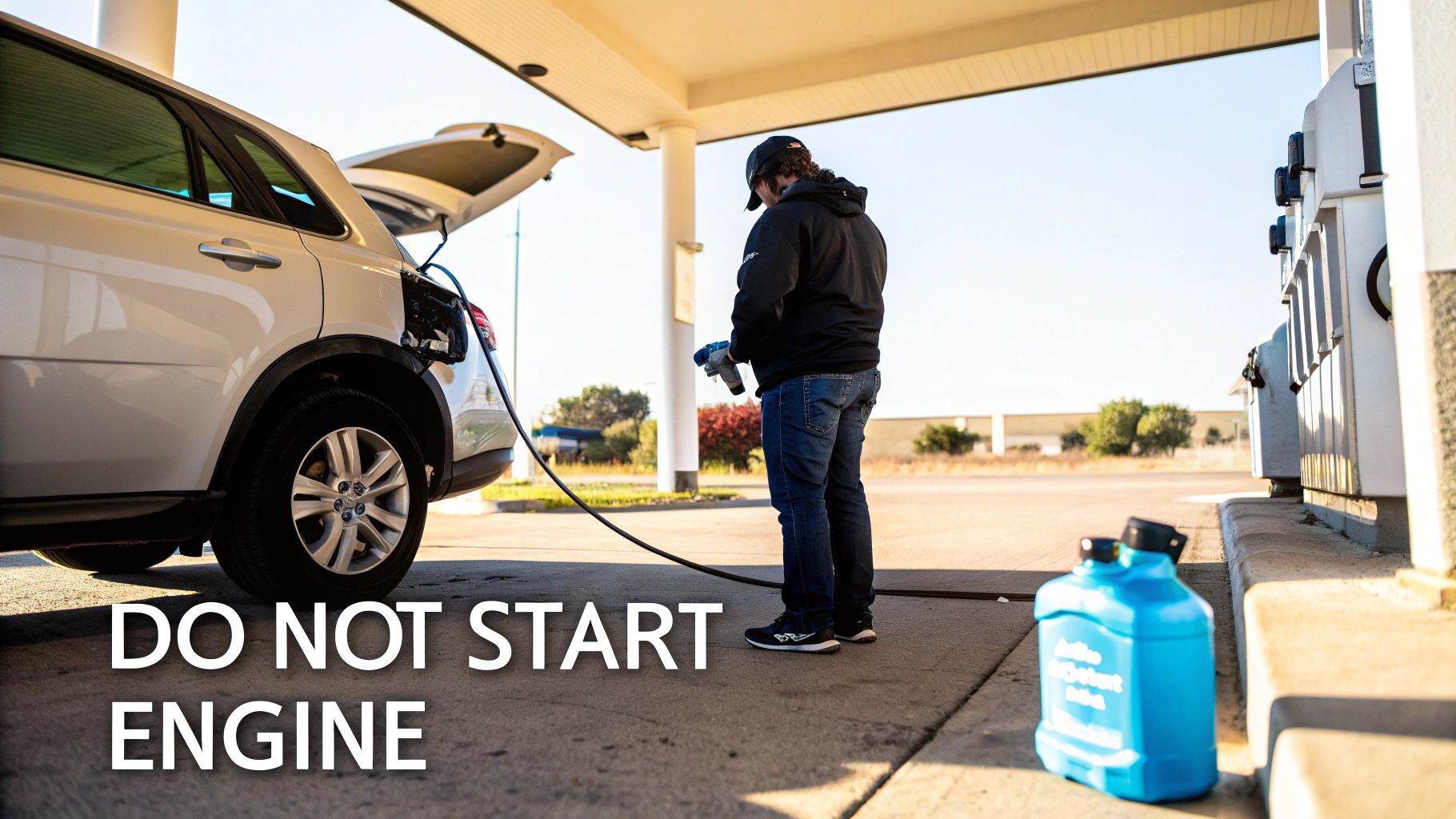
That sinking feeling hits you the moment you realise what you’ve done: AdBlue in the diesel tank. The single most important thing to do right now is absolutely nothing. Don’t start the engine. Don’t even turn the key to the 'on' position. Doing so can prime the fuel pump and kickstart a very expensive contamination process.
Small Amount of AdBlue in Diesel Tank by Mistake
Those first few moments after the mistake are critical. They genuinely make the difference between a simple fix and a financial nightmare. It’s natural to panic, but a clear head now will save you thousands of pounds later.
The problem is that AdBlue is essentially 67.5% de-ionised water. It has zero lubricating properties, which your high-pressure fuel system desperately needs. When mixed with diesel, it forms a corrosive, crystallising solution that grinds away at your engine's finely-tuned components like liquid sandpaper.
And if you think this is a rare mistake, think again. AdBlue misfuelling now makes up a shocking 22% of all misfuelling incidents we see across the UK. This number has shot up as more diesel drivers in places like Suffolk have to deal with Ultra Low Emission Zones. With nearly half of the UK's 11.6 million diesel cars now needing AdBlue, the chances of this happening are higher than ever.
What to Do, Right Now
Your immediate goal is to keep that contaminated fuel from moving an inch. Here’s your step-by-step game plan while you're still at the pump:
Engine Off. Keys Out. This is non-negotiable. Starting the engine pulls the AdBlue cocktail into the fuel lines, pump, and injectors, causing catastrophic damage.
Tell the Petrol Station Staff. Let them know what's happened. They need to close the pump and can help ensure the area is safe.
Push, Don't Drive. Your car needs to be moved out of the way. Ask the station staff or a fellow motorist for a hand to push it to a safe parking spot. Do not be tempted to start it, not even for a second.
To highlight just how crucial these first actions are, here’s a quick comparison of the right moves versus the wrong ones.
Immediate Actions vs Costly Mistakes
Action to Take Immediately | Mistake to Avoid at All Costs | Potential Outcome |
|---|---|---|
Keep the ignition completely off. | Starting the engine, even for a moment. | A simple fuel drain vs. a full system replacement. |
Push the vehicle to a safe place. | Driving it to a "safer" spot. | Damage is contained to the tank, saving thousands. |
Call a professional fuel drain service. | Trying a DIY fix or ignoring the problem. | A professional flush vs. long-term corrosion and failure. |
Getting it right in these first few minutes is the key to a much less painful outcome.
The moment you turn that key, you’re turning a recoverable mistake into a potential engine write-off. The cost difference is genuinely thousands of pounds. Keep the keys in your pocket until a specialist arrives.
Once your car is safely parked, the next and only call you should make is to a professional fuel drain service. This isn't just a recommendation; it's the only way to safeguard your engine. If you're in this situation right now, our guide on finding emergency fuel drain services near you has the immediate advice you need.
How a Tiny Splash of AdBlue Can Wreck a Modern Diesel Engine
"It was just a splash, surely it'll burn off?" I hear this a lot, and it's a dangerously expensive assumption to make. The truth is, even a small amount of AdBlue in a diesel tank by mistake kicks off a destructive chemical chain reaction that modern, high-precision engines simply can't handle.
The problem starts with what AdBlue actually is. It’s a mix of urea and de-ionised water, which is brilliant for emissions but a total disaster when mixed with diesel fuel. It doesn't just dilute the fuel; it starts to form hard, sharp crystals as soon as the engine cools down.
These tiny urea crystals are the real killers. Think of them as microscopic sandpaper, circulating through the incredibly sensitive veins of your fuel system. This is where the serious, and costly, damage begins.
The Crystal Contamination Cascade
Let's picture a typical scenario. A delivery driver in Ipswich, making lots of short drops. Every time they switch off the engine, the contaminated fuel cools slightly, and more of these abrasive crystals form. When they start it back up, this gritty slurry gets sucked straight from the tank.
The first parts to feel the pain are almost always:
The Fuel Filter: It's designed to catch dirt, but it gets choked by the sheer volume of crystals in no time. This leads to fuel starvation, and your engine will just cut out.
The High-Pressure Fuel Pump: This is a masterpiece of engineering, working with tiny tolerances. Those crystals just scour the internal surfaces, causing irreversible wear and a catastrophic drop in fuel pressure.
The Fuel Injectors: The microscopic nozzles on modern injectors get clogged instantly. Worse, they can be physically scored and damaged by the abrasive particles, leading to poor spray patterns, misfires, and ultimately, complete failure.
This whole process happens alarmingly fast. A family heading out of Felixstowe for a weekend away might only make it a few miles up the A14 before the car starts shuddering to a halt. For a deeper dive into the fluid itself, you can learn more about diesel exhaust fluid and its function in our detailed guide.
Once those crystals start forming, it’s not a question of if your fuel system will fail, but when. Every second the engine is running, you're essentially grinding away at components that cost thousands of pounds to replace.
Spotting the Signs of Contamination
If you've turned the key, even for a moment, the symptoms of AdBlue contamination will show up quickly and they won't be subtle. These are your engine's desperate cries for help.
Be on high alert if you notice:
A sudden, dramatic loss of power.
The engine struggling to start or refusing to turn over at all.
Noticeable white or bluish smoke puffing from the exhaust.
A rough, stuttering, or misfiring engine.
Your dashboard lighting up like a Christmas tree with engine management and DPF warnings.
The financial fallout, particularly for commercial operators in Suffolk, can be eyewatering. For a van or HGV, just one litre of AdBlue can contaminate a 40-60 litre tank. The resulting crystal damage to the fuel pump and injectors leads to an average repair bill of around £3,200. In a worrying 20% of cases we see, where the vehicle has been driven for more than a mile, a full engine replacement costing £10,000 or more becomes the only option, taking a vital vehicle off the road for weeks.
The Professional Process for Fixing AdBlue Contamination
So, you’ve done the right thing and called for help. What happens now? Knowing what to expect can definitely take some of the stress out of the situation. When one of our technicians arrives, whether you're stuck at a petrol station in Ipswich or stranded on a quiet road near Bury St Edmunds, they'll have a specialist mobile fuel drain unit ready to go. This isn't just a basic pump; it's a fully certified system designed specifically for handling contaminated fuel safely and cleanly.
The first thing the technician will do is have a quick chat with you to confirm what’s happened and, most importantly, make sure the ignition hasn't been turned on. From there, they'll connect their industrial-grade pumping gear directly to your fuel tank. This allows them to drain the entire cocktail of diesel and AdBlue without a single drop being spilt or any more of the nasty stuff getting into your engine's sensitive components. You might be surprised how quickly this crucial first stage is over.
Flushing and Decontamination
Just draining the tank is only half the battle. AdBlue is a real pain because it leaves behind a crystalline residue that loves to stick to the inside of the tank, fuel lines, and filter housing. If you just add fresh diesel on top, those crystals will dissolve and contaminate the new fuel, and you're right back where you started.
To get around this, we perform a comprehensive system flush. We pump specialist cleaning solutions through the tank and fuel lines, which are designed to dissolve every last trace of those damaging urea crystals. It’s a painstaking but essential part of the job that gives your fuel system a completely clean slate. All of the contaminated mix and the flushing agents are safely stored in our mobile unit, ready for proper, environmentally friendly disposal.
This diagram shows just how quickly AdBlue contamination escalates from a simple mix-up into a major system-wide problem.
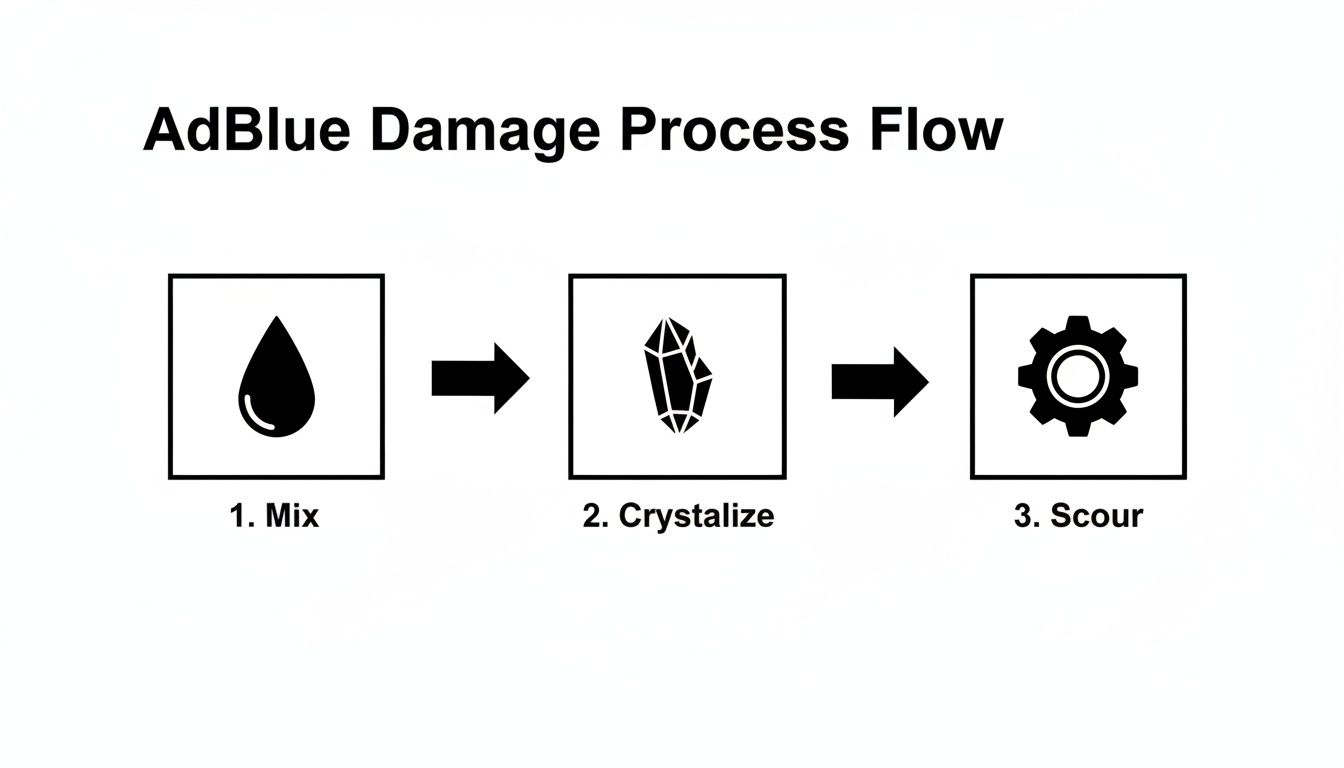
As you can see, the damage isn’t instant. It’s a rapid chain reaction, moving from mixing to crystallisation and then to abrasive scouring of delicate engine parts.
A professional fuel drain is so much more than just emptying a tank; it’s a full decontamination. We’re not just removing the liquid – we’re hunting down the crystalline residue that causes all the long-term damage. That attention to detail is what saves you a fortune in future repair bills.
Final Checks to Get You Moving Again
After the flush, one of the most critical steps is to change the fuel filter. The old one will be clogged with crystals and is basically a write-off. Fitting a brand-new, clean fuel filter is non-negotiable for a proper fix. It's the final guard, preventing any stray contaminants from ever reaching your engine. We keep a wide range of filters on our vans to fit most vehicles on the road.
With that done, we're on the home straight:
A splash of fresh diesel: We'll add a small amount of clean, high-quality diesel back into your tank.
Priming the system: Next, we prime the fuel system. This pushes the clean fuel through all the lines and injectors, forcing out any last pockets of air or cleaning solution.
The moment of truth: With your permission, we’ll start the engine. We let it run for a few minutes, keeping a close eye on the dashboard for any warning lights and listening to make sure everything sounds right.
This thorough, step-by-step approach ensures that when we hand your keys back, your vehicle is genuinely safe to drive. To get a better idea of why this deep clean is so important, have a look at our complete guide to cleaning fuel tanks after misfuelling.
Quick Fix vs. Full Repair: A Look at the Real Costs
The moment you realise you've put AdBlue in your diesel tank, your mind probably jumps straight to the cost. It's a genuine worry, and honestly, the financial outcome can go one of two ways. The deciding factor? Whether or not you turn that ignition key.
Think of calling a mobile fuel drain service here in Suffolk as damage control. It’s a single, upfront cost that stops a much bigger, more expensive problem from ever starting. While the price for a drain-out varies, it's a drop in the ocean compared to the repair bills that follow if that contaminated fuel starts circulating.
But the second you start that engine, the game changes entirely. You've moved from prevention to repair, and the costs start to climb. Fast.
How the Repair Costs Can Snowball
The damage from AdBlue doesn't happen all at once; it's a chain reaction. The mix of diesel and AdBlue creates abrasive crystals that get sucked into your fuel system, and from there, the costs don't just add up—they multiply as one failing part damages the next.
Typically, the repair journey looks something like this:
First Point of Failure: The first components to go are usually your fuel filter and the low-pressure pump. You’re already looking at a bill of several hundred pounds just to replace these.
The Big Jump: Once the contamination gets past the filter, it hits the expensive stuff: the high-pressure fuel pump and the fuel injectors. This is where the repair bill can suddenly leap into the thousands.
Worst-Case Scenario: If the damage is severe enough, you could be facing a complete replacement of the fuel system, the SCR (Selective Catalytic Reduction) system, and in some unlucky cases, the engine itself.
This isn't just scaremongering. From what we see on the ground, some vehicles are incredibly sensitive to even a small amount of AdBlue contamination.
Calling for a fuel drain isn't just fixing a mistake—it's making a smart financial move. It's the difference between a manageable one-off payment and a bill that could potentially cost you your engine.
Real-World Repair Bills We've Seen
Some cars are just more vulnerable than others. For example, we often get calls for Peugeot and Citroen models, which are popular in hire fleets. Their sealed fuel tank design means that even less than a litre of AdBlue can form enough crystals to block everything up and destroy the injectors. We've personally seen repair quotes for these vehicles hit anywhere from £2,000 to £7,000.
It's not just us saying it, either. Major recovery services like the RAC and AA report that the minimum repair cost after running the engine is around £1,500. That figure can easily shoot past £5,000 if the whole fuel and SCR system needs replacing. In the most severe 20% of cases, where the vehicle has been driven for a while, a full engine replacement becomes the only option, with costs pushing beyond £10,000. You can read more about these AdBlue challenges and their costly outcomes to get the full picture.
Opting for a professional fuel drain isn't just about sorting the immediate problem. It's about saving yourself from a potential repair bill that could be twenty, or even fifty, times higher.
Simple Ways to Avoid an AdBlue Misfuelling Nightmare
Once you've dealt with the stress and cost of an AdBlue mix-up, you’ll be keen to ensure it never happens again. Thankfully, preventing it is much easier than fixing it. It really just boils down to a bit of mindfulness at the pump and, for businesses, having solid procedures in place.
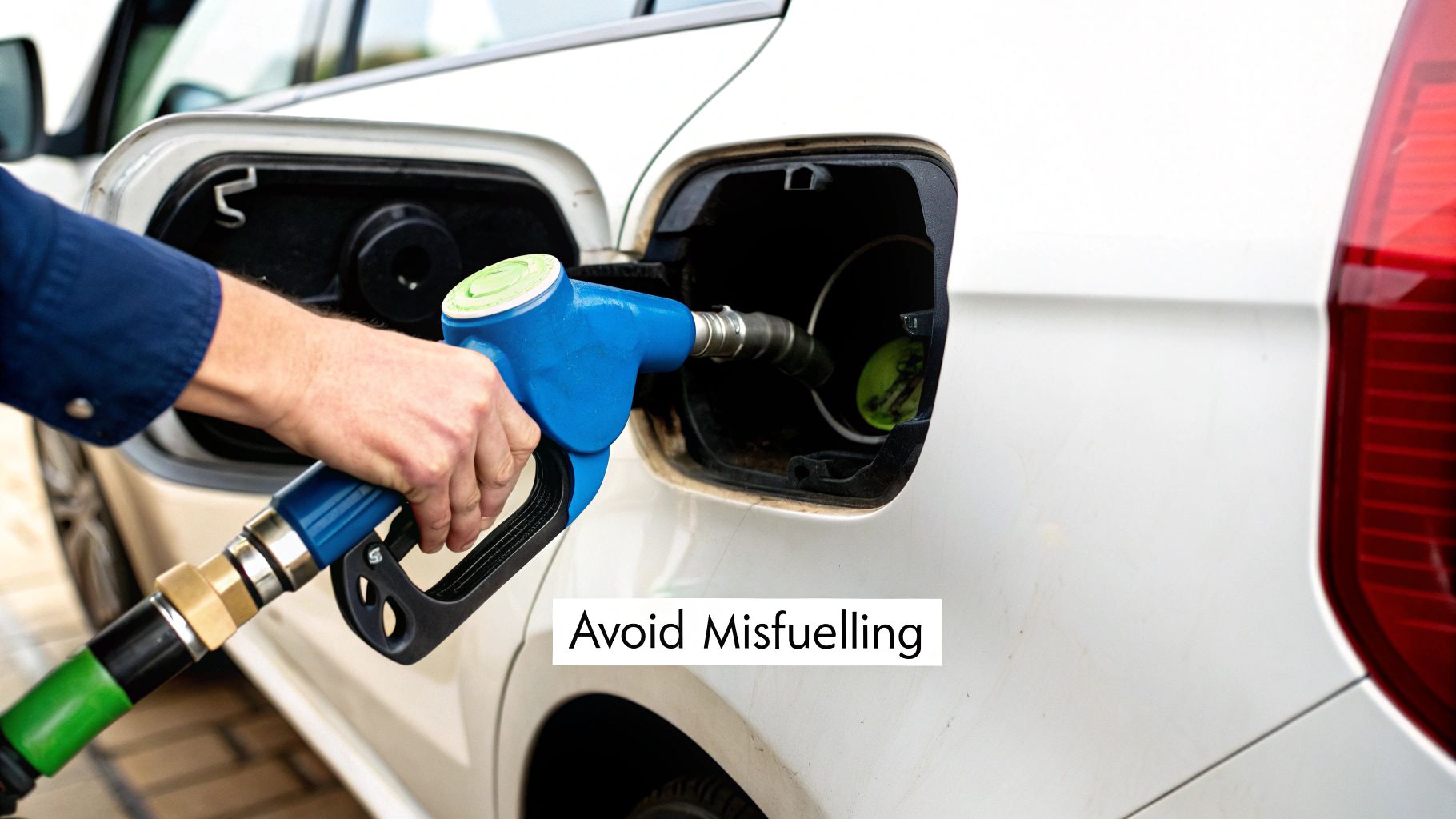
For the everyday driver, the single best defence is taking a deliberate pause before you do anything. It's so easy to be on your phone or finishing a conversation when you pull up to the pump, and that's precisely when these slips happen. Force yourself to take one second to look at the nozzle in your hand and the cap you're about to open.
Remember, the AdBlue filler cap is almost always bright blue. That’s a deliberate design choice to make it stand out from the black or green diesel cap. Make it a habit to actively look for that blue cap every single time you need to top up the AdBlue. It’s a simple visual check that could literally save you thousands of pounds.
Tips for Individual Drivers
Developing a few simple habits can make all the difference:
One Job at a Time: Don't try to fill up with diesel and AdBlue at the same time. Finish one task completely, put the cap back on, and then move on to the next.
Get to Know Your Car: Take a moment to familiarise yourself with the layout of your car’s fuel area. Know exactly where both inlets are so you’re not second-guessing yourself.
Buy the Right Bottle: If you're topping up from a bottle, get one with a proper non-spill nozzle. Not only does this stop you making a mess, but the design often makes it physically difficult to insert into the much wider diesel filler neck by mistake.
I've seen it time and time again – the most common cause of misfuelling is simple distraction. A small, consistent routine at the petrol station is your best defence against a very expensive mistake.
Prevention Strategies for Fleet Managers
If you’re running a fleet of diesel vehicles in Suffolk, the stakes are obviously much higher. Just one vehicle out of action from contamination can throw your entire schedule into chaos and hit your bottom line. Putting some robust prevention strategies in place isn’t just good sense; it’s crucial for keeping your operation running smoothly.
It all starts with clear, consistent training. Never assume your drivers know the risks. Show them photos of the damage caused by putting even a small amount of AdBlue in a diesel tank by mistake. Reinforce the ‘check the cap, check the nozzle’ rule during inductions and make it a point of discussion in regular safety briefings.
You should also consider putting these practical measures in place across your fleet:
Label Everything Clearly: A prominent, weather-proof "DIESEL ONLY" sticker inside the fuel flap next to the main filler is a great visual reminder. Add an "AdBlue ONLY" sticker next to the smaller blue cap, too.
Invest in Better Gear: A small investment in non-spill AdBlue filling adapters for all your vehicles can prevent a massive repair bill down the line.
Create a Misfuelling Protocol: Every single driver needs to know exactly what to do if a mistake is made. This procedure must have one golden rule in massive, bold letters: DO NOT START THE ENGINE. It should also include the direct contact number for a trusted emergency fuel drain service, ensuring they call a specialist immediately instead of trying to sort it out themselves.
Your AdBlue Questions, Answered
When you’ve just put AdBlue in the diesel tank, a million questions probably flash through your mind. It’s a horrible feeling. We get calls from drivers all over Suffolk in this exact situation, so let's walk through the most common worries we hear and give you some straight, honest answers.
"I only put a tiny splash in. Is that really a problem?"
This is probably the first thing everyone asks. You’d think a small amount wouldn’t hurt, but unfortunately, with AdBlue, it does. Even a small amount of AdBlue in a diesel tank by mistake is enough to cause serious issues.
AdBlue is mostly de-ionised water, which doesn’t mix with diesel. It sinks straight to the bottom of your tank, which is exactly where the fuel pump draws from. This means the corrosive, water-based solution is the first thing to get pulled into your sensitive fuel system, where it can start to crystallise and cause havoc.
"How long will I be stuck here? What's the wait for a fuel drain?"
We know you're likely stranded and just want to get going. So, "How long does a professional fuel drain take?" For a typical car or van, provided you haven't started the engine, our technicians can usually have the whole job done and have you back on your way in about 60 to 90 minutes.
That timeframe covers everything we need to do on-site:
Completely draining the contaminated fuel from the tank.
Flushing the fuel lines to clear out any AdBlue residue.
Replacing the fuel filter – this is a critical step that shouldn’t be skipped.
Adding a bit of fresh, clean diesel and running the engine to ensure it’s all clear.
Our mobile units are kitted out to handle all of this at the roadside, whether you're at a busy petrol station in Ipswich or stuck on a quiet country lane near Lowestoft.
Quick word on insurance: a lot of drivers assume their policy will cover a misfuel. Some comprehensive plans do, but many explicitly exclude it as driver error. It's always worth a look at your policy documents, but don't waste precious time figuring it out – the priority is to get the car sorted.
"Oh no, I've already started the engine. Is it too late?"
This is the big one, the question that causes the most panic: "I’ve already started the car, is it too late?" Take a deep breath. While it’s certainly not ideal, starting the engine is not necessarily a death sentence for your car.
The key is to act fast. As soon as you notice the engine stuttering, losing power, or any warning lights, pull over somewhere safe and switch it off immediately. The longer the engine runs, the further that corrosive AdBlue mixture travels, increasing the potential damage and the cost of repairs.
Getting an emergency fuel drain at this stage is crucial. It can often still save your high-pressure pump and injectors—the really expensive bits—from being completely ruined. There might be some damage, sure, but a fast, professional response can stop a bad situation from becoming a catastrophic one.
If you've put even a small amount of AdBlue in your diesel tank by mistake, don't risk it. Call Misfuelled Car Fixer straight away for our 24/7 emergency service across Suffolk. Our experienced technicians will get you safely back on the road. Phone us now or find us at https://www.misfuelledcarfixer-suffolk.co.uk.