



What to Do if You Put a Small Amount of AdBlue in Diesel Tank by Mistake
- Misfuelled Car Fixer
- Dec 14, 2025
- 13 min read
24/7 Hotline Nationwide: 0330 122 6640
National Wrong Fuel Rescue: https://www.misfuelledcarfixer.co.uk
If you found this page, we cover you!
It's a mistake that's surprisingly easy to make, but putting even a small amount of AdBlue in your diesel tank by mistake is a serious problem that needs immediate attention. The single most important thing to remember is this: do not start your engine. Not even to move it a few feet. That one action can be the difference between a simple fix and a catastrophic repair bill.
The Real Risk of a "Small" AdBlue Mistake | Small amount of AdBlue in diesel tank
You might think a small splash of AdBlue will just get diluted by the diesel and burn off. I've heard this a few times, but unfortunately, it's a complete myth. AdBlue isn't a fuel additive; it's a specific chemical solution made of urea and deionised water, designed only for your exhaust system. When it hits diesel, it doesn't mix – it starts a destructive chemical reaction, even from a tiny amount.
Because AdBlue is water-based, it sinks straight to the bottom of the fuel tank. There, it begins to crystallise. It's amazing how fast these hard, white crystals can form, even from a small amount of AdBlue in the diesel tank.
How a Small Amount of AdBlue Crystals Wreck Your Engine
Once those crystals appear, they become a direct threat to the most finely-tuned—and most expensive—parts of a modern diesel engine. The chain reaction of damage is alarmingly quick.
First, the fuel pump will try to pull the contaminated mixture from the tank. The first thing it hits is the fuel filter, where the tiny AdBlue crystals will immediately start to clog up the fine mesh. This effectively chokes the engine, starving it of fuel.
Worse still, any crystals that manage to get past the filter act like sandpaper on the high-precision components inside your fuel injectors and high-pressure fuel pump. The solution itself is also corrosive to many of the seals and metal alloys found throughout the fuel system.
As more cars on UK roads are fitted with SCR technology, this kind of misfuelling is becoming more common. In fact, data shows that even 100ml of AdBlue can crystallise and block a fuel filter by up to 80%. Looking at 2024 insurance data from Aviva, about 10% of these cases end up needing a full fuel system overhaul, with costs soaring to £4,000 or more. It's a stark reminder of the financial stakes. You can read more about the health and pollution costs associated with diesel engine problems over at EHN.org.
The golden rule couldn't be simpler: Do Not Start the Engine. Not for a second. The moment you turn that key, the fuel pump primes and starts circulating the AdBlue. Keeping it off is the best thing you can do to avoid a four-figure repair bill after putting a small amount of AdBlue in your diesel tank by mistake.
To help you react correctly in a stressful moment, here's a quick-glance guide on what to do—and what not to do—immediately after realising the mistake.
Immediate Do's and Don'ts After Misfuelling AdBlue
Action | Why It Matters |
|---|---|
DO NOT turn on the ignition or start the engine. | This prevents the fuel pump from circulating the corrosive AdBlue solution through your entire fuel system. |
DO put the car in neutral and get help to push it to a safe place. | Keeping the car off is paramount. If you're at a petrol station or in a dangerous spot, get assistance to move it safely. |
DO NOT try to drain the tank yourself. | This is a job for specialists. DIY draining can be hazardous and often fails to remove all the crystallised residue, leading to future damage. |
DO call a professional roadside fuel draining service immediately. | A specialist has the right equipment and expertise to safely flush the tank, lines, and filters, ensuring all contamination is removed. |
Following these steps minimises the damage and turns a potential disaster into a manageable problem.
Getting to grips with what AdBlue is and why it must be kept separate from your fuel is the best form of prevention. If you're interested in learning more, take a look at our complete guide on what AdBlue is for a diesel driver. Trust me, this is one of those mistakes that’s far more than just an inconvenience; it’s a fast track to major mechanical failure if you don't handle it correctly from the very start.
Your Roadside Emergency Action Plan
That sudden, gut-wrenching moment at the pump is a feeling you wouldn’t wish on anyone. But right now, panic is your worst enemy. What you do in the next few minutes after realising you’ve put a small amount of AdBlue in your diesel tank by mistake will make all the difference, potentially saving you thousands of pounds in repairs.
The golden rule, the one thing you must remember above all else, is this: do not start the engine. Seriously. Don’t even turn the key to the accessory position to check your phone or close a window. The second you turn that key, the fuel pump whirs into life, priming the system and sending that corrosive AdBlue mix on a one-way trip towards your engine’s most sensitive components. Keeping the car completely off is your single best defence.
Securing Your Vehicle and Making the Right Call
If you're still at the pump and it's safe to do so, just leave the car where it is. If you’re blocking the way, get it into neutral and ask a fellow motorist or the station attendant for a hand to push it to a safe parking spot. The temptation to just start it for a few seconds to move it is huge, but you have to resist.
Next, you need to call for professional help. While your first instinct might be to ring your usual breakdown service, they often aren't equipped for a specialist fuel drain at the roadside. They'll likely just tow you to a garage, adding time and cost. A dedicated mobile fuel drain service is what you need – they're the experts who deal with this exact scenario day in, day out, and can sort it out right where you are.
When you make the call, have this info handy:
Your precise location (the petrol station name and town in Suffolk is perfect).
Your car's make, model, and registration.
A rough idea of how much AdBlue went in, even if it was a small amount.
And the most important bit: confirm that the engine has not been started.
This diagram shows exactly why we're so insistent on keeping the engine off. It visualises how AdBlue reacts with diesel to form hard, damaging crystals.
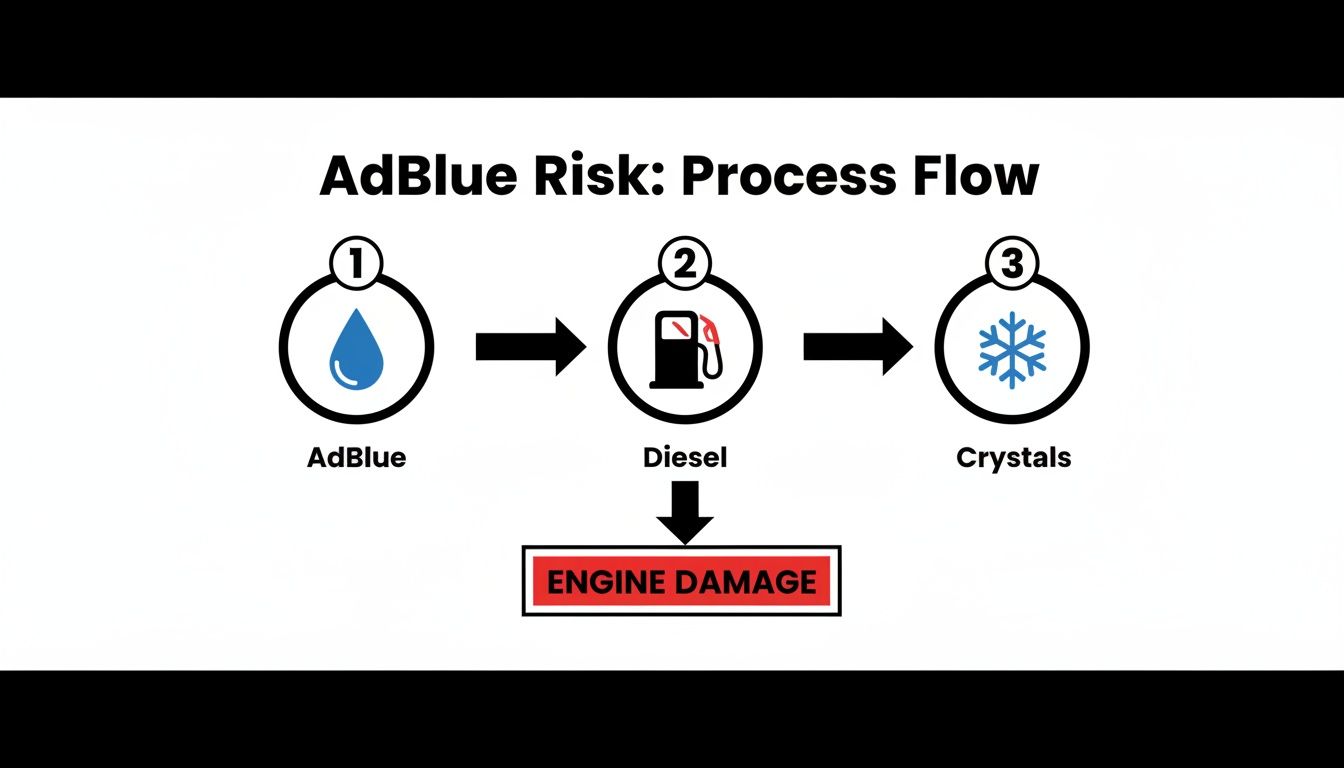
Once that mixture circulates, those crystals start to form everywhere, which is precisely what causes the catastrophic damage.
Remember, the longer the AdBlue sits in the tank, the more it can begin to crystallise. A quick, decisive call to a specialist is the single most effective thing you can do right now.
This is a time-sensitive problem. Knowing exactly what to do when you need a fuel drain near you can turn a potential catastrophe into a straightforward fix, getting you back on your journey with minimal fuss and, crucially, minimal damage to your vehicle.
What to Expect from a Fuel Drain Specialist

When the technician’s van pulls up, it’s a massive relief after that sinking feeling at the pump. But what exactly happens next? Knowing the process helps you understand why professional help is so crucial, even if you’ve only put a small amount of AdBlue in your diesel tank by mistake. This isn't just about siphoning out the bad stuff; it’s a meticulous operation to safeguard your engine.
First off, the specialist will have a quick chat with you to assess everything, the most important question being whether the engine has been started. They’ll then set up their specialised pumping gear. This is ATEX-approved equipment, meaning it's certified safe for use with flammable liquids – a far cry from a DIY hose and bucket, which is both dangerous and won't do the job properly.
The Draining and Flushing Process
To get started, the technician will find the best access point to your fuel tank, which could be via the filler neck or by temporarily accessing the fuel sender unit. From there, a powerful pump gets to work, completely emptying the tank of the contaminated diesel and AdBlue mix. Every last drop has to go, as any leftover AdBlue will simply crystallise later on and cause a world of expensive problems.
But draining the tank is only half the battle. What follows is arguably the most critical part of the whole service.
Flushing the Lines: The technician will introduce a small amount of clean diesel into the tank and circulate it through the fuel lines and filter housing. This is essential for dissolving and clearing out any rogue AdBlue that might have crept into the system before you realised the mistake.
Handling the Waste: That mix of diesel and AdBlue is now hazardous waste. A certified technician is licensed to handle, transport, and dispose of it according to strict environmental regulations, which saves you from a potential legal and logistical nightmare.
This thorough, two-stage process is exactly why trying to sort this yourself is never a good idea. You simply can't guarantee you've removed every trace of the contamination.
Final Checks and Getting You Moving Again
With the flush complete, it's standard practice to replace the fuel filter. AdBlue is notorious for blocking filters with its crystals, so a new one provides a clean slate for the engine.
Once the system is confirmed clear, the technician will add some fresh, clean diesel to get you going.
The whole on-site procedure is surprisingly quick. For a straightforward job where the engine hasn't been run, a specialist can often have the entire drain and flush completed in under an hour, minimising the disruption to your day.
The final step is to start the vehicle. They'll let it run for a few minutes, listening to the engine and making sure everything is running smoothly. This complete, end-to-end service ensures the mistake is properly fixed, protecting the expensive, sensitive components of your vehicle’s fuel system for the long haul.
What’s This Going to Cost Me? A Look at the Potential Damage and Repair Bill
Let’s get straight to the point: the biggest worry for any driver who's just put a small amount of AdBlue in their diesel tank by mistake is the financial hit. The final bill swings wildly depending on one crucial decision—whether or not you turned the ignition key.
This one simple action separates a manageable hiccup from a potentially wallet-emptying disaster.
If you caught the mistake at the pump and left the engine completely off, breathe a sigh of relief. You're in the best possible position. The solution is relatively straightforward: a professional fuel drain, a new fuel filter, and a tank of fresh diesel. You're likely looking at a cost of a few hundred pounds, which, while not ideal, is a far cry from a major mechanical overhaul.
But the moment you start that engine, the game changes entirely.
How Starting the Engine Sends Costs Skyrocketing
Turning the key is like hitting a self-destruct button for your fuel system. The corrosive AdBlue solution is instantly pumped through every delicate part, attacking the most sensitive and expensive components. A simple drain is no longer an option, even with just a small amount of contamination.
Because AdBlue has a pH of 9-10, it immediately starts to eat away at rubber seals and precision-engineered metal parts.
The first components to fall victim are usually:
The High-Pressure Fuel Pump: This is the heart of your diesel system. It relies on diesel for lubrication, which AdBlue strips away instantly. This causes friction, rapid wear, and often, total failure.
Fuel Injectors: AdBlue is notorious for forming crystals that can clog the tiny nozzles in your injectors. This messes up the fuel spray, or worse, seizes them completely.
Fuel Lines and Seals: The corrosive mixture can degrade the inside of fuel lines and make rubber seals swell up and fail, leading to leaks and a loss of fuel pressure.
The jump in cost is genuinely staggering. Once that engine has been running, even for a minute, repair costs can shoot into the thousands. Swapping out a high-pressure pump and a full set of injectors on a modern diesel can easily top £3,000, and that’s just for the parts, before you even factor in labour.
Real-World Repair Bills Don't Lie
Ever since AdBlue became common around 2015, we've seen a sharp rise in these contamination incidents right across the UK. It’s a costly mistake. The average UK repair bill for misfuelling climbed to £1,800 in 2023. Worryingly, about 22% of these cases required major engine work, pushing the final cost past £5,000.
Think a small splash won't matter? Think again. As little as 200ml can destroy a high-pressure fuel pump in under 20 miles of driving. Just look at a recent case from a Manchester logistics firm in 2024: five separate incidents over six months led to a staggering £12,000 in repair bills, all because staff training had slipped. The environmental fallout is also a real concern, as highlighted in reports like the Brooke Additives pollution case on GOV.UK.
Understanding what you might be facing is the first step. For a more detailed look at how these costs break down, take a look at our guide on the cost of putting the wrong fuel in your car. It really drives home why keeping that engine off is the single most important thing you can do to protect your vehicle and your bank account.
Simple Habits to Avoid Another Misfuelling Mishap
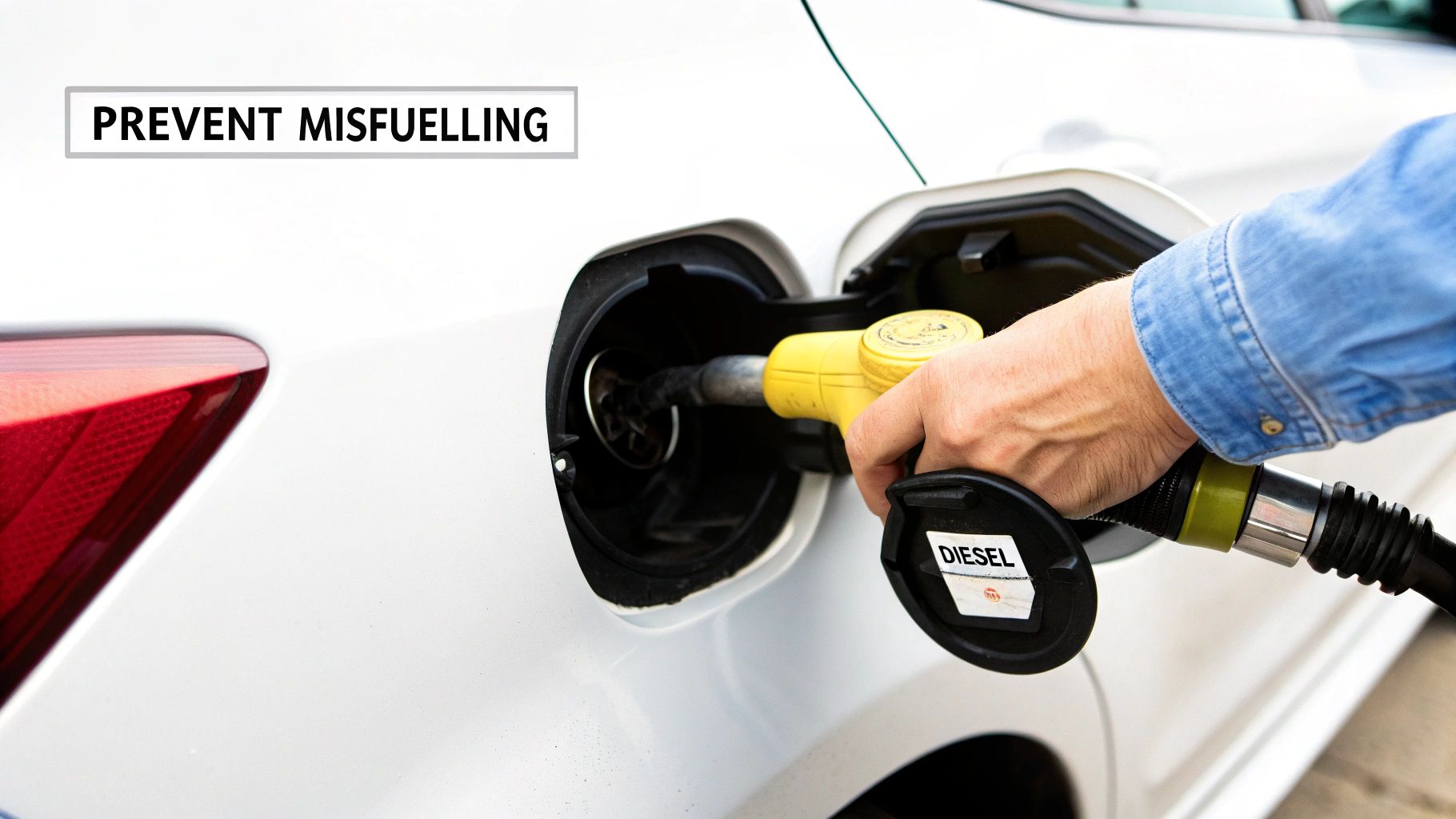
Dealing with a misfuel is a headache, no doubt about it. But once you're through it, the experience serves as a powerful reminder to be more mindful at the pump. The goal now is to turn that lesson into a few rock-solid habits that make a repeat mistake next to impossible. It's about tweaking your routine just enough to save yourself a world of future stress and expense.
Honestly, the biggest culprit is almost always distraction. We've all been there: juggling calls, thinking about work, or just running on autopilot after a long day. The single most effective habit you can build is to force a deliberate pause just before you grab the pump handle. Stop, breathe, and consciously check what you’re about to do.
A Quick Mental Checklist for the Forecourt
Making prevention second nature means creating a simple mental checklist that you run through every single time you refuel. It takes all of five seconds but can be the difference between driving away smoothly and calling for a drain-down service.
Check the Handle Colour: This is your first and most obvious clue. AdBlue pump handles are always blue. Diesel handles are almost always black. Instil the mantra: blue is not for you—unless you’re specifically topping up the dedicated AdBlue tank.
Confirm the Filler Cap: Most modern diesel vehicles have the small, blue-capped AdBlue port right next to the main fuel filler. Double-check that you're opening the correct, larger cap for the diesel.
Read the Pump Label: Colour coding is great, but don't rely on it alone. Always glance at the label on the pump itself to confirm it reads "DIESEL."
This isn't a rare mistake. Putting a small amount of AdBlue in a diesel tank by mistake has become a surprisingly common problem since Euro 6 engines hit the mainstream. In fact, UK data suggests that AdBlue mix-ups can now account for up to 20% of all diesel misfuelling callouts in some areas. It’s a real and growing issue, as detailed in this helpful guide from the experts at Fuel Fixer on their website.
Stronger Safeguards: Tech and Training
If you want an extra layer of security, you can buy a misfuelling prevention device. These are clever caps or inserts that physically block the smaller AdBlue nozzle from ever entering your wider diesel filler neck, making a mistake impossible.
For fleet managers across Suffolk, prevention needs a more structured approach.
Consistent and repeated driver training is non-negotiable. A quick annual refresher on the dangers of AdBlue contamination, paired with clear, bold labelling on the vehicle's fuel cap, can slash the odds of a very expensive error occurring across your fleet.
Your AdBlue Contamination Questions Answered
Once the initial shock wears off—that heart-sinking moment you realise you’ve put AdBlue in the diesel tank—the questions start coming thick and fast. Even if you’ve done the right thing and haven’t started the engine, a few worries will probably still be nagging at you.
We get calls about this all the time across Suffolk, so let's walk through some of the most common questions we hear from drivers in your exact situation.
Will My Car Insurance Cover This?
This is usually the first thing people ask, and unfortunately, there's no straightforward answer. It all comes down to the fine print of your specific insurance policy.
Some fully comprehensive plans do include "misfuelling cover," sometimes as standard, other times as a paid add-on. If your policy has this, then you're likely covered for the cost of the drain and any related repairs. On the flip side, many standard policies have an exclusion clause for misfuelling damage.
Our advice: Don't just assume you're covered. The only way to know for sure is to dig out your policy documents or ring your insurer directly. It's worth remembering that even a rejected claim can sometimes be noted on your record and affect future premiums.
I Only Drove a Few Feet. What Now?
It’s a classic scenario. You realise the mistake, panic, and quickly move the car from the pump to a parking bay before switching it off. Even if you only covered a few metres, the damage has been set in motion.
As soon as the engine runs, the fuel pump kicks in and pulls the contaminated diesel-AdBlue mix from the tank into the fuel lines. The advice is exactly the same: stop the car, do not turn the key again for any reason, and call for a professional fuel drain. The risk of AdBlue crystallising in your fuel filter, lines, and injectors is still incredibly high. A professional flush of the entire system is the only safe way forward.
Can't I Just Dilute It with More Diesel?
Absolutely not. This is probably the most dangerous and costly myth out there. Thinking you can just top up the tank with diesel to dilute the AdBlue is a recipe for disaster. It simply doesn't work.
Imagine adding a shot of salty water to a pint of fresh water – the salt is still there, it's just spread throughout. The AdBlue will still crystallise, and its corrosive properties will still go to work on your fuel system components.
Worse still, you're just making the job harder. Now, instead of draining, say, 5 litres of contaminated fuel, the technician has to drain 50. This takes more time, costs more, and creates more hazardous waste to dispose of.
Is It Safe to Drain the Tank Myself?
Tackling a fuel drain on your own is something we strongly advise against. It's a job loaded with risks—to your health, your vehicle, and the environment.
Here’s why you need to leave it to a professional:
Safety First: Diesel is flammable and its fumes are hazardous. Professionals use ATEX-certified (explosion-proof) equipment for a reason. A stray spark from the wrong type of pump or static electricity is all it takes to cause a fire.
Hazardous Waste: The diesel and AdBlue cocktail is classified as hazardous waste. You can't just pour it down a drain or put it in your household bin. We are licensed to handle and dispose of it legally and safely, saving you from a potential run-in with the Environment Agency and hefty fines.
Getting It All Out: A simple siphon tube from a DIY shop will never get all the contamination out. The heavier AdBlue solution settles at the bottom of the tank, and traces will always be left behind. We use high-powered pumps and flushing techniques to ensure the system is completely clean.
If you've put even a small amount of AdBlue in your diesel tank by mistake in Suffolk or the surrounding areas, don't take a chance. The quickest, safest, and ultimately cheapest solution is to call in the experts.
Contact Misfuelled Car Fixer 24/7 for an immediate, professional mobile fuel drain. We’ll get you back on the road without the drama. https://www.misfuelledcarfixer-suffolk.co.uk